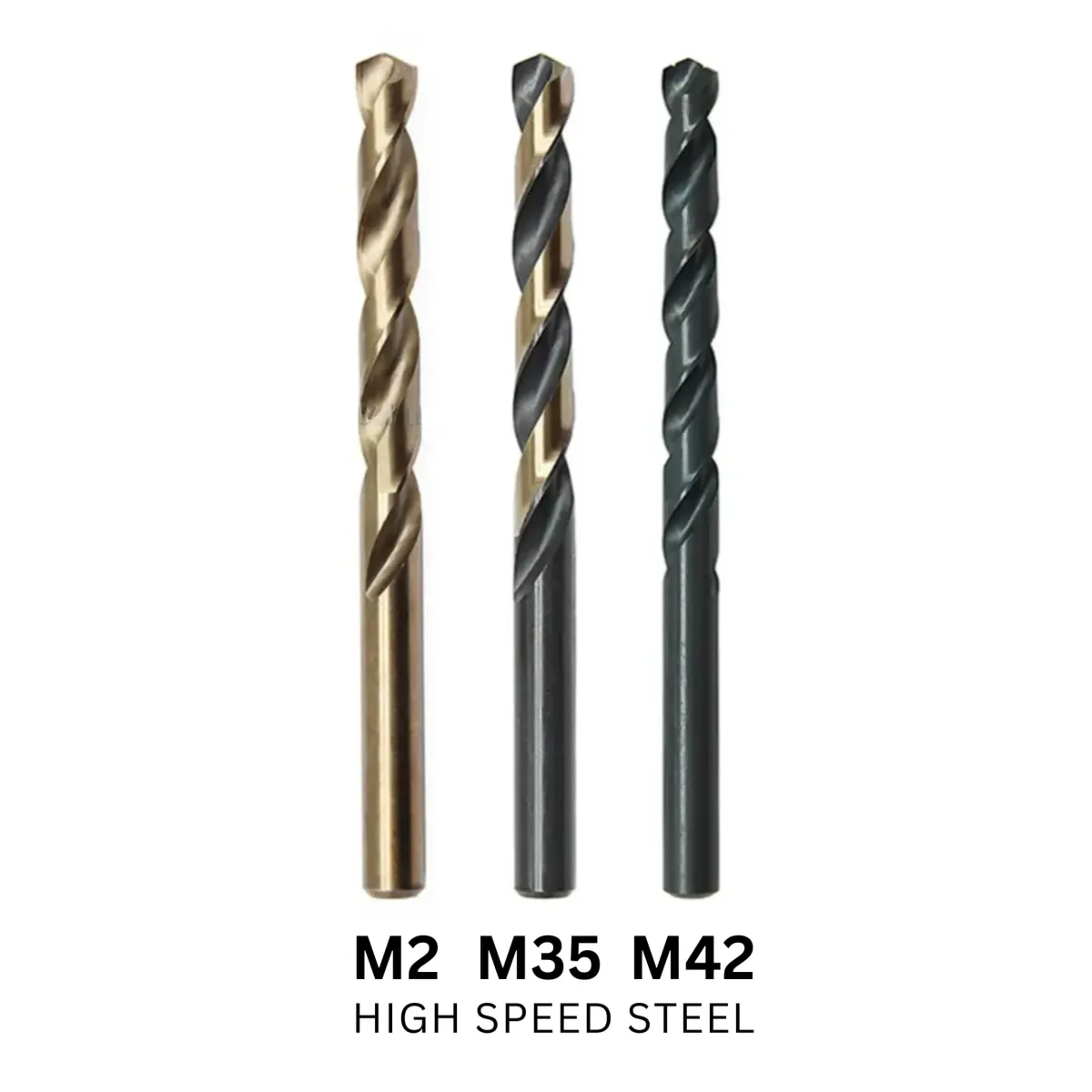
M35 и M42 — это марки быстрорежущей стали (HSS) с добавлением кобальта для повышения термостойкости («красной твердости»). Это особенно важно при сверлении металлов с низкой теплопроводностью, таких как нержавеющая сталь, где тепло остается на режущей кромке.
- M35: ~5% кобальта (сбалансированная прочность + термостойкость)
- M42: ~8% кобальта (максимальная термостойкость, но более хрупкий)
M35 и M42: основные различия
| Показатель | M35 (5% Co) | M42 (8% Co) |
|---|---|---|
| Термостойкость | Высокая | Очень высокая |
| Прочность (устойчивость к разрыву) | Лучшая | Низкая (более хрупкий) |
| Лучше всего подходит для | Ручные дрели, общие нержавеющие материалы, работы в мастерской | Сверлильный станок, твердые сплавы, производственное сверление |
| Типичный режим отказа | Перегрев при слишком высокой частоте вращения | Сколы/ломание, если сверло колеблется |
Какой вариант выбрать?
- Выбирайте M35, если вы сверлите вручную, вам нужна долговечность или вы хотите самый безопасный универсальный вариант из кобальта.
- Выбирайте M42, если вы используете жесткие установки (сверлильный станок/ЧПУ), сверлите очень твердые сплавы или вам нужна максимальная термостойкость.
Если ваш целевой материал очень твердый (например, закаленная сталь), техника имеет большее значение, чем марка — поддерживайте низкую скорость вращения, высокое давление подачи и используйте охлаждающую жидкость.
Как сверлить кобальтом
- Используйте центровой ударник, чтобы предотвратить смещение.
- Низкая скорость вращения (слишком высокая скорость — основная причина неудач). Используйте таблицу скоростей и подач.
- Высокое давление подачи, чтобы сверло резало стружку (а не пыль).
- Используйте охлаждающую жидкость (масло для нержавеющей стали, смазочно-охлаждающую жидкость для сплавов).
- Используйте сверло с шаговым ходом для глубоких отверстий, чтобы удалить стружку.
Распространенные неисправности и способы их устранения
- Синий/обгоревший наконечник: слишком высокая скорость вращения или отсутствие охлаждающей жидкости. Немедленно снизьте скорость.
- Сколы на режущих кромках: колебания сверла или боковая нагрузка. Улучшите жесткость или замените M42 на M35.
- Сломанное сверло: застрявшие стружки в канавках. Используйте сверло для глубоких отверстий и часто очищайте стружки.
Нужны сверла из кобальта OEM M35/M42 или упаковка под собственной торговой маркой? Обратитесь в Zhonghuan Tools для получения ценового предложения.