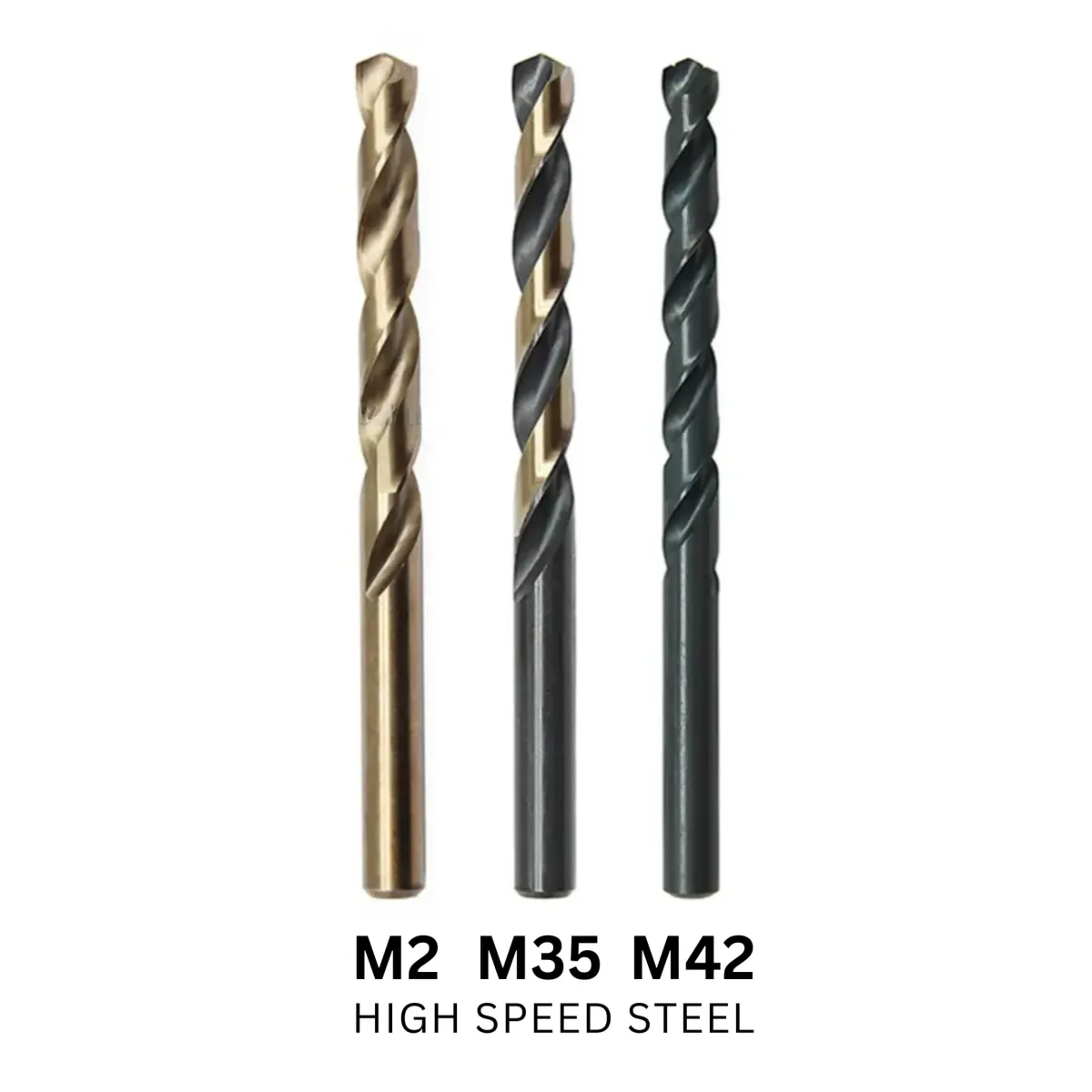
M35 und M42 sind Schnellarbeitsstahlsorten (HSS) mit Kobaltzusatz zur Verbesserung der Hitzebeständigkeit („Rotfestigkeit“). Dies ist besonders wichtig beim Bohren von Metallen mit geringer Wärmeleitfähigkeit wie Edelstahl, bei denen die Wärme an der Schneidkante verbleibt.
- M35: ~5 % Kobalt (ausgewogene Zähigkeit + Wärmebeständigkeit)
- M42: ~8 % Kobalt (maximale Hitzebeständigkeit, aber spröder)
M35 vs. M42: Wesentliche Unterschiede
| Punkt | M35 (5 % Co) | M42 (8 % Co) |
|---|---|---|
| Hitzebeständigkeit | Hoch | Sehr hoch |
| Zähigkeit (Bruchfestigkeit) | Besser | Geringer (spröder) |
| Am besten geeignet für | Handbohrmaschinen, allgemeine Edelstahlarbeiten, Werkstattarbeiten | Bohrmaschine, harte Legierungen, Produktionsbohrungen |
| Typische Fehlerursache | Überhitzung bei zu hoher Drehzahl | Absplittern/Abbrechen bei Flattern des Bohrers |
Welches sollten Sie wählen?
- Wählen Sie M35, wenn Sie von Hand bohren, eine hohe Haltbarkeit benötigen oder die sicherste Allround-Kobaltoption wünschen.
- Wählen Sie M42, wenn Sie starre Aufbauten (Bohrmaschine/CNC) verwenden, sehr harte Legierungen bohren oder maximale Hitzebeständigkeit benötigen.
Wenn Ihr Zielmaterial sehr hart ist (z. B. gehärteter Stahl), ist die Technik wichtiger als die Qualität – halten Sie die Drehzahl niedrig, den Vorschubdruck hoch und verwenden Sie Kühlmittel.
Bohren mit Kobalt
- Mit einem Körner markieren, um ein Verlaufen zu verhindern.
- Niedrige Drehzahl (zu hohe Drehzahl ist die häufigste Ursache für Fehlschläge). Verwenden Sie eine Tabelle mit Drehzahlen und Vorschüben.
- Hoher Vorschubdruck, damit der Bohrer Späne (und keinen Staub) schneidet.
- Verwenden Sie Kühlmittel (Öl für Edelstahl, Schneidflüssigkeit für Legierungen).
- Peck-Bohrer für tiefe Löcher, um Späne zu entfernen.
Häufige Fehler und deren Behebung
- Blaue/verbrannte Spitze: Drehzahl zu hoch oder kein Kühlmittel. Sofort die Drehzahl verringern.
- Abgebrochene Schneidkanten: Bohrer wackelt oder seitliche Belastung. Steifigkeit verbessern oder von M42 auf M35 umsteigen.
- Abgebrochener Bohrer: Späne haben sich in den Nuten festgesetzt. Mit Peckbohrer bohren und Späne regelmäßig entfernen.
Benötigen Sie OEM-Kobaltbohrer M35/M42 oder eine Eigenmarkenverpackung? Kontaktieren Sie Zhonghuan Tools für ein Angebot.