
For installers drilling repeated fixing holes, the useful result is a correctly sized hole with a predictable drilling cycle. We build SDS-Plus sample programs around your concrete, anchor diameter and cordless hammer so the head and flute do useful work with the energy available.
Start with the hole and the hammer
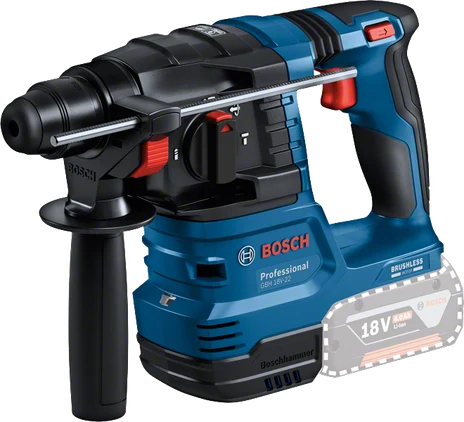
Tell us the concrete or masonry, likely aggregate, anchor hole diameter and usable depth. Then identify the hammer model, impact class, battery platform and extraction attachment. Battery voltage alone does not describe the energy delivered at the bit, and a longer or larger drill changes the load on the same machine.
For shallow repetitive fixings, choose the working length that clears the specified depth and allows the extraction attachment to operate. Extra length can be necessary for access, but should be a deliberate requirement rather than a default for every size.
Two sample directions for different concrete conditions
For general concrete with a clear drilling path, we can start with a centering two-cutter geometry and an open flute matched to the diameter. The comparison focuses on entry behavior, drilling time and dust evacuation.
For reinforcement exposure or a more demanding aggregate, evaluate a full-carbide-head option. Match the head size, body and joining specification as an assembly. This is a proposed sample direction, not a promise that one cutter count wins every battery test. Planned reinforcement intersections follow the project drilling layout and approved method.
Measure useful output per battery charge
Compare bits on the same hammer, battery model and condition, concrete block, diameter and finished depth. Keep feed practice and extraction consistent. Record drilling time, completed holes, recharge or thermal interruptions, diameter retention and the condition of the head.
A flute that evacuates cuttings effectively can help avoid recutting and heat accumulation. The gain depends on the complete drilling setup; we agree an acceptance target from your baseline rather than publishing a universal percentage. Review worn-hole quality as well as the first few fast holes.
Build the order around approved sizes
Send your high-volume diameters and lengths first. We can prepare a focused comparison set, then release the selected construction for those sizes with agreed laser marking, packaging and reorder specifications. Adjacent diameters should be reviewed against their own flute section and head dimensions.
If the holes are for an approved anchor system, retain its specified drilling diameter, depth and cleaning sequence. Bit selection supports that installation method; it does not replace the anchor manufacturer’s instructions.
Choose the tooling direction
| Job condition | Starting configuration | What to check |
|---|---|---|
| General concrete fixings | Centering two-cutter sample | Entry, time per hole, diameter retention |
| Rebar exposure / demanding aggregate | Full-carbide-head sample | Head integrity, tracking and wear |
| Repeated shallow holes | Depth-matched working length | Extraction fit and cycle time |
| Deep or restricted access | Longer working section as required | Cuttings clearance and handling |
Send these details for a tooling quote
- Concrete / masonry and expected reinforcement
- Hammer model and battery model
- Hole diameter × finished depth; required reach
- Quantity per size and preferred packaging
- Current bit or baseline drilling cycle
Request a matched tooling quote
Review the product range · Related application program
Machine and technical references
Milwaukee Cordless SDS Hammers: Models, Batteries and Drill-Bit Matching