
Bushing Bit
Carbide-pin and hardened alloy steel bushing tools for coating adhesion, shotcrete substrate roughening, anti-slip concrete texture and decorative stone finishing. SDS-Plus, SDS-Max, Hex, fixed shank and replaceable head are compatibility and specification options.
Bushing Bit Range
Choose between carbide-pin bushing bits and integral steel-tooth bushing bits. Shank type and head system are specification options inside each line.

Carbide-Pin Bushing Bit
Carbide-pin bush hammer bits with a bronze-finish tungsten carbide pin grid for hard concrete, abrasive aggregate, bridge decks, parking decks and sustained shotcrete substrate preparation. The shown SDS-Max one-piece model benchmarks against carbide pin bushing tools such as Hilti TE-Y BT 4x4-style products.

Integral Steel-Tooth Line
Integral steel-tooth bush hammer bits with a hardened alloy steel tooth face for general concrete roughening, leveling and coating prep in contractor and distributor programs. The shown model uses a one-piece SDS-Max shank and a heat-treated grey steel working face that sets the steel-tooth line apart at a glance.
OUR PRODUCT & BATCH PHOTOS
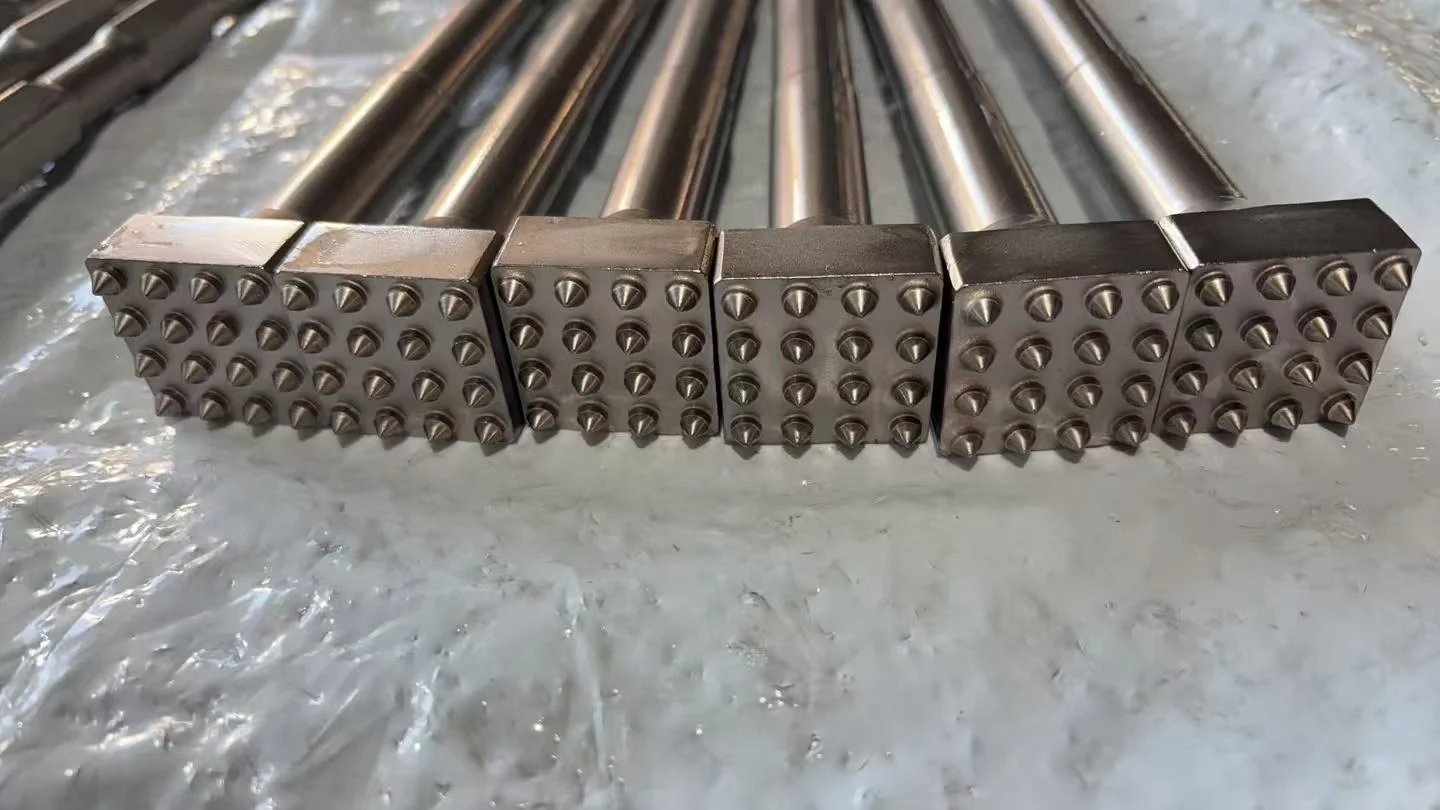
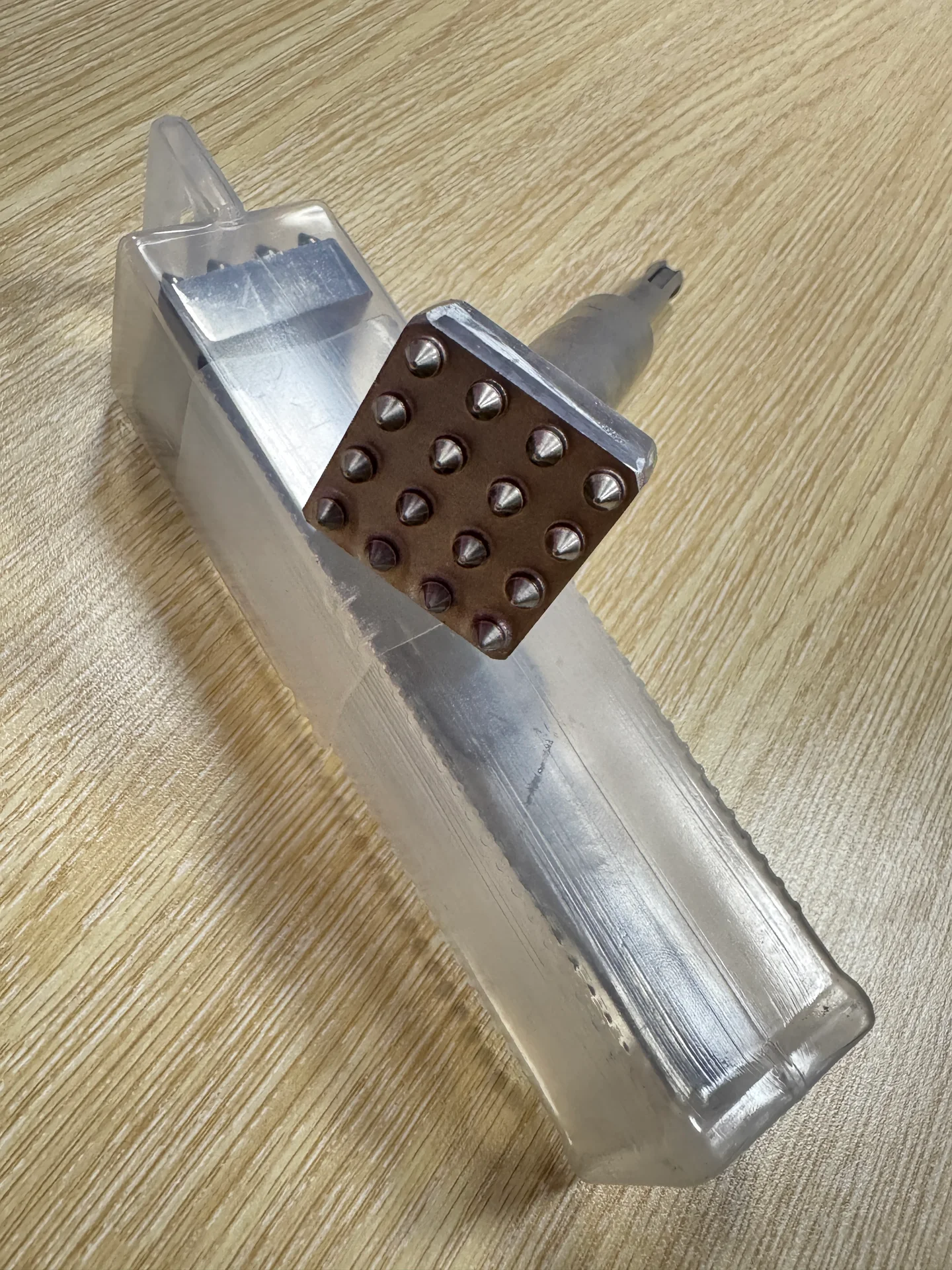
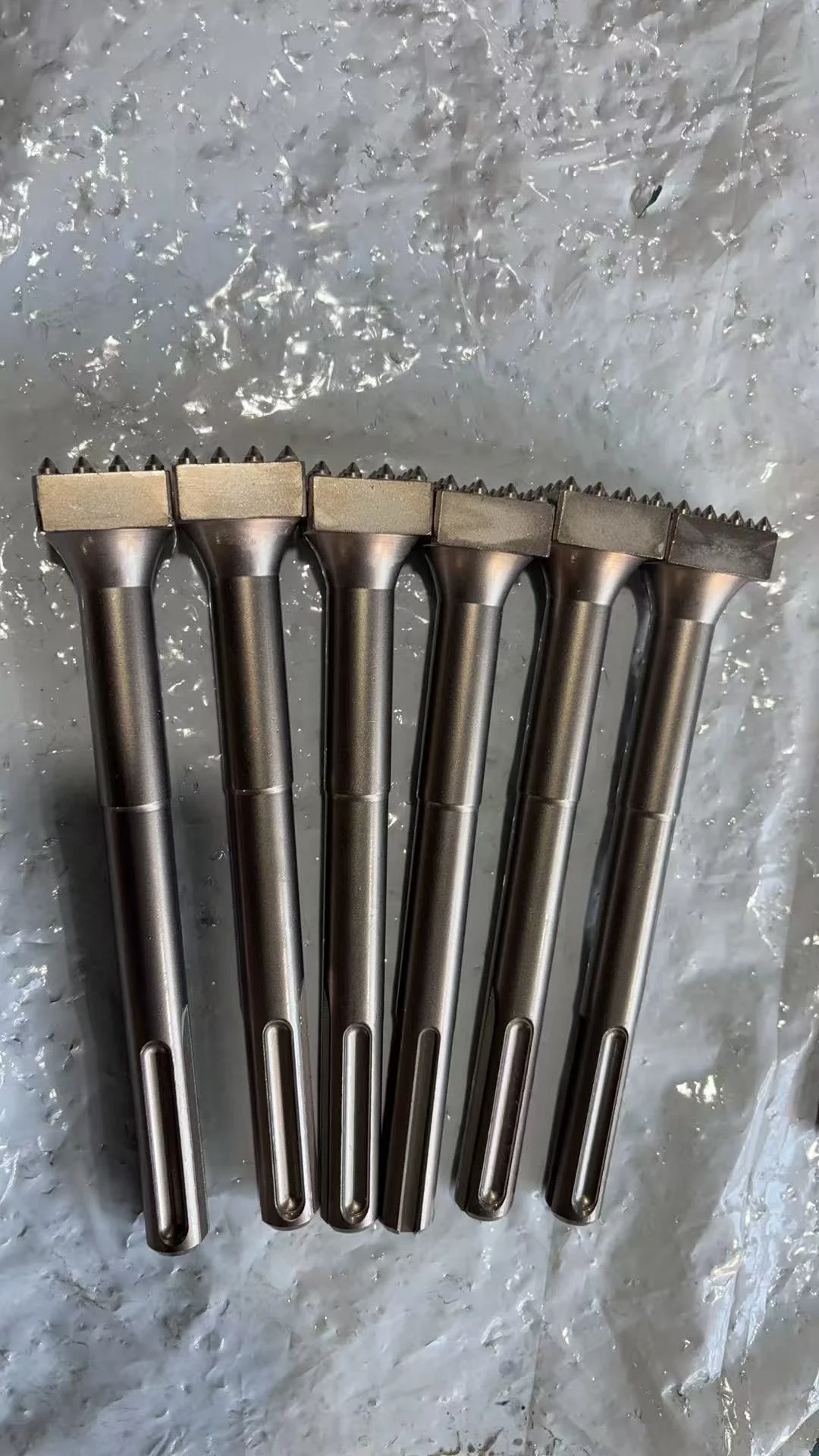
Carbide-pin bushing tools: 16-point and 25-point views
See our 4 × 4 and 5 × 5 working faces, single-tool details and batch body views. Send the head size, shank, overall length and quantity for an OEM quotation.
16-point working face · 4 × 4 pin layout
Three complementary views: batch working faces, an angled single tool with its protective tube, and complete tool bodies.
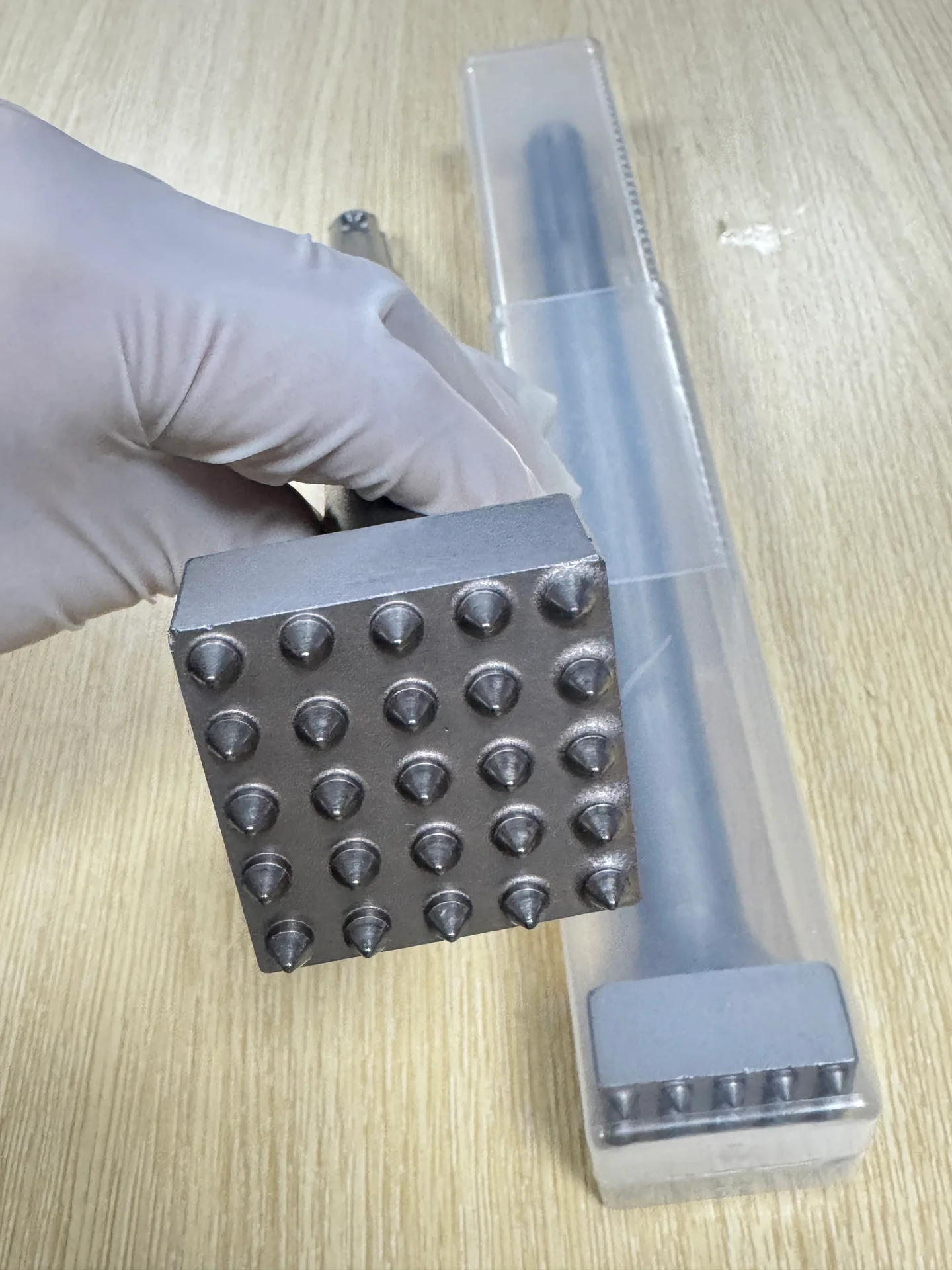
25-point working face · 5 × 5 pin layout
A close-up of the square working face complements our 25-point product diagrams.
Technical Buying Points
Bush hammer tools are defined by pin material, heat treatment, head system and texture consistency before shank compatibility.
Buyer Selection Logic
Use this sequence before asking for price. It prevents mixing carbide-pin tools and integral steel-tooth tools in the same RFQ.
Choose Material Line First
Use carbide pin for the wear-life-critical line and hardened alloy steel for the general-purpose, cost-efficient line.
Then Choose Surface Result
Coating adhesion, shotcrete prep, anti-slip texture and decorative stone aging need different tooth counts and head sizes.
Choose Head System
Fixed shank is simpler and cheaper. Replaceable heads make sense for contractor systems and spare-head programs.
Tip · Replaceable heads need planned packaging and MOQ.
Then Choose Shank
SDS-Plus, SDS-Max and hex decide which hammer the tool fits; they do not decide the construction or the texture.
Tip · A carbide-pin SDS-Plus tool can be more valuable than an integral-steel-tooth SDS-Max tool, depending on the job.
Benchmark Honestly
Hilti, Bosch, Milwaukee and DeWalt each signal different value: carbide pins, roughing pattern, forged steel, shock resistance.
Tip · Use benchmark names to define the spec, not to promise a copy of brand assets.
Lock Packaging Early
Retail blister, plastic tube, bulk carton and contractor kits change MOQ, artwork and unit economics.
Tip · Packaging can decide whether this is a shelf SKU or a contractor program.
Wholesale & OEM Program
Procurement support for distributors, rental channels and private-label concrete surface preparation tools
Packaging Options
OEM/ODM Services
- — Carbide-pin or steel-tooth construction planning
- — Custom tooth count, head diameter and texture depth for coating prep or anti-slip finish
- — Fixed-shank or replaceable-head system development
- — SDS-Plus, SDS-Max / TE-Y, Hex and project-specific holder compatibility
- — Logo laser marking, private-label packaging, barcode and carton artwork
- — Benchmark review against Hilti TE-Y BT, Bosch HS1909, Milwaukee and DeWalt bushing tools
Order Details
Frequently Asked Questions
What separates a carbide-pin bush hammer bit from an integral steel-tooth one?
A bush hammer bit’s construction is not defined by having an SDS-Max shank. The real distinction comes from the working face and the body: carbide-pin heads use tungsten carbide pins for higher wear resistance on hard concrete and abrasive aggregate, while integral steel-tooth heads use a hardened alloy steel tooth face for general-purpose roughening at a lower unit cost. Poorly made versions of either construction usually copy the shape but use lower-grade material, weaker heat treatment, looser tooth alignment and lighter packaging. For professional distributors, each line should be sold on its own construction and wear-life story, not just as a larger or smaller bushing bit.
Should I choose a bush hammer tool by shank type?
No. Shank type decides machine compatibility, not the tool. First choose the construction: carbide-pin or integral steel-tooth. Then choose fixed shank or replaceable head, coarse structural keying or a finer visible texture, and finally the SDS-Plus, SDS-Max, TE-Y or hex fitment for the hammer. Diamond blades are chosen the same way: segment technology, material and machine class come before the arbor size.
Carbide pins vs hardened alloy steel teeth — which one do I need?
Carbide pins hold the working profile longer on hard concrete, abrasive aggregate, bridge decks and sustained shotcrete prep, the right choice for buyers benchmarking Hilti TE-Y BT 4x4-style carbide bushing tools. Hardened alloy steel teeth cost less to manufacture and suit general roughing, leveling and exterior texture work. A strong private-label program often carries both constructions side by side: carbide-pin for wear-life-critical jobs, integral steel-tooth for general-purpose volume work.
Fixed shank or replaceable head system — which is better?
Fixed shank is the default for simple distributor SKUs: one-piece construction, lower cost, fewer parts, easy packaging and reliable impact transfer. Replaceable-head systems make sense when the customer sells to contractors or rental fleets who use multiple tooth patterns and want to replace only the working head. The replaceable system is more of a program than a single item: it needs holder logic, spare-head packaging, tooth-count assortment and MOQ planning.
How do tooth counts map to surface results?
16-20 teeth create deeper, more aggressive texture for structural keying, coating adhesion and heavy concrete roughening. 25 teeth sits in the middle and works well for general roughing and excess concrete removal. 30-45 teeth create a finer, denser texture for anti-slip walkways, stairs, pool decks, decorative concrete and stone aging. Fewer teeth mean deeper impact marks. More teeth mean finer and more uniform visible texture.
How should I use Hilti, Bosch, Milwaukee and DeWalt as benchmarks?
Use them to define the specification, not to claim brand copying. Hilti is useful for the carbide-pin and induction-hardened construction story. Bosch HS1909 is useful for 16/25 tooth SDS-Max roughing of stone, concrete and asphalt. Milwaukee is useful for high-grade forged-steel and longer-life steel-tool positioning. DeWalt is useful for shock-resistant steel and wear-resistant tip messaging. Send the exact benchmark model, target head size, length, tooth count and construction so we can separate what can be responsibly matched from what should stay with the original brand.
Which applications create the strongest distributor demand?
The strongest B2B applications are coating-adhesion preparation, shotcrete substrate roughening, anti-slip concrete texture, bridge and parking-deck preparation, excess-concrete removal, exterior finishing and decorative stone aging. These jobs give distributors a clear application story and recurring professional demand.
Why is induction hardening important?
A bush hammer tool receives repeated hammer-only impact. Without proper heat treatment, the body can mushroom at the strike area, bend under angled impact or wear at the head-to-shank transition. Induction hardening gives the impact zone higher surface hardness while retaining a tougher core. That is why anti-mushrooming, anti-bending and wear resistance are important claims for carbide-pin bushing tools.
Build a Bush Hammer Bit Program
Send target benchmark, pin material, tooth count, head system, shank type, packaging style and annual volume. We will help separate carbide-pin SKUs from steel-tooth SKUs.
Related Products
Related Sourcing Guides

Bushing Bit Buying Guide: Carbide Pin vs Steel Tooth OEM Spec
Procurement guide for bushing bits and bush hammer tools. Compare carbide pin and hardened steel tooth lines, shank fitment, tooth patterns, benchmark brands, QC checks, and RFQ wording for OEM buyers.

Bush Hammer Bits: Tooth Count Selection & Surface Texturing Guide
How to choose bush hammer bits for concrete texturing. Compare carbide-pin and integral steel-tooth construction, mesh belt furnace brazing, 16, 20, 25, 30, and 45 tooth configurations, SDS-Plus vs SDS-Max, anti-slip, bonding prep, and decorative applications.

Top Bush Hammer & Bushing Bit Manufacturers (2026): Premium Brands and OEM Sourcing Shortlist
A buyer's shortlist of the top bush hammer and bushing bit manufacturers: the premium programs from Hilti, Bosch, Makita, DeWalt, Milwaukee, Tyrolit, and Diablo, plus the factory-direct OEM route across all four shank families — with pin-count, carbide, and brazing criteria for qualifying a supplier.