
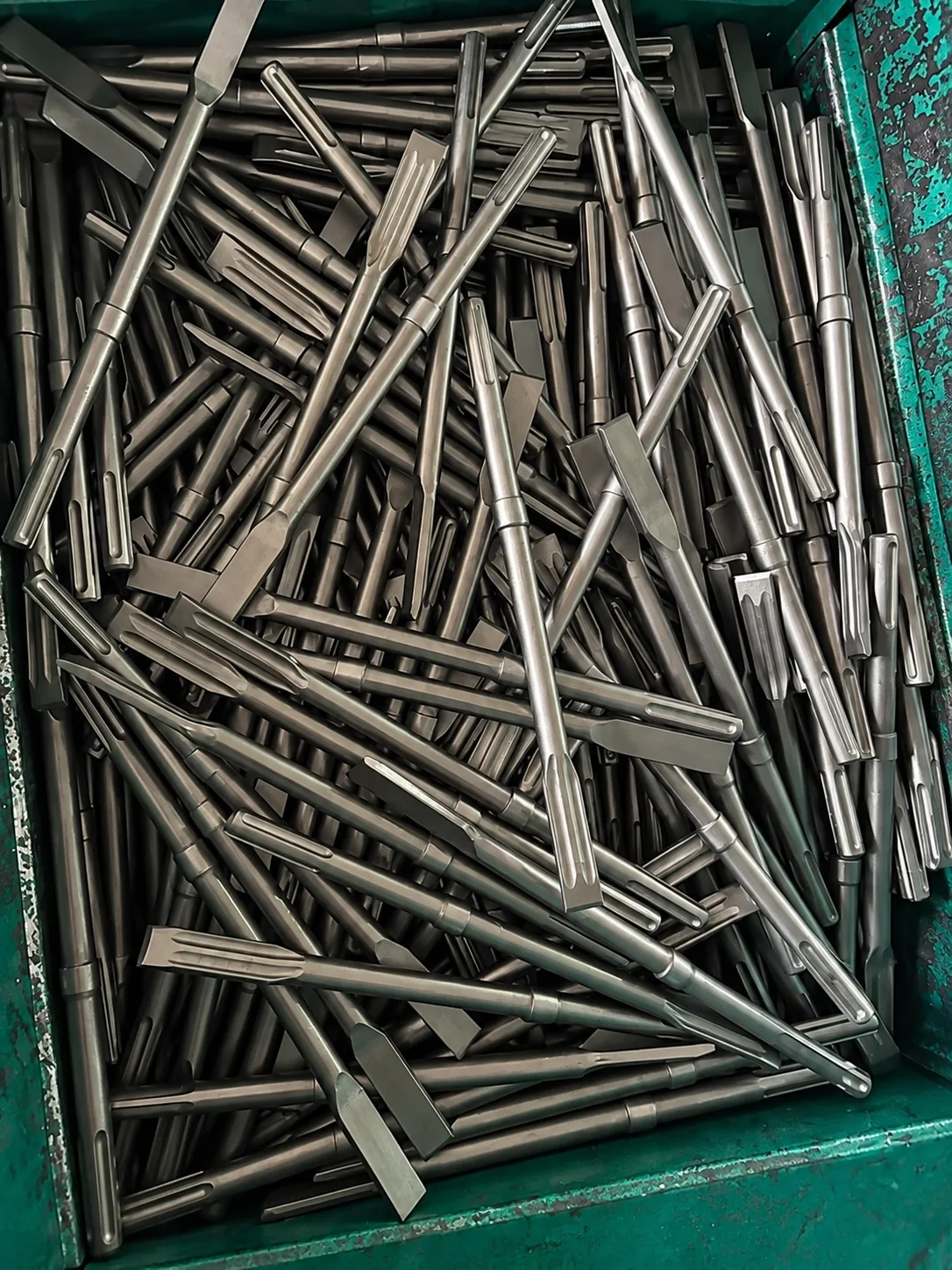
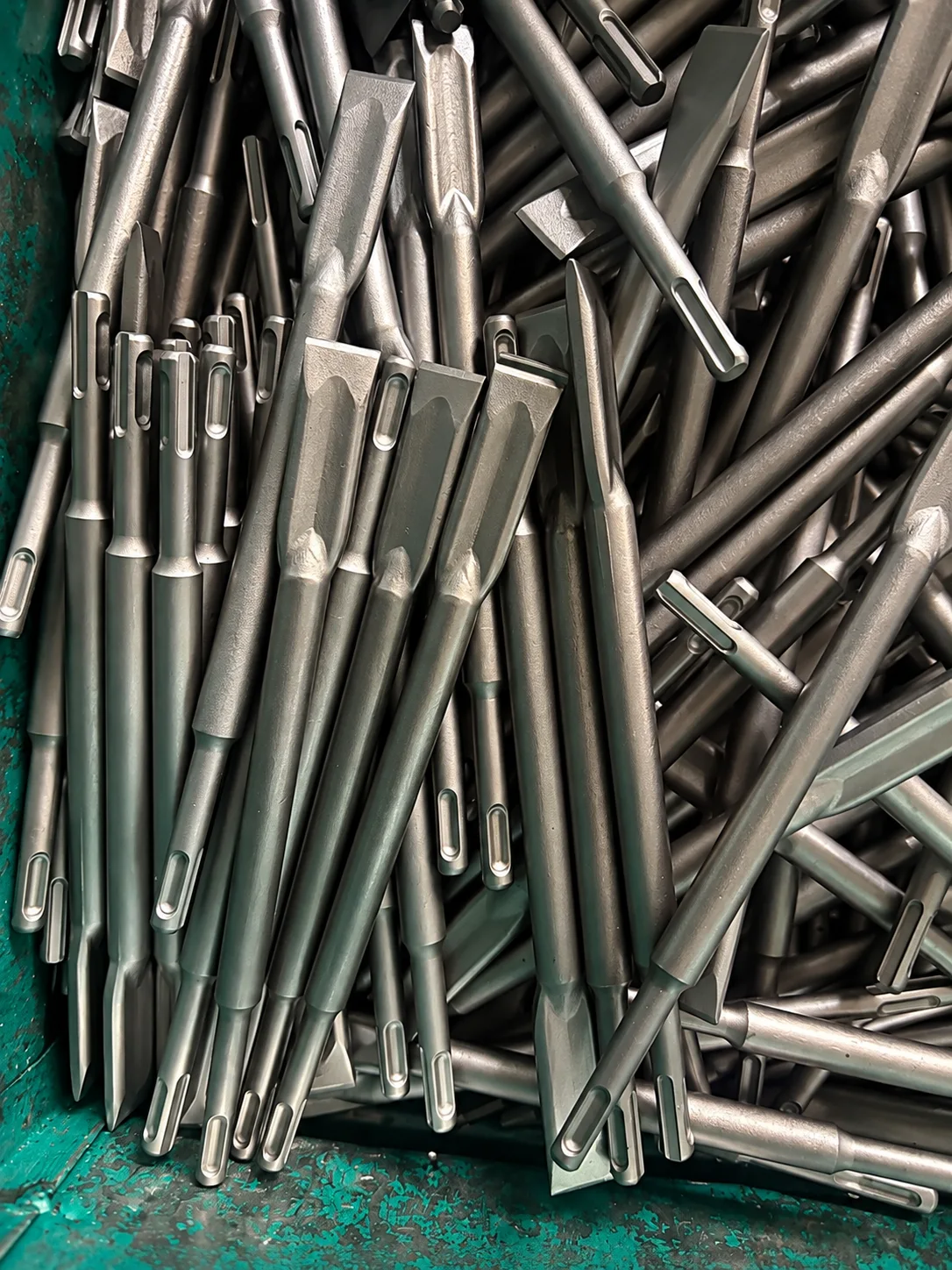
A renovation chisel must lift the unwanted layer while keeping the base usable for the next trade. We supply self-sharpening spade, chevron and tile-chisel options for repeated stripping, with the working width and shank matched to the hammer.
Separate the layer from the substrate
Start with what must come off: tile, hardened mortar, plaster or a thin adhesive residue. Then identify the base that must remain. A thick bonded layer may need a different edge and attack angle from a brittle tile on a sound screed.
Use a small trial area to establish whether impact removal leaves an acceptable base. Flexible adhesive films may suit a replaceable scraper blade; persistent thin coatings may require a separate grinding or PCD operation.
Choose the working edge before the width
Our self-sharpening spade uses a profiled working blade for repeated scaling. The chevron blade adds patterned working faces for mortar and plaster removal. An angled tile chisel improves access to the underside of a tile where the machine position allows it.
A wide blade covers more surface, but spreads the available impact. Select the width with hammer class, layer adhesion and working angle. Increasing width alone does not guarantee faster stripping.
Confirm the machine and sample behavior
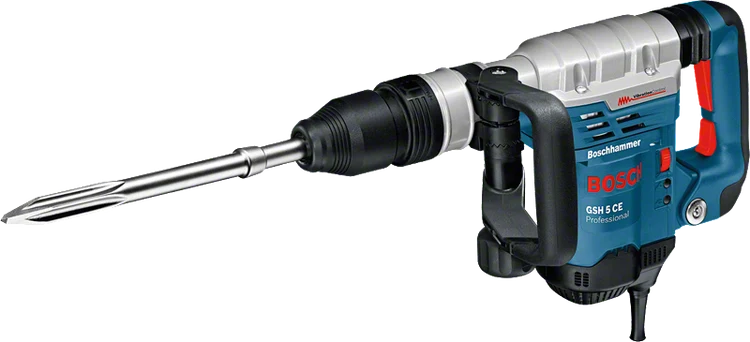
Provide the exact tool holder and hammer model, including the available chiselling mode. SDS-Plus, SDS-Max and hex interfaces require their own matching shank; a similar-looking rear end is not a compatibility check.
Compare samples on the same layer and base. Record useful area removed, remaining material, edge wear, bending and the amount of base repair needed. Stop the comparison when the substrate result is unacceptable, even if removal looks fast.
Supply a focused renovation assortment
We can quote a compact program of a tile chisel, a self-sharpening spade and a chevron blade, selected for your actual jobs. Agree dimensions and sample acceptance first, then add marking, packaging and quantities.
For repeat supply, retain the approved working-end profile and shank specification. Send wear or damage photos with the machine and layer details when asking us to adjust a design.
Choose the tooling direction
| Job condition | Starting configuration | What to check |
|---|---|---|
| Tiles with an accessible bond line | Angled tile chisel | Edge access and base damage |
| Mortar / plaster build-up | Self-sharpening spade | Removal area and edge wear |
| Repeated scaling | Chevron blade | Control and residual layer |
| Flexible adhesive film | Replaceable scraper option | Blade contact and residue |
Send these details for a tooling quote
- Layer to remove and base to preserve
- Hammer model and shank
- Blade width and overall length
- Quantity and packaging
- Photo of the working surface or current tool
Request a matched tooling quote
Review the product range · Related application program