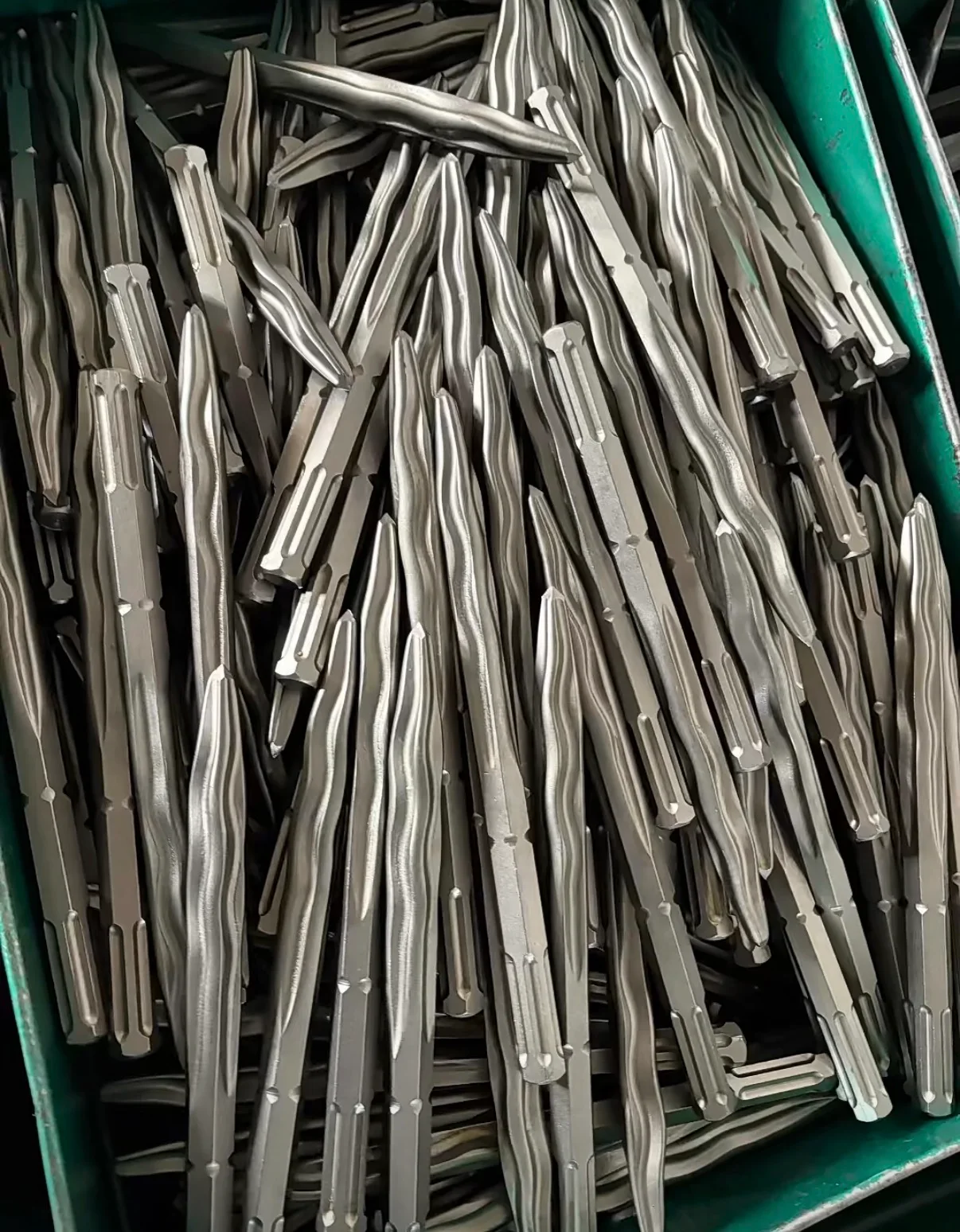

Start with what you need to remove and the machine you will use. Then select the working end, reach and assembly. A point chisel, a self-sharpening profile and a replacement scraper blade describe different things; they should not be treated as interchangeable product types. This guide covers SDS-Max configurations. Our wider product selector also includes other interfaces, so choose SDS-Max before requesting a machine match.
Choose by task
| Task | Working-end choice | What to match |
|---|---|---|
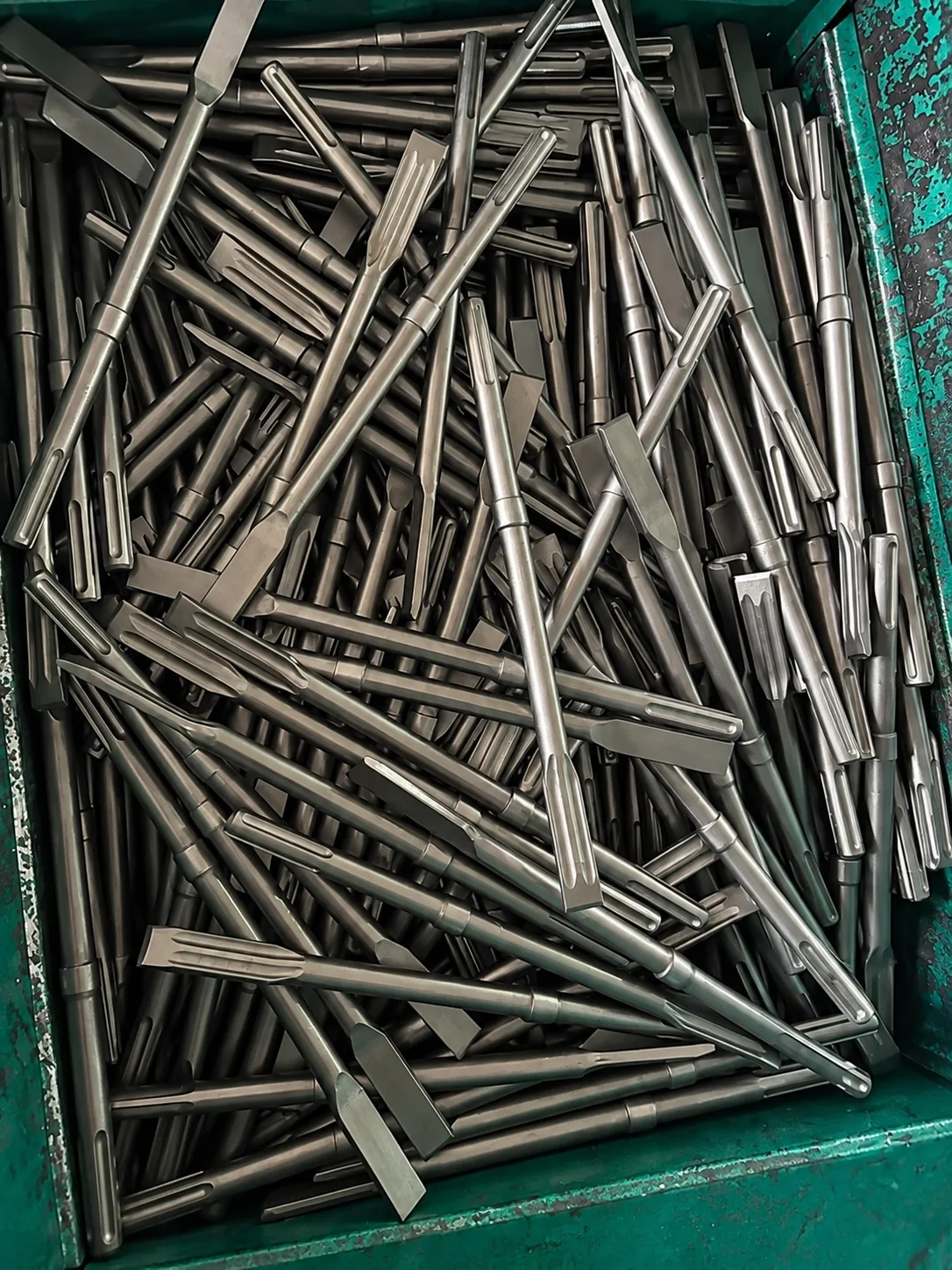
| Concrete breaking | Conventional point or flat; profiled point where sustained breaking is the priority | A point starts concentrated fractures. A flat edge gives directional control for trimming and boundaries. View matching tools → |
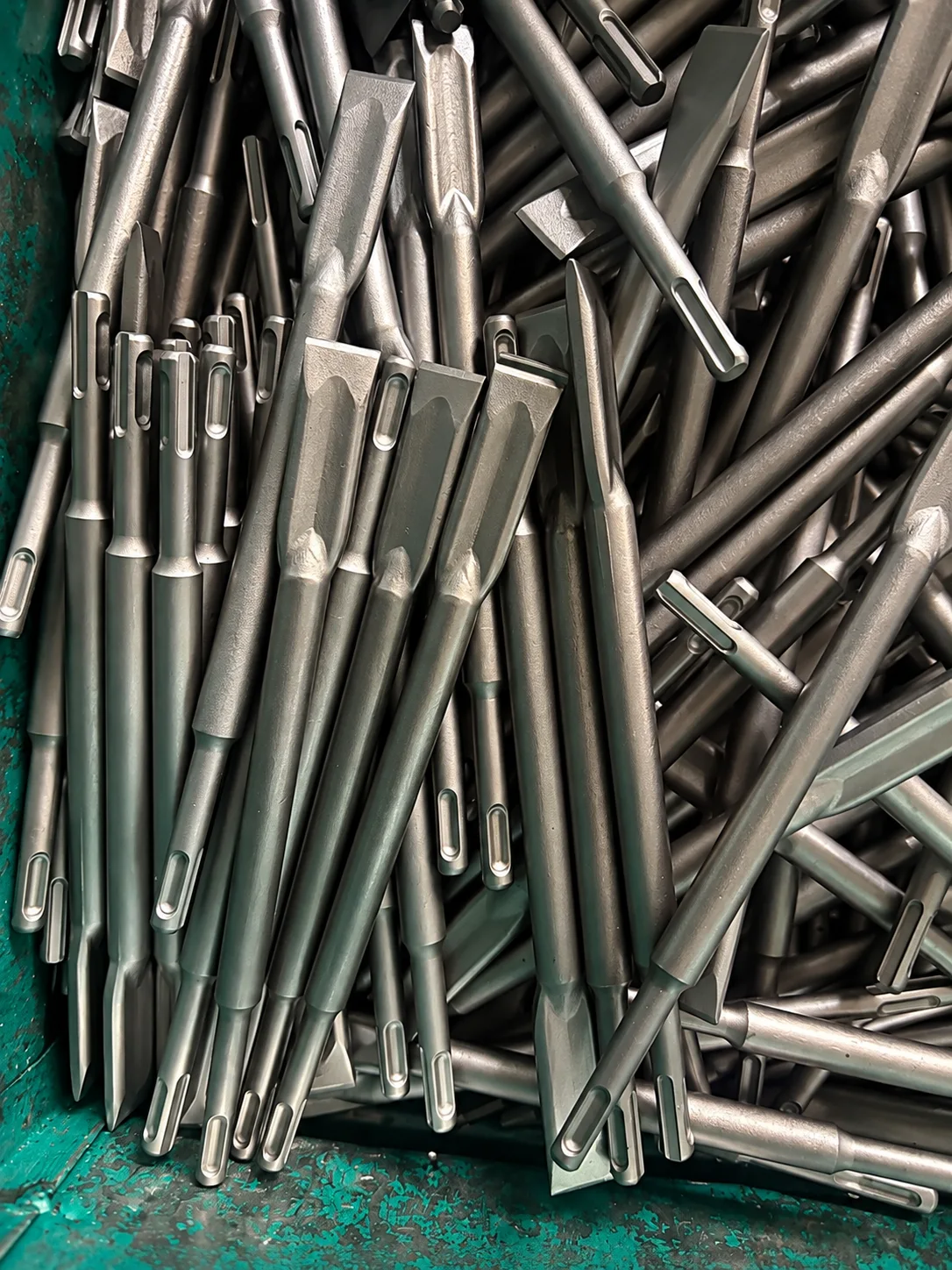
| Tile, mortar and floor layers | Tile chisel, scaling chisel or replaceable-blade scraper | A forged tile chisel gets beneath rigid tile and bedding. A bolted scraper is a separate blade-and-holder assembly for the specified floor layer. Choose angle and width for access. View matching tools → |
| Channels and mortar joints | Gouge, winged channel, narrow slotting or mortar-raking profile | Match the channel width and shape. A narrow offset mortar tool works in joints; it is not the same working end as a broad wall-chasing gouge. View matching tools → |
| Road and ground work | Asphalt cutter, clay spade or digging spade | Use a pavement-cutting profile for asphalt edges and a soil-working spade for ground loosening. Confirm the complete SDS-Max configuration and machine duty. View matching tools → |
| Surface texturing | Bushing tool | A multi-point face roughens concrete for surface preparation. It is a separate tooling category, not a flat chisel or floor scraper. View matching tools → |
Understand working-end profiles
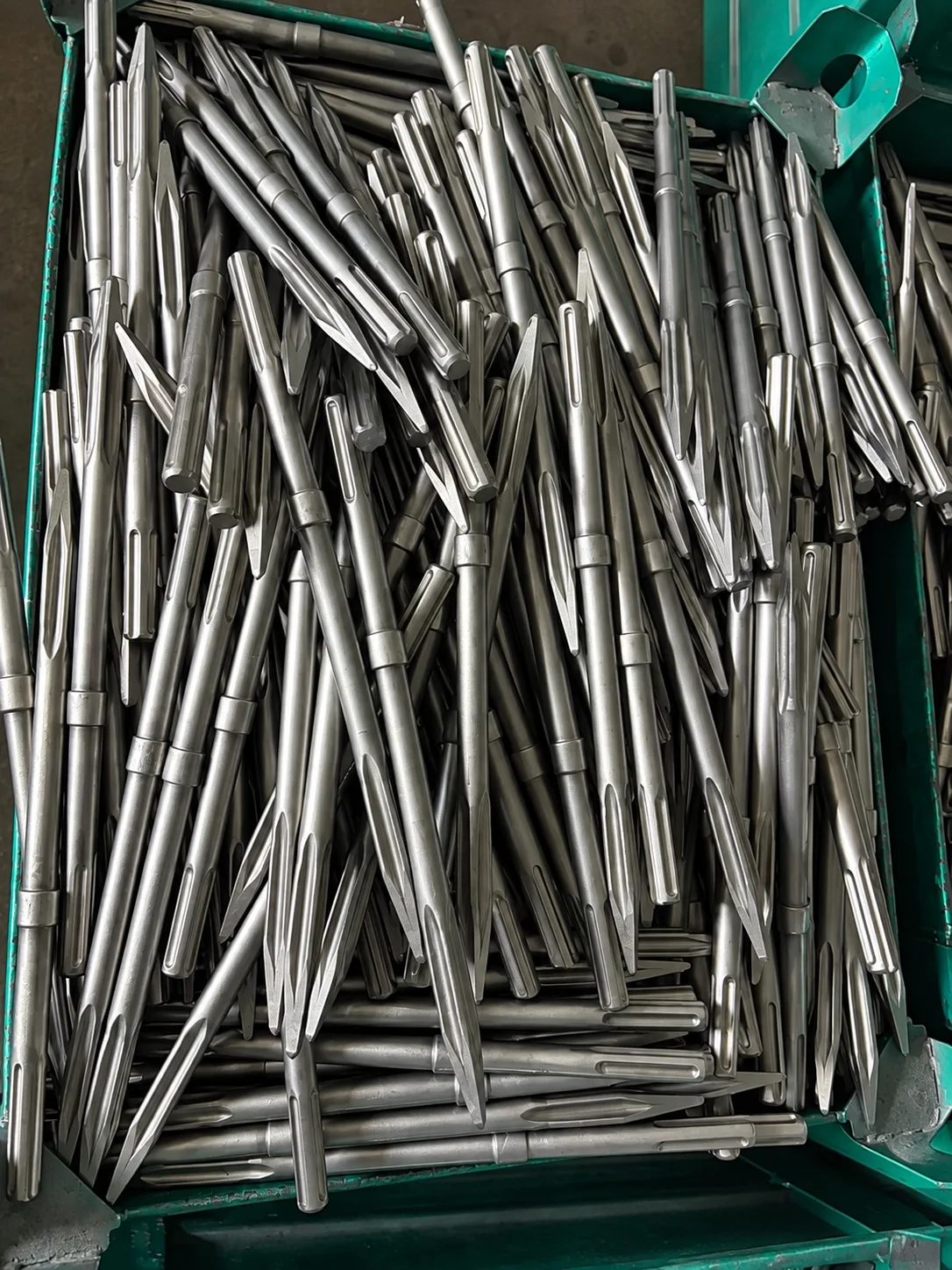
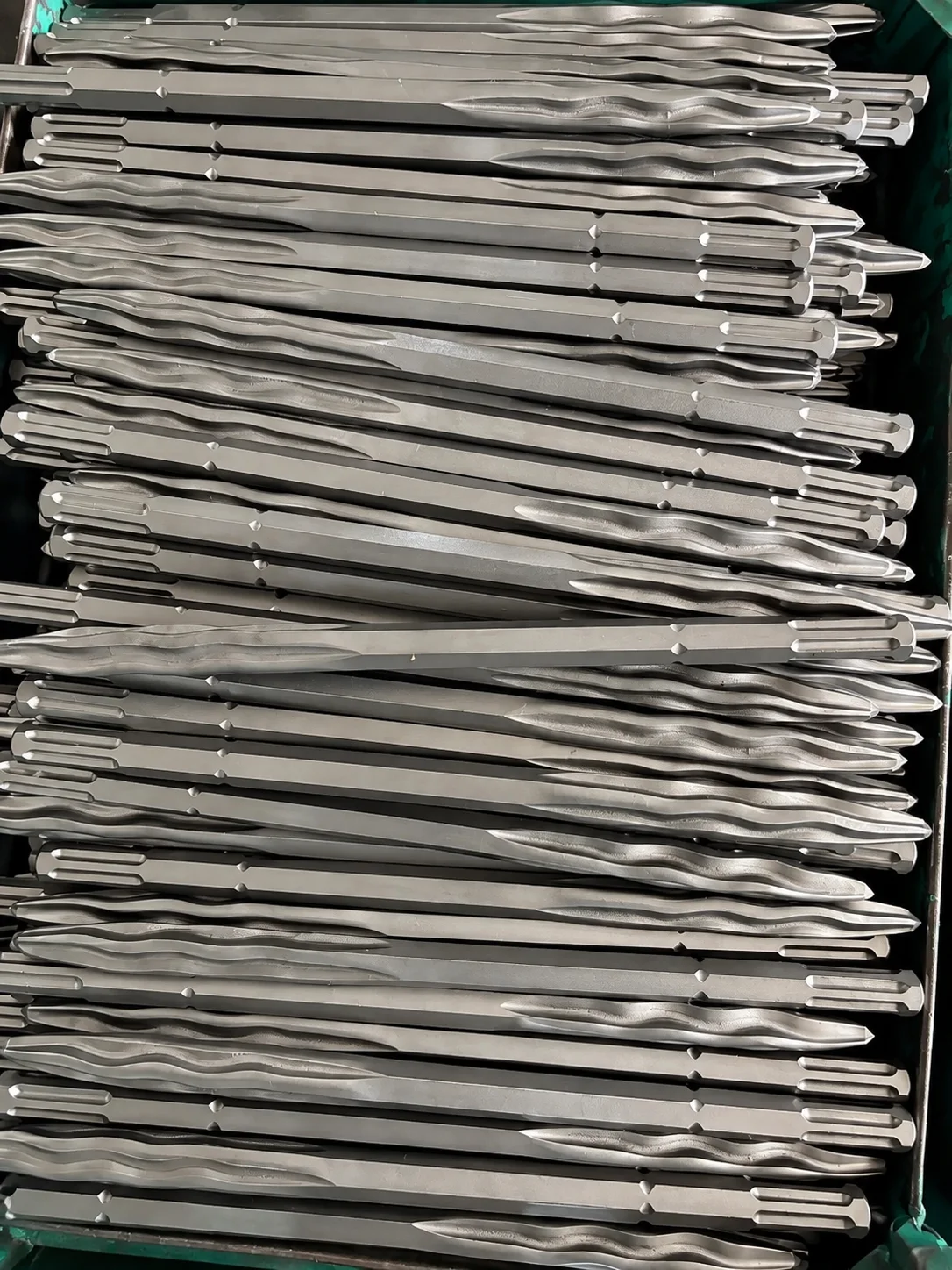
Conventional point and flat: basic working-end shapes for concentrated or directional impact. Star Profile: a multi-ribbed, twisted working-zone geometry, especially useful for describing our featured point chisel. Wave / polygon profiles: other shaped working zones; compare their actual ribs, valleys and tip rather than treating the names as one standard. Chevron: a V-patterned face used on specified self-sharpening variants.
Self-sharpening describes a function: the wear pattern is designed to preserve useful working edges. It does not mean zero wear or identical behaviour across every profile. R-Tec is Bosch product/technology terminology, and PH-65A is a machine model; neither names our Star Profile geometry. The profile describes the working end, not the shank.
Star Profile for concrete breaking
Keep Breaking. Spend Less Time Freeing a Stuck Chisel.
Our Star Profile SDS-Max point chisel combines a self-sharpening working geometry with a forged 42CrMo body for demanding concrete breaking. The profiled point is designed to retain effective working edges as it wears, while relief around the working end helps reduce binding in the broken material.
Self-sharpening geometry
Raised working edges and recessed relief define the star-profile point. We position it for sustained breaking with fewer interruptions for tip maintenance; actual wear and output depend on the concrete, machine and technique.
Less binding, efficient breaking
The relieved profile gives broken material clearance around the point. It is designed to help the chisel release more readily as work advances. Choose the point for concentrated breaking; use the complementary flat chisel for controlled edges and the wide chisel for surface removal.
42CrMo forged body
Our premium Star Profile point uses a forged 42CrMo body with heat treatment matched to repeated impact. Working-end geometry, steel and heat treatment work together; the SDS-Max shank provides the specified machine interface.
Build your OEM chisel range
Send the hammer model, chisel type, overall length, blade width where applicable, target material and quantity. We match the star-profile point, flat and wide-chisel configurations to your range and confirm samples, marking and packaging.
Request Star Profile SDS-Max Chisels →
Check the interface and dimensions
An SDS-Max shank has a nominal 18 mm diameter with three open drive grooves and two closed retention grooves. SDS-Plus, Hilti TE-S and hex interfaces are separate systems. An SDS-Max fit alone does not approve every length, width or accessory for every hammer: check the machine model, chiselling mode and the manufacturer’s accessory guidance.
Specify overall length and blade width separately. For a point, describe the point geometry instead of inventing a blade width. A shorter tool can improve access and control; a longer one provides reach but changes handling and bending loads. Width follows the removal layer and machine capacity. Any illustrated or catalogue size is a reference until the exact configuration is confirmed.
For a mixed-interface catalogue, match the complete insertion and retaining geometry. Hex across-flats size alone is insufficient; collar and retention features matter. On the product page, select the SDS-Max filter and then the relevant job family.
Steel and heat treatment
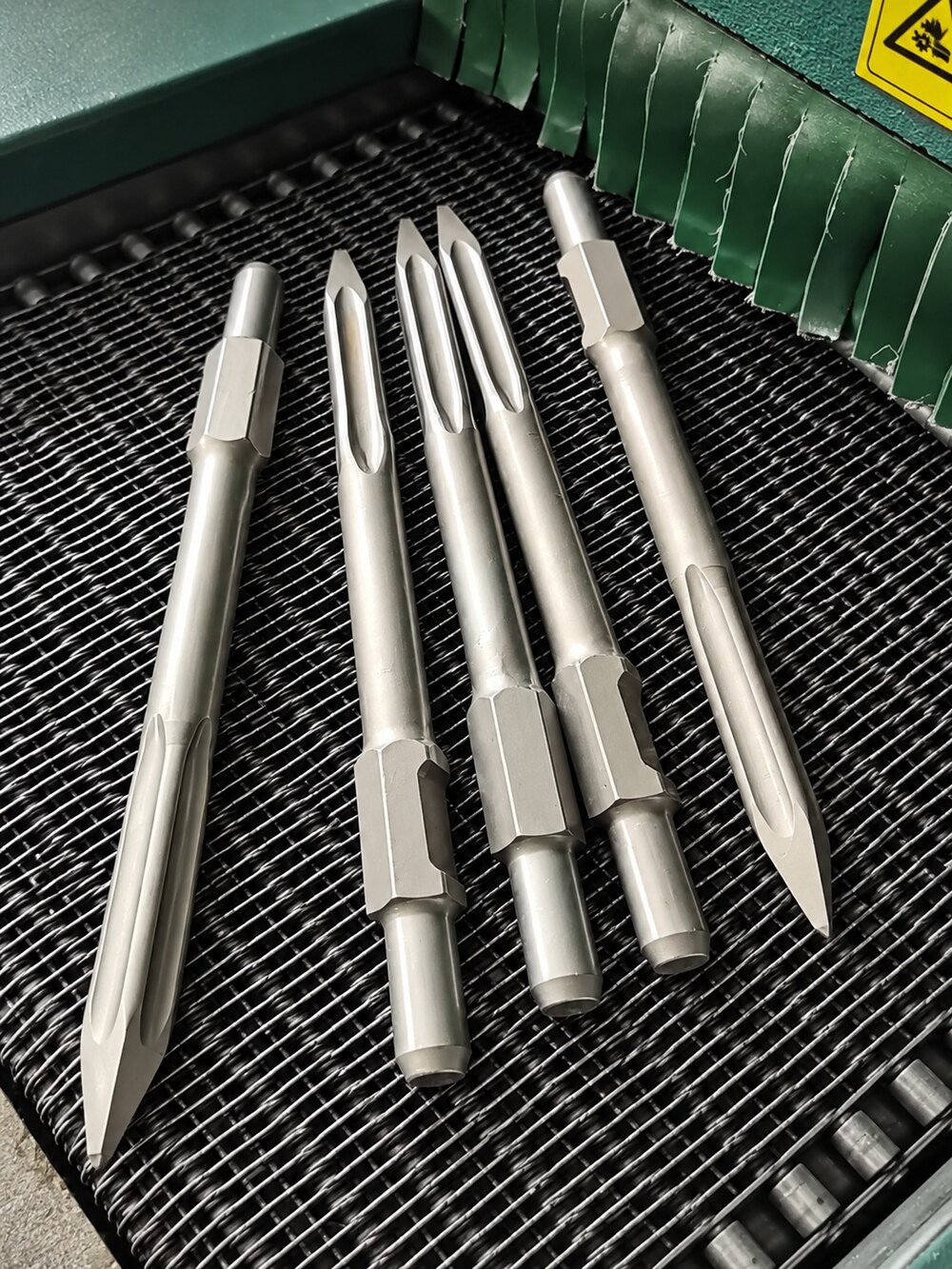
Our premium demolition chisels use 42CrMo alloy steel, including the forged Star Profile point. We match the working-end geometry and heat treatment to the intended impact duty. The goal is a working end that resists deformation with a body and shank that tolerate repeated loading.
40Cr remains a separate material option in the wider chisel market. It is not a blanket specification for our premium range. Steel designation alone does not establish performance: forging quality, heat-treatment route, transitions, dimensions and acceptance checks must be agreed together. We specify these for the order rather than assigning one hardness value to every surface of every chisel.
Accessories and replacement assemblies
Replaceable scraper systems: order the complete tool or identify the blade, holder and fasteners separately. Blade width, thickness, hole spacing and fixing hardware must match; a spare blade is not a complete SDS-Max chisel.
Rod drivers: match the driver socket to the rod head and the approved machine operation. Tamper systems: distinguish the stem, pad and retaining connection; specify the assembly for the backfill task.
Adapters: describe both ends in drive order: machine-side male shank → accessory-side female holder. For example, an SDS-Max male → SDS-Plus female adapter accepts an SDS-Plus accessory only where the adapter and machine instructions permit that combination and operating mode. A hammer-only breaker does not become a rotary drill through an adapter. Avoid inferring compatibility from a photograph or reversing the stated direction.
Care, wear and machine matching
Clean and lubricate the insertion end as directed by the hammer manufacturer, using the specified grease. Inspect the working end, shank and retaining features before use. Follow the approved procedure for regrinding a serviceable conventional chisel; do not assume a profiled self-sharpening tip can be restored with the same grinding shape.
Retire cracked, bent or seriously damaged tools. Avoid side-loading and prying with the chisel. Match the tool to the machine’s approved accessory range rather than a universal joule-versus-length rule. For sample evaluation, compare on the same substrate and hammer and record binding, tip wear, removal progress and operator handling.
Turn the selection into an RFQ
Send the machine model or holder photo, material and removal task, selected profile, overall length, blade width where applicable and quantity by configuration. List spare blades, holders, tamper pads and driver sockets separately. We confirm the SDS-Max assembly, 42CrMo premium specification, marking, packaging and sample plan before production.
Compare profiles and build an RFQ → · Request a machine match →
Inside our production
Zhonghuan pointed and flat chisel production gallery
Our production photos show chisel working ends, body profiles and shank details. For an OEM range, send us the working-end type, shank, dimensions and quantity so we can prepare a specification and sample proposal.