

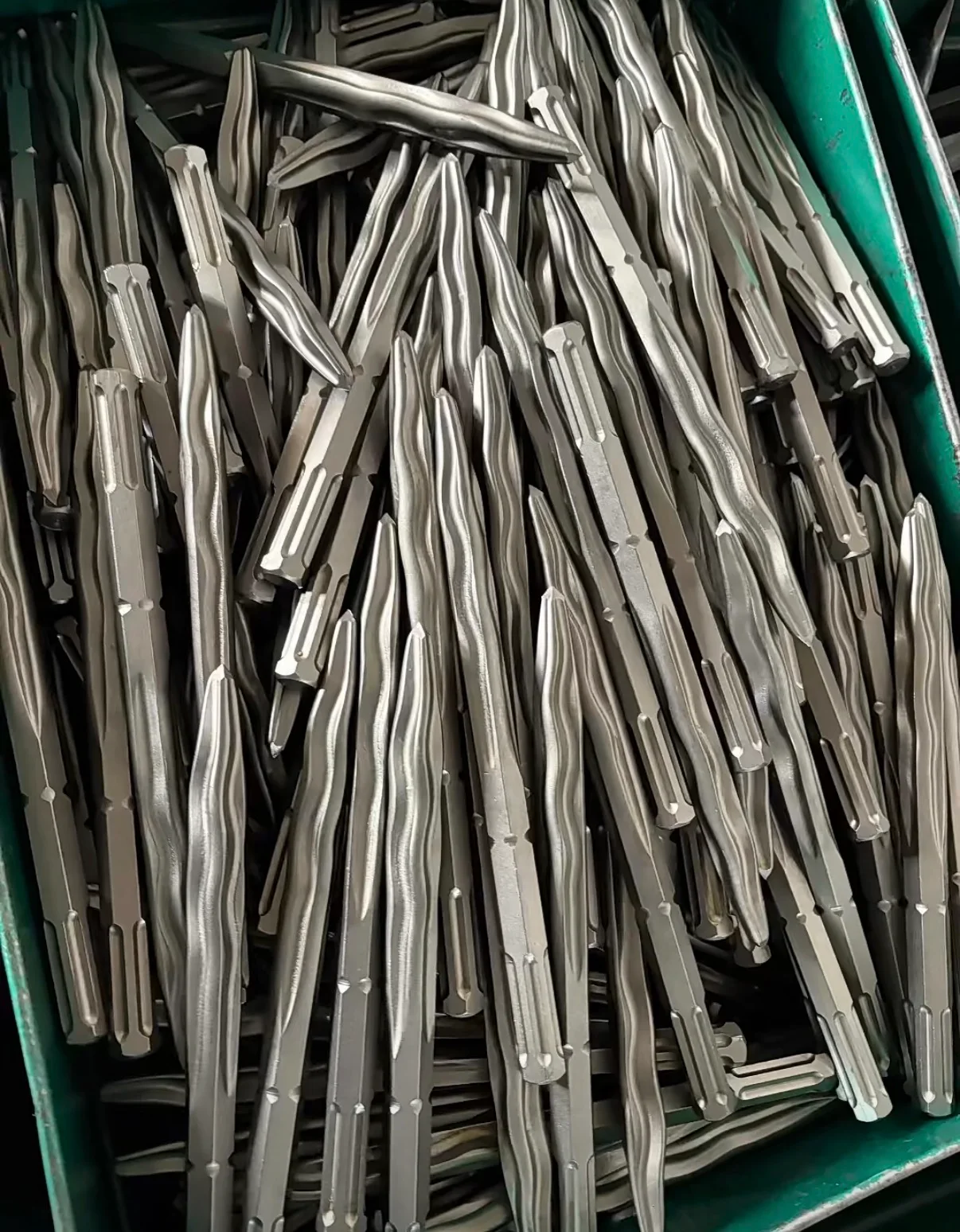
Our premium demolition chisels use 42CrMo chromium-molybdenum alloy steel. We combine this material with heat treatment, working-end geometry and a machine-matched shank to build a professional range for repeated impact work. For the buyer, the deliverable is a chisel specified for the job, with the dimensions, marking and packaging needed for a repeatable OEM order.
Start with the concrete and the hammer
Dense concrete, hard aggregate, mortar and bonded floor layers place different demands on a chisel. A pointed end concentrates impact to start a fracture; a flat edge controls the removal line; a wide or angled blade works across a layer. Where reinforcement interrupts removal, the working method and tool choice need to account for the steel as well as the concrete.
We first match the substrate and task to the machine platform, impact energy where known, working length and access. A heavier hammer and a longer exposed tool change the load path. That is why our selection begins with Machine + Task and moves into dimensions during the RFQ.
Why our premium range uses 42CrMo
42CrMo gives our premium chisel program a chromium-molybdenum steel foundation for the required strength and toughness balance. The engineering objective is to resist permanent bending and premature fracture while maintaining a useful working-end profile under repeated impact. Heat treatment and section geometry turn that material choice into a finished tool.
For material context, Ovako describes 42CrMo4 as a quench-and-temper steel combining strength and toughness. Our specified grade is 42CrMo; an EN 42CrMo4 or SAE 4140 requirement is reviewed against the requested standard and material specification before substitution.
Heat treatment makes the steel work for the application
Our high-end specification pairs 42CrMo with the heat-treatment requirement for the tool section and hammer duty. The working end needs resistance to deformation and wear; the body, transition and retaining features must tolerate repeated impact. We set the finished requirement around those functions.
A single headline HRC number cannot describe all of them. Excessive hardness can sacrifice fracture resistance, while an overly soft working end can roll or flatten. Hardness locations, acceptance limits and any sample comparison belong to the agreed product specification. Buyers can send the present failure mode; our team handles the material and geometry match.
Four breaking profiles, one premium material direction
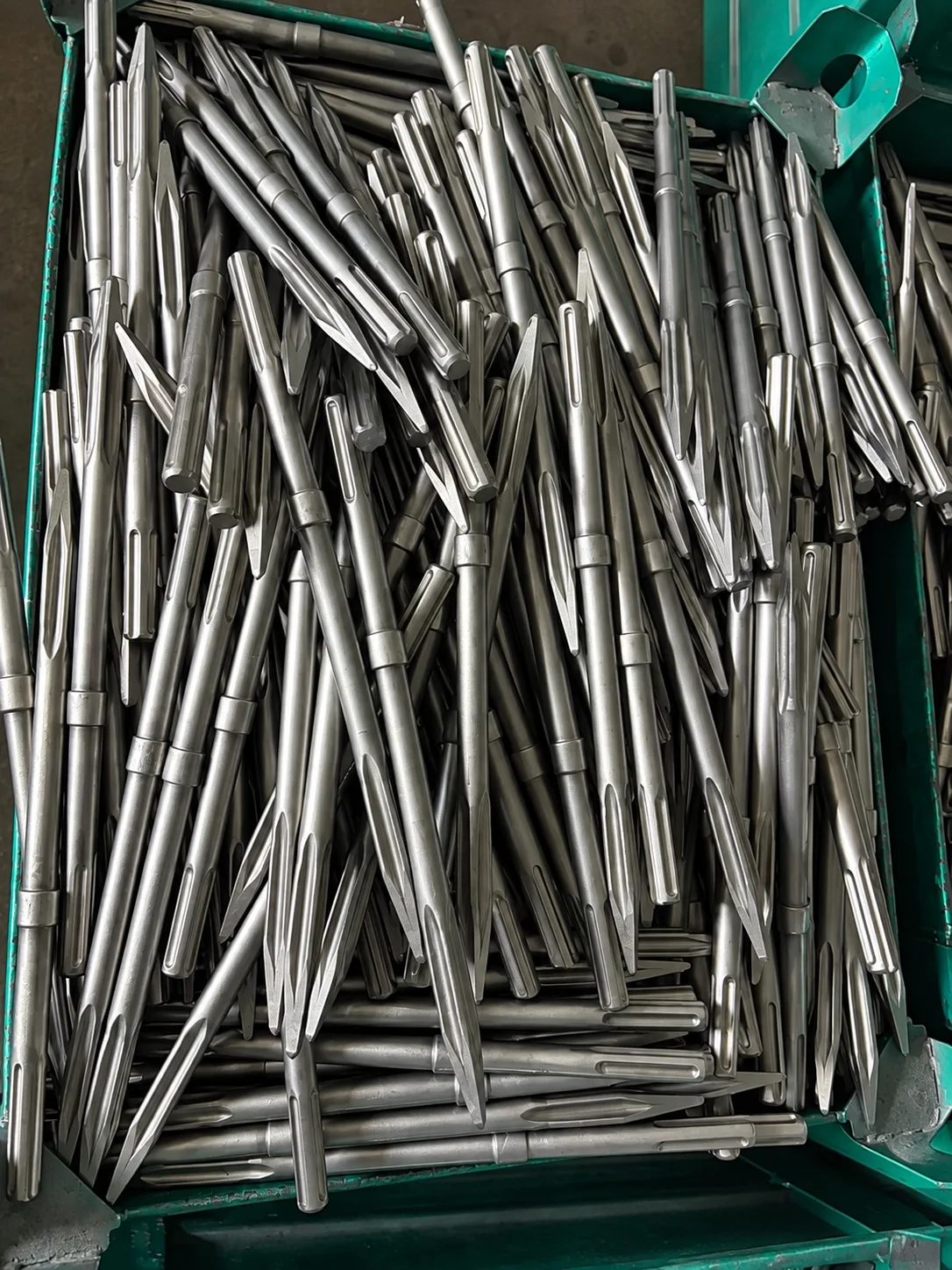
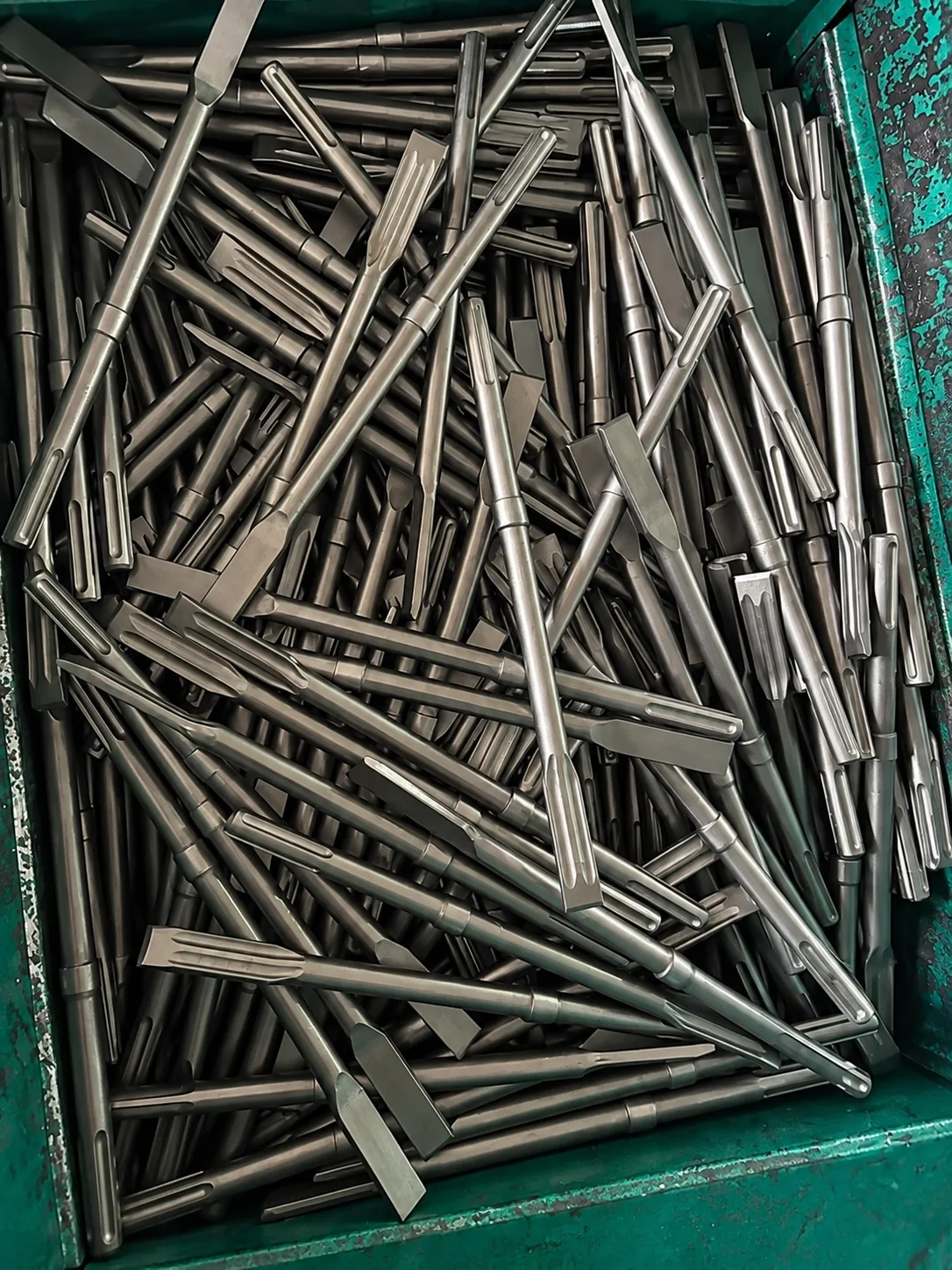
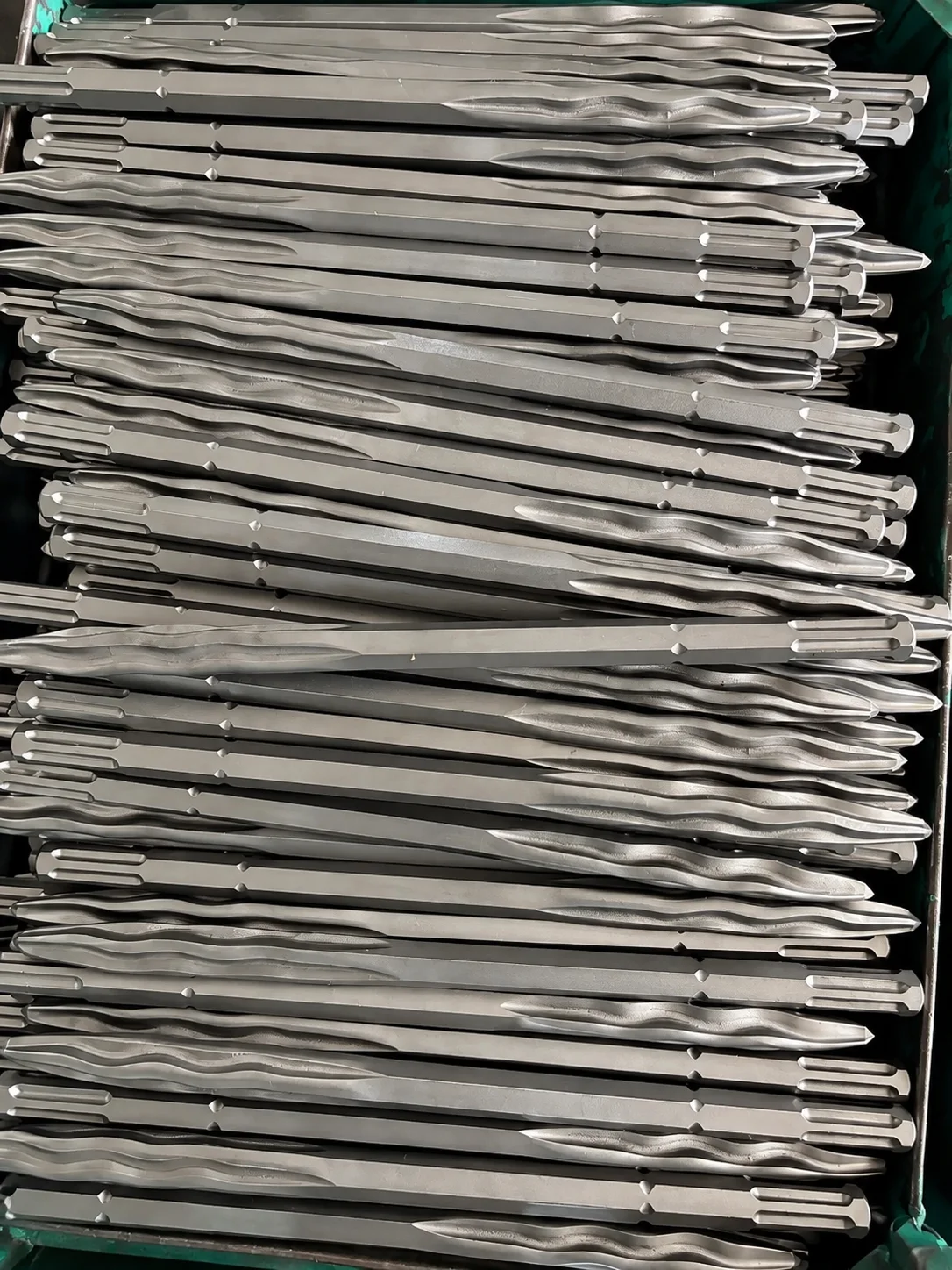
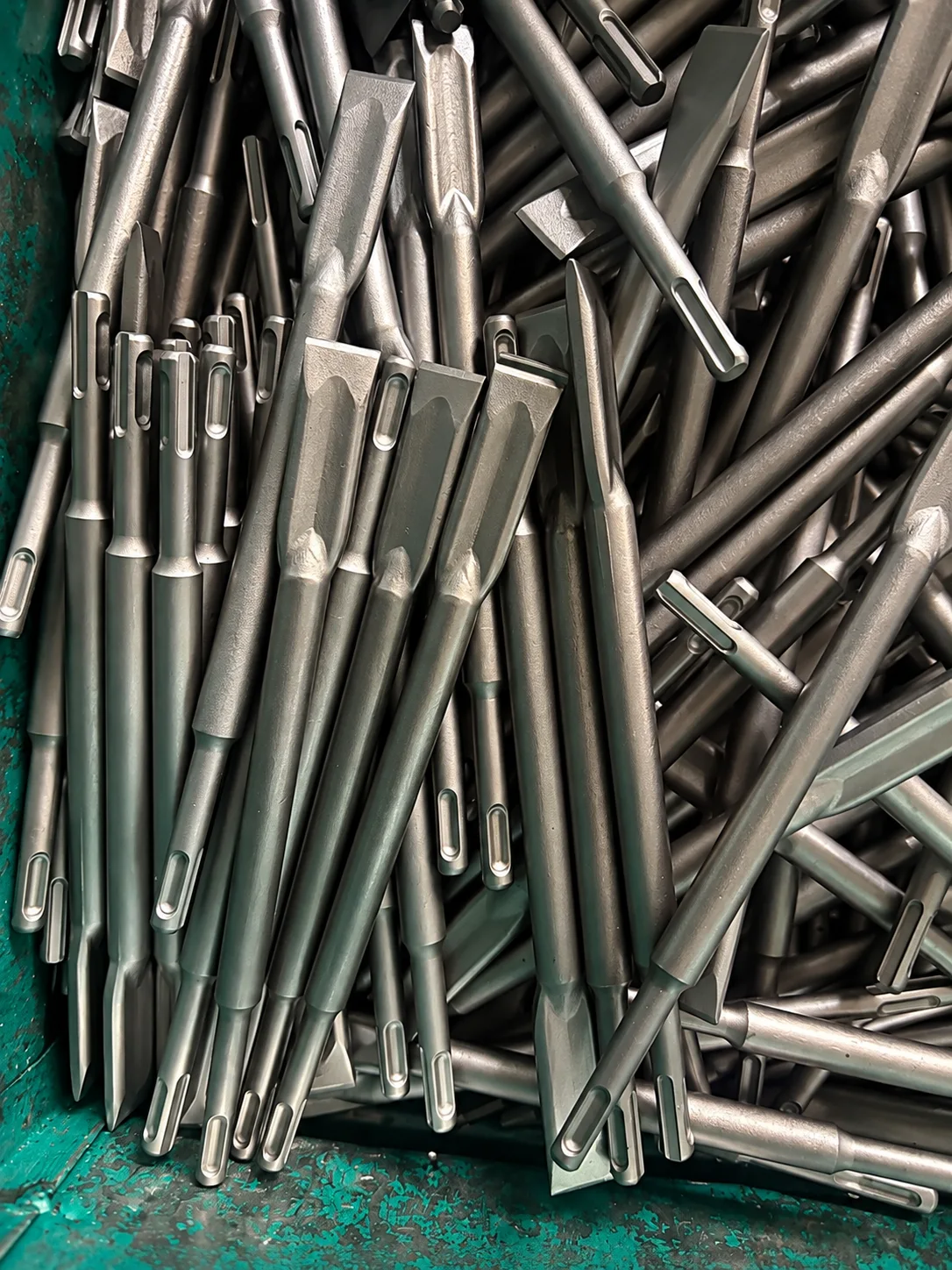
Our pointed and flat chisels cover focused breaking and controlled removal. The self-sharpening pointed profile adds formed flutes around the working tip; the self-sharpening flat profile uses ribs and grooves around the cutting end. These shapes influence how the end wears and engages the work. They are selected together with the body section and machine.
Self-sharpening describes the working-end design. It does not make the interface universal or remove the need to match the tool to the task. We confirm SDS-Plus, SDS-Max or the exact hex-shank retaining geometry separately, then agree overall length and edge width.
Keep complete tools and service parts easy to order
A distributor needs a coherent range: breaking chisels, tile and scaling tools, channel profiles, floor scrapers and task-specific breaker tools. We help structure that range around the machines and jobs your customers already use.
Replacement scraper blades, fastener kits, stems, holders and tamper spares sit in a dedicated accessories section. They can be included in the same RFQ as the complete tool. The 42CrMo premium-chisel specification applies to the specified chisel models; each replacement blade, fastener or carbide working end has its own material and mating requirements.
From an approved sample to the next order
Send the machine model or holder photo, material and task, preferred length or width, and quantity by size. We return a proposed profile, interface and 42CrMo premium specification. If you have a current tool to improve, add a photo and a short description of the wear or breakage.
The order then brings together the drawing, material grade, working dimensions, fit requirements, finish, marking and packaging. A retained approved sample and agreed specification give the next order a clear reference. Your team chooses the commercial range; we handle the detailed tool match.

