

Zhonghuan self-sharpening chisels: product photos and application choices
We supply self-sharpening point and spade chisels alongside wave-profile demolition points and chevron scaling blades. Build a professional accessory range around the work: concrete breaking, mortar removal, tile stripping and surface scaling. These six product photos come from our chisel catalog; we match the working end, body and shank to your hammer and target job.
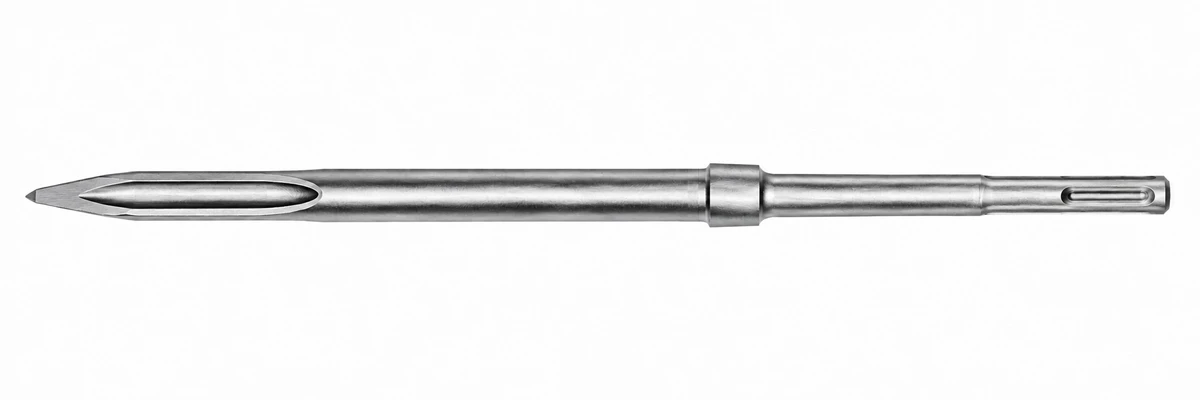
Self-sharpening point chisels
Profiled points for repeated concrete breaking, with geometry selected for the hammer class.
- Overall length, body section and machine interface.
- Specify the hammer model, shank and working dimensions for your sample.
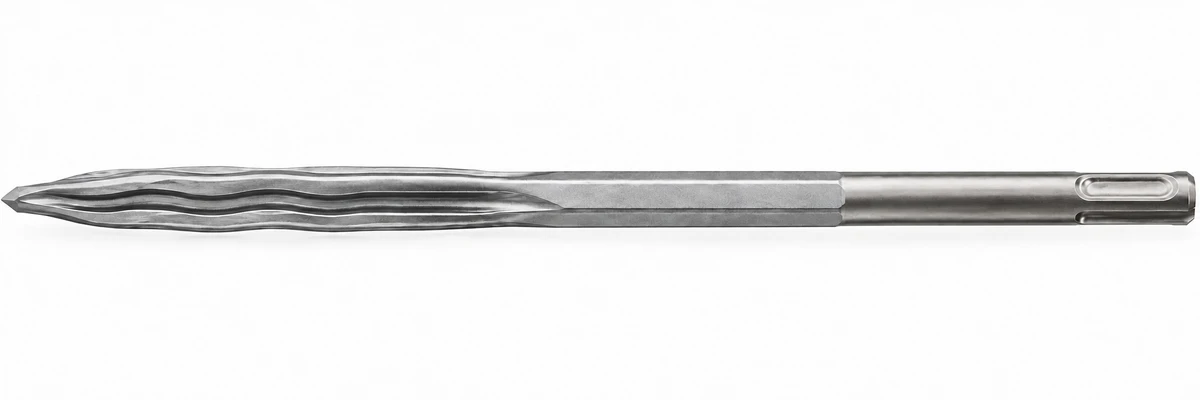
Polygon-body wave-point chisels
Gentle wave ribs join a polygonal working body; the shank and working dimensions are matched to the selected machine.
- Machine model, overall length, working section and intended chiselling task.
- Specify the hammer model, shank and working dimensions for your sample.
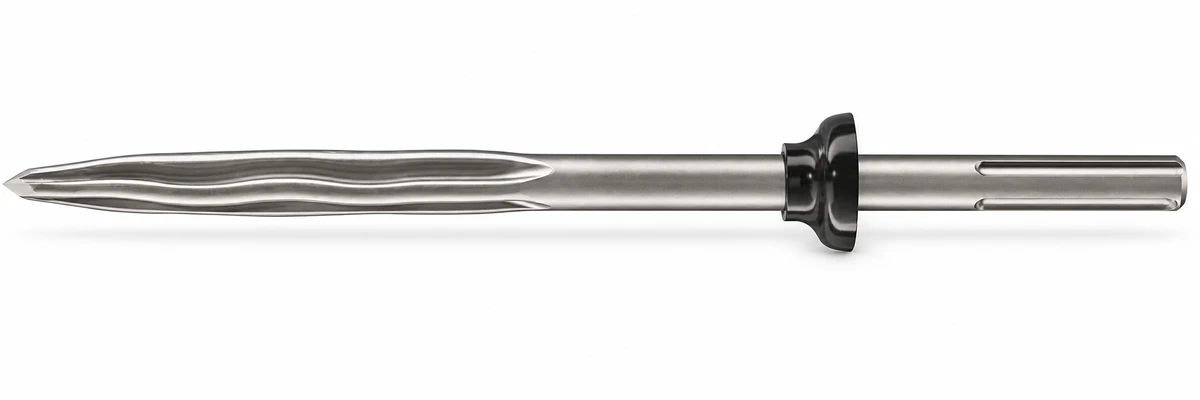
Slender wave-point chisels
A slender wave working zone joins a cylindrical body, with relief channels for debris release.
- Hammer model, overall length, working-zone profile and target breaking task. Confirm the shank and sample together.
- Specify the hammer model, shank and working dimensions for your sample.
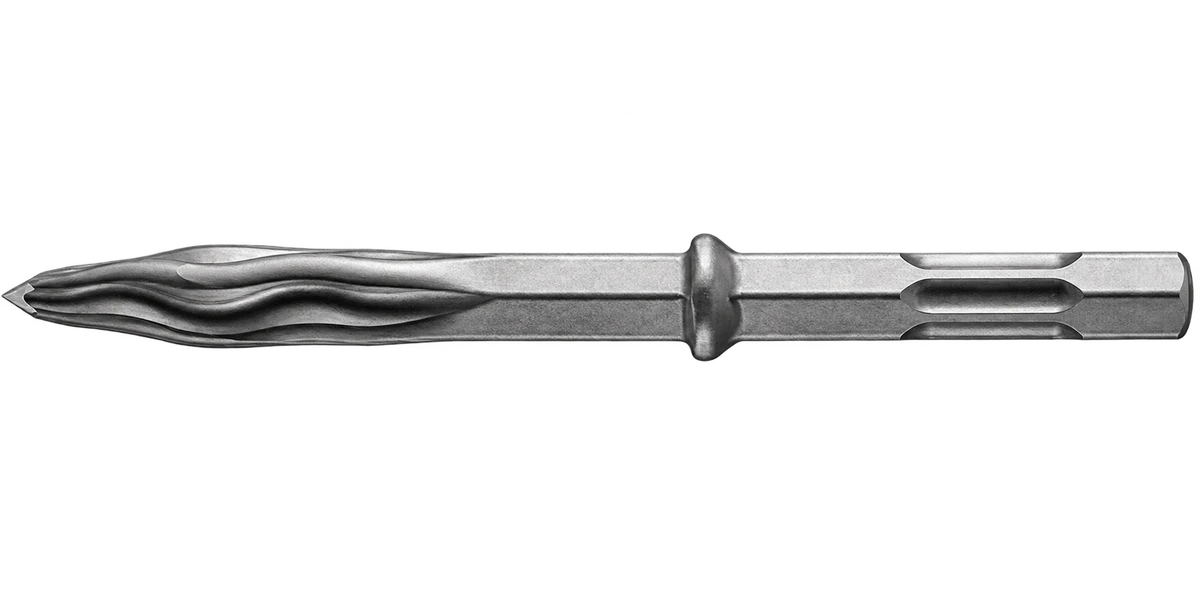
Broad-wave pointed chisels
Pronounced broad ribs and relief valleys form the working end; body and shank are matched to the impact duty.
- Machine model, shank interface, overall length and working-zone profile.
- Specify the hammer model, shank and working dimensions for your sample.
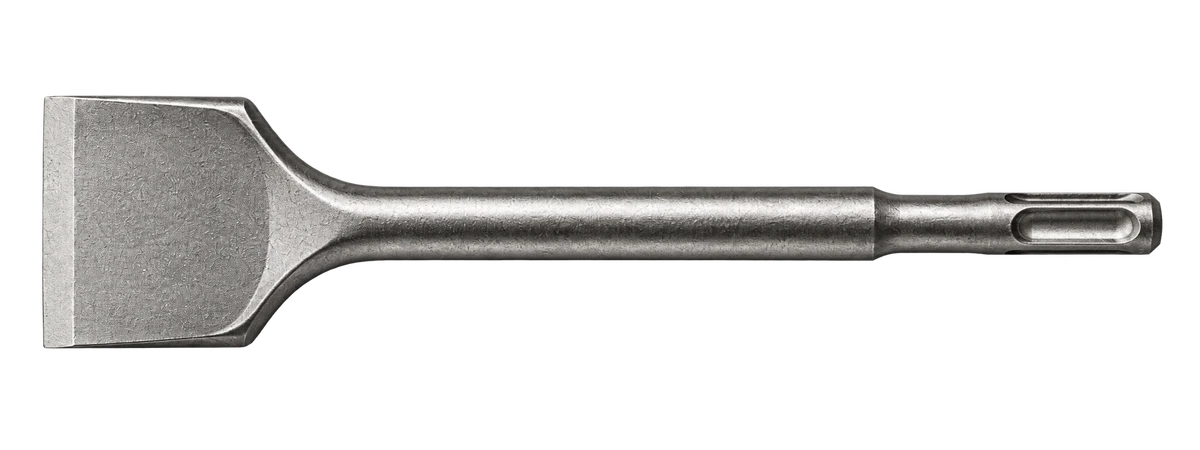
Self-sharpening spade chisels
A shaped rib or recess runs into the working blade for repeated scaling and stripping.
- Edge width, layer condition and machine class.
- Specify the hammer model, shank and working dimensions for your sample.
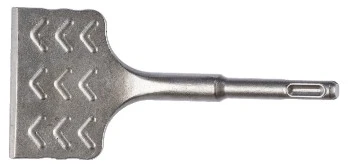
Chevron self-sharpening chisels
Chevron-patterned blade faces for mortar, plaster and tile-removal programs.
- Edge width, layer condition and machine class.
- Specify the hammer model, shank and working dimensions for your sample.
Who actually makes SDS chisels: the global landscape
SDS-Plus and SDS-Max chisels are supplied through two channels: premium power-tool brands — Bosch, Hilti, Makita, DeWalt, Milwaukee — whose self-sharpening and Longlife chisel programs set the reference for steel grade, hardness gradient, and shank tolerance, and factory-direct OEM manufacturers that forge and heat-treat to the same specifications for private-label demolition-accessory programs.
This guide covers the premium benchmarks, the factory-direct OEM route — including where Zhonghuan fits — and the chisel-specific quality variables (steel, heat treatment, straightness, shank fit) that decide whether a chisel survives the job site.
China's SDS chisel supply base
SDS chisels look simpler than drill bits, but sourcing quality still depends on disciplined heat treatment, steel control, straightness, edge finishing, and fit consistency at the shank. China offers strong capacity for pointed, flat, wide, and channel chisels, especially from factories already serving hammer-drill and demolition accessory channels.
This page is a practical shortlist for importers and distributors. It is not a fixed ranking. Use it as a starting point, then validate with field testing, hardness checks, and the same commercial discipline you would apply to any OEM accessory program.
What Quality Actually Looks Like in SDS Chisels
Most SDS chisel failures trace back to one of three production decisions, not the chisel shape itself:
| Variable | Good Practice | Common Shortcut | Field Symptom |
|---|---|---|---|
| Steel grade | 40Cr alloy steel | 45# carbon steel | Edge mushrooms within 50 blows on concrete |
| Heat treatment | In-house induction, HRC 42–46, batch records | Outsourced batch, HRC 35–40 | Rapid edge dulling, bending under lateral load |
| Straightness | CNC-straightened after heat treatment, ≤0.3mm/300mm | Hand-straightened, no spec | Vibration off-axis, creates oval hole, user fatigue |
| Shank fit | Ground to SDS-Plus/SDS-Max tolerance, ±0.05mm | Forged but not ground, tolerance ±0.2mm | Chuck rattle, energy loss, premature bearing wear in hammer |
The key question to ask any factory: "Can you provide the last 3 batches of Rockwell hardness test records for your SDS chisels?" A factory with in-house heat treatment and real QC will answer immediately. A trading company or low-process factory will give a vague response about "meeting international standards."
Premium global brands: the specification benchmarks
These are the chisel programs buyers benchmark steel grade, hardness gradient, and shank tolerance against:
- Bosch SDS Chisels (Germany): Global volume leader in SDS chisels. The Longlife and Self-Sharpening (SelfSharp) chisel programs define the mainstream European pro-retail standard. Anchor reference when buyers specify forging quality, shank tolerance, and working-end hardness.
- Hilti TE-C / TE-Y Chisels (Liechtenstein): Premium construction-brand chisel lines specified by top-tier professional contractors for continuous-duty demolition work. Reference standard for self-sharpening tip geometry and shank heat treatment.
- Makita SDS Chisels (Japan): Global power-tool ecosystem chisel line with broad Asian and European professional coverage. Reference for Japanese-spec finish, packaging, and contractor-channel ergonomics.
- DeWalt Rock Carbide Chisels (Stanley Black & Decker, US): US construction-channel chisel brand with wide big-box and contractor-supply retail coverage. Reference for retail blister-packaging programs and rough-duty impact shank durability.
- Milwaukee SDS-Plus Chisels (TTI, US): US professional-channel demolition brand with growing European presence. Reference for heavy-duty scaling and point chisel geometry in the North American demolition channel.
We supply self-sharpening chisels for OEM and private-label programs
At Zhonghuan Tools, we supply SDS-Plus and SDS-Max chisels, including self-sharpening points, self-sharpening spades, chevron blades and profiled demolition points. Our catalog also covers flat, tile, channel and scraper options, so distributors can build a coordinated demolition-accessory range.
Send the material or layer to remove, hammer model, shank, overall length, edge width and quantity. We match the working profile, steel and heat-treatment specification, then prepare the sample and packaging proposal. Private-label support includes laser marking and custom packaging. Explore our chisel product selector and photos or discuss a chisel OEM program.
How self-sharpening geometry works
Self-sharpening describes a working-end profile designed to retain an effective point or cutting edge as it wears. The shape and steel condition work together: the contact area, ribs and relief faces influence how the edge develops during repeated impact. Buyers should compare the worn working end and material-removal behavior, not just the appearance of a new tool.
For concrete breaking, start with a point. A compact contact area initiates local fracture. Our self-sharpening point and wave-profile options give buyers different working-end sections to match to the hammer and concrete. The wave designs shown above use different rib widths and relief spaces; select them together with the body section and machine class rather than treating every profile as interchangeable.
For stripping and scaling, start with the layer and edge width. Our self-sharpening spade has a shaped recessed blade for repeated surface removal. The chevron option uses a patterned blade face for mortar, plaster and tile-removal programs. A wider edge covers more surface per pass, while a narrower edge concentrates the available impact. Match width to layer adhesion, substrate and hammer capacity.
Choose a sample set around the job
Concrete demolition: compare a self-sharpening point with a wave-profile point on the same hammer, concrete and working period. Review penetration, sticking, tip wear and shank condition.
Renovation and surface removal: compare a self-sharpening spade with a chevron blade on the same tile, mortar or coating layer. Review removal rate, edge wear, substrate damage and operator control. Record the exact machine, dimensions and sample specification before approving your order.
Quick comparison table
| Brand | Origin | Position | Where Zhonghuan Fits |
|---|---|---|---|
| Bosch SDS Chisels | Germany | Global volume leader | Factory-direct alternative to Bosch retail |
| Hilti TE-C / TE-Y | Liechtenstein | Premium specified | OEM route for contractor distributors |
| Zhonghuan Tools | China (Wenzhou) | Factory-direct OEM | — |
| Makita | Japan | Global pro ecosystem | Japanese-spec private-label alternative |
| DeWalt Rock Carbide | US (Stanley B&D) | US construction retail | Retail blister OEM base |
| Milwaukee SDS | US (TTI) | US demolition channel | Heavy-duty scaling chisel OEM |
What buyers should validate
- Start with the use case: Align the line with real demand for pointed, flat, scaling, and channel chisels rather than buying generic assortments.
- Check shank fit and straightness: An SDS chisel that mushrooms early or fits poorly creates complaints fast.
- Test under impact: Lab-style hardness numbers help, but site testing tells you how the chisel edge behaves in concrete, mortar, and tile-removal work.
- Clarify the business model: Lock in MOQ, pricing, and lead time, then decide whether your line should be standard catalog or a custom OEM project.
SDS Chisel Types and When to Use Each
Choosing the right chisel profile for the application is as important as selecting the right manufacturer. Here is a quick reference for B2B buyers stocking SDS chisels:
| Chisel Type | Blade Width | Primary Use | SDS System |
|---|---|---|---|
| Pointed (bull point) | N/A | Breaking concrete, starting channels, demolition | Plus & Max |
| Flat chisel | 20–25mm | Chasing channels for cables, removing mortar, light demolition | Plus & Max |
| Wide flat chisel | 40–80mm | Removing tiles, scraping adhesive, scaling concrete | Plus & Max |
| Spade / clay chisel | 50–110mm | Digging clay, trenching, channel cleaning | Max only |
| Groove / channel chisel | 22–26mm (U-shape) | Cutting conduit channels in walls, wire chasing | Plus & Max |
Stock allocation for distributors: Pointed and flat chisels account for 60–70% of sales volume. Wide flat chisels are the next tier at 15–20%. Spade and groove chisels are specialty items at 10–15% but command higher margins. A distributor with all five types serves every contractor need from demolition to electrical installation.
Why Heat Treatment Separates Good Chisels from Bad
The single biggest quality differentiator in SDS chisels is heat treatment — specifically, whether the manufacturer controls the hardness gradient from tip to shank:
- Tip hardness (HRC 55–60): The working end needs to be hard enough to cut concrete without mushrooming. Below HRC 55, the tip deforms rapidly. Above HRC 60, it becomes brittle and chips on hard aggregate.
- Shank hardness (HRC 42–48): The SDS shank must absorb repeated hammer impacts without cracking. If the shank is as hard as the tip, it shatters under the electro-pneumatic piston. If too soft, it deforms and won't lock into the chuck properly.
- The transition zone: Quality chisels have a gradual hardness gradient between tip and shank. Cheap chisels are either uniformly hardened (brittle shank) or uniformly soft (tip mushrooms after 50 impacts).
When evaluating suppliers, ask for a cross-section hardness profile — a graph showing HRC from tip to shank. Factories with proper induction hardening lines produce this data routinely. If a supplier cannot provide it, their heat treatment is not controlled to a repeatable standard.
Related Procurement Programs
If you are sourcing this product line for a distributor, importer, or private-label channel, these OEM and wholesale programs cover the procurement questions buyers usually ask next.
- SDS Chisels & Demolition Accessories OEM Manufacturer — SDS-Plus and SDS-Max chisel manufacturer and OEM supply for importers, distributors, rental companies, and private-label brands: point, flat, wide, gauge, and s…
- SDS-Max Chisels for Concrete Demolition & Breaking — SDS-Max chisel solutions for concrete demolition, channel chasing, and surface removal. Pointed, flat, wide, and channel chisels in 40Cr and 55Cr steel grades.
- Drilling Solutions for Mining & Tunneling — Rock Drilling, Anchoring & Ground Support — Heavy-duty drill bits and chisels for mining and tunneling: SDS-Max for rock bolt installation, SDS-Plus for secondary anchoring, hammer chisels for rock scalin…

