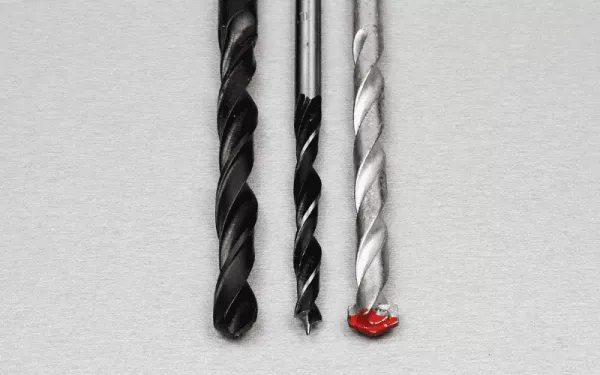
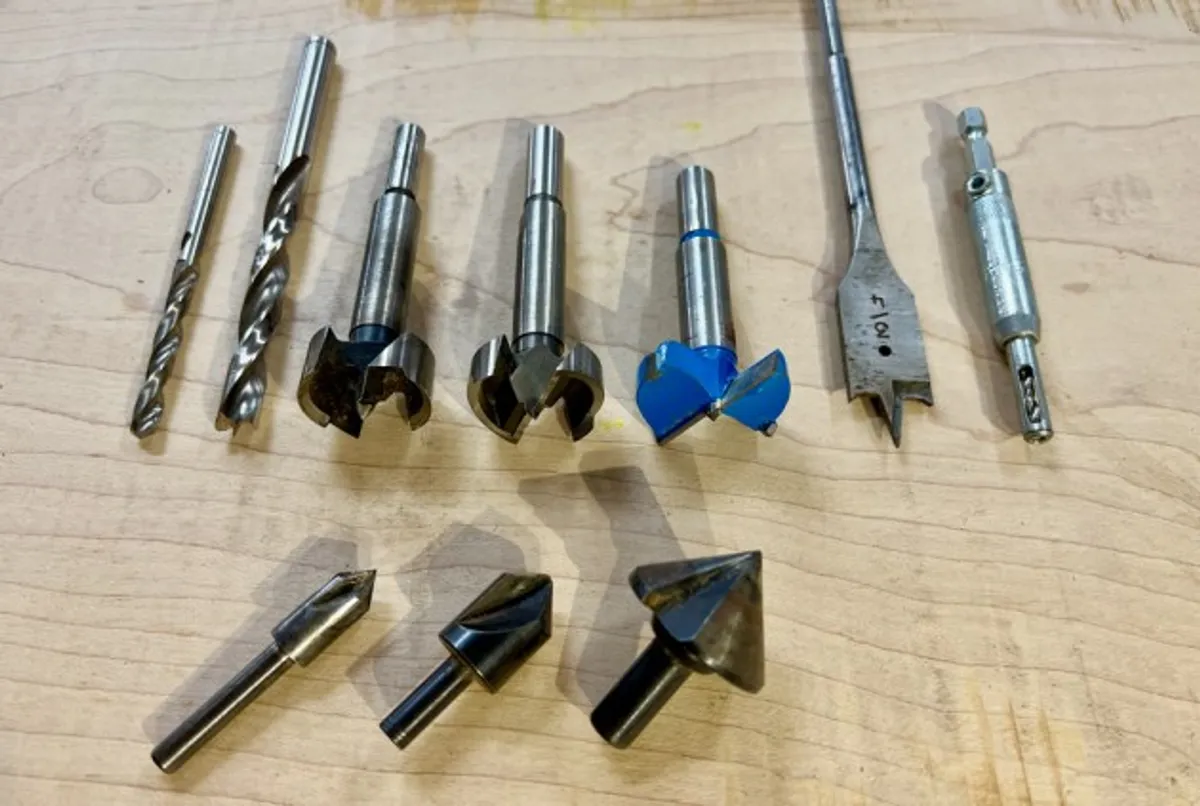
Using a metal drill bit on wood often tears the fibers, leaving an ugly, splintered hole. Wood requires specific geometry to slice fibers cleanly before removing the material.
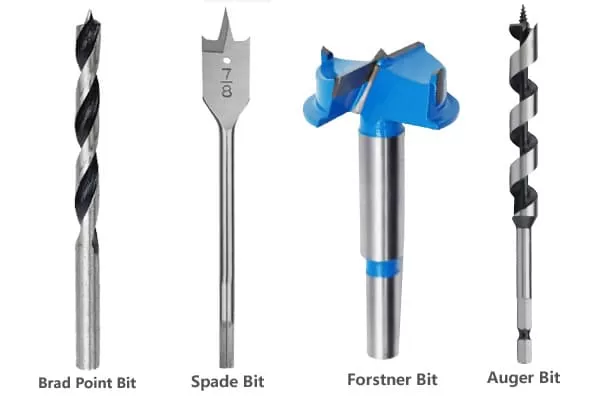
1. Brad Point Bits: The Precision Choice
Best For: Furniture making, doweling, and high-precision joinery.
The Identification: Looks like a standard twist drill but has a sharp "W" shaped tip (the brad) in the center.
Why Use It? The sharp center point prevents the bit from wandering (walking) when you start the hole. The sharp outer spurs slice the wood grain circumference before the center removes the wood, preventing tear-out.
2. Spade (Paddle) Bits: Fast & Rough
Best For: Framing, running wires/pipes through studs, rough carpentry.
The Identification: Flat, paddle-shaped blade with a center point.
Pros:
- Extremely cheap.
- Very fast drilling speeds.
- Available in large diameters (up to 1.5 inches).
3. Auger Bits: Deep & Powerful
Best For: Drilling deep holes in thick timber (e.g., deck posts, landscape ties).
The Identification: A long spiral flute with a screw tip at the very front.
Why Use It? The screw tip pulls the bit into the wood automatically—you don't need to push. The wide, deep single flute acts like a conveyor belt to lift chips out of deep holes, preventing jamming.
4. Forstner Bits: Clean & Flat-Bottom
Best For: Cabinet hinges, large clean holes, overlapping holes.
The Identification: A circular rim with a small center point.
The Superpower: Forstner bits drill flat-bottomed holes. They cut on the rim, allowing you to drill overlapping holes (like a figure-8) without the bit slipping deeply into the previous hole. Essential for installing Euro-style cabinet hinges.