
When it comes to drilling large-diameter holes through concrete, brick, or block walls, not all hole saws are created equal. The YG10C carbide-tipped concrete hole saw with its unique three-blade design has become the go-to choice for professional installers across multiple trades.
What Makes YG10C Special?
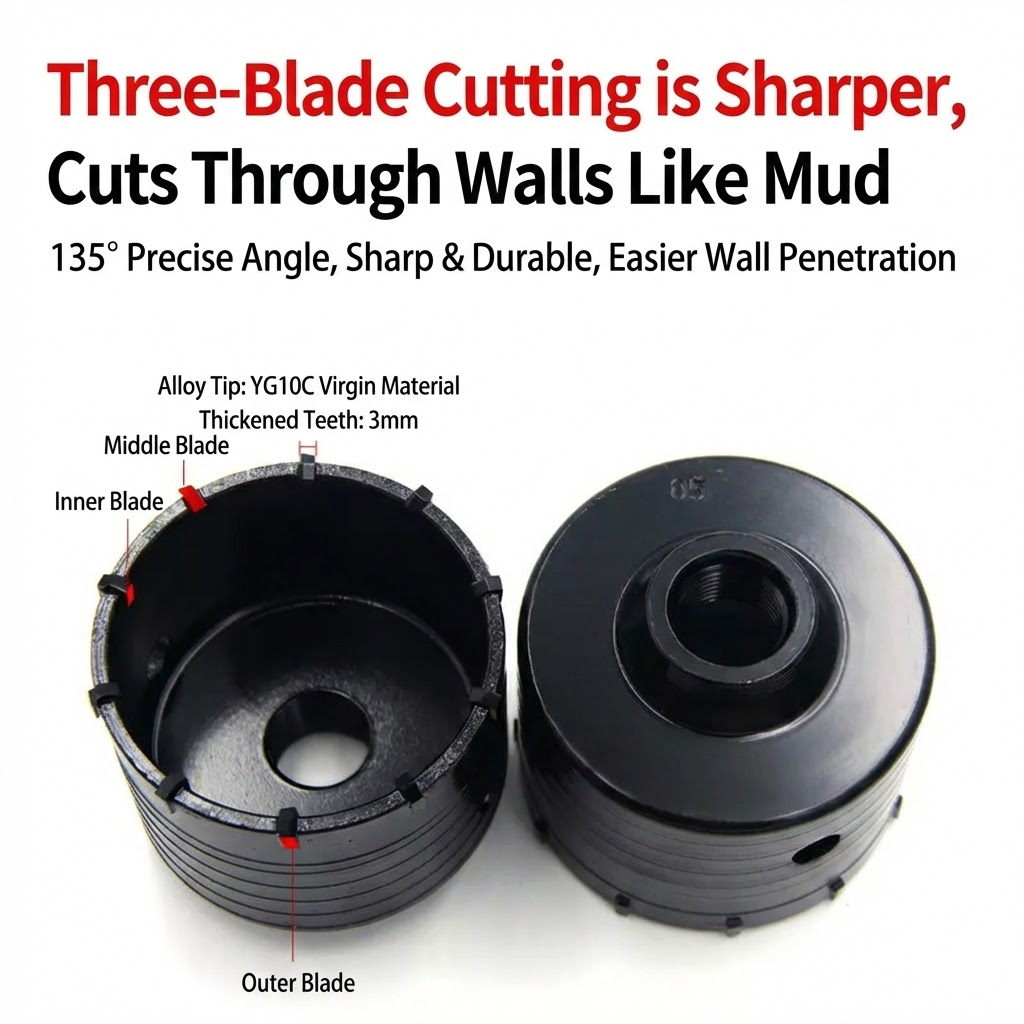
Before diving into applications, let's understand what sets this hole saw apart:
- YG10C Virgin Carbide: Ultra-hard alloy material that maintains sharpness 5x longer than standard TCT
- Three-Blade Cutting System: Inner, middle, and outer blades work together to reduce vibration and speed up cutting
- 135° Drill Tip: Precision center positioning prevents misalignment and wandering
- 3mm Thickened Teeth: Enhanced durability for heavy-duty commercial applications
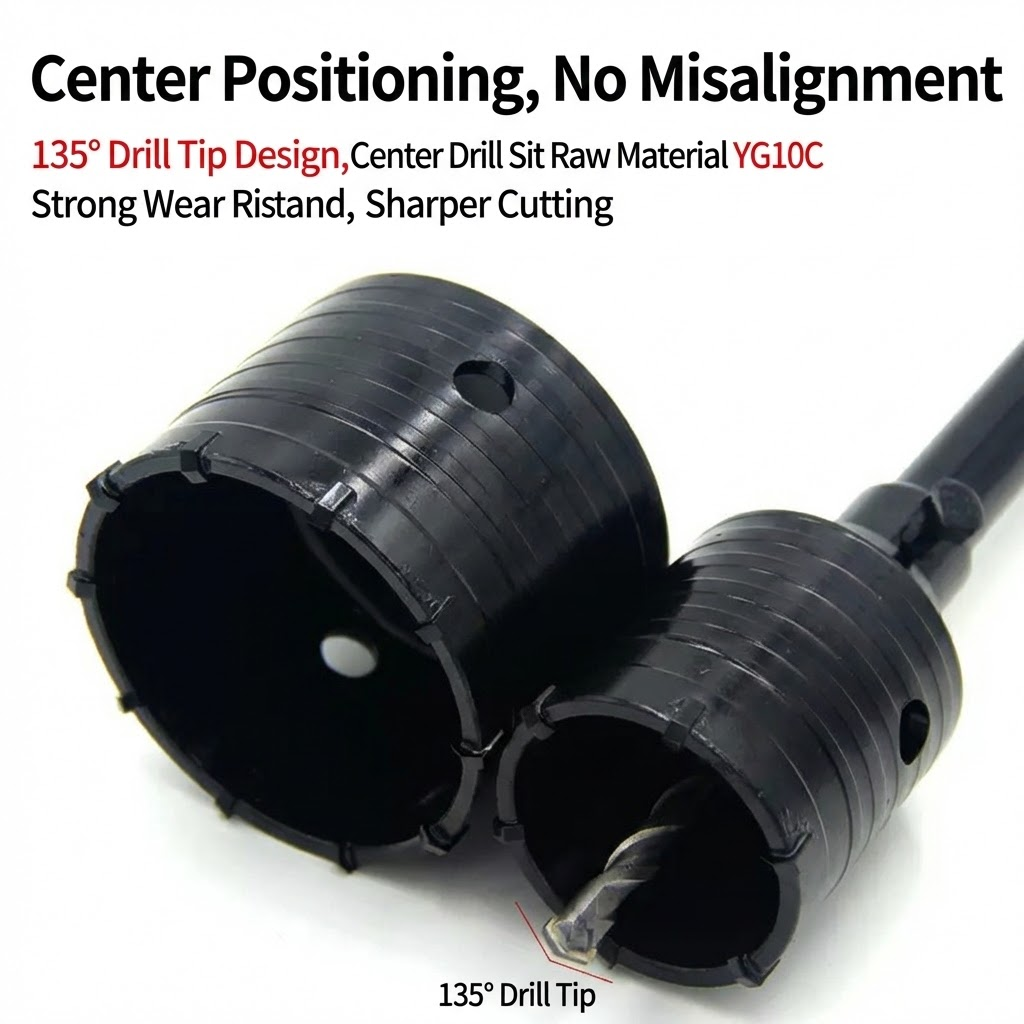
The three-blade design isn't just marketing—it genuinely cuts through concrete 30-40% faster than traditional two-blade hole saws while producing less dust.
6 Professional Applications Where YG10C Excels
1. Electrical Conduit Installation
MOST COMMON USE CASE
Electricians use YG10C hole saws daily to:
- Run conduit pipes through load-bearing walls (50-150mm diameter holes)
- Install junction boxes in concrete walls
- Create cable entry points in electrical panels
- Penetrate foundation walls for service entrance
Why YG10C? The precise 135° tip prevents damage to adjacent wiring or rebar. Clean cuts mean less time spent cleaning up debris before pulling wire.
2. Plumbing & HVAC Pipe Penetration
Water supply lines, drain pipes, and refrigerant lines all require wall penetrations. YG10C hole saws handle:
- PVC drain pipes (75-110mm holes)
- Copper refrigerant lines for mini-split AC units
- Water supply lines for bathroom/kitchen additions
- Ventilation ductwork (up to 150mm)
3. Security & Surveillance System Installation
Modern security installations require dozens of cable runs through concrete or brick:
- CCTV camera cable routing (20-32mm holes)
- Intercom system wiring
- Fiber optic cable penetrations for industrial sites
- Alarm sensor wire runs
4. Commercial HVAC & Ventilation
Large-diameter holes for commercial HVAC systems benefit hugely from the three-blade design:
- Exhaust fan installations (100-150mm)
- Air handler drain lines
- Fresh air intake penetrations
- Commercial kitchen hood ventilation
5. Fire Sprinkler System Installation
Fire protection contractors face strict deadlines and need reliable tools for:
- Sprinkler main line wall penetrations (65-100mm)
- Riser pipe holes through floor slabs
- Fire alarm conduit runs
- Post-construction retrofits in occupied buildings
6. Residential Renovation & Remodeling
Homeowners and contractors use YG10C hole saws for:
- Installing bathroom exhaust fans through exterior brick
- Adding electrical outlets in concrete basement walls
- Running Ethernet cables for home networks
- Installing range hoods in commercial-grade kitchens
When NOT to Use YG10C Hole Saws
To help you choose the right tool, here are situations where other methods work better:
- Wood or drywall only: Use standard HSS hole saws (YG10C is overkill)
- Metal pipe or plate: Use bi-metal hole saws instead
- Holes smaller than 25mm: Standard masonry drill bits are more economical
- Glass or ceramic tile: Use diamond-tipped glass drill bits
Operating Tips for Best Results
- Use rotation-only mode (not hammer mode)—the carbide teeth do the cutting
- Start at 30% speed to establish the pilot hole, then increase to full speed
- Apply steady, moderate pressure—let the tool do the work
- Clear debris every 20-30mm by withdrawing the saw
- Use water cooling for 100mm+ holes (dramatically extends bit life)
Critical: Never use hammer mode with carbide-tipped hole saws. The impact will shatter the carbide teeth.
Troubleshooting Guide
| Problem | Possible Cause | Solution |
|---|---|---|
| Teeth chipping | Hammer mode used / Hit rebar | Switch to Rotary Mode; Use rebar cutter for heavy steel |
| Slow cutting | Worn teeth / Debris clogging | Sharpen or replace; Withdraw bit frequently to clear dust |
| Bit wandering | Pilot drill dull / No pilot hole | Check pilot bit; Start slow to establish center |
| Overheating | Excessive speed / No cooling | Reduce RPM; Add water cooling for deep holes |
Cost vs. Value
YG10C hole saws cost 40-60% more than standard TCT, but deliver:
- 5x longer lifespan: One YG10C saw replaces five standard saws
- 30-40% faster cutting: Time savings on every job
- Less rework: Clean holes mean no chipping repair