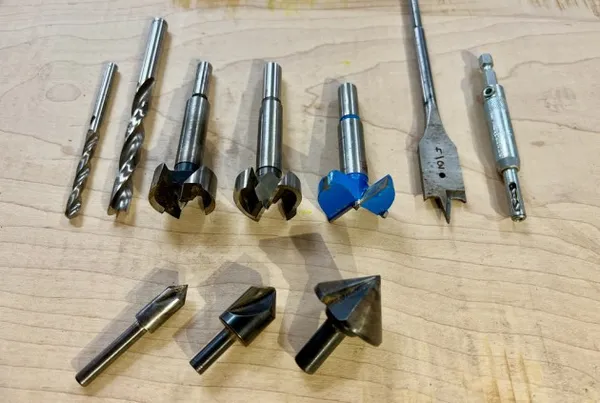
Electricians drill more holes than any other trade. But unlike carpenters, your holes often need to be deeper, hidden, or drilled around dangerous obstacles.
1. Rough-In: The Auger Bit
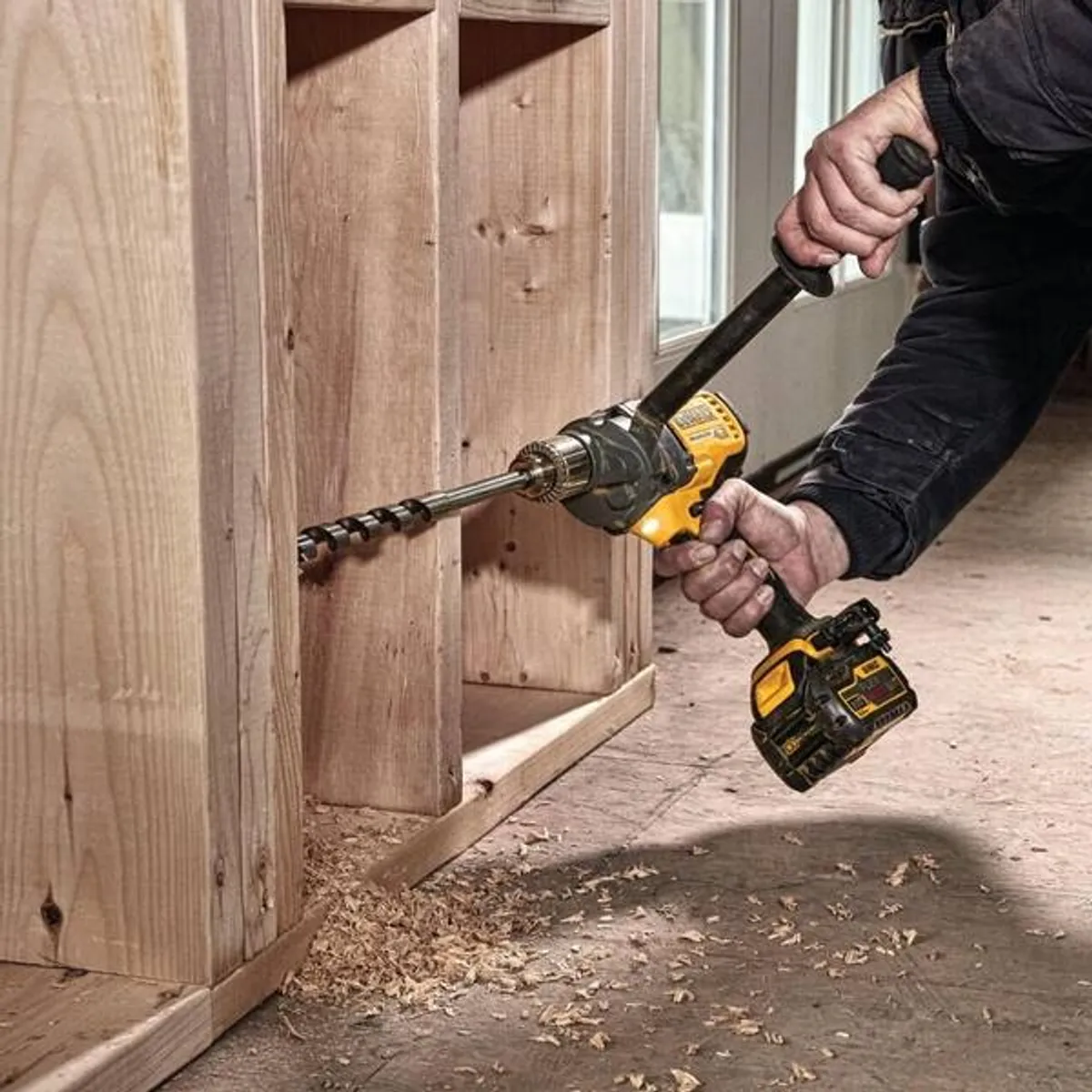
When running Romex through framing studs, speed and chip clearance are key.
The Tool: 7/8" Ship Auger Bit (18" Length).
Why: The screw tip grabs the stud and pulls the heavy drill through. The single deep flute carries the wood chips out, so you don't get jammed inside a triple stud pack.
2. Trim-Out: The Hole Saw
When cutting holes for junction boxes ("J-Boxes") or pot lights in drywall.
The Tool: Bi-Metal Hole Saw.
Tip: Run the drill in reverse first to scour the paper layer of the drywall to prevent tearing. Then switch to forward.
3. Service Entrance: SDS Max
Bringing main power into a building usually means going through poured concrete.
The Tool: SDS Max Core Bit.
Don't use a solid bit for large conduit holes (e.g., 2 inch). Use a Core Bit. It removes less material, is faster, and puts less strain on your rotary hammer.
4. The Golden Safety Rules
- Nail Plates: If your auger bit suddenly stops and makes a metallic grinding noise, STOP. You hit a nail plate protecting a pipe or wire.
- Two Hands: High-torque drills (Hole Hawgs) have massive kickback. Always use the side handle and brace yourself properly. If the bit catches, the drill will spin and can break your wrist.