
Embedded rebar can interrupt an otherwise straightforward concrete-drilling job. For distributors and private-label tool brands, a well-specified rebar cutter gives contractors a controlled way to pass the steel and continue the required hole.
At Zhonghuan Tools, we support OEM rebar-drilling programs built around the application, rotary hammer and required hole dimensions. Our range includes rotation-only carbide-tooth crown cutters and a separate full-carbide-head drilling line for reinforced concrete. We coordinate product specifications, marking and packaging around the selected program.
A successful OEM product combines the cutting head, steel body, machine interface and operating instructions into one clear specification.
Start with the Application and Machine
Before selecting a cutting head, establish the job and the machine that will drive it:
- Required hole diameter and depth.
- Concrete conditions and the reinforcement likely to be encountered.
- Rotary hammer model and available operating modes.
- A dedicated cutter after a concrete pilot hole, or continuous reinforced-concrete drilling.
- The failure to address: chipped teeth, slow steel cutting or trapped steel slugs.
These inputs establish head architecture, edge support and chip clearance. The SDS-Plus interface, machine capacity and approved operating mode must match the selected cutter.
Rebar Cutters Have Different Operating Modes
| Product construction | Typical job | Operating mode |
|---|---|---|
| Dedicated carbide-tooth crown cutter | Cut embedded steel after a concrete pilot hole | Commonly rotation-only; follow the exact model instructions |
| Dedicated impact-approved rebar cutter | Steel cutting with a specifically rated head | Hammer mode only when expressly approved |
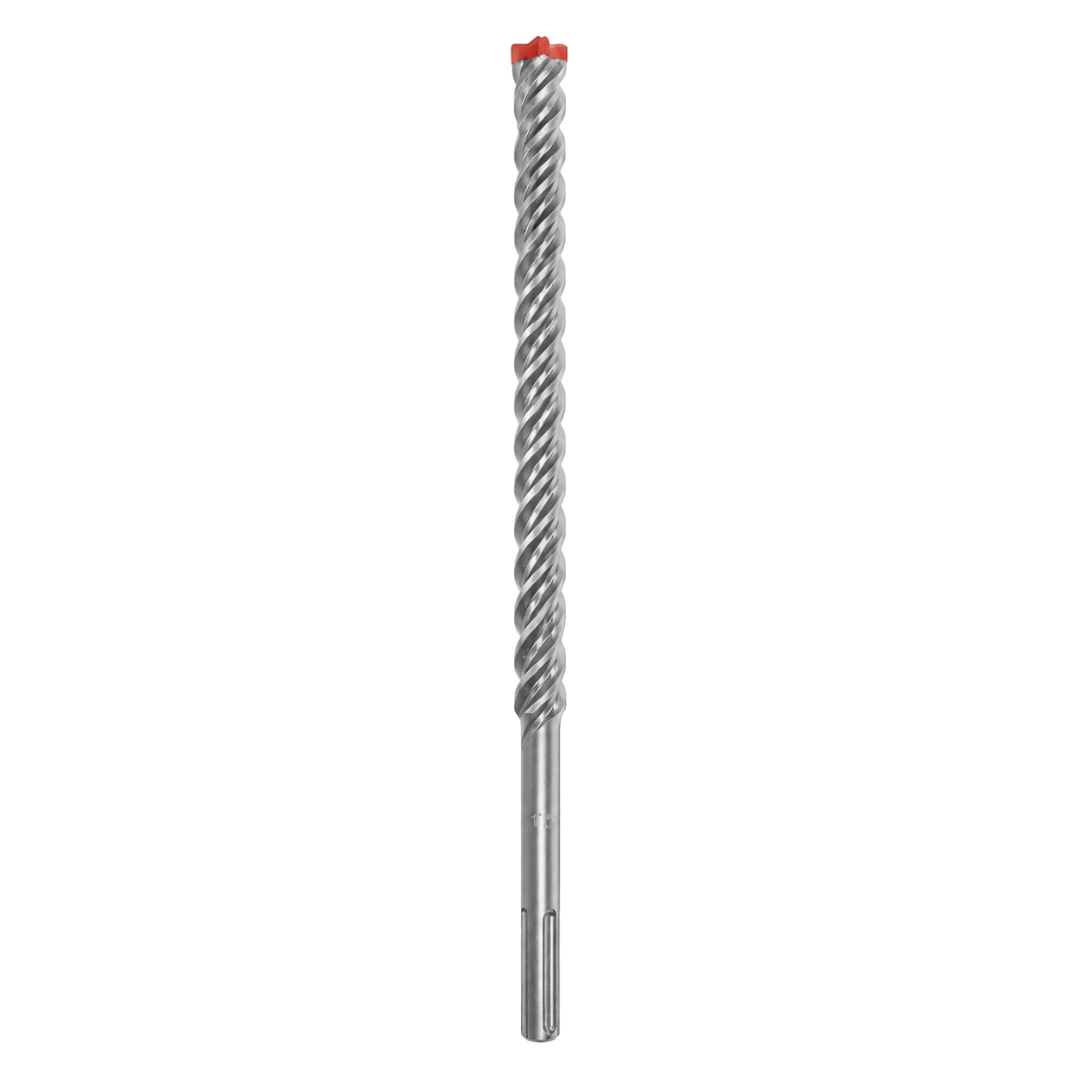
| Full-carbide reinforced-concrete drill bit | Drill concrete and reinforcement with one tool | Use the mode specified for the complete drill bit |
Hilti's SDS-Plus carbide rebar cutter and Relton's SRB cutter specify rotation-only use. These dedicated cutters should not inherit operating instructions from another construction.
There are model-specific exceptions. DEWALT DWA540118 expressly permits hammer-mode drilling through its head design. That approval applies to the stated model.
Milwaukee's HAMMER GUARD on model 48-20-6713 protects carbide teeth from accidental hammer impacts. Accidental-impact protection alone is not permission for continuous hammer-mode cutting.
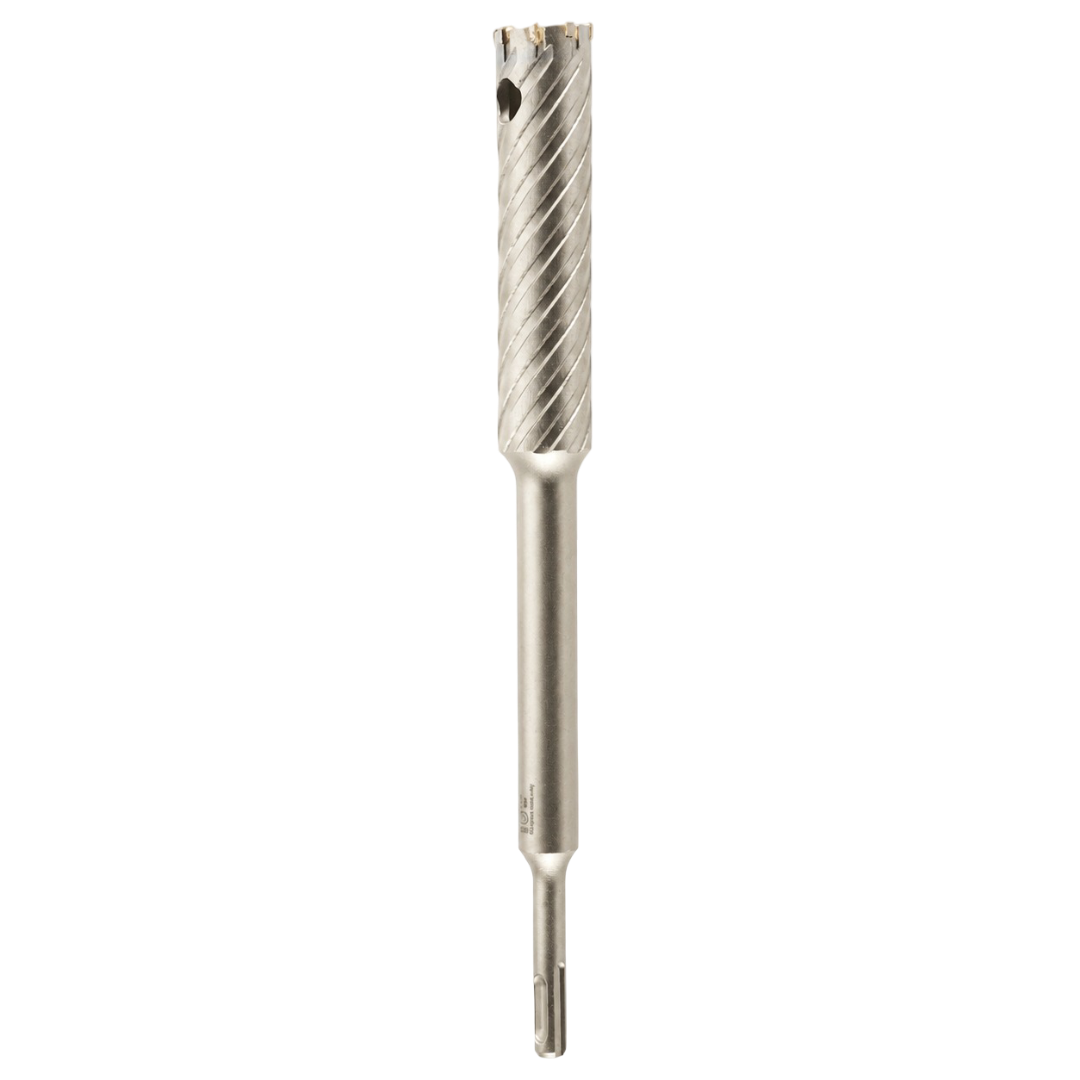
Our carbide-tooth crown cutter program is rotation-only: hammer action off. Our full-carbide-head reinforced-concrete drilling line is a separate product with its own specified operating mode.
What Matters in a Carbide-Tooth Rebar Cutter
Cutting-Edge Geometry and Tooth Support
Tooth profile, projection and support determine how the edge enters steel. Inner and outer tooth positions can distribute the cut across the crown; the exact pattern follows the confirmed product drawing. Define tooth count, position, cutting geometry, seat support and finished diameter together.
Carbide Selection and Joining
Carbide selection balances edge strength, wear resistance and steel-cutting duty. Grade, tooth seat and joining process need to work as one assembly. Agree tooth position, cutting performance and tooth-retention acceptance criteria for the assembled tool. Any material-origin requirement belongs in the documented purchase specification.
Flutes, Chip Clearance and Ejection Ports
Steel chips and the cut slug need an exit route. Deep channels, flute geometry and crown openings help clear the cutting zone; packed debris can increase heat and interrupt progress. Specify the position and size of ejection openings together with crown dimensions and working length.
Steel Body and SDS-Plus Shank
The body transmits torque while the shank locates the tool in the machine. Define body material, heat-treatment condition, straightness and shank dimensions for the duty. Finished cutting diameter and assembled runout belong in the agreed order specification.
One-Piece Cutters and Replaceable-Head Systems
A one-piece cutter is supplied as a complete fixed head-and-shank assembly. A modular system lets the user replace a worn head while retaining a serviceable adapter. Makita E-12572 with its specified E-12594 adapter illustrates the replaceable-head approach.
For a modular OEM program, specify:
- Thread diameter, pitch and direction.
- Shoulder and locating surfaces.
- Wrench flats and the removal method.
- Assembled working length and overall length.
- Head sizes approved for the adapter.
- Matching head and adapter part markings.
The SDS-Plus machine connection and cutter-head thread are separate interfaces. Approve the head and adapter as a matched assembly.
Define the OEM Specification Before Quotation
| Specification | What to agree |
|---|---|
| Construction | Complete one-piece cutter, or matched head and adapter |
| Cutting diameter | Nominal hole size and finished-diameter acceptance |
| Length | Working length and overall length stated separately |
| Head geometry | Tooth count, profile, projection and support |
| Carbide and body | Material specifications for the cutting duty |
| Joining | Assembly requirements and inspection criteria |
| Operating mode | Instructions for the exact SKU |
| Machine fit | SDS-Plus connection and machine capacity |
| Marking | Brand, size, SKU, batch and mode |
| Packaging | Product protection, retail format and master carton |
Our rotation-only crown cutter range covers Ø12–32 mm. Custom configurations follow the selected construction and drawing review. Overall length includes the connection; it does not equal usable cutting reach.
Give Contractors a Clear Operating Workflow
For the rotation-only crown cutter, the working sequence is:
- Drill the concrete pilot hole with the appropriate concrete bit.
- Stop when the bit reaches embedded rebar.
- Fit the specified rebar cutter and switch hammer action off.
- Cut the steel using the approved speed, feed and chip-clearance procedure.
- Remove the cutter, refit the concrete bit and finish the hole.
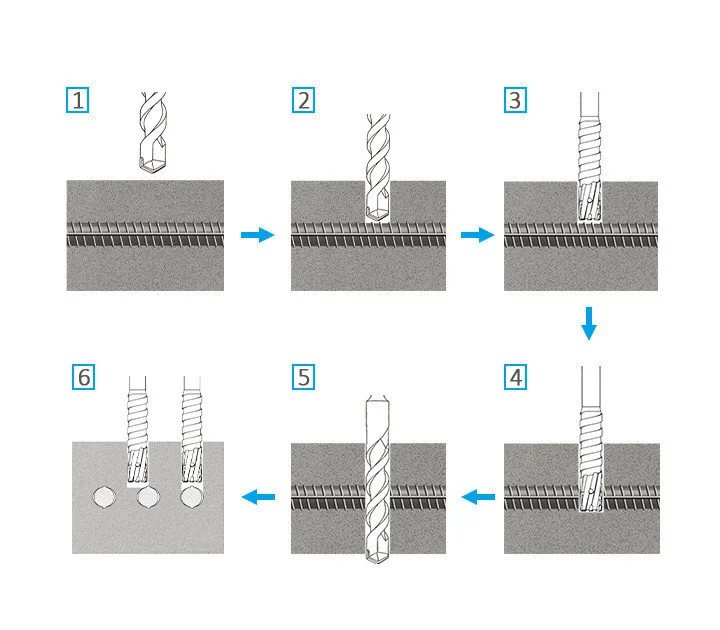
Relton's published instructions describe this drill–cut–drill sequence. Carry it out within the project's approved hole and reinforcement-cutting plan.
A SKU-specific product card should show operating mode, size, application and the tool-change sequence. Customers should be able to identify the correct mode at the job site without comparing unrelated product instructions.
Confirm the Order Specification
Rebar cutters are supplied against normal purchase orders. Send the required diameters, lengths and quantities; we confirm the construction, operating mode, packaging and delivery before order confirmation. We do not offer a separate sample service.
The confirmed product drawing and order specification are the reference for production and repeat orders.
Build a Private-Label Range That Is Easy to Stock
Our OEM program coordinates brand marking, multilingual mode labels, protective tubes, retail boxes, contractor pairing kits and master cartons. The order quantity and schedule follow the selected product and packaging.
Start with the core diameters for your channel. Pair concrete bits and dedicated cutters where customers need the changeover workflow. For modular systems, plan spare heads alongside compatible adapters. Keep size, part number and mode labels consistent across the range.
Order quantities and production timing are confirmed for the actual order.
Request a Rebar Cutter OEM Quotation
Send three details to start: hole diameters, rotary hammer model and quantities. If you have a reference photo or drawing, include it. We then confirm cutter construction, operating mode, working and overall lengths, marking and packaging for the proposed program.
Request your rebar cutter OEM quotation.
Frequently Asked Questions
Can every SDS-Plus rebar cutter run in hammer mode?
No. The SDS-Plus connection does not determine the approved cutting mode. Rotation-only crown cutters require hammer action to be switched off. Use hammer mode only on the exact model expressly rated for it.
Is a rebar cutter the same as a reinforced-concrete drill bit?
A dedicated cutter normally passes the steel after a concrete pilot hole, followed by a change back to the concrete bit. A full-carbide reinforced-concrete drill bit is a separate construction designed for the specified concrete-and-rebar drilling cycle.
Will any SDS-Plus adapter fit a replaceable cutter head?
No. The machine connection and head thread are separate interfaces. Match the thread, locating surfaces and approved head sizes to the specific adapter.
What do you need to start an OEM quotation?
Send the hole diameters, rotary hammer model and order quantities. A reference photo or drawing can help define the construction. We confirm operating mode, lengths, marking, packaging and delivery for a normal purchase order. We do not offer a separate sample service.