

The Enemy: Work Hardening
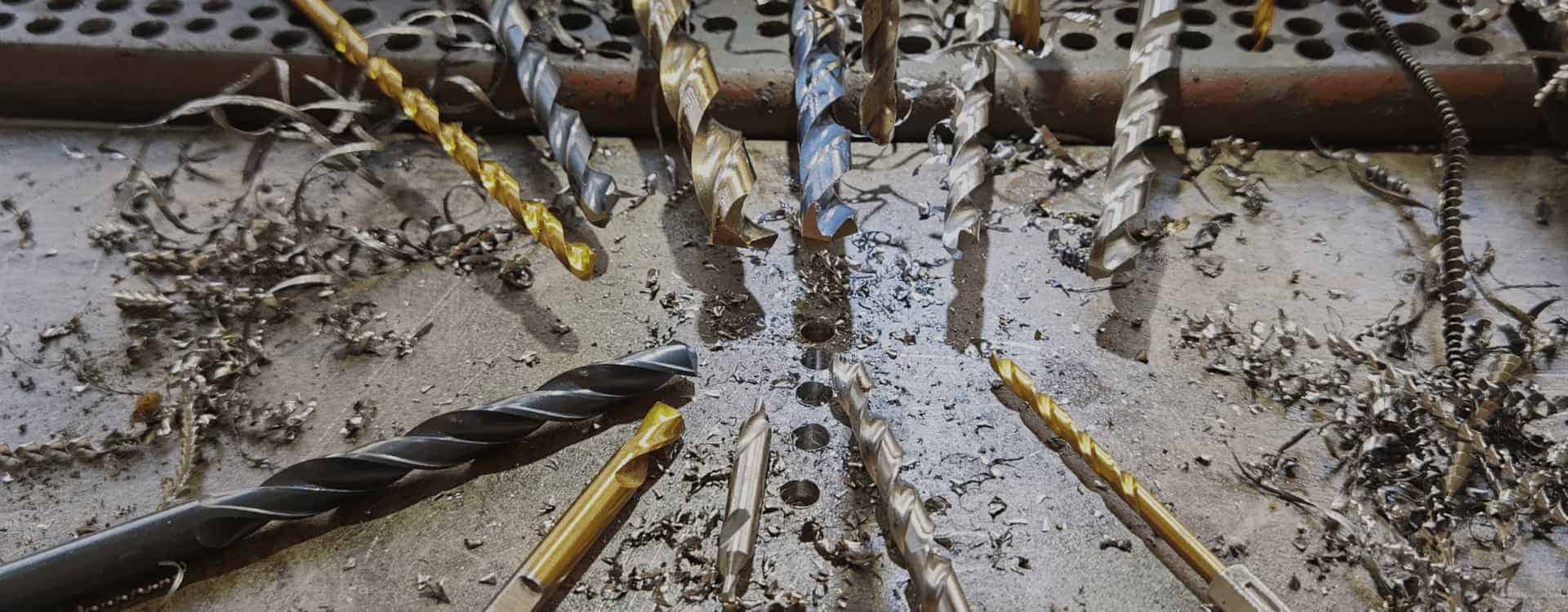
Stainless Steel (especially 304 and 316 grades) has a nasty property called Work Hardening. As you heat it up with friction, its crystal structure changes and it becomes harder.
If you run your drill too fast (High RPM) and don't apply enough pressure, you are just rubbing the metal, creating heat. You are literally hardening the steel while trying to cut it. Moments later, your drill bit glows red and dies.
The Titanium Coating Myth
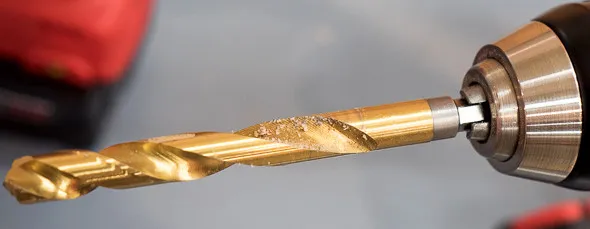
Many DIYers buy "Gold" drill bits labeled "Titanium", thinking they are made of Titanium. They are not.
They are usually cheap High Speed Steel (HSS entry-level HSS) with a microscopic layer of Titanium Nitride (TiN) paint.
The problem: The moment you start drilling stainless steel, that coating wears off the tip. You are left with soft, cheap steel against hard stainless. It's a recipe for failure.
Why Cobalt is King (M35 vs M42)
For stainless steel, you need Cobalt Drill Bits. Unlike coatings, Cobalt is melted into the steel alloy itself. Learn more in our HSS Material Grades Guide.
- M35 (5% Cobalt): The industry standard. Enhances "Red Hardness" (ability to stay hard at high temps). Best value for pros.
- M42 (8% Cobalt): Even higher heat resistance. Harder, but more brittle. If you use a hand drill and wobble, M42 might snap. Best for drill presses.
RPM Guide for Stainless
Slow Down! You must drill stainless at 50% the speed of mild steel.
| Bit Size | RPM (Mild Steel) | RPM (Stainless) |
|---|---|---|
| 3mm (1/8") | 2500 | 1200 |
| 6mm (1/4") | 1200 | 600 |
| 10mm (3/8") | 800 | 400 |
| 13mm (1/2") | 600 | 300 |
Also consider using a 135° Split Point geometry for self-centering.
Speed and Feed Rate Guide
Getting the right RPM is only half the battle. You also need the correct feed pressure and coolant strategy for each bit diameter. Here is a practical reference table for drilling 304/316 stainless steel with M35 cobalt bits:
| Bit Diameter | RPM Range | Feed Pressure | Coolant |
|---|---|---|---|
| 3mm | 1500–2000 | Light | Recommended |
| 6mm | 800–1200 | Moderate | Essential |
| 10mm | 400–600 | Firm & Steady | Essential |
| 13mm+ | 200–400 | Heavy & Slow | Essential |
Important: Stainless steel work-hardens if you go too slow or apply too little pressure. You must maintain consistent, firm feed pressure throughout the cut. If you hear squealing instead of a steady cutting sound, you are rubbing rather than cutting, and the surface is hardening beneath your bit.
Coolant and Lubrication Tips
Stainless steel generates 2–3x more heat than mild steel during drilling. Without proper lubrication, your bit will overheat and dull within seconds. Here are your coolant options:
- Cutting Oil (best for hand drilling): Apply generously to the drill point before and during drilling. Reapply every time you retract. This is the most common and effective method for jobsite and workshop use.
- Water-Soluble Coolant (best for production): Ideal for drill presses and CNC setups where flood cooling is available. Provides excellent heat dissipation and chip flushing for continuous drilling operations.
- Paste or Wax (best for field work): When liquid coolant is impractical — such as overhead drilling or tight spaces — use a cutting paste or wax stick. It clings to the bit and provides short-term lubrication.
Peck Drilling Technique: For holes deeper than 2x the bit diameter, use peck drilling — drill partway in, retract fully to clear chips and allow coolant to reach the cutting edge, then drill again. This cycle prevents chip packing, reduces heat buildup, and dramatically extends bit life in stainless steel.
Why Drill Bits Fail in Stainless
If your bits keep dying in stainless steel, the problem is almost always one of these four causes:
- RPM Too Slow (Work Hardening): Ironically, going too slow is just as deadly as going too fast. When the bit turns slowly without adequate feed pressure, it rubs instead of cutting. The friction hardens the stainless surface, and each subsequent rotation becomes harder to penetrate. The fix: use the correct RPM range from the table above and apply firm, steady downward pressure.
- No Coolant (Overheating): Stainless steel is a poor conductor of heat. All the thermal energy stays concentrated at the drill tip, quickly reaching temperatures that soften HSS and even cobalt steel. Always use cutting oil at a minimum — never drill stainless dry.
- Wrong Bit Material (HSS Instead of Cobalt): Standard HSS (entry-level HSS) lacks the red hardness to survive stainless steel. The bit softens at the cutting edge long before the hole is complete. You need M35 cobalt (5% Co) at minimum. For hardened stainless or heavy production, step up to M42 (8% Co).
- Dull Bit (Failure to Replace or Resharpen): A sharp cobalt bit cuts stainless cleanly. A dull one rubs and generates excess heat, triggering the work-hardening cycle. When you notice the cutting speed dropping or hear a change in sound, stop immediately. Either resharpen the bit or replace it. Pushing a dull bit harder only accelerates failure.
Bit Recommendation by Stainless Steel Grade
| SS Grade | Hardness | Recommended Bit | Key Setting |
|---|---|---|---|
| 304 / 1.4301 | ~85 HRB | M35 cobalt, 135° split point | 300–500 RPM for 8mm+; cutting oil |
| 316 / 1.4401 | ~85 HRB | M35 cobalt | Same as 304; slightly more chip-breaking tendency |
| 316L (low carbon) | ~80 HRB | M35 cobalt | Slightly easier — 10% more speed acceptable |
| 2205 Duplex | ~100 HRB | M42 cobalt or solid carbide | 200–350 RPM; heavy cutting oil; peck drill |
| 17-4 PH (hardened) | 35–40 HRC | M42 cobalt or solid carbide | 150–250 RPM; coolant essential |
Related Procurement Programs
If you are sourcing this product line for a distributor, importer, or private-label channel, these OEM and wholesale programs cover the procurement questions buyers usually ask next.
- M35 Cobalt Drill Bits Wholesale for Stainless Steel & Industrial Supply — Wholesale M35 cobalt drill bit program for stainless steel, maintenance, metalworking, and industrial distributors.
- HSS Twist Drill Bits Wholesale & OEM Supply for Metalworking Channels — HSS twist drill bit wholesale and OEM supply for importers, industrial distributors, and private-label brands: M2, M35 cobalt, DIN 338, DIN 345, black oxide…
