

What a Professional Diamond Blade Specification Actually Starts With
A diamond blade grinds with industrial diamond held in a bond system, but the professional buying decision does not start with the words segmented, turbo or continuous. It starts with the machine platform, the substrate and job condition, and the acceptance result. Those inputs set the diameter, arbor or drive interface, RPM window, core construction, gullet system, segment geometry, diamond placement, attachment route and wet/dry rating.
This guide keeps the familiar rim terms as baseline vocabulary, then moves to the specification layers used for hand-held saws, floor and Early-Entry saws, wall and ring saws, and bridge-saw fabrication.
Layer 1: Start With the Machine Platform
The same nominal diameter can sit on machines with completely different power, drive and cutting behaviour. A hand-held cut-off saw needs a blade rated to the saw's no-load speed and guard. A floor saw needs a torque-matched kerf and 1-inch or project-specific drive. An Early-Entry system adds triangular arbor, up-cut rotation and skid-plate support. Wall and ring saws are drive-system tools. Bridge saws prioritise core tension, coolant delivery and accepted slab edge.
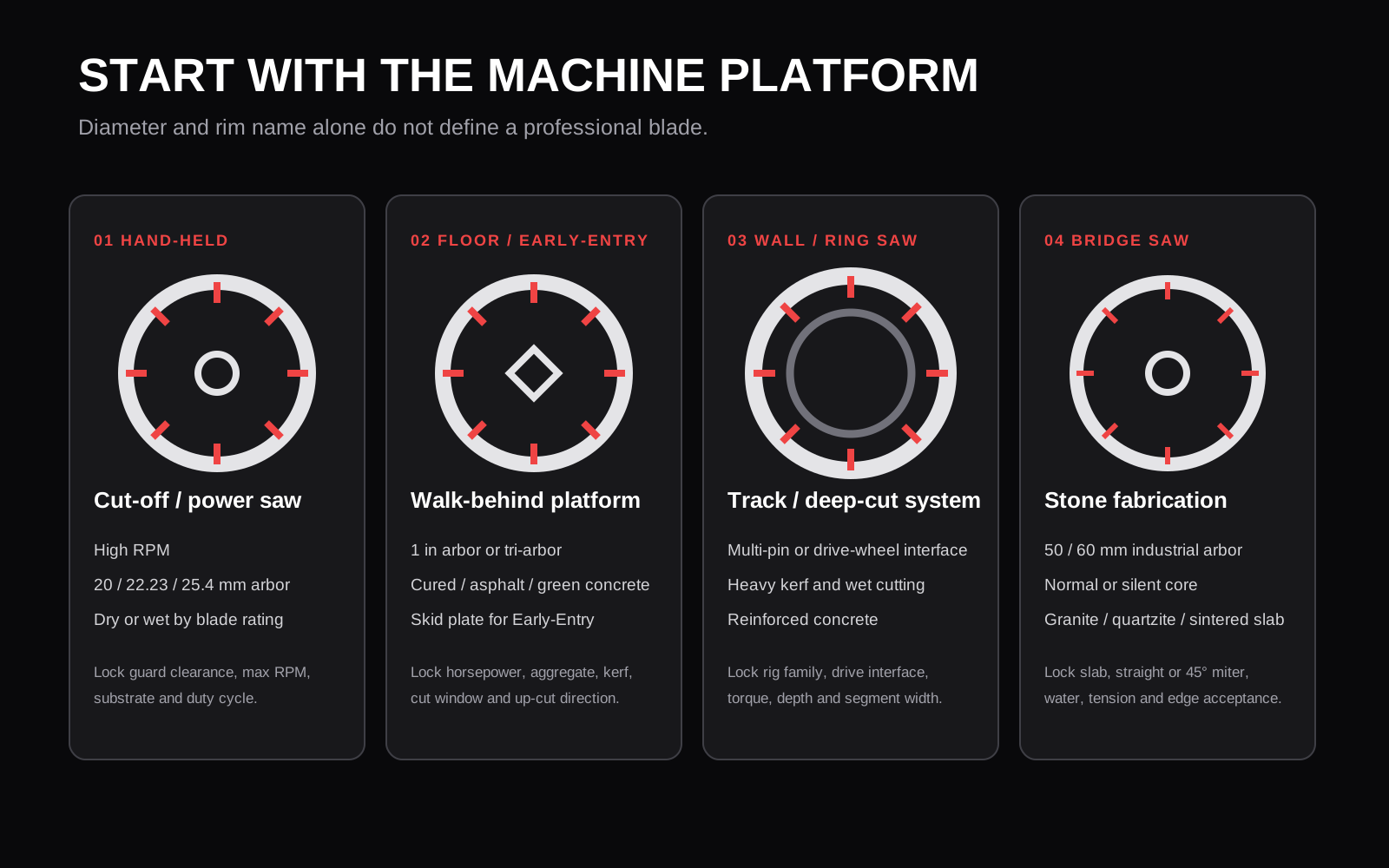
Segmented, Turbo and Continuous Are Baseline Vocabulary
Segmented identifies separated cutting segments and open gullets. Turbo identifies a serrated or channelled working face. Continuous identifies a supported rim with minimal interruption. These labels help a buyer recognise the broad family, but they do not specify a professional blade.
A complete line item must still state the machine, substrate, core and gullet design, segment dimensions, diamond layout, attachment, arbor, maximum RPM, wet/dry rating and sample acceptance. Two blades can both be called segmented while one is an asphalt floor-saw blade with undercut protection and the other is a multi-pin wall-saw blade for reinforced concrete.
Layer 2: Substrate and Operating Condition Set the Bond Direction
The inverse rule remains a useful starting point: hard dense material generally needs a bond that renews the cutting face, while soft abrasive material needs a matrix that resists rapid erosion. It is not a complete public formula. Aggregate, reinforcement, machine power, coolant, cut depth and target balance between speed and life all move the final matrix.
For RFQs, the buyer should send the actual material and machine condition. Bond chemistry, diamond grade and concentration stay inside the engineering match and are approved by sample performance rather than a universal hard/soft label.
Layer 3: Separate Segment Geometry From Diamond Placement
Flat, turbo-channelled, split, notched and profiled segments describe the visible working geometry. Random, uniform and ordered-array describe how diamond is distributed inside the matrix. They are separate axes: an ordered-array segment can use a flat or application-specific working profile, and a dotted surface alone does not prove ordered placement through the full depth.
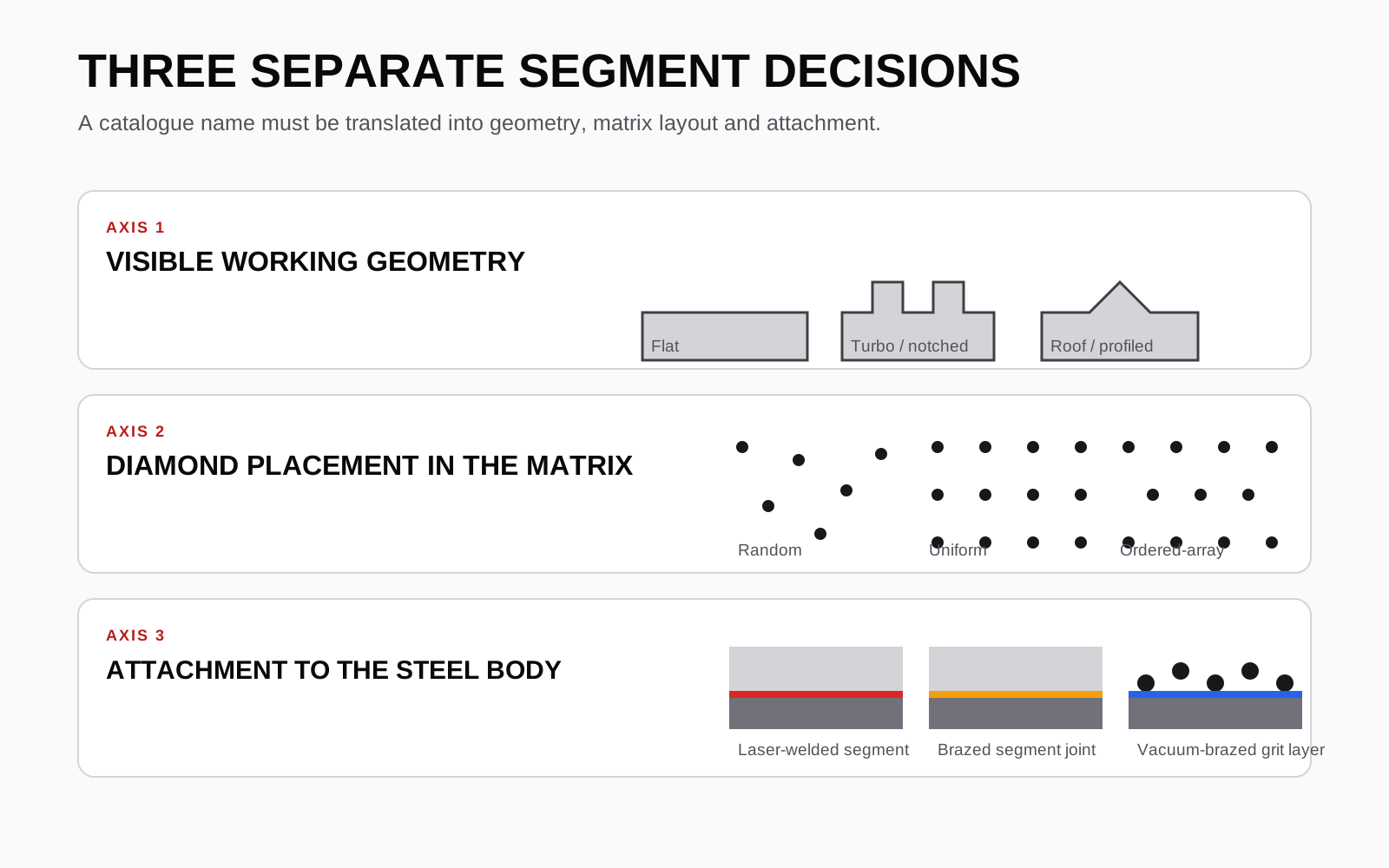
Layer 4: Segment Manufacture Is Not Segment Attachment
A hot-pressed or sintered segment describes how the diamond-metal matrix is made. It does not, by itself, describe how that segment is joined to the steel core. The joint may be laser welded, high-frequency brazed or produced through another approved route. A vacuum-brazed grit blade is a different single-layer cutting architecture rather than a tall sintered segment joined to a core.
- Laser-welded segmented blade: standard starting point for structural concrete, large floor-saw and wall-saw programs where heat and impact load require a metallurgical joint.
- Brazed segment joint: valid for an approved wet-cut or application-bounded program when the joint, temperature window and sample plan are stated.
- Vacuum-brazed grit layer: single-layer architecture used for selected metal, multi-material and specialty cutting programs; the final tool may be dry-rated when its design and marking allow it.
Never infer wet/dry use from the word sintered alone. Use the final blade marking, maximum RPM, machine match and signed technical sheet.
Layer 5: Gullet, Core and Wet/Dry Mode Work as One System
A wide U-slot clears abrasive slurry and is commonly paired with drop segments or undercut protection for asphalt. A narrow round-ended slot gives a different core-relief path for structural cutting. A narrow J-slot can be a project option for Dekton-class sintered stone and porcelain slab, often evaluated with a normal or damped sandwich core. None of these shapes is a universal upgrade; the exact slot, core tension and coolant path must be tested with the machine and substrate.
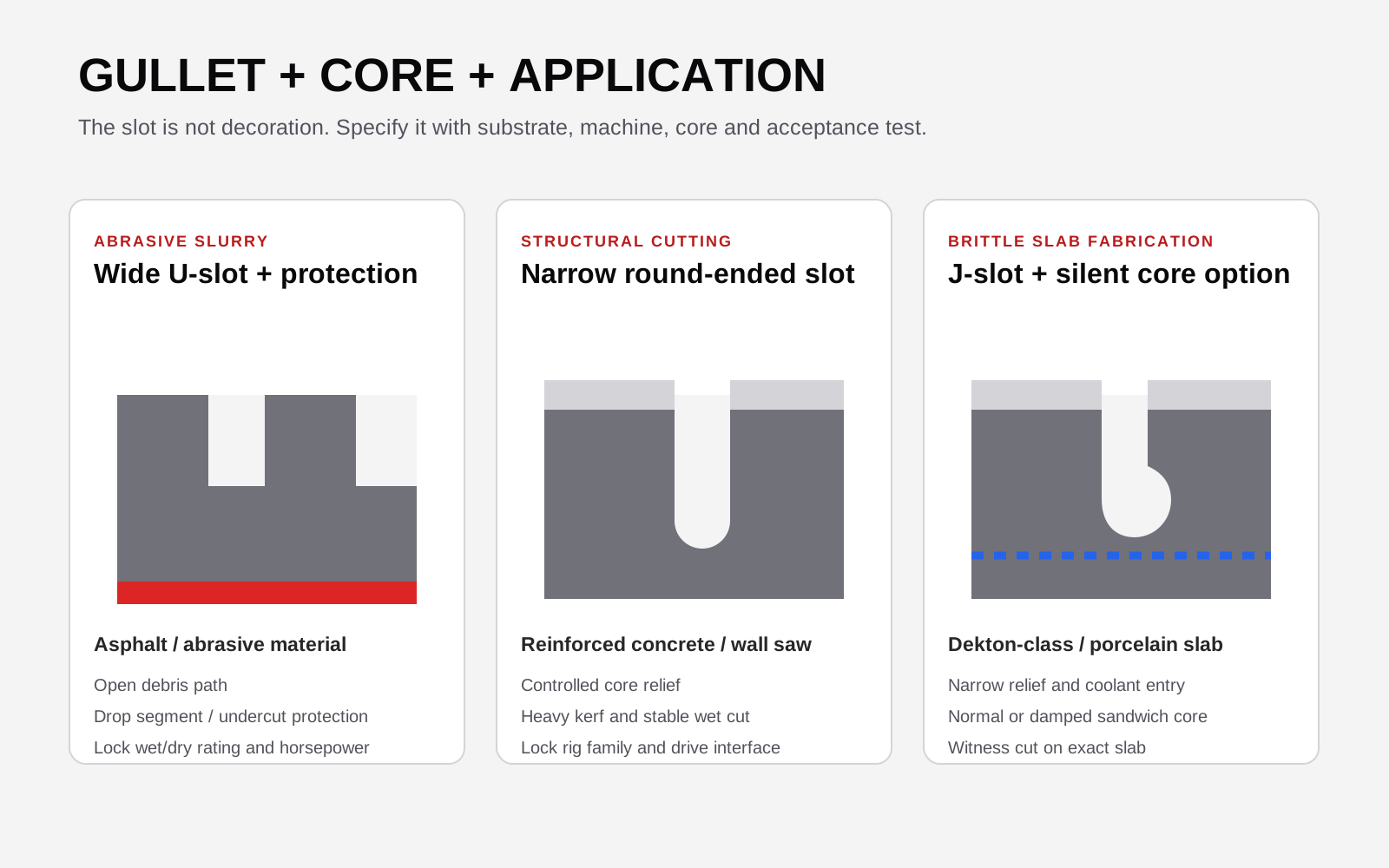
Wet cutting cools and flushes the kerf and is standard for bridge, wall and many floor-saw programs. Dry cutting needs a blade explicitly rated for the machine speed, temperature and duty cycle. The rating belongs to the completed blade system, not to one manufacturing word.
Professional Selection Matrix
| Machine / job | Architecture starting point | Buyer must provide |
|---|---|---|
| Hand-held concrete or masonry | Rated segmented or channelled blade | Saw model, guard, RPM, diameter, arbor, dry/wet |
| Floor saw - asphalt | Open gullet + undercut protection | Horsepower, aggregate, depth, asphalt-over-concrete condition |
| Early-Entry green concrete | Tri-arbor + up-cut blade + skid plate | Saw model, cut window, aggregate, kerf, blade-only or system |
| Wall or ring saw | Rig-specific drive + heavy wet-cut segment | Rig family, drive interface, torque, depth, reinforcement |
| Bridge saw - granite / quartzite | Normal or silent core + substrate-matched segment | Slab, thickness, straight or 45-degree miter, arbor, water |
| Bridge saw - sintered slab | Supported rim; J-slot or other approved relief option | Exact slab, machine, edge acceptance and witness cut |
Segment Height, Kerf and Cost per Accepted Cut
Segment height is the available wear reserve, but life is not proportional to height alone. Usable life also depends on bond renewal, diamond placement, segment width, coolant, machine power and substrate. Compare blades by cost per accepted metre or cut, including speed, edge quality, changeovers and reject risk.
Arbor, Drive Interface and Maximum RPM
The interface must match the machine exactly: common hand-held bores, 1-inch floor-saw arbors, triangular Early-Entry arbors, multi-pin wall-saw patterns, ring-saw drive systems and 50/60 mm bridge-saw interfaces are not interchangeable. Confirm the machine model and the blade's marked maximum operating speed before approval.
Read Failure Modes as Specification Evidence
Glazing points to a cutting face that is not renewing under the current load and material. Rapid segment wear points to an overly erosive system or severe abrasive slurry. Core undercut points to missing or insufficient protection. Wander, vibration or slab chipping calls for review of core tension, kerf, slot geometry, feed, coolant and machine alignment. Record the failure mode rather than changing one visible feature at random.
Acceptance and Safety
Approve the completed blade against the machine and job: dimensions and interface, maximum RPM, direction of rotation, wet/dry marking, guard clearance, runout or tension requirement, cutting result and any required safety documentation. Concrete and stone cutting also require the applicable wet-control or dust-extraction plan for respirable silica.
A Buyer-Friendly RFQ
The buyer only needs to provide: machine and power, material and condition, diameter and interface, wet or dry, cut depth or slab thickness, straight or miter cut, annual quantity and a photo of the old blade or flange when useful. Engineering then matches the bond, diamond system, segment geometry, gullet, core and attachment backstage.
Zhonghuan coordinates documented OEM and private-label diamond-blade supply programs around approved drawings, machine compatibility and witness samples. Send the job inputs above and we return a proposed configuration and acceptance plan for confirmation.
Build a Machine-Matched Diamond Blade Program
Send the machine, substrate, diameter, interface and duty cycle. We return the blade architecture, sample plan and RFQ-ready specification.
Request Diamond Blade Engineering Match

