

What Is the DEWALT ELITE SDS-Max Bit?
The distinctive feature of the DEWALT ELITE SDS-Max bit is its broad, cross-shaped carbide head. Behind it sits a substantial steel core and a spiral built to move concrete dust out of the hole. The package targets a practical contractor problem: keeping productive drilling going when hard aggregate, deep holes and rebar encounters put both the cutting head and the body under load.
We look at the design from the application back to the construction: concrete and reinforcement, the rotary hammer, the likely failure mode, then the head and body features intended to address it. This is a useful premium benchmark for distributors selecting a heavy-duty SDS-Max range.
DEWALT uses regional names including ELITE SERIES, EXTREME and XLR. The DW5810 reference belongs to the North American range; DT60835-QZ identifies a metric 32 × 570 mm model. Confirm the actual SKU and dimensions when matching catalogues. This article concerns the four-cutter concrete-drilling family; our DEWALT mining-bit analysis covers the separate French and German market references.
The official UK page identifies DT60835-QZ as made in Germany. For procurement, retain that statement against the exact article number and regional documentation.
The Four-Cutter Full Carbide Head
DEWALT describes the construction as a full carbide head with four cutting edges. The front view shows a cross-shaped cutting face and a raised central pilot, with open spaces between the cutting arms leading towards the flutes.
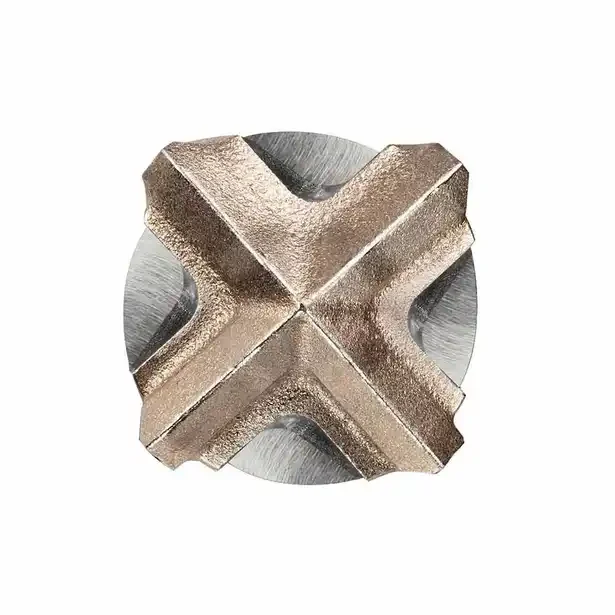
In our engineering reading, the pilot establishes the starting point while the outer cutting edges work towards the finished hole diameter. Around the rotating head, the four cutting positions meet changes in aggregate and reinforcement at different moments. The intended benefits are controlled starts, round holes and resistance to edge damage during rebar encounters.
Four cutters describes edge count; full carbide describes head construction. A head assembled from several carbide inserts can also have four cutting edges. Buyers should therefore specify both the construction and the edge count. The head-to-steel joint is another separate specification: a product photograph identifies geometry, while the manufacturing specification establishes the joining process and carbide grade.
Iron Blast and the Reinforced Core
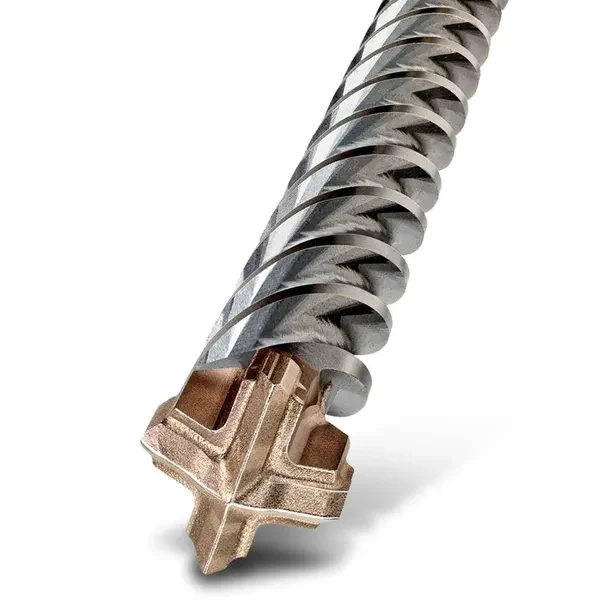
DEWALT connects Iron Blast Technology with fatigue resistance and reduced breakage. Its German DT60835-QZ page describes surface blasting with steel balls; other regional pages describe high-speed composite blasting. These are DEWALT’s product descriptions, not a published production recipe.
The engineering principle is relevant to the failure mode. A rotary-hammer bit experiences repeated impact, torsion and bending. Surface condition matters where cracks can start, particularly around flute transitions. Controlled mechanical surface treatment can help manage this part of the fatigue problem; the result still depends on the steel, heat treatment, section geometry and process control.
The tapered, reinforced core addresses a different part of the same problem: resistance to bending and flute fracture as the hole gets deeper. Increasing the load-bearing section must work alongside enough flute space to clear debris. This combination explains why a premium bit should be assessed as a complete assembly rather than selected by the tip alone.
Dust Removal and the Anchor Wear Mark
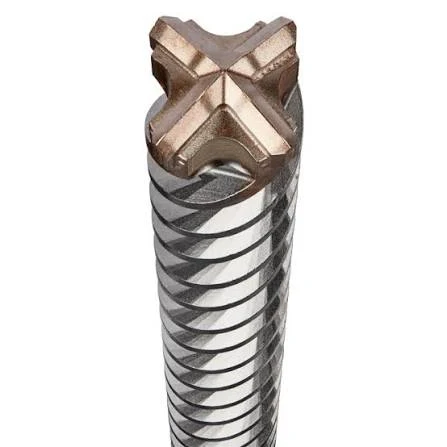
Hard aggregate creates abrasive dust; deeper holes make its exit path longer. If debris accumulates at the face, the bit repeatedly crushes material it has already broken, increasing friction and reducing useful progress. DEWALT presents its open head and optimized flutes as a way to keep material moving away from the cutting zone.
The anchor wear mark serves hole-diameter control. DEWALT instructs users to replace the bit for anchor installation once the mark is no longer visible. This matters because a bit can still penetrate concrete after wear has affected the dimensions of the hole. Use the mark provided on the actual model and follow the anchor manufacturer’s drilling and cleaning instructions.
For repeat purchasing, evaluate drilling speed together with hole diameter and wear progression. A fast first hole is only part of the purchasing decision; a contractor also needs usable holes throughout the bit’s service life.
Where This Construction Makes Sense
The intended work includes reinforced-concrete anchor holes, rebar doweling and penetrations through concrete walls or slabs within the selected bit’s capacity. Start with concrete hardness, aggregate abrasiveness and expected reinforcement, then choose a rotary hammer with suitable capacity for the diameter and depth. SDS-Max identifies the connection; the machine’s rated drilling range and operating mode determine the appropriate match.
Rebar-strike resistance is valuable when the cutting head encounters an embedded bar. Planned cutting of structural reinforcement still follows the approved project drilling plan. For repeated steel intersections, use a validated drilling method suited to that duty.
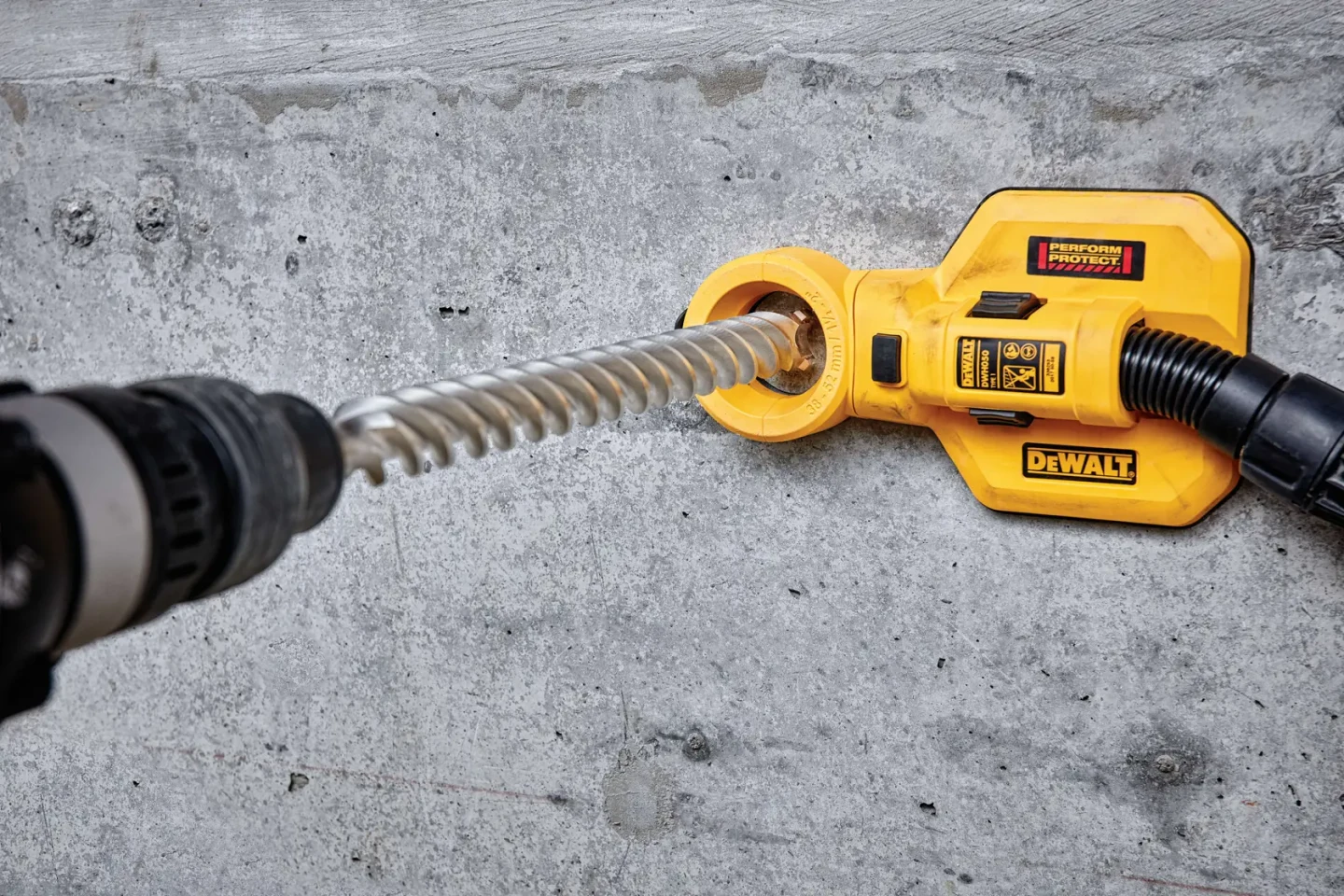
For deep holes, provide a practical debris-removal routine and compatible dust extraction. Our reinforced-concrete drilling guide explains the application choices in more detail.
Reading the 2× Life Claim and No Break Guarantee
The North American ELITE messaging includes up to twice the life. The stated SDS-Max comparison is DEWALT DW5809 against Bosch HC5021 in C35/45 concrete. It is a defined manufacturer comparison, not a universal multiplier for every diameter, competitor or drilling condition. DEWALT’s 2022 launch announcement supplies the comparison footnote.
The No Break Guarantee is also specific: the North American product copy ties replacement to the anchor wear mark remaining visible and lists DW5861, DW5830 and DW5831 as exclusions. Apply the current DEWALT terms for the purchased SKU and market; the same guarantee should not be transferred automatically to metric DT references in other regions.
For a distributor, these features support a clear premium offer: documented construction, wear control and a defined service promise. In comparative sampling, record the machine, concrete, reinforcement, drilling depth, usable hole count and reason for retiring each bit so the result answers the customer’s actual job.
Metric Sizes and Model Identification
The following examples identify metric catalogue formats from the regional listings and DEWALT product references. Dimensions are diameter × overall length; availability depends on the local range.
| Reference | Diameter (mm) | Overall length (mm) |
|---|---|---|
| DT60809-QZ | 16 | 340 |
| DT60810-QZ | 16 | 540 |
| DT60817-QZ | 20 | 540 |
| DT60820-QZ | 22 | 540 |
| DT60825-QZ | 25 | 540 |
| DT60835-QZ | 32 | 570 |
| DT60844-QZ | 40 | 380 |
The German DT60835-QZ page specifies 32 mm diameter, 570 mm overall length and 450 mm working length. The Australian DT60844-QZ page names a 40 × 380 mm bit with 250 mm working length. Record these three dimensions independently when comparing quotations.

Turning the Benchmark into an OEM Programme
When we help a tool brand build a premium SDS-Max range, we translate this benchmark into the factors that control repeat performance: substrate and reinforcement, hammer platform, failure mode, head architecture, carbide grade, joining route, body heat treatment and finished-hole acceptance.
- Full-carbide-head programme: our ZHMAX-8 SDS-Max range currently covers Ø4–25 mm, with a one-piece carbide head joined to the steel body by our resistance-friction-welding process. Confirm the selected size and machine match with our engineering team.
- Other diameters and duties: our ZHMAX-7 uses a full-width main carbide blade plus two inclined, axially set-back side inserts, forming four cutting edges. ZHMAX-168 uses three carbide pieces forming six cutting edges. These are separate constructions selected by application and drawing.
- Private-label execution: agree the size matrix, branding, packaging and sample acceptance before confirming the production specification.
For programmes benchmarked against a 32 or 40 mm DEWALT model, we select the head architecture and size against the application and approved drawing. See our full-carbide-head SDS-Max programme and SDS-Max product range for the current options.
Planning an OEM range? Send us the required diameters and lengths, target material, rotary-hammer model and approximate quantity. We will propose the appropriate head construction and sampling specification for your market.
Official References
Product facts and claim conditions were checked against the official references below on 24 October 2026. The geometry explanations are our engineering interpretation of the photographs and the documented construction.


