

One core bit for a cordless coring system
A contractor buying a Ø102 mm core bit for repeated sleeve holes needs to know how the bit fits the rig and how much work a charge can cover. Hilti’s SPX-A Speed is its Ultimate line for cordless coring. A German DD 150-U-22 kit lists a B 102/320 SPX-A Speed bit and separate BI (M41) connection ends. In that designation, 102 mm is the nominal diameter and 320 mm is the working length. Use the actual wall or slab thickness when planning the hole.
The photographs below show a separate 2″ × 14″ example, item #2411303. Its box and engraving identify the sample and show the crown and installed connection end. Hilti Singapore lists BI and configurations supplied without a connection end. Specify the actual holder and assembly when buying a replacement.
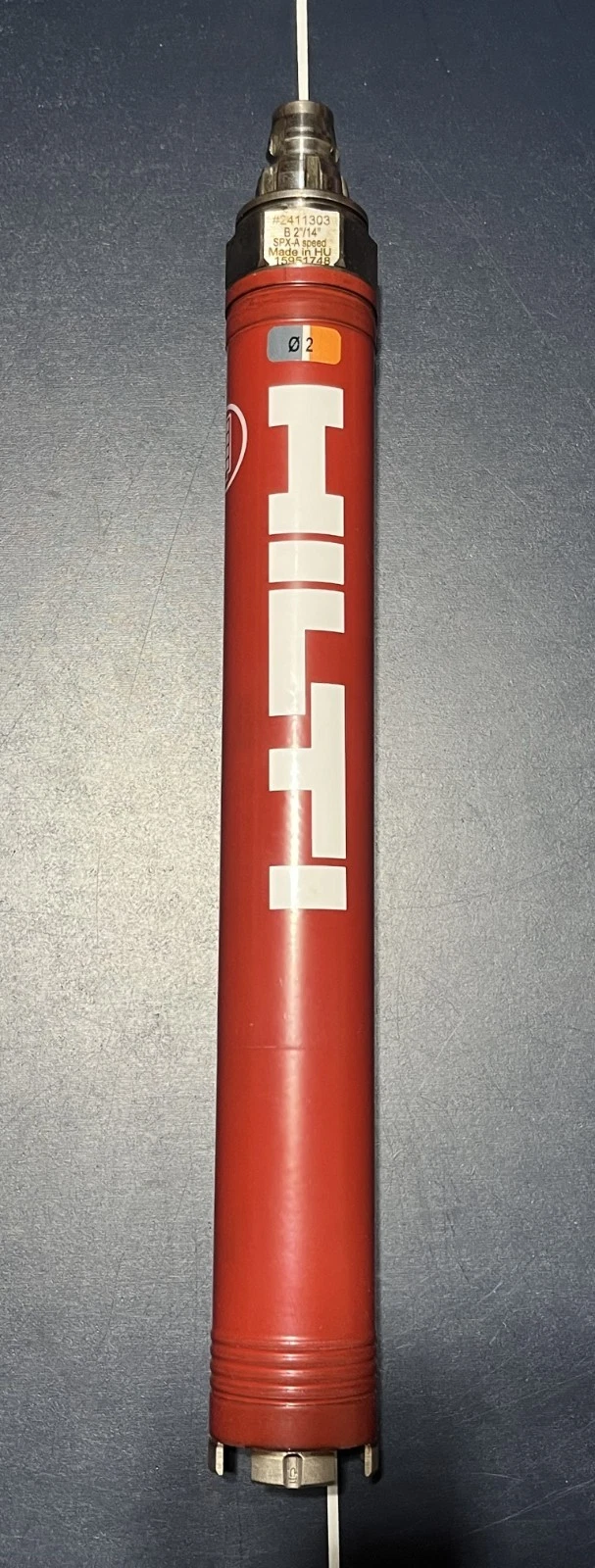
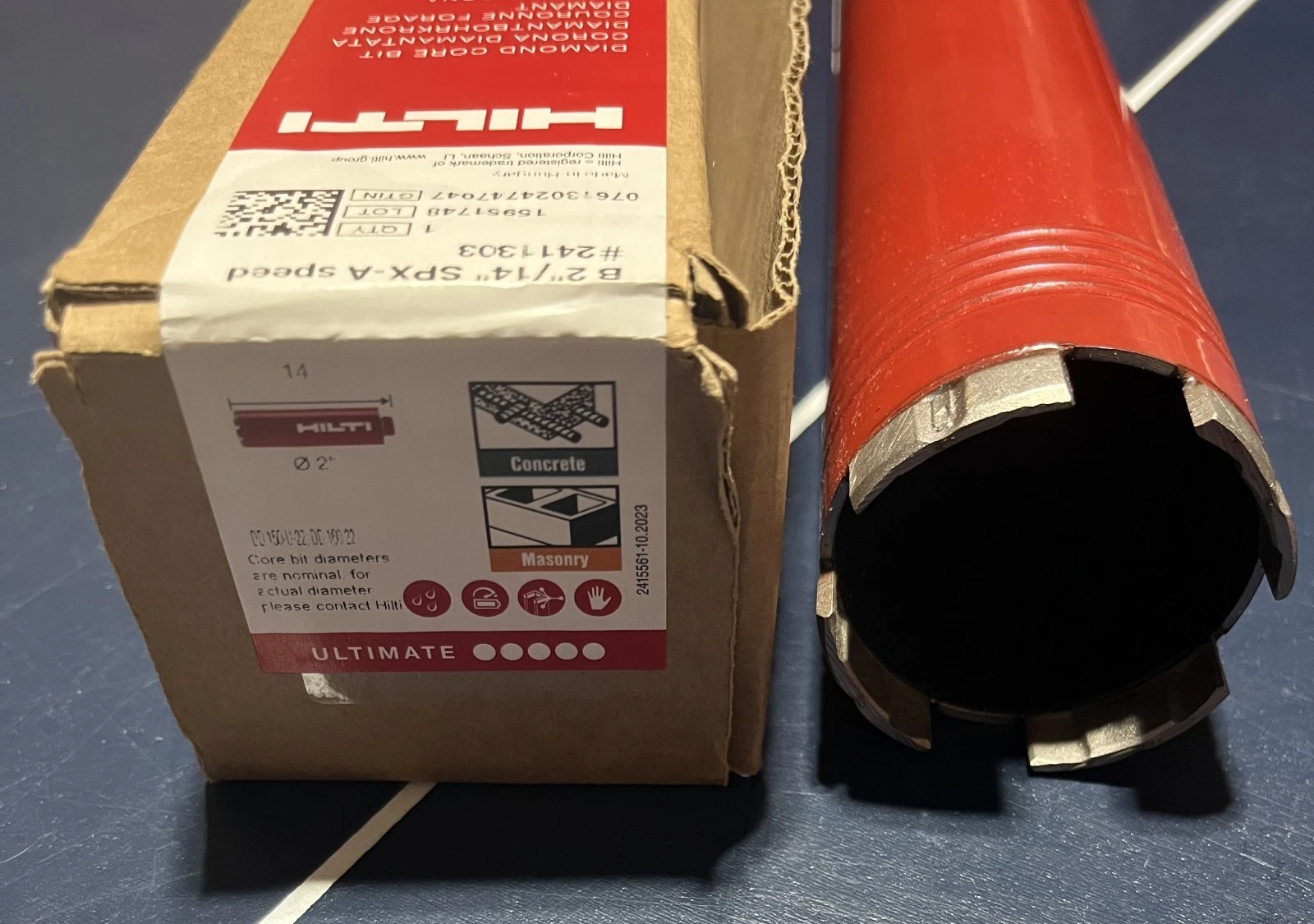
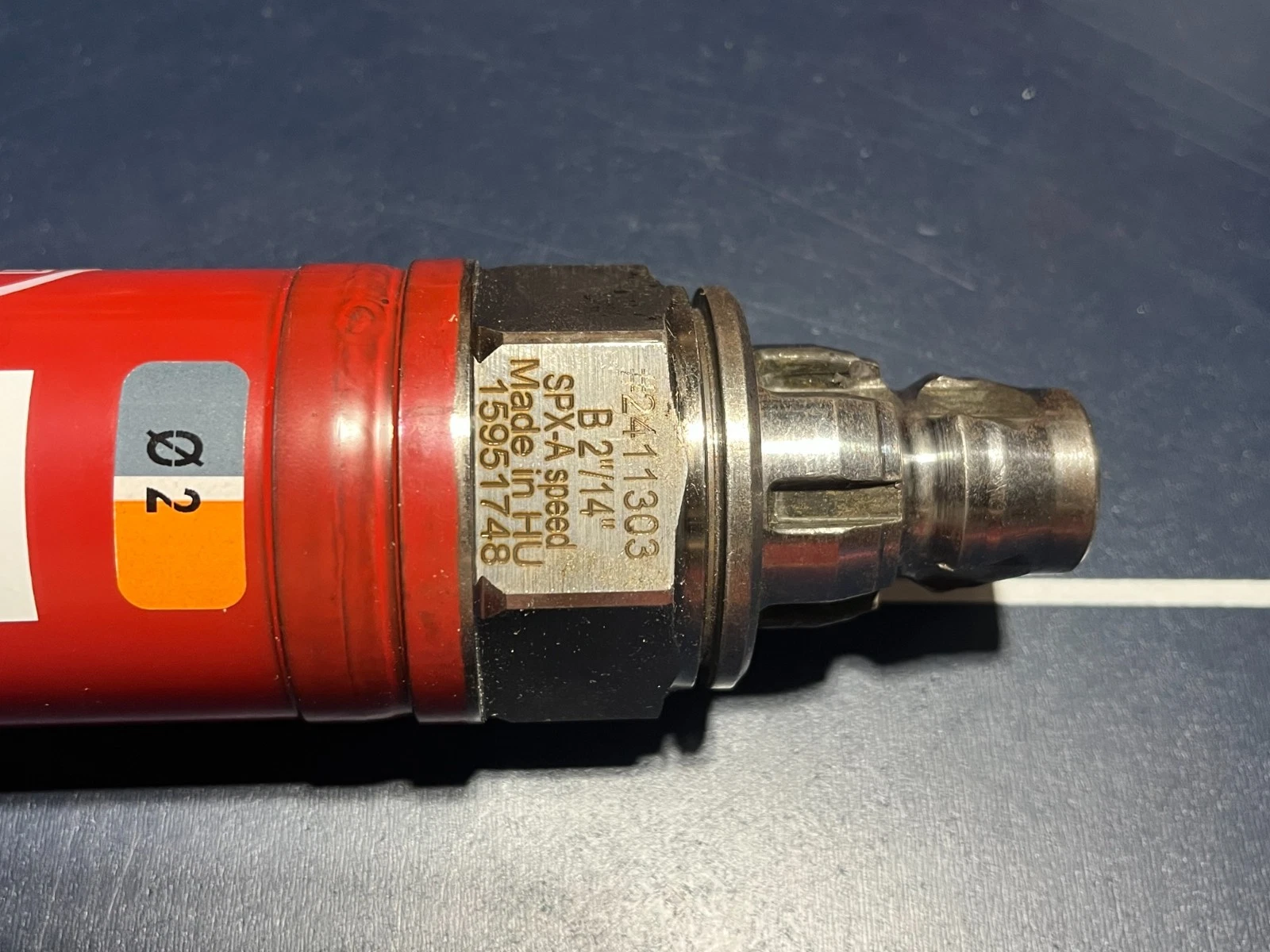
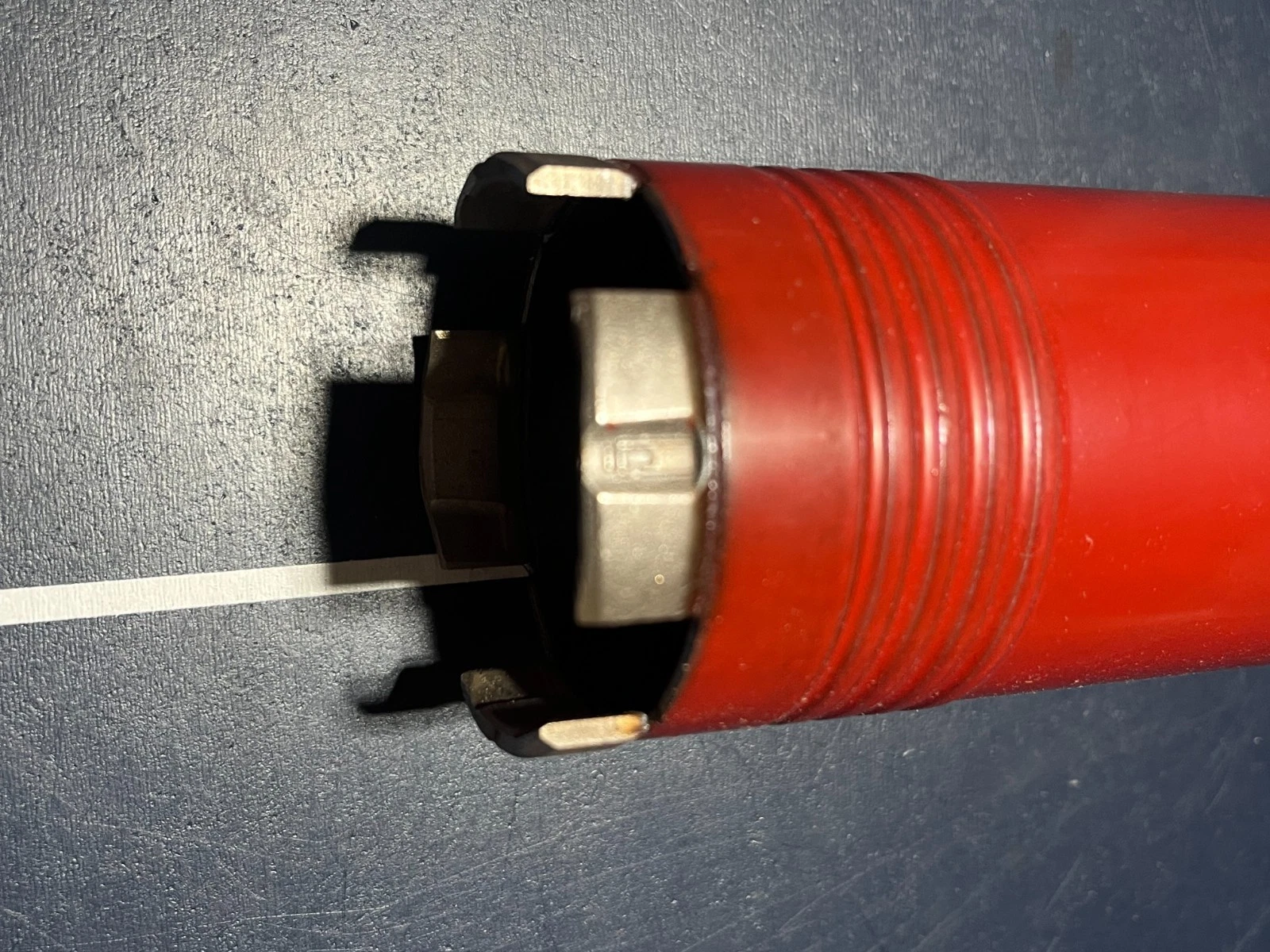
SPX-A Speed product specifications · DD 150-U-22 kit with B 102/320
Dry in masonry and wet in concrete
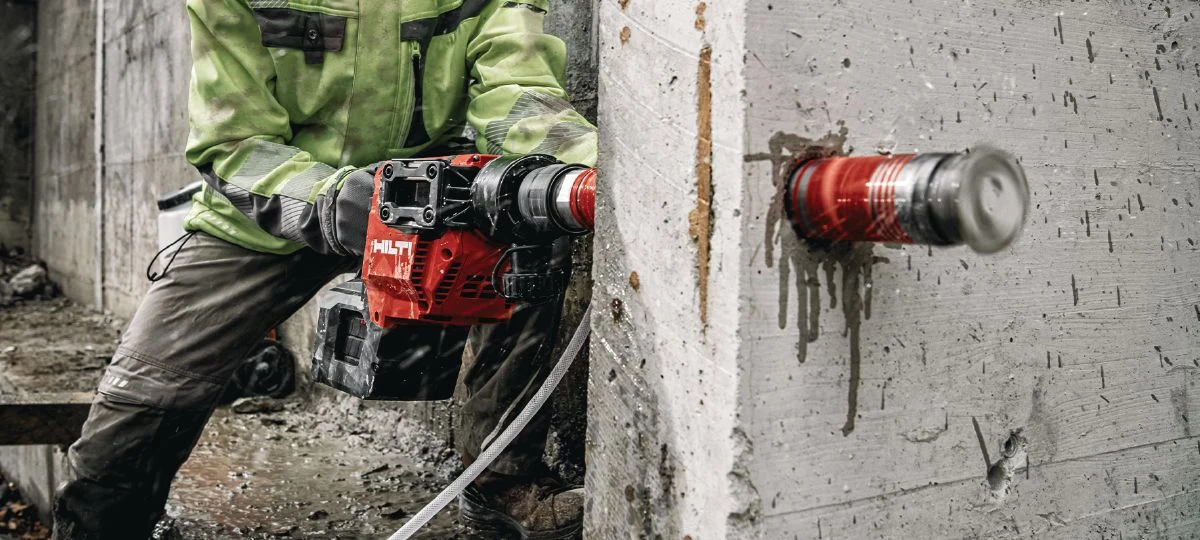
Hilti lists hand-held dry coring in masonry with suitable dust extraction, and wet coring in concrete by hand or on a stand. On the masonry job, check the dry setup and extraction. On the concrete job, plan water supply and slurry collection. Confirm the permitted diameter for the chosen rig, base material and drilling mode.
Hilti specifies Equidist diamond placement on this family from Ø37 mm. For a buyer comparing two bits, record the segment width, crown wear and hole time alongside the diamond layout. Those observations make the trial useful at purchase time.
SPX-A Speed product specifications
How many Ø102 mm holes can one battery complete?
Up to five holes per charge is the best-documented Ø102 mm example. Hilti Australia names the DD 150-U-22, one B 22-290 battery and cordless-optimised inserts. It describes a rig-mounted test on a 156 mm non-load-bearing reinforced concrete wall with one Ø16 mm bar.
Hilti Taiwan publishes two further Ø102 mm examples under different conditions. Read the three figures alongside the material, depth and reinforcement in each row. A single trial at the buyer’s own jobsite gives a better basis for planning a batch of holes.
| Hilti source | Base material and depth | Ø102 mm holes per charge |
|---|---|---|
| Australia | 156 mm non-load-bearing reinforced concrete wall, one Ø16 mm bar. rig-mounted, DD 150-U-22 and one B 22-290 battery | Up to 5 |
| Taiwan | Masonry, 100 mm hole depth | Up to 18 |
| Taiwan | Reinforced concrete, 125 mm hole depth, Ø16 mm rebar | Up to 3 |
Hilti Australia test conditions · Hilti Taiwan job examples
How to specify an OEM trial
For an OEM or private-label diamond core-bit enquiry, send the machine model, installed holder or a photo, diameter × working length, base material and quantity by size. A photo of the current bit label helps our team match the interface. We can confirm a wet- or dry-coring sample specification and coordinate evaluation and batch supply.
When runtime matters, trial both samples on the same rig and battery model, with the same material, hole depth, operating mode and comparable starting charge. Record completed holes per charge, time per hole and remaining segment height. If rebar is present, record its size and what each bit actually encountered.
| Trial field | What to record |
|---|---|
| Machine and battery | Rig, fitted holder, battery model and starting charge |
| Hole and material | Diameter, depth, dry or wet mode, base material and rebar |
| Trial result | Completed holes per charge, time per hole and change in segment height |
Explore Zhonghuan diamond core bits · Request an OEM core-bit quote
