

Our engineering reading is that the US Makita SDS-Plus 3-Cutter bits pictured here are very likely supplied by Diager as an OEM program linked to its Booster Plus design family. The case rests on a combination: the three-edge carbide geometry, Makita’s explicit description of a brazed head and, most distinctively, its Tri-Zone flute terminology.
This article focuses on the B-60975 / B-61139 product family shown in the supplied Makita material. Our separate Makita NEMESIS II analysis covers a different range.
The application: concrete, reinforcement and anchor holes
In concrete, a rotary-hammer bit must fracture aggregate and move crushed material out of the hole. When the head meets reinforcement unevenly, guidance and edge support become more important. For anchor drilling, the practical targets are controlled hole diameter, reliable starting and steady progress on the selected SDS-Plus machine.
Makita positions this three-cutter family for concrete and reinforced concrete. Select diameter and length within the hammer’s rated drilling range. Follow the anchor specification for edge distance, embedment and hole cleaning; the promotional near-edge illustration does not set those installation limits.
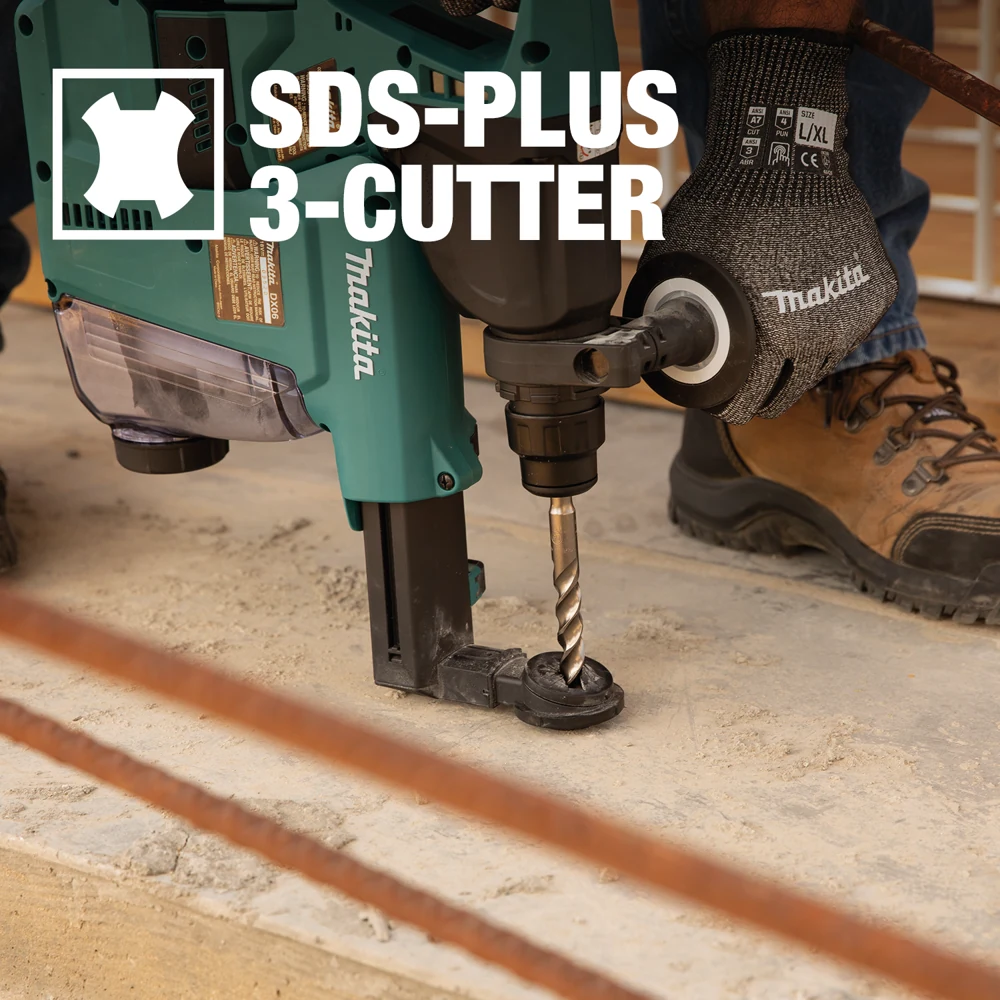
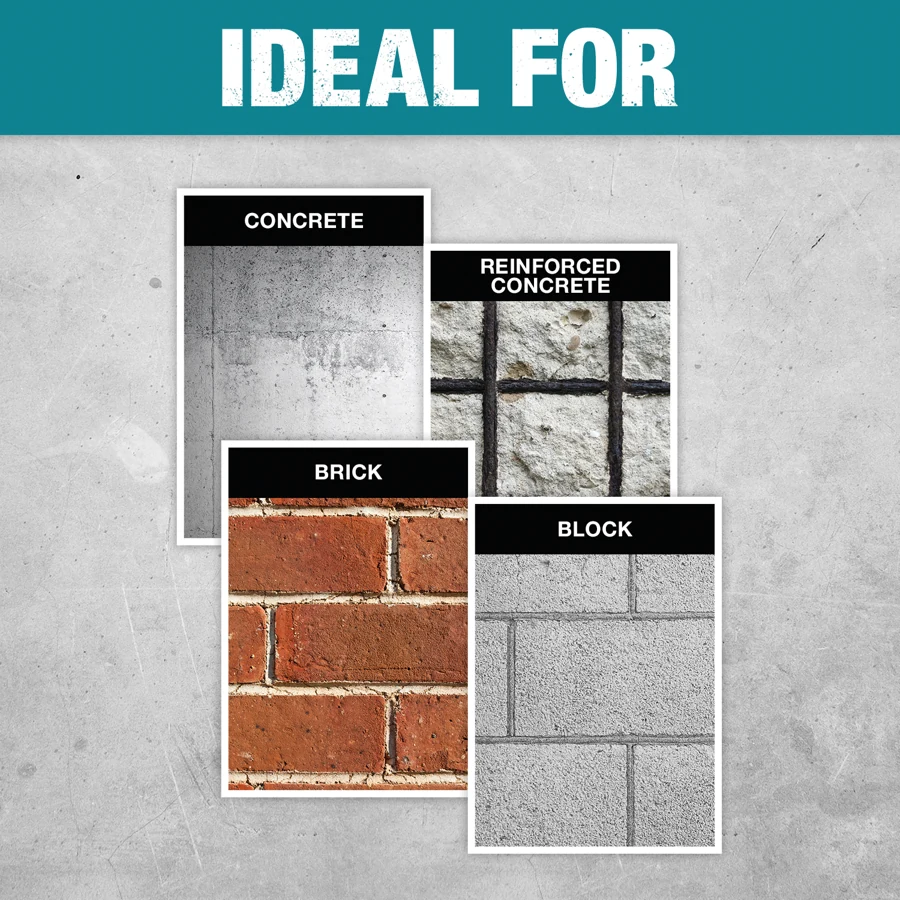
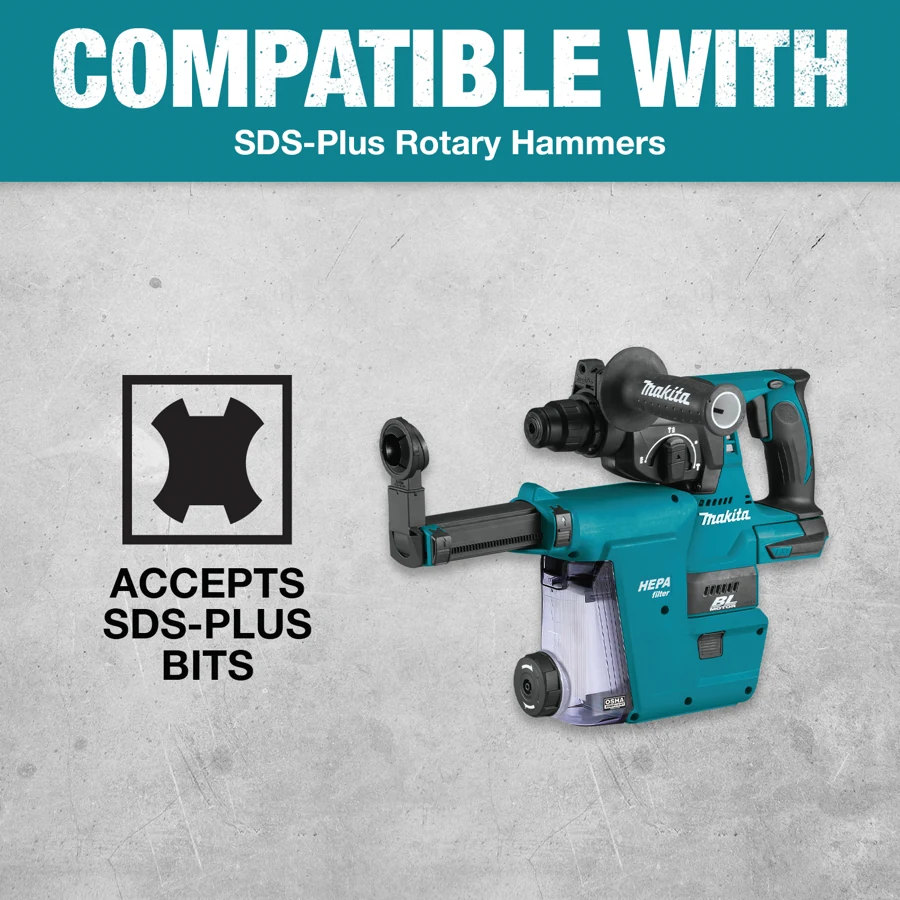
What the images reveal about the head and flute
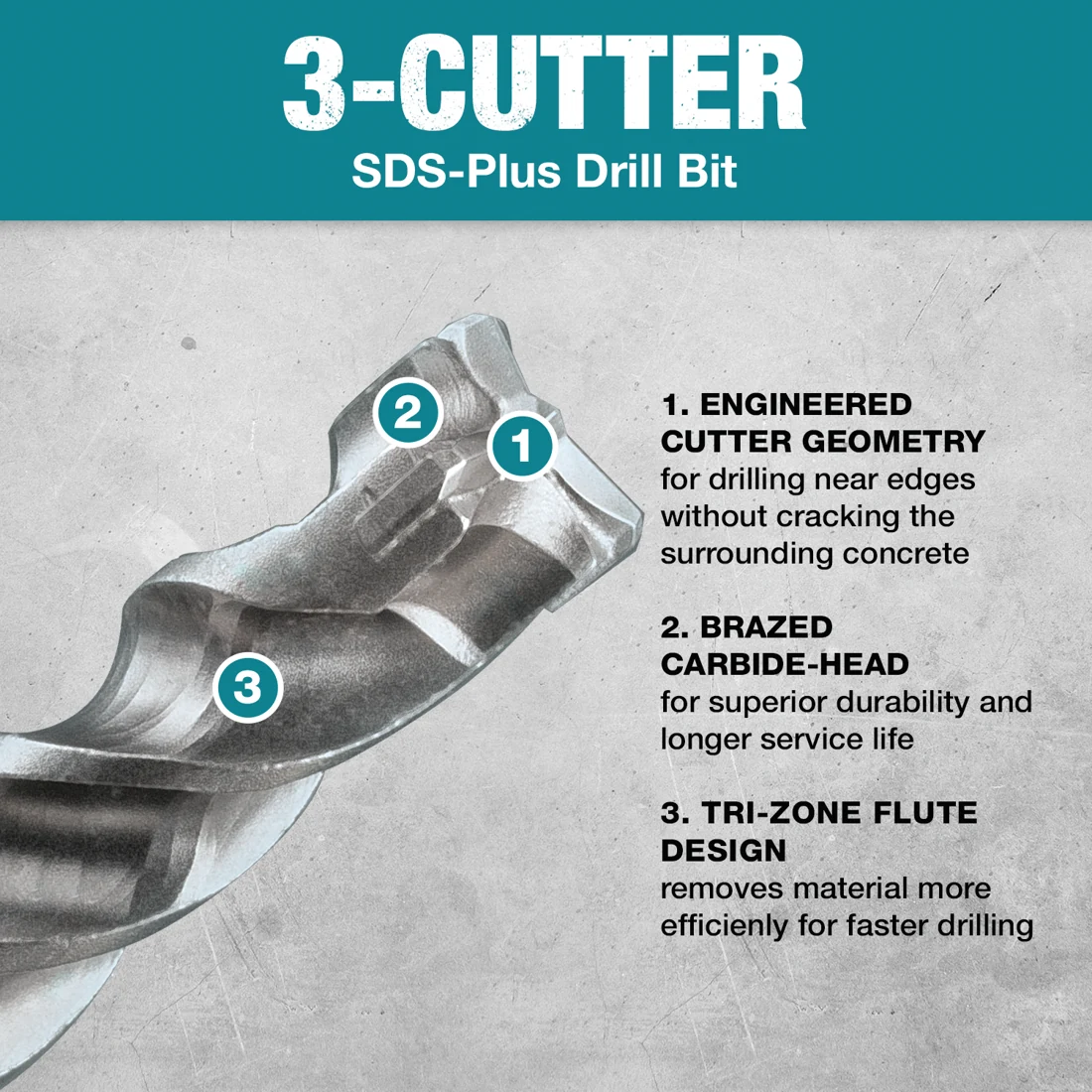
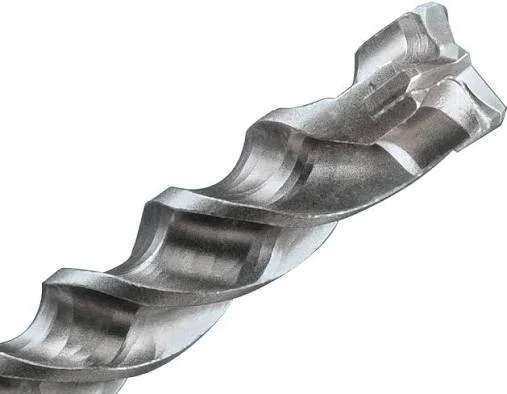
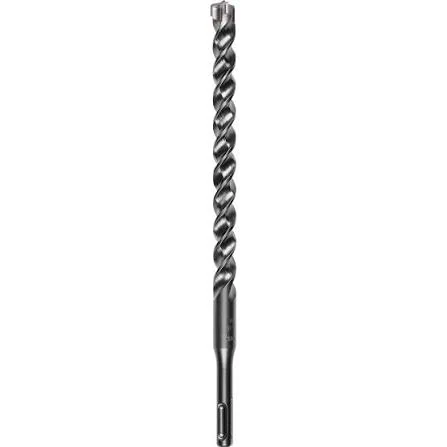
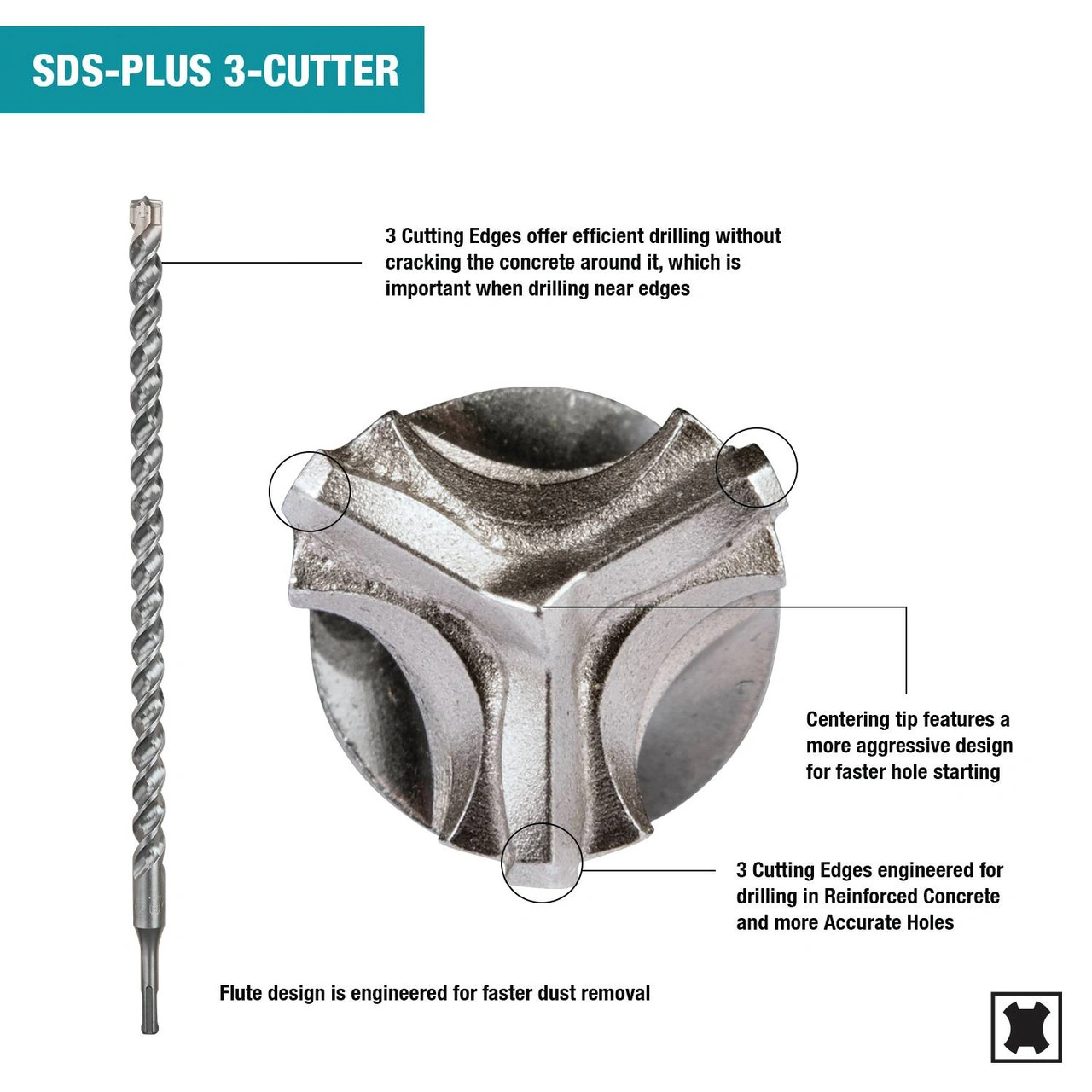
The close-ups show three cutting edges around a central point, with open passages into the spiral. Makita’s annotated graphic identifies three elements: cutter geometry, a brazed carbide head and a Tri-Zone flute design. The centre point starts and guides the hole; the peripheral edges work around its circumference; the flute carries away debris.
These features describe a coordinated head-and-flute system. They do not make every three-cutter equivalent: carbide support, grinding, joint quality and flute clearance still determine how a sample performs. A brazed carbide construction also needs to be distinguished from a full carbide head welded onto a steel body.
Why Diager Booster Plus is the likely OEM connection
The strongest sourcing clue is the shared feature combination, especially Tri-Zone. Diager’s Booster Plus technical sheet documents a three-cutter monobloc carbide tip, brazed construction and a Tri-Zone flute. Compare that with the supplied Makita graphics and its concrete catalog:
| Feature | Makita material | Diager reference |
|---|---|---|
| Head and joint | Three-edge tip; graphic explicitly identifies brazing | Booster Plus sheet: brazed monobloc carbide tip |
| Flute | Tri-Zone named on the supplied feature graphic | Tri-Zone named and illustrated in the Booster Plus sheet |
| Tip geometry | Concrete catalog describes three 135° cutting edges | Earlier Booster Plus sheet also describes 135° edges |
Taken together, these details support Diager as the likely OEM supplier more strongly than a generic Y-shaped head does. This remains our sourcing inference: the cited public documents describe the products and do not disclose a Makita–Diager supply agreement. It should not be extended to every Makita bit, market or production lot.
Source versions matter too. The earlier Booster sheet uses 135°, while Diager’s 2022 French catalog lists a 150° tip angle for Booster Plus. Diager’s 2024 English catalog also repeats 135°, while its French product page lists 150°. These publications do not establish whether the difference reflects geometry changes or documentation; confirm the selected reference against a sample.
B-61139 dimensions and the US 3-Cutter range
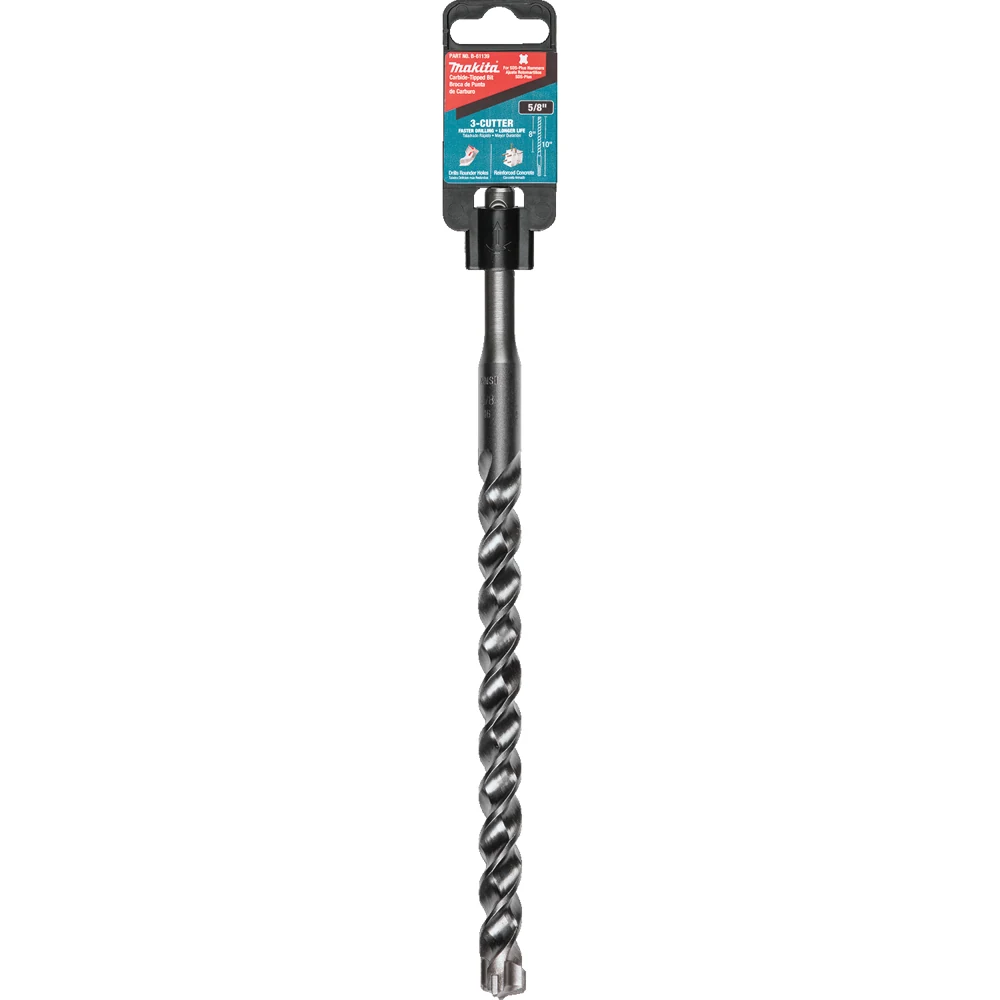
The official B-61139 page separates diameter, usable length and overall length:
| Specification | B-61139 |
|---|---|
| Shank | SDS-Plus |
| Diameter | 5/8 in = 15.875 mm |
| Usable length | 8 in = 203.2 mm |
| Overall length | 10 in = 254 mm |
| Cutting edges / package quantity | 3 / 1 |
The supplied Makita flyer also lists B-60975 at 3/16 × 4 in, B-61020 at 1/4 × 6 in, B-61070 at 3/8 × 6 in and B-61101 at 1/2 × 6 in. These are diameter × overall-length designations. The flyer covers both two- and three-cutter products; its B-60551 reference belongs to the two-cutter group.
The smaller head photographs illustrate the family’s geometry, while the package photograph identifies B-61139. Photographs of different diameters are not dimensional drawings of the same SKU.
What to specify for a private-label alternative
For distributors, the useful next step is a measurable product brief. At Zhonghuan, we build the comparison around the intended concrete, rebar exposure, rotary-hammer model, diameter and usable length.
| Proposed route | Construction and positioning | Sample acceptance |
|---|---|---|
| A — Brazed three-cutter | Three-edge monobloc carbide insert with a brazed joint; proposed benchmark route for engineering confirmation | Tip support, finished diameter, starting accuracy, drilling rate and head retention |
| B — Premium three-cutter FCH | Our one-piece full carbide head joined to steel by resistance friction welding; a separate construction route | The same drilling conditions, plus joint integrity and gauge retention after the agreed hole count |
We manufacture three-cutter full carbide head SDS-Plus bits for OEM programs. Send us your diameter and usable length, target material, hammer model and estimated quantity. We can confirm the appropriate construction, sample plan and private-label packaging through an OEM quotation.
Official references
- Makita B-61139: product page and dimensions
- Makita: SDS-Plus 2-Cutter & 3-Cutter flyer
- Makita: concrete solutions catalog
- Diager: earlier Booster Plus / Tri-Zone technical sheet
- Diager: 2022 French catalog, Booster Plus reference 113
- Diager: 2024 English catalog, Booster Plus technical illustrations
- Diager: Booster Plus reference 113, French product page
Product photographs and promotional graphics supplied for this article are Makita reference imagery. The OEM assessment is our engineering interpretation of those images and the linked manufacturer documents.


