

New-barrel production details
These are real Zhonghuan product and segment photographs. They show the new-barrel route that remains our standard supply model; they are not presented as third-party retipping returns.
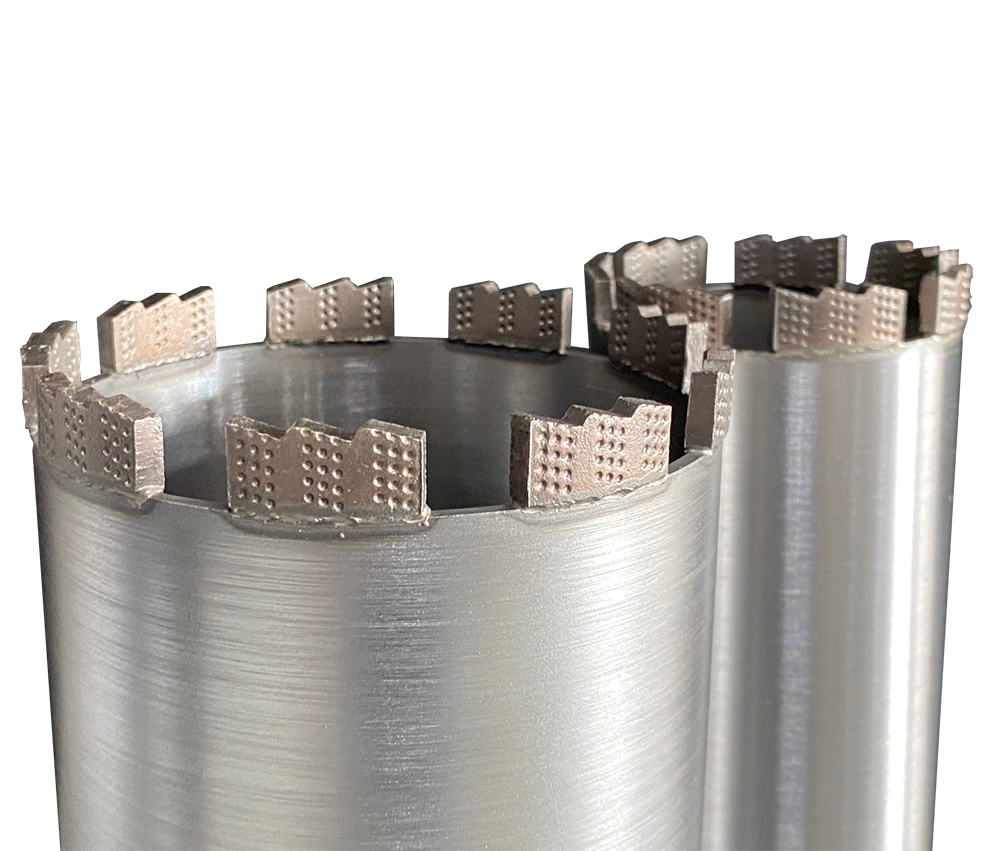
Shark-segment core barrels
New steel barrels with aligned shark-profile diamond segments. The first segment installation on a new barrel is standard manufacturing, not retipping.
- New barrel
- Shark segments
- Controlled spacing
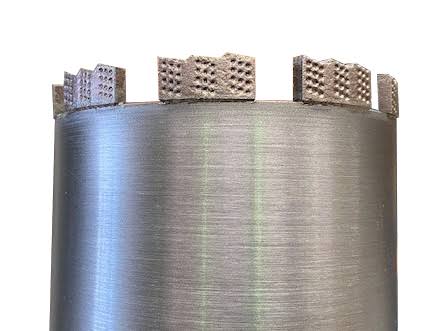
Segment seats on a new tube
Close view of real segment faces, spacing and the new tube edge before field service history exists.
- Real segment faces
- Uniform spacing
- New tube edge
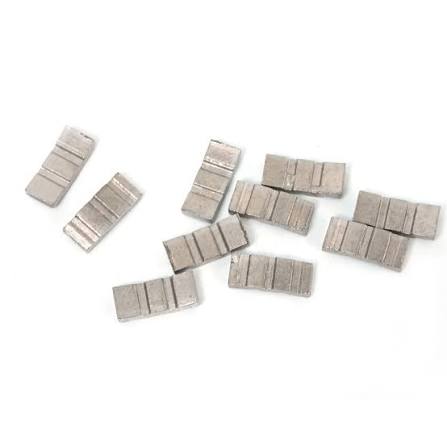
Loose diamond segments
A replacement segment set is only one input. The reused tube must pass engineering review before these segments can become a retipped tool.
- Segment set
- Bond by substrate
- Tube approval first
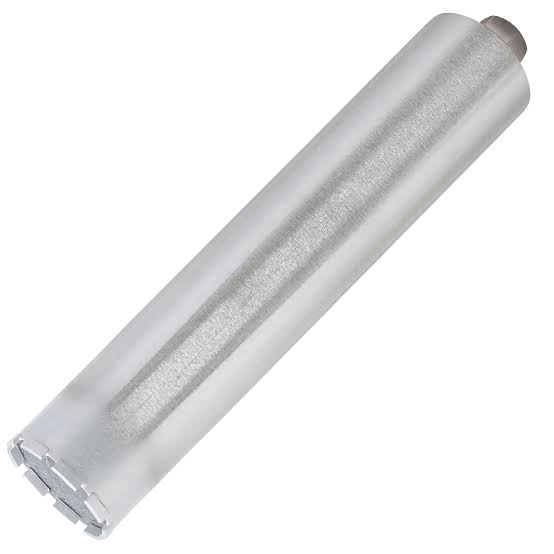
Full-length core barrel
A new barrel lets thread, working length, tube geometry and segment layout be controlled from the first approved drawing.
- Machine-matched thread
- Approved working length
- First-build traceability
Quick Answer: First-Time Welding Is Not Retipping
If the tube is new and is receiving its first diamond segments, the job is normal core-bit manufacturing—not retipping. This remains true when the customer supplies the new tube. Retipping begins only when a used core barrel returns with worn, broken or missing segments and the old joint area must be removed before a new segment set is installed.
The distinction matters commercially and technically. A new barrel arrives with a known drawing, clean segment seats and no field heat history. A used barrel arrives with an untraceable combination of wear, runout, thread load, side impact, overheating, previous repair and tube-steel condition. The segment is replaceable; the tube has to earn approval for another service cycle.
New Barrel vs Used Barrel
| Question | New barrel, first build | Used barrel, retipping candidate |
|---|---|---|
| Previous segment joint | None | Must be identified and removed |
| Field heat and impact history | None | Requires review |
| Tube geometry | Checked against drawing | Re-check straightness, roundness and runout |
| Commercial route | Standard OEM production | Existing-customer engineering review |
What Retipping Actually Involves
Professional retipping is not a repair bead placed on top of the old joint. The controlled sequence is:
- Confirm the barrel identity, original supplier or order reference, original joining method and application history.
- Remove the worn segments and residual joint material.
- Cut back or re-machine the tube edge until the new segment seats locate on clean, sound steel.
- Inspect thread condition, wall integrity, cracks, remaining working length, straightness and runout.
- Approve the new segment count, side clearance, bond, joining route and fixture drawing.
- Install the new segment set, then inspect final alignment, joint condition and dimensional conformity.
Diamond Products describes its re-segmenting service in the same practical terms: the worn end is cut off and new segments are installed, provided the tube is suitable. Husqvarna likewise treats retipping as a specialised service-centre process in which old segments are removed and new segments are brazed to the old tube.
Brazed vs Laser-Welded Retipping Routes
Originally silver-brazed barrels
These are the conventional retipping candidates. The old segments and braze residue are removed, the seat is cleaned and prepared, and new segments are positioned before controlled brazing. The process is familiar, but tube approval remains mandatory; a neat new braze cannot correct a bent barrel, damaged thread or cracked tube edge.
Originally laser-welded barrels
A laser-welded barrel is not automatically disposable, and it is not automatically reusable. Re-segmenting may be practical when the old weld and affected tube edge can be cut back to sound steel while preserving working length, roundness and the approved geometry. The new joint is then produced on the newly prepared seat. The new segment is never specified as an overlay on the old laser seam.
The joining route for the replacement set follows the new application and approved process—not simply the label on the old bit. Reinforced-concrete wet coring, masonry dry coring, tube steel and segment-base construction all influence whether laser welding or brazing is the correct route.
Barrel Acceptance Checklist
- Identity and traceability: original order, drawing, tube steel and joining route.
- Thread: correct interface, no deformation, severe wear or loss of alignment.
- Tube wall: no excessive thinning, corrosion, deep scoring or local collapse.
- Cracks: no visible cracks at the old segment seat, slots, tube wall or connection end.
- Geometry: straightness, roundness and radial runout remain inside the approved service specification.
- Length: enough tube remains after cutback to meet the required working length.
- Heat history: no evidence of severe overheating, uncontrolled previous repair or repeated local burning.
Husqvarna's diamond-drill operating guidance also tells users to monitor vibration and radial runout because abnormal vibration can loosen segments. Retipping economics only work when the reused tube remains a stable carrier for the new segment set.
When a New Barrel Is the Right Route
A new barrel is the cleaner engineering and commercial route when the used tube has untraceable steel specification, untraceable repair history, thread damage, cracks, distortion, insufficient remaining length or abnormal runout. It is also the standard route for a new customer because the barrel can be matched to the machine, diameter, connection and working depth from the first drawing.
Retipping is not a universal cost-saving promise. Collection freight, cleaning, inspection, cutback, re-machining, fixture setup and one-off segment matching can exceed the value of a new barrel—especially on small diameters or mixed third-party returns.
Modular Retipping Is Different
Hilti's X-Change barrel is a purpose-built modular system. The cutting module can be mechanically removed and replaced, including on site, without conventional segment welding. That is different from workshop retipping of a standard tube. See the Hilti X-Change barrel for the modular approach.
Zhonghuan Supply Policy
We build diamond core-bit programs around new barrels, approved segment specifications and documented machine interfaces. This keeps tube steel, thread geometry, working length, segment spacing and joining history controlled from the first sample.
For established Zhonghuan customers, a traceable barrel from an approved prior Zhonghuan program can be submitted for retipping review. Acceptance follows the barrel inspection and the economics of the specific diameter and quantity. Returns from third-party or non-traceable programs are routed to a new-barrel quotation.
Information to Send
- Is the barrel new or used?
- Original supplier and Zhonghuan order reference, where applicable.
- Original joining route: silver brazed, laser welded, modular or untraceable.
- Diameter, working length, thread and target drill rig.
- Target substrate, reinforcement, wet/dry mode and typical hole depth.
- Photos of the full barrel, segment seat, thread and any visible damage.
- Quantity by diameter and whether consistent batch history is available.
For a new, machine-matched program, review the Zhonghuan Diamond Core Drill range or send the approved barrel drawing through our engineering RFQ.


