

Quick Answer: Undercut Protection Is a Sacrificial Wear System
Asphalt and green concrete release loose sand, aggregate and cuttings into the kerf. Water turns those particles into abrasive slurry; dry cutting keeps them moving as abrasive debris. Blade rotation repeatedly drives that material through the gullets and across the narrow steel zone beside each diamond segment.
The diamond layer can still look serviceable while the steel directly below it is already being carved away. Undercut protection places a deeper diamond-bearing protector, a wedge segment or an intermittent vertical tungsten insert in that wear path. The protector is consumed first so the main steel core retains support around the segment root.
How Abrasive Slurry Undercuts the Steel Core
- Particles enter the kerf. Asphalt fines, incompletely bonded green-concrete sand and aggregate circulate with water or cutting dust.
- Flow concentrates beside the segment root. The gullet gives slurry an exit path, but the transition between the wider segment and thinner core remains exposed.
- The core thins locally. Repeated particle impact cuts a groove into the steel and can leave a knife-edge profile below an otherwise usable segment.
- Segment support falls. Once the supporting steel area is reduced, load becomes concentrated around the attachment and premature segment loss becomes possible.
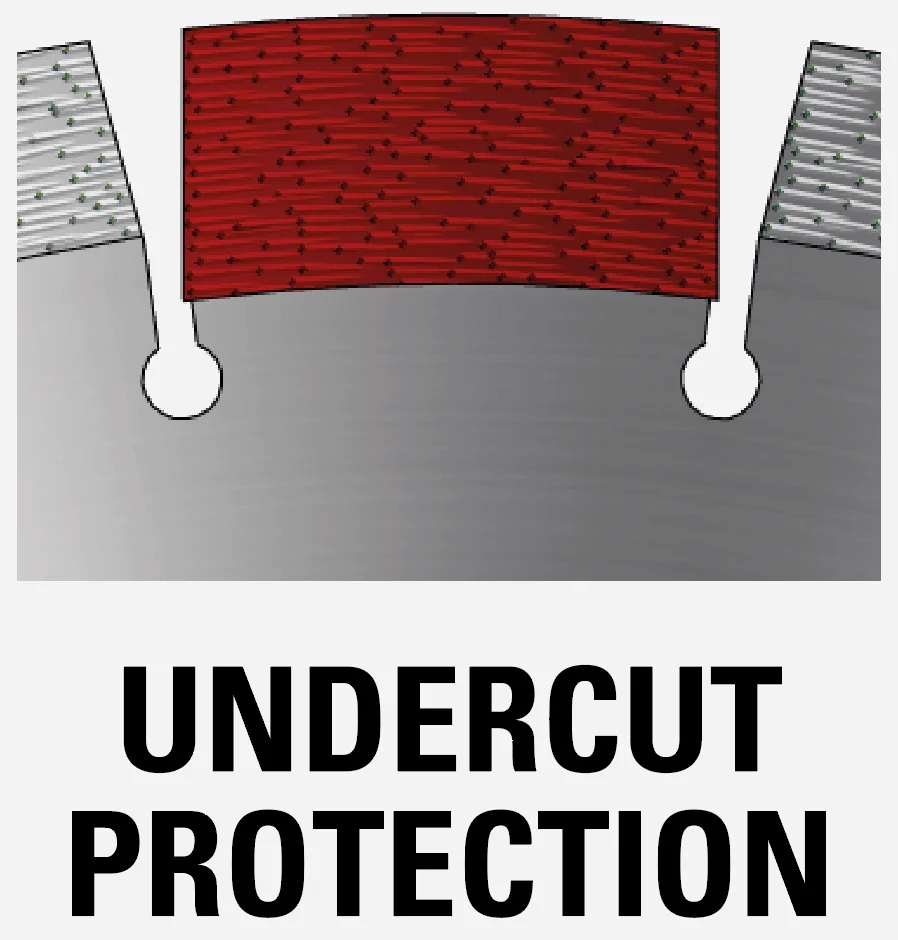
Three Visible Protection Architectures
1. Deep, Drop or Skirt Segment
A drop segment extends farther toward the center of the blade than the normal cutting segments. The lower extension shields the steel at the root and gives abrasive flow a sacrificial target. It may be formed as a full-width deep segment, a narrow skirt or an intermittently positioned protector.
Milwaukee's asphalt and green-concrete blade documentation combines laser-welded drop segments with wide gullets: the drop segments protect against undercutting while the gullets remove slurry.
2. Wedge Segment
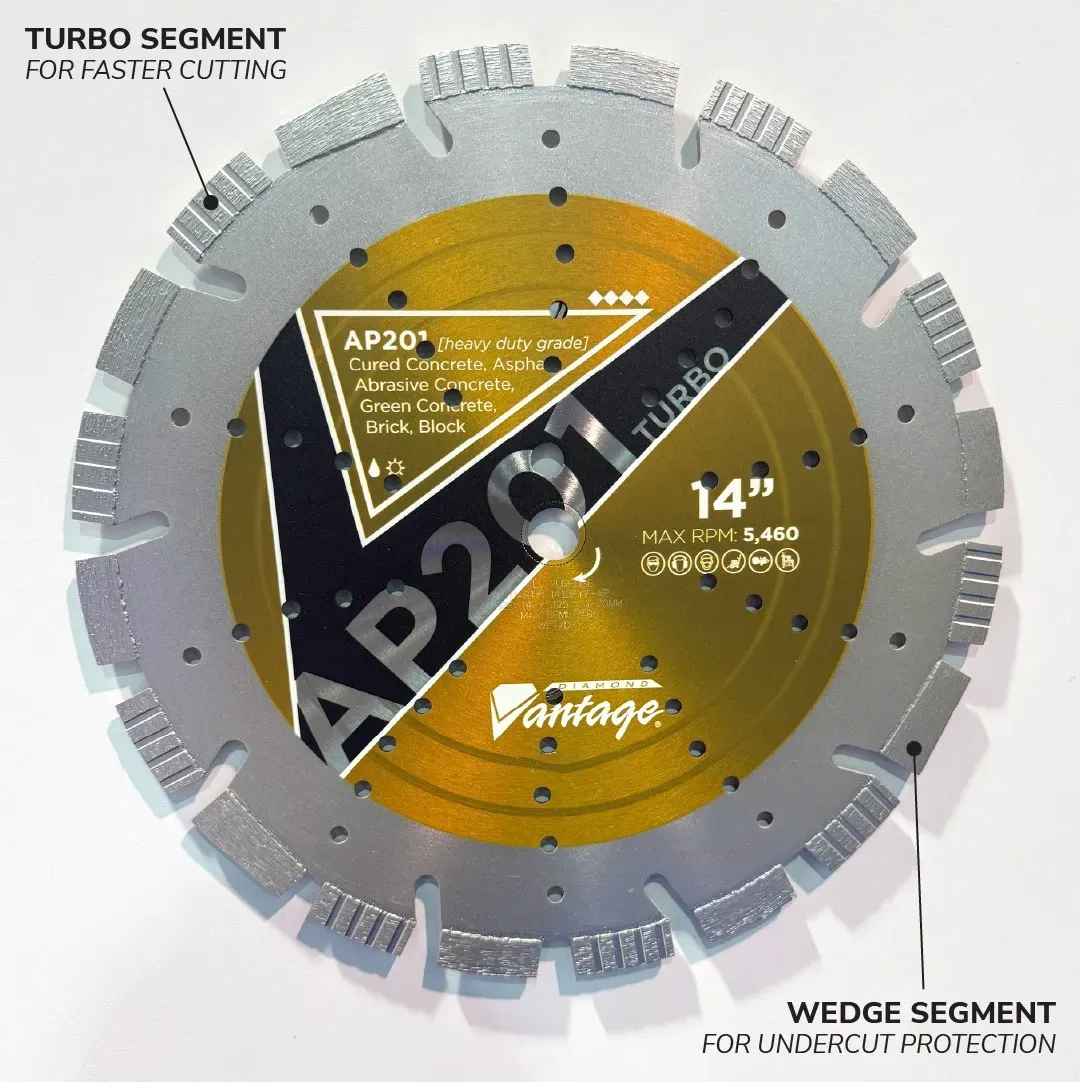
A wedge protector puts a broader or tapered wear reserve across the exposed root zone. The market uses several names—wedge segment, kicker, vertical drop segment and undercut segment—but the buying question is the same: where does the protector sit relative to the main segment and how much of the vulnerable steel does it cover?
Diamond Vantage product data separately identifies wedge-segment, insert and deep-segment undercut protection, confirming that these are distinct engineering routes rather than interchangeable labels.
3. Intermittent Vertical Tungsten Insert
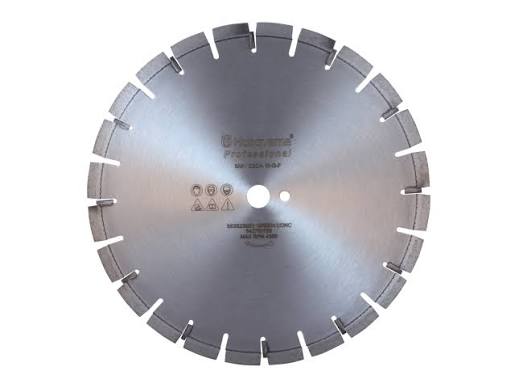
This architecture does not extend every main segment. Narrow vertical tungsten inserts are positioned intermittently around the rim, close to the gullet and segment-root wear path. The inserts receive concentrated slurry abrasion before it reaches the surrounding core steel. Their narrow format preserves open gullet area while adding local wear resistance at selected positions.
Vertical describes the orientation of the insert; tungsten identifies the wear-resistant insert material. It is therefore a different construction from a full-width diamond-bearing drop segment even though both are forms of undercut protection.
How Protection-Tooth Drawings Are Read
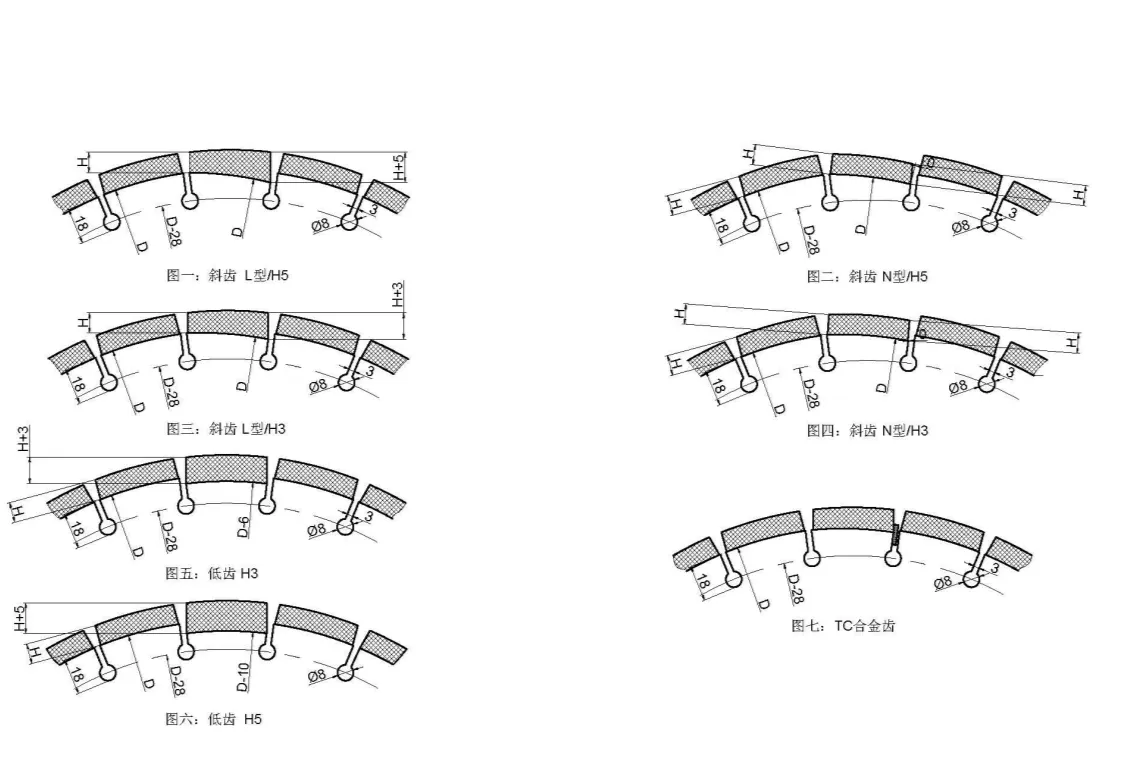
The drawing makes an important procurement distinction. Inclined L and N protectors, low protectors and TC alloy teeth all target core undercutting, but they are not the same component. H3/H5 and the dimensional callouts belong to the approved drawing for that blade family; they should be locked with diameter, core thickness, segment layout and joining plan rather than treated as universal dimensions.
Drop Segment vs Vertical Tungsten Insert
| Field | Deep / Drop / Wedge segment | Intermittent vertical tungsten insert |
|---|---|---|
| Basic construction | Diamond-bearing or wear-resistant segment geometry extends below the normal rim line | Narrow tungsten wear elements are inserted at selected gullet positions |
| Coverage | Broad or integrated coverage around a segment root | Localized armor at repeated high-wear points |
| Visible identifier | A protector visibly reaches deeper toward the blade center | Small narrow inserts appear intermittently beside or inside selected gullets |
| Gullet relationship | Protector geometry may narrow part of the open rim space | Intermittent layout preserves most of the open gullet path |
| Production drawing | Protector height, width, spacing, matrix and joining route | Insert quantity, position, dimensions, material and attachment route |
Neither architecture is automatically the premium answer for every blade. The correct program follows the saw platform, diameter, substrate, expected slurry load, cutting mode and approved sample. Some heavy-duty asphalt blades combine drop segments and tungsten inserts when the design needs both broad root coverage and localized core armoring.
What Buyers Can Identify From Product Photos
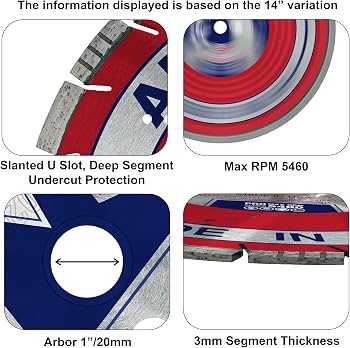
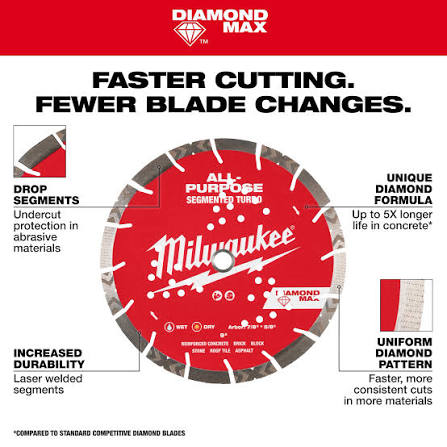
A photo can usually establish whether a blade uses a deeper protector, a wedge or an intermittent insert. The final repeat-order specification still comes from the old blade, flange interface and approved drawing because front photographs do not show protector depth, matrix or attachment quality.
Bond, Gullet, Attachment and Protection Solve Different Problems
| System | Primary job |
|---|---|
| Diamond bond | Controls matrix wear and fresh-diamond exposure |
| Gullet geometry | Provides spacing and a path for slurry, debris, water or air |
| Segment attachment | Transfers cutting load between segment and core |
| Undercut protection | Places a sacrificial wear reserve in front of the vulnerable steel-core zone |
A hard, abrasion-oriented bond does not replace undercut protection. Wide or slanted gullets do not replace it either. A professional asphalt or green-concrete program aligns the bond, gullet, attachment and protector as one blade system.
Where These Systems Are Used
- Asphalt: sustained abrasive slurry and long linear cuts make root protection a core design requirement.
- Green concrete: loose sand and incompletely bonded aggregate create an abrasive cutting environment. High-power floor-saw programs may use vertical inserts or deeper protectors.
- Asphalt over concrete: the blade crosses layers with different matrix and wear demands.
- Abrasive concrete, block, screed and sandstone: free particles can create the same localized core-wear path.
Diamond Vantage technical guidance likewise identifies the segment-attachment region as the main undercut zone and treats protection design as part of material and machine selection.
Field Inspection: Retire the Blade Before the Root Disappears
- Inspect the steel immediately below and beside the segments, not only the remaining diamond height.
- Watch for a groove, crescent-shaped recess or knife-edge steel profile at repeated positions.
- Check whether protectors are wearing evenly around the rim; one-sided loss can point to feed, alignment, cooling or machine-interface problems.
- Maintain the specified water flow for wet programs so slurry leaves the kerf instead of recirculating.
- Match blade diameter, maximum RPM, feed and cutting depth to the approved saw setup.
A Buyer-First RFQ
Buyers do not need to choose every protection dimension before contacting Zhonghuan. Start with the information already available:
- Saw type or machine model
- Blade diameter and center bore, or a photo of the old blade
- What the project is cutting: asphalt, green concrete, layered pavement or another abrasive material
- Approximate cutting depth and order quantity
We use those inputs to match the bond, gullet, main segment, drop/wedge protector or intermittent vertical tungsten insert, then return the drawing and sample-approval route. Send the project through the Zhonghuan engineering RFQ.


