

The Bosch EXPERT 8C pointed chisel comes in two versions: SDS-Plus at 250 mm (part no. 2608901694) and SDS-Max at 400 mm (part no. 2608901696). Both use a self-sharpening carbide tip for concrete and masonry demolition. The SDS-Max version also has a Bosch RTec element on the shank. Start with the hammer you use, then decide whether the added wear resistance is worth paying for on your jobs.
SDS-Plus vs SDS-Max: sizes and part numbers
| Specification | SDS-Plus 8C | SDS-Max 8C |
|---|---|---|
| Overall length | 250 mm | 400 mm |
| Part number, single | 2608901694 | 2608901696 |
| Part number, multipack | 2608901698 (×5) | 2608901700 (×10) |
| RTec on shank | Not listed | Yes |
Bosch lists these as overall lengths, including the shank. SDS-Plus and SDS-Max fit different holders. Use the matching holder and a hammer that supports chiselling with rotation stopped. Verify the part number as well as the pack quantity when ordering.
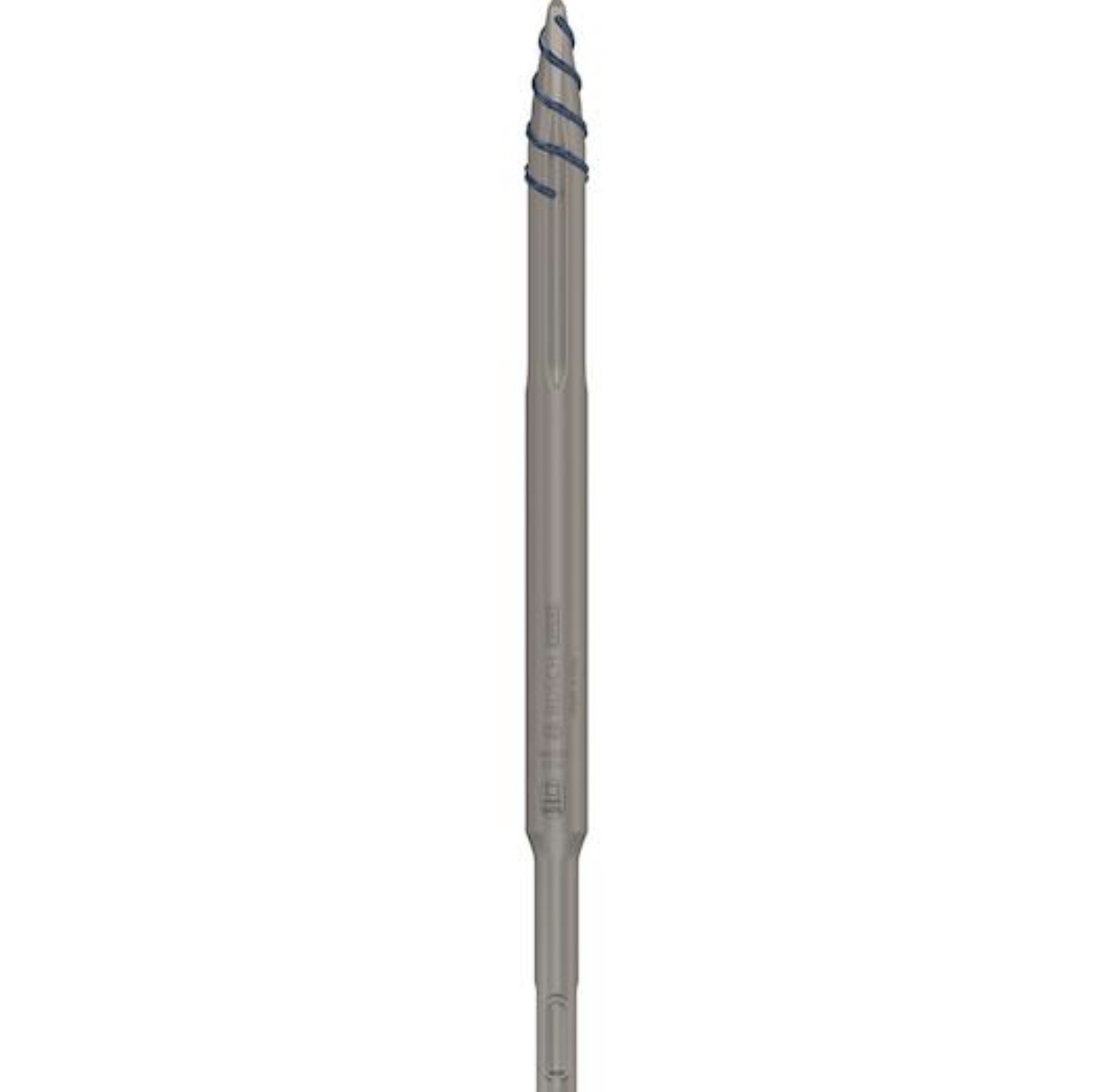
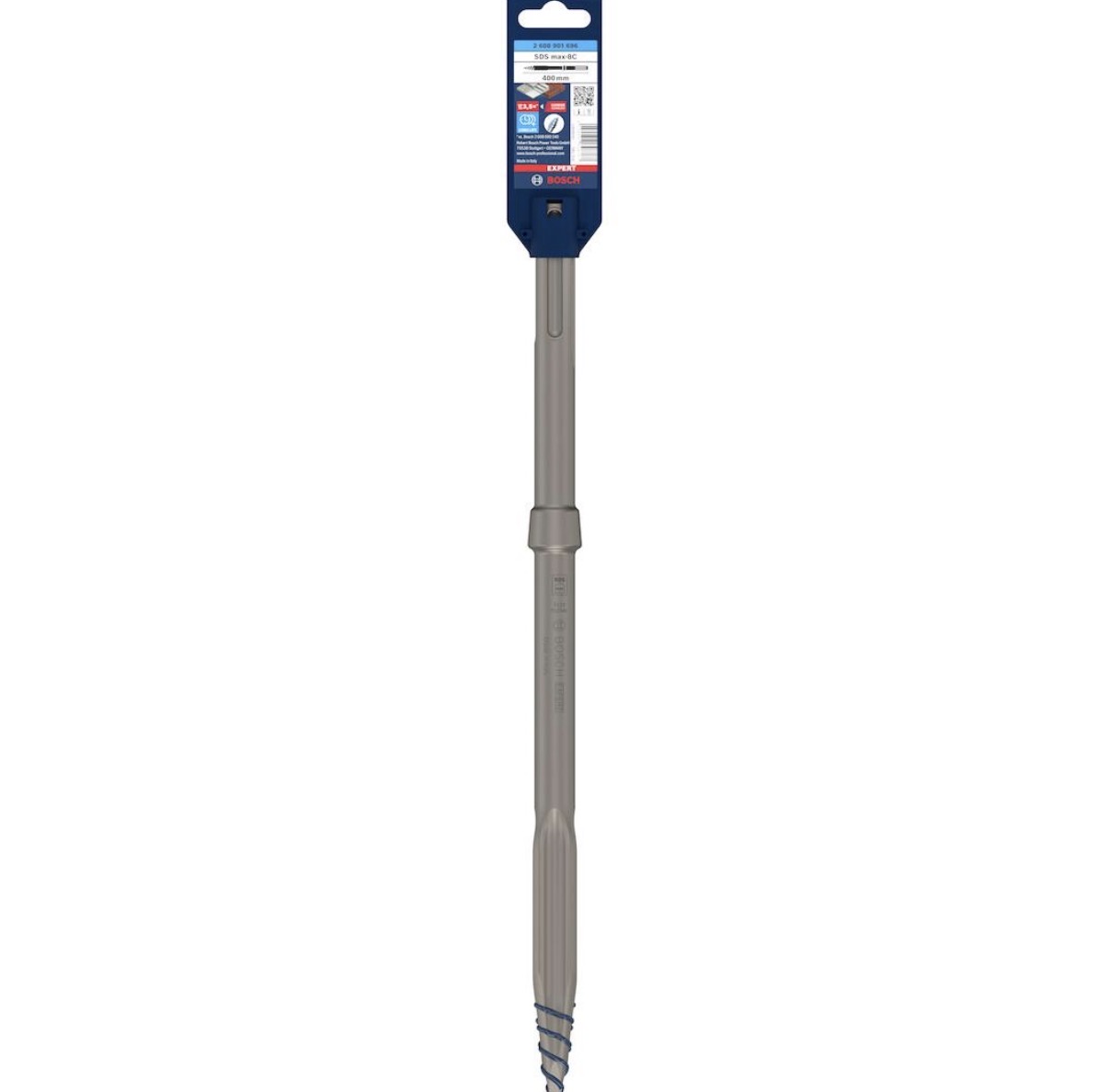
Where a pointed chisel works best
A point concentrates each blow on a small area. Use it to start a fracture at a concrete edge, open a spot in a slab or break out a section of masonry. Once the material has opened up, a flat chisel is usually more useful for removing a wider strip. SDS-Plus is a practical choice for localized breakout with a compact hammer; SDS-Max makes sense for more sustained work with a heavier machine.
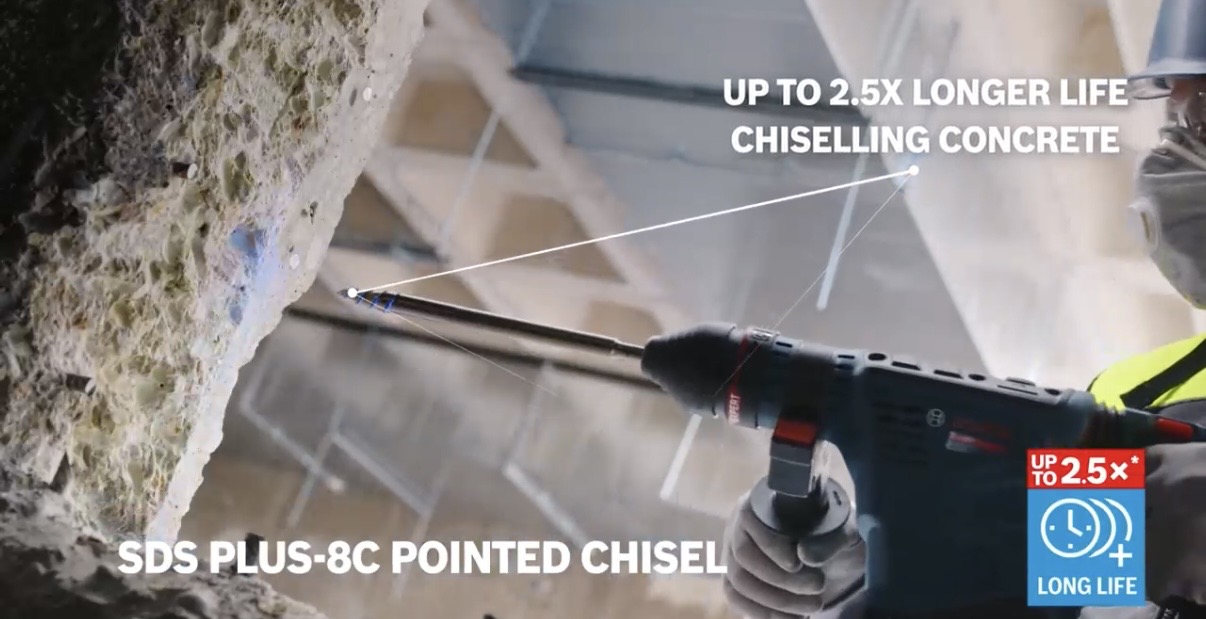
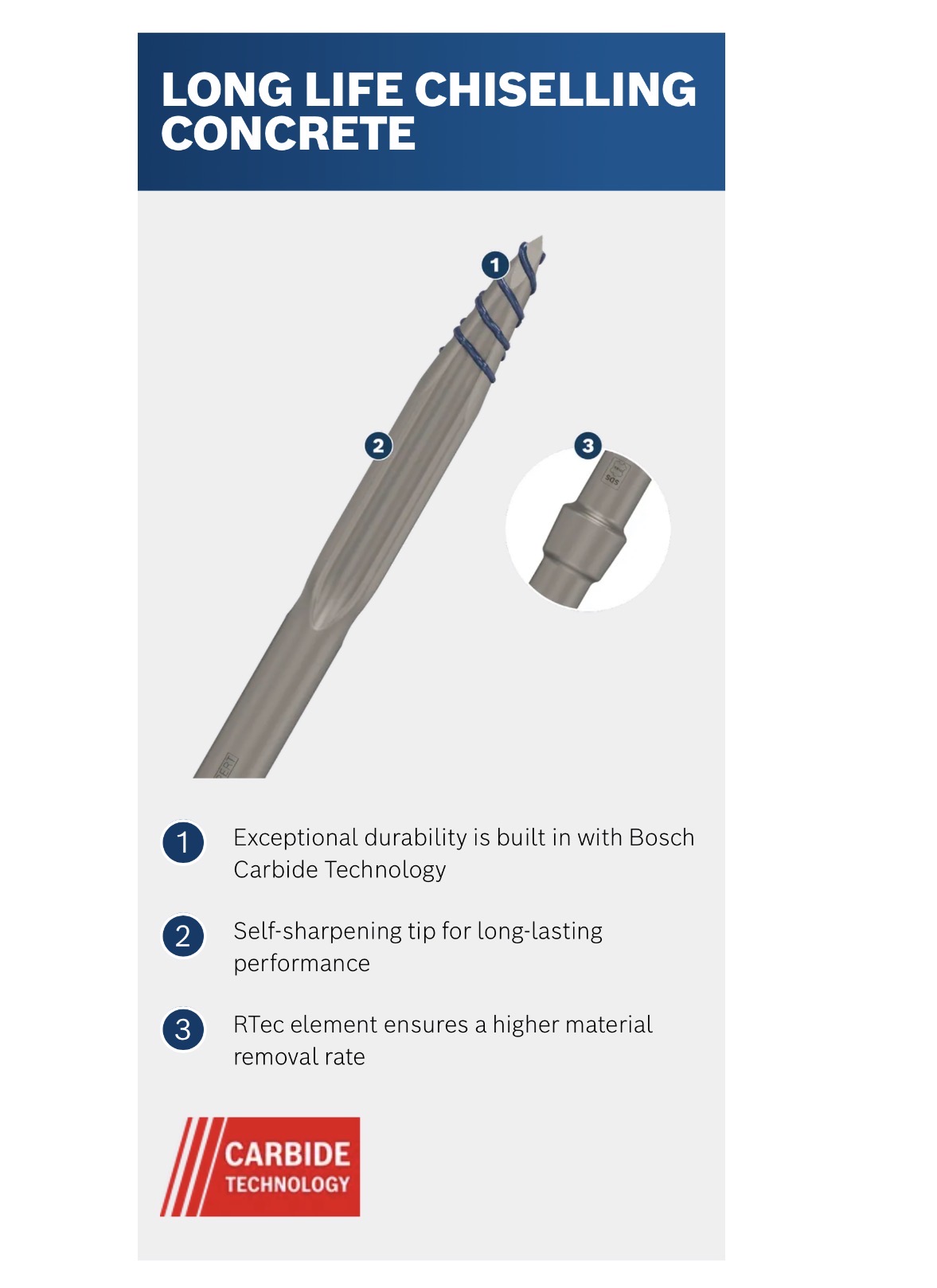
What the carbide tip and RTec element do
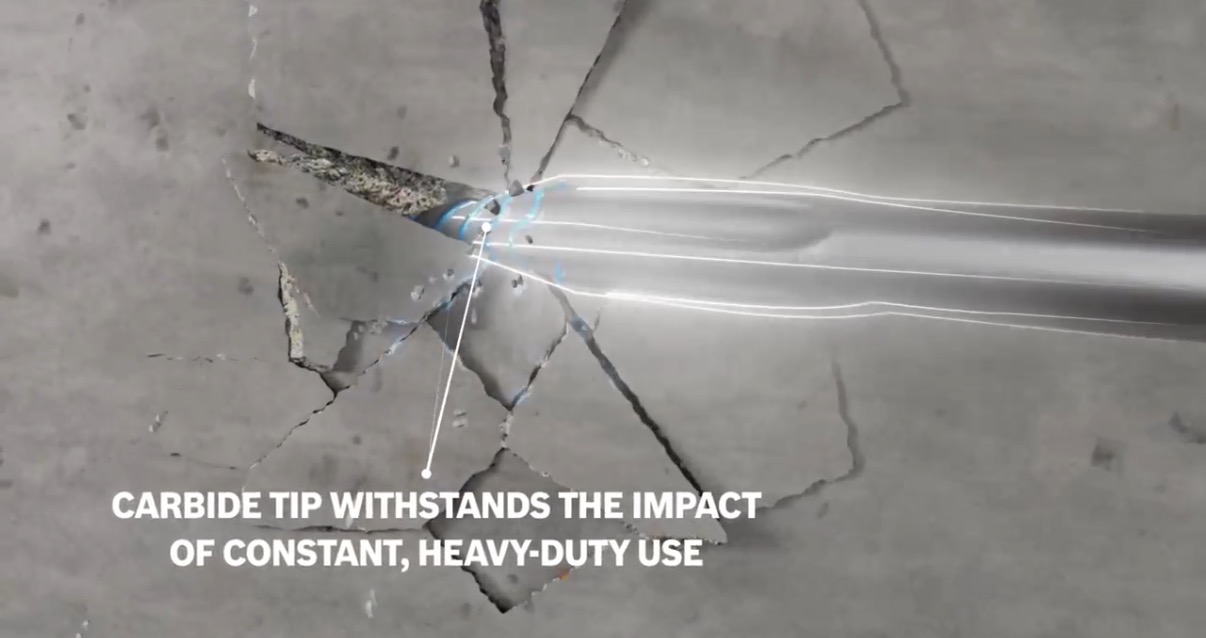
Bosch uses carbide at the working end to resist wear under repeated impact. Its self-sharpening geometry is designed to retain a useful point as the tip wears. On abrasive concrete, the question is how long the chisel keeps starting fractures effectively as the working profile wears back.
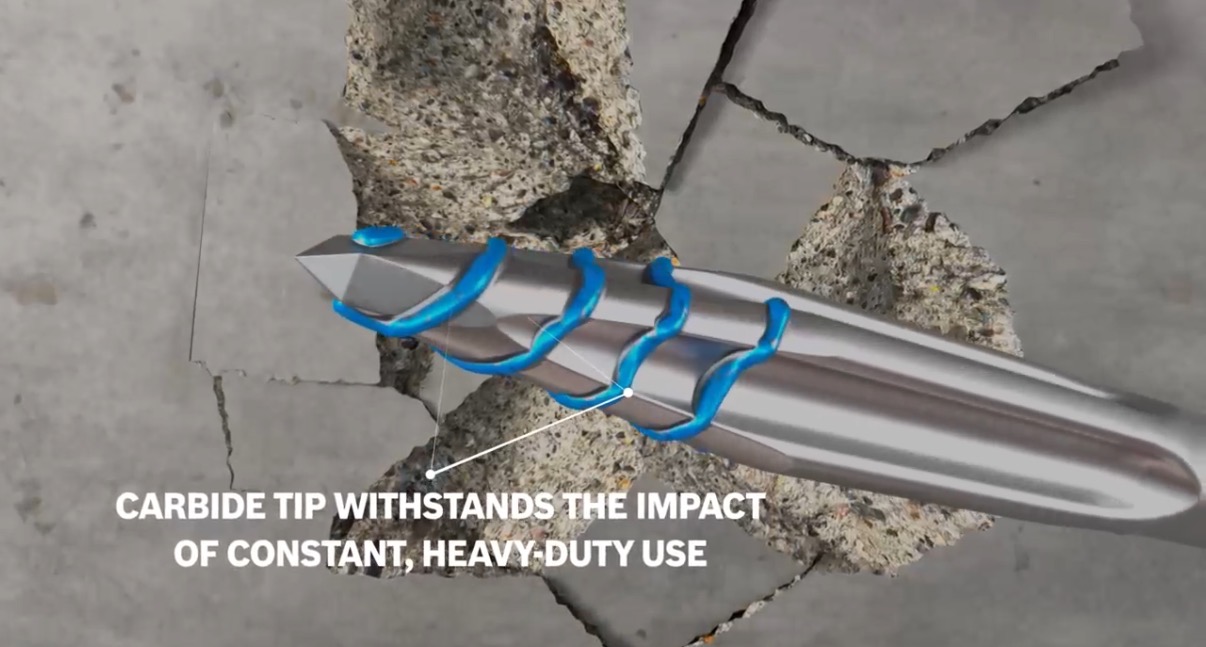
The RTec element is a separate feature on the SDS-Max shank. Bosch describes it as reflecting impact energy to support a higher material removal rate. It is separate from the carbide tip and the shape that retains its point through wear.
How to read the 2.5× and 3.5× life claims
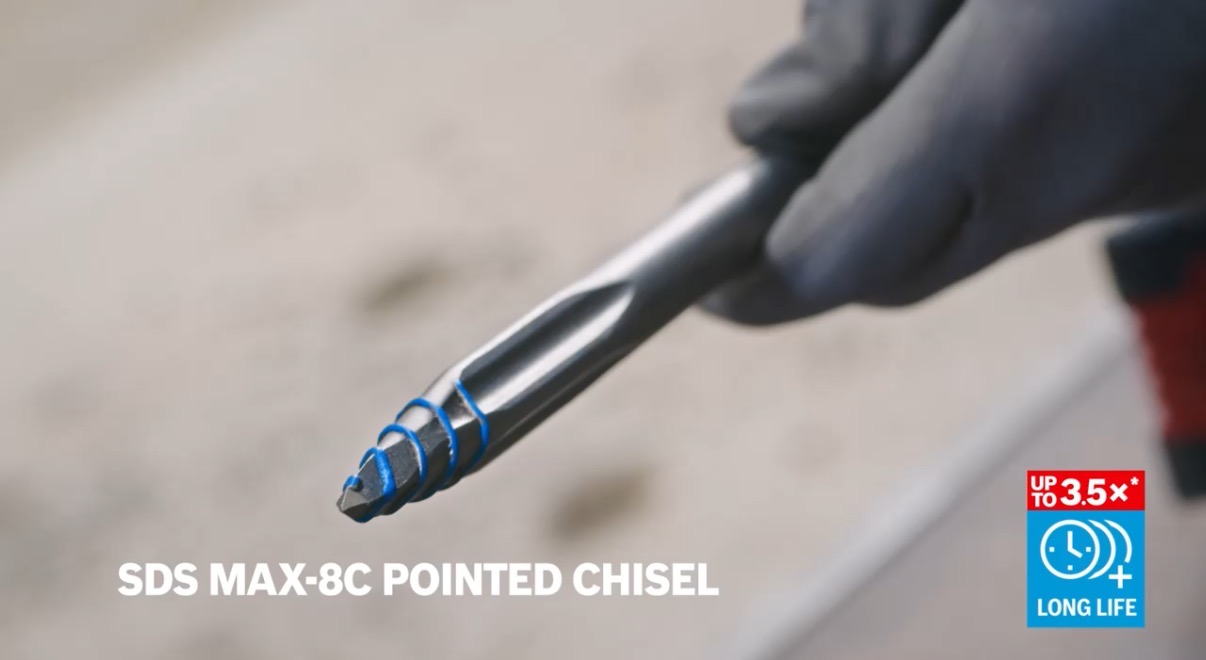
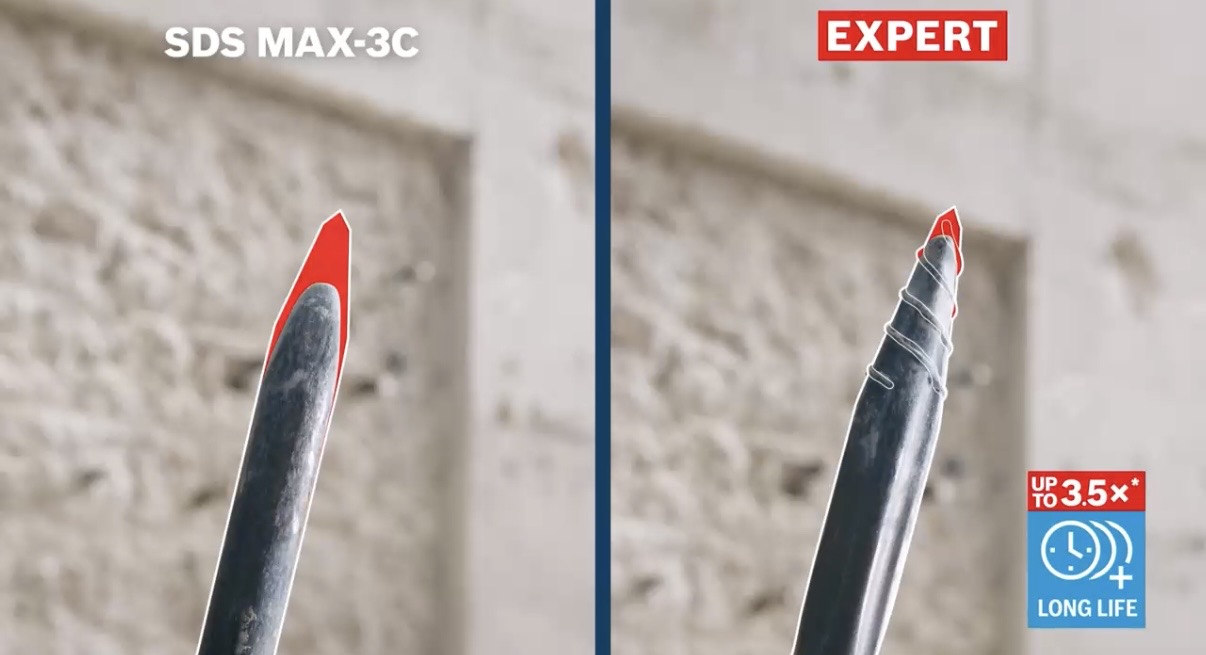
Bosch reports up to 2.5× the life of a standard Bosch SDS-Plus pointed chisel and up to 3.5× the life of a standard Bosch SDS-Max pointed chisel. Each number compares tools within its own shank family. The SDS-Max comparison image shows a 3C reference. Neither figure tells you how fast SDS-Max will break concrete compared with SDS-Plus.
If you are deciding whether to stock a premium point, compare cost per completed job. Test both candidates on the same hammer and concrete; track material removed, time, and the point at which progress falls off. That tells you whether the extra purchase cost pays for itself on the work you actually do.
Specifying an OEM pointed chisel
For a Zhonghuan OEM pointed chisel, we start with the target hammer, shank fit and concrete or masonry application. We can quote a forged self-sharpening steel point as the baseline. If tip wear is limiting the job, ask us to review a carbide-tipped configuration for sampling. We agree the working profile and the acceptance criteria before you approve the sample.
View our demolition chisels · Request a sample or OEM quote
Frequently asked questions
Which Bosch 8C pointed chisel is 250 mm?
The EXPERT SDS plus-8C pointed chisel is 250 mm overall: 2608901694 for one and 2608901698 for a pack of five.
Which Bosch 8C pointed chisel has RTec?
Bosch lists RTec for the 400 mm EXPERT SDS max-8C pointed chisel: 2608901696 for one and 2608901700 for a pack of ten.
Can I use the 400 mm SDS-Max 8C in an SDS-Plus hammer?
No. The 400 mm 8C has an SDS-Max shank and requires an SDS-Max holder on a machine with a chiselling mode.
Bosch references: SDS plus-8C product page · SDS max-8C product page · 8C technical launch release

