

RockFaster 118 for Reinforced-Concrete Drilling
Diager RockFaster, reference 118, is an SDS-Plus hammer-drill range for reinforced concrete, concrete, stone and solid brick. Its defining feature is a one-piece carbide head whose cutting-edge count changes with diameter. The family combines that head with a centring point, three side stabilisers and a triple flute.
For a contractor, the purchase starts with concrete and aggregate, expected rebar contact, the rotary hammer and the required hole. For us as an OEM manufacturer, those conditions establish the head geometry and failure mode to address before carbide grade, joining and finished-hole acceptance are agreed.
Cutting-Edge Count Changes with Diameter
Diager specifies the following split. The change happens between 7 and 8 mm; the number is selected by the manufactured diameter, rather than adjusted during drilling.
| Diameter | Cutting edges | Construction |
|---|---|---|
| Ø5–7 mm | 3 | One-piece full-carbide head |
| Ø8–20 mm | 6 | One-piece full-carbide head |
Three Cutting Edges at Ø5–7 mm
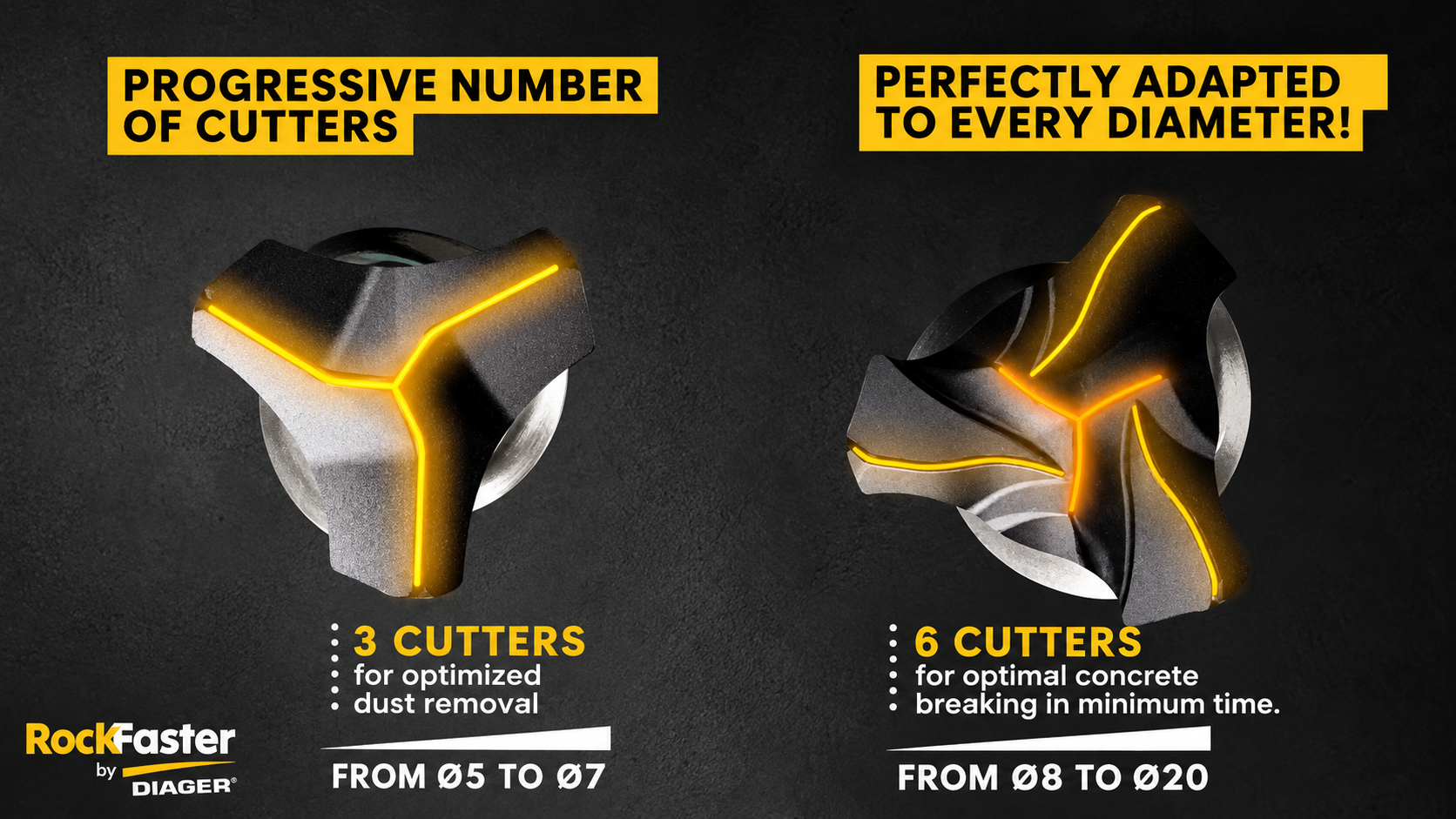
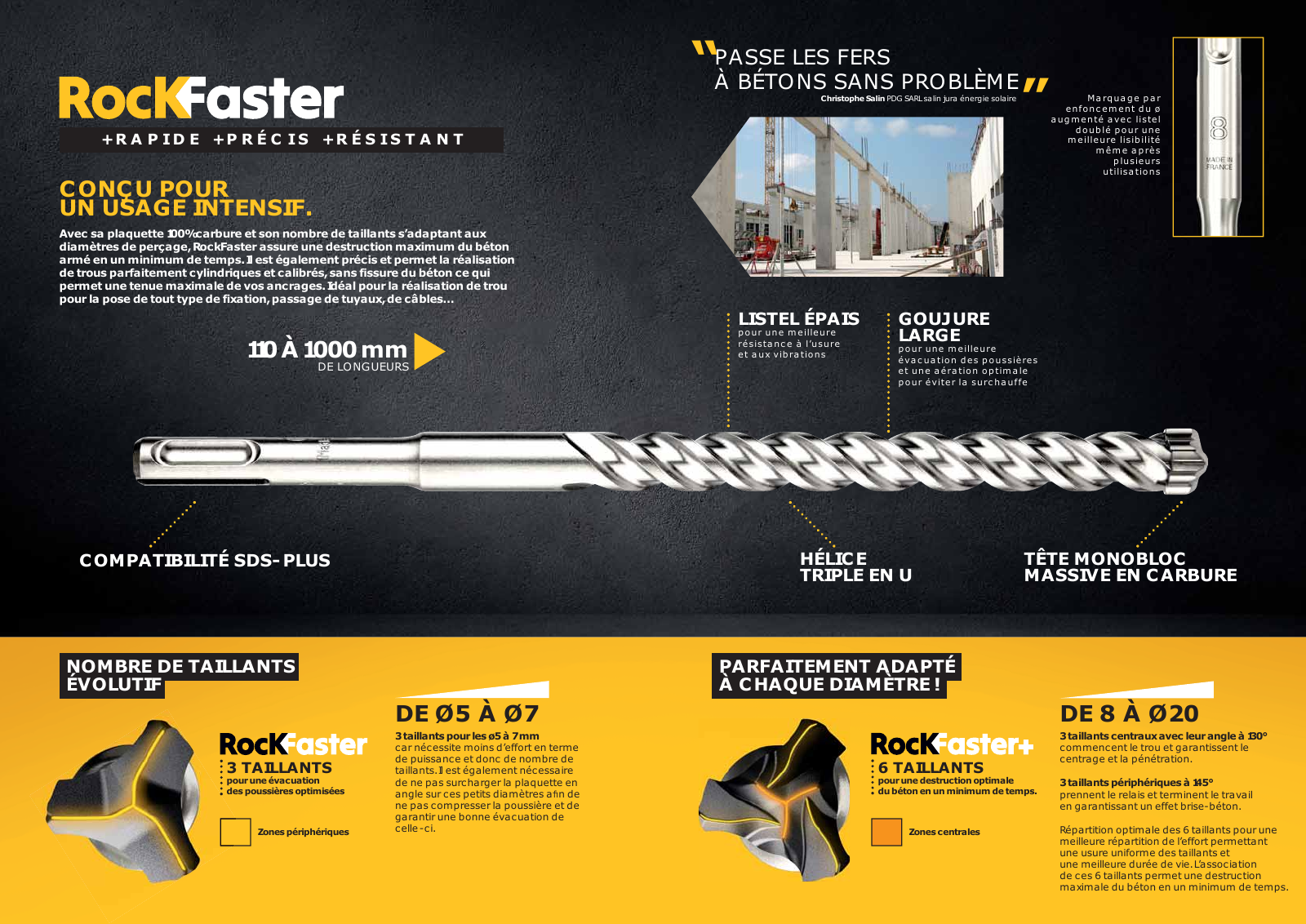
At the smaller diameters, RockFaster uses three cutting edges. The original diagrams make the three-way layout easy to follow. Diager links this geometry with dust evacuation in the space available around a small-diameter head.
The practical question is how well the bit starts and maintains progress at the intended depth. For a trial, keep the hammer and concrete consistent and record the entry condition, drilling time and edge condition. A small three-edge head belongs to this diameter-specific programme, rather than being a separate claim about every three-cutter on the market.
Six Cutting Edges at Ø8–20 mm
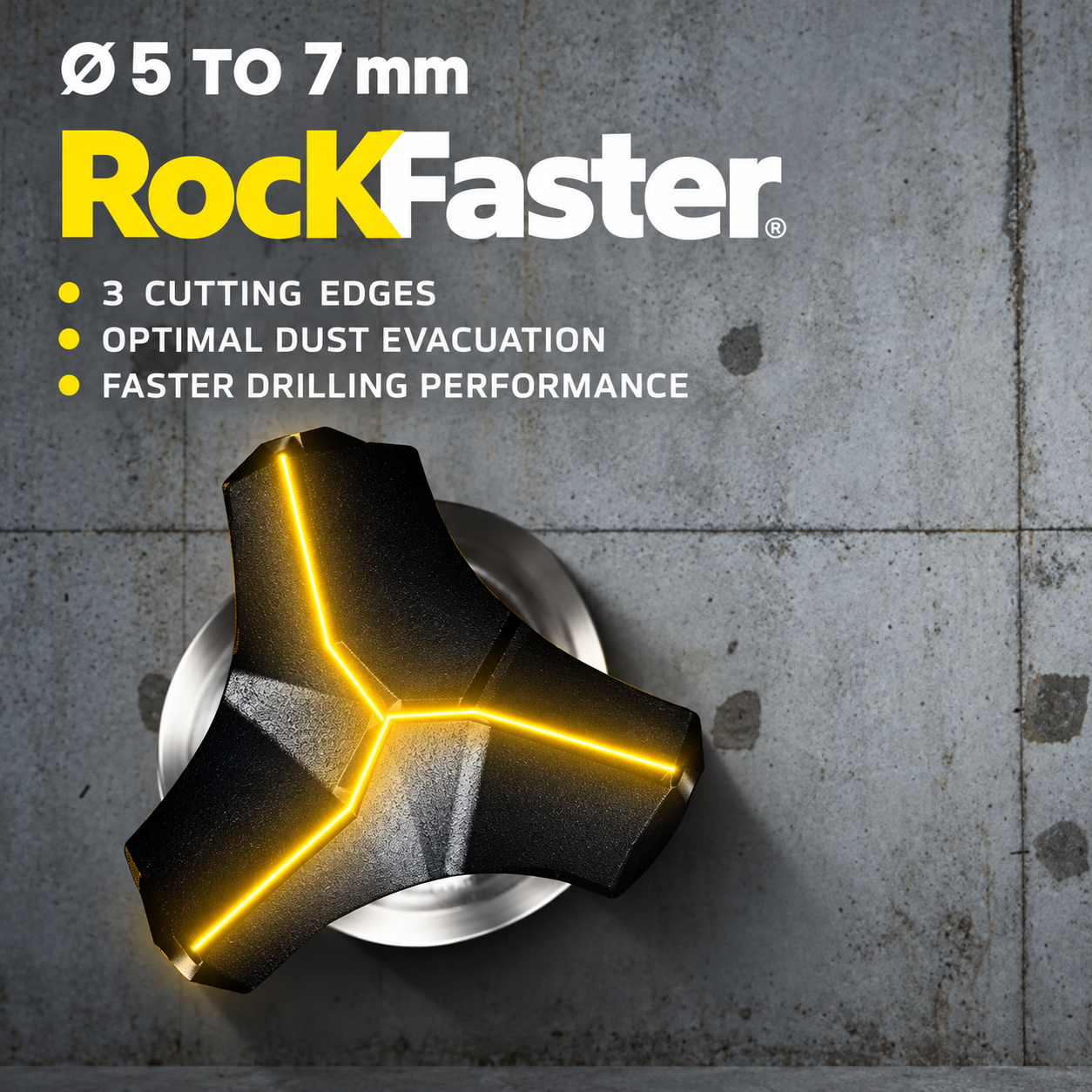
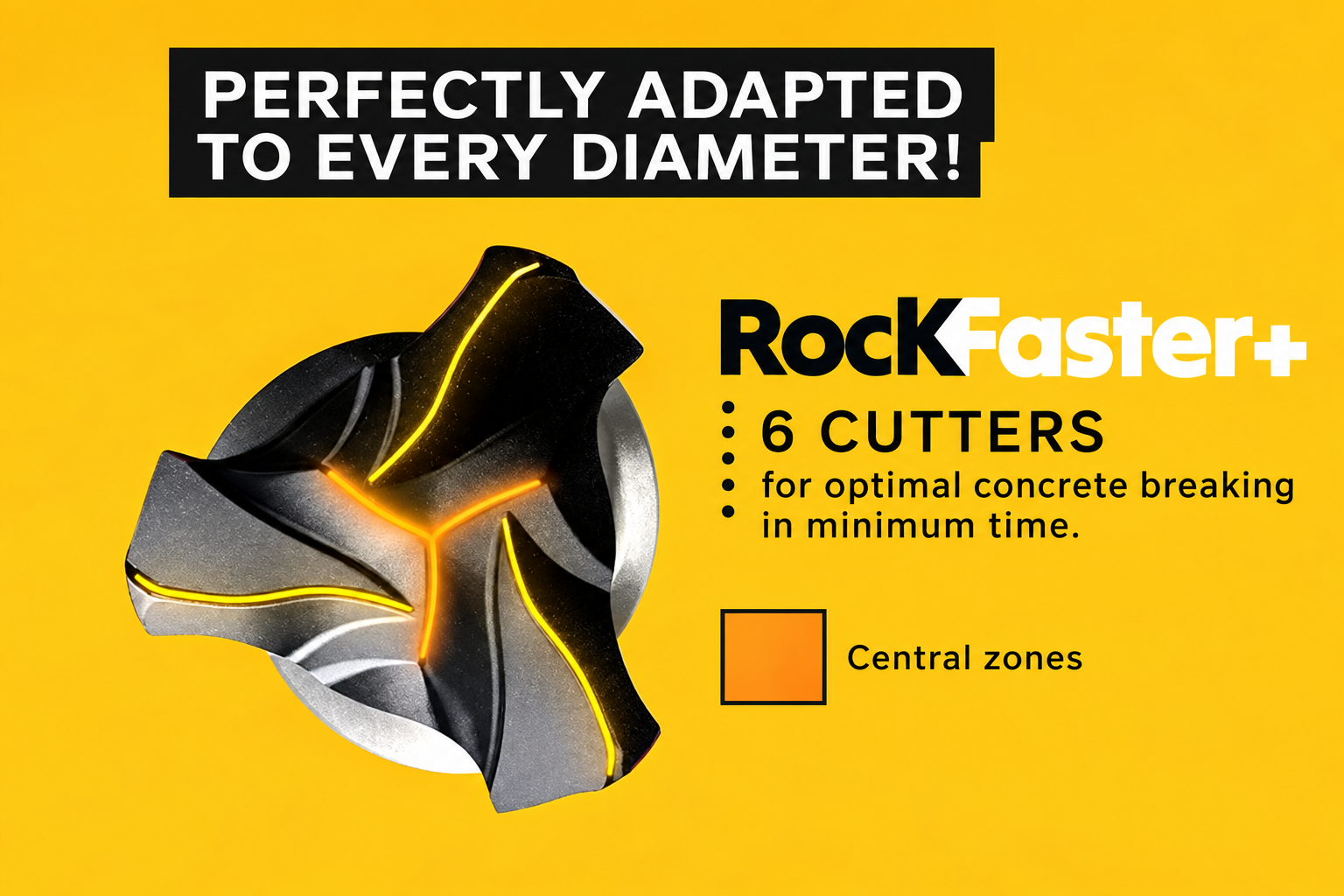
From Ø8 to 20 mm, the six-edge version is presented as RockFaster+. Diager’s product presentation describes three central cutting edges that start penetration and establish centring, followed by three peripheral cutting edges that continue and complete the hole. The official launch brochure specifies 130° for the central edges and 145° for the peripheral edges.
| Cutting zone | Edges | Angle in Diager’s brochure | Role described by Diager |
|---|---|---|---|
| Central | 3 | 130° | Initiate penetration and centre the hole |
| Peripheral | 3 | 145° | Take over and complete the hole with a concrete-breaking action |
These are six working edges on one carbide head. Diager associates their distribution with a better spread of load, more uniform wear, longer service life and time savings. For purchasing trials, compare the same diameter, depth, concrete and hammer, recording drilling progress, edge condition and the finished hole.
See Diager’s official launch brochure and RockFaster product video for the manufacturer’s presentation.
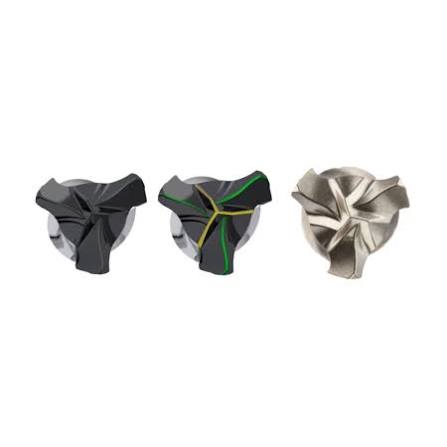
Six Cutting Edges: One-Piece Head vs Three Carbide Plates
RockFaster at Ø8–20 mm, Diager Ultimax 168 six-edge models and our ZHMAX-168 all have six cutting edges. Their carbide construction differs: RockFaster uses one full-carbide head; the two SDS-Max designs use three separate carbide plates forming six edges.
| Product | Carbide pieces | Cutting edges | Interface |
|---|---|---|---|
| RockFaster Ø8–20 mm | 1 · one-piece full-carbide head | 6 | SDS-Plus |
| Diager Ultimax 168 · six-edge models | 3 · separate carbide plates | 6 | SDS-Max |
| Zhonghuan ZHMAX-168 | 3 · separate carbide plates | 6 | SDS-Max |
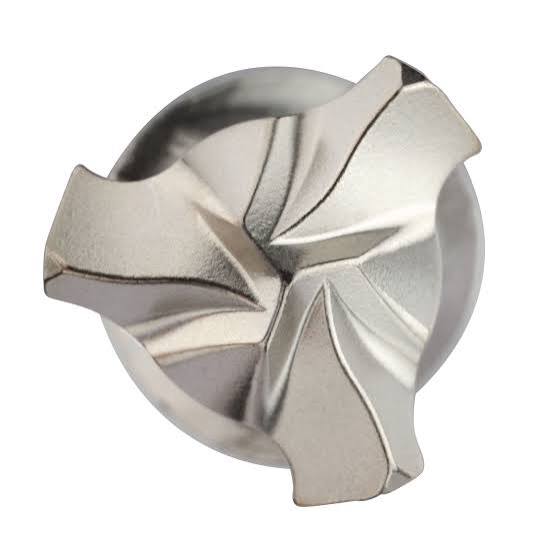
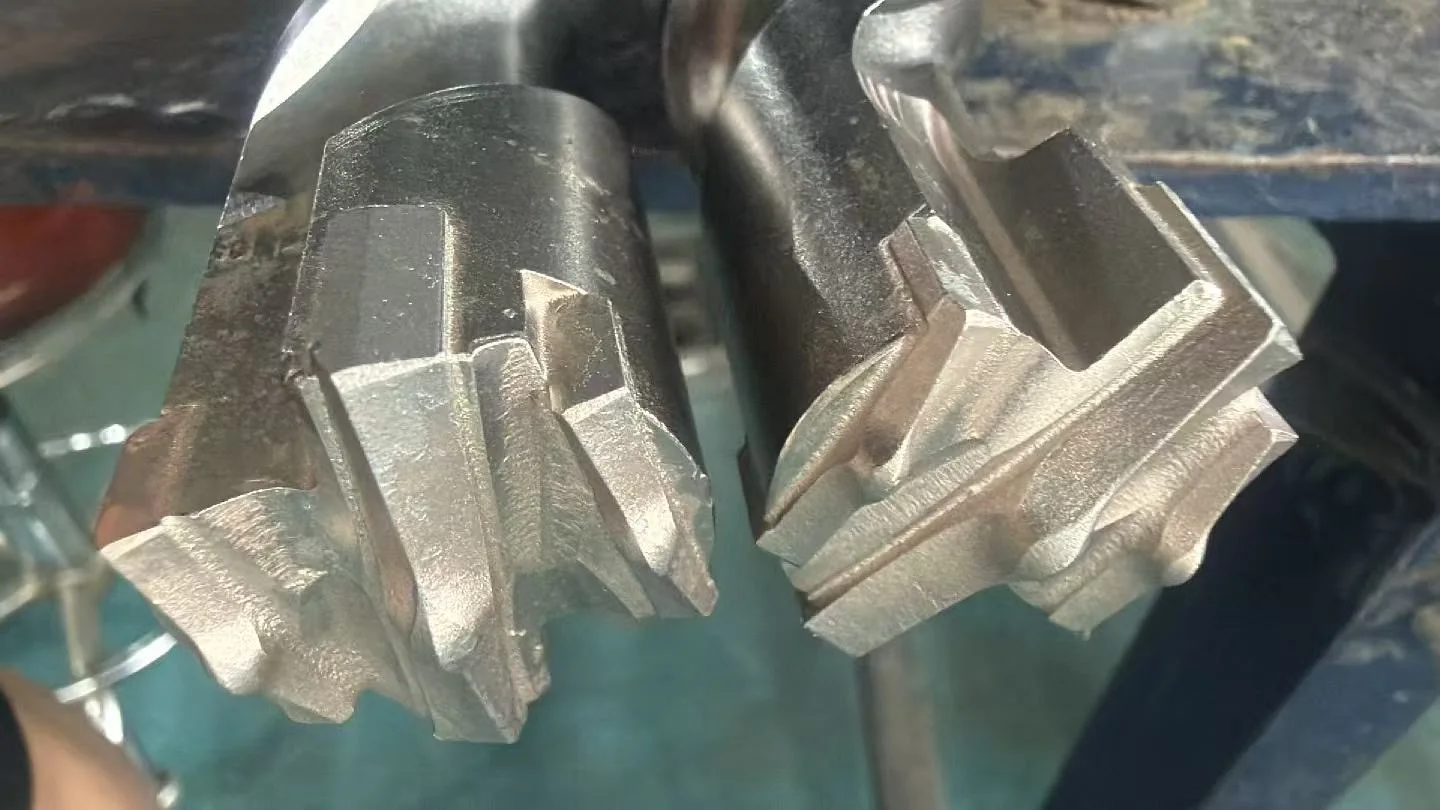
We braze the three ZHMAX-168 carbide plates to the steel head in a mesh-belt furnace. The finished-head photo comes from our ZHMAX-168 manufacturing record, which also shows forming, furnace brazing and finishing.
Compare the carbide construction together with the hammer platform, hole diameter and depth. The joint layout is part of that specification; a shared six-edge label does not establish equal drilling speed or service life. For process choices, see our carbide-head joining guide.
Triple U-Shaped Flute and Dust Evacuation
RockFaster combines a triple U-shaped flute, wide grooves and substantial lands. The grooves carry debris away; the lands are the raised portions between them. Diager links the wide flute with dust evacuation and ventilation to limit overheating, and the thick lands with resistance to wear and vibration.
Judge dust transport at working depth. Record repeated withdrawal, changes in progress and debris accumulation while holding the concrete and hammer constant. Use suitable dust extraction and retain the anchor manufacturer’s final cleaning procedure. Flute transport and a clean, ready-to-anchor hole are different stages of the job.
Centring, Stabilisers and Anchor-Hole Quality
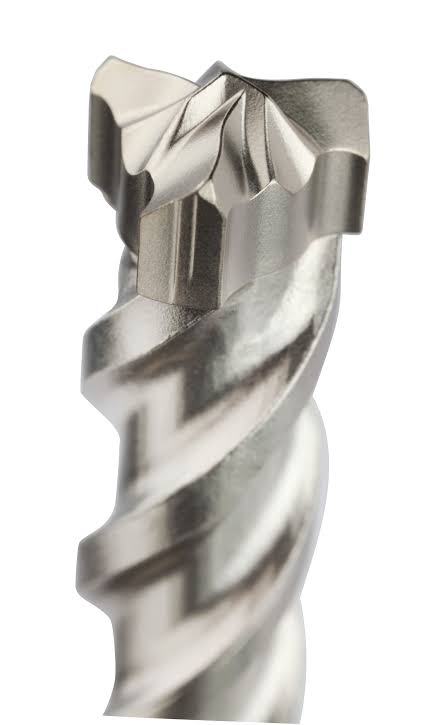
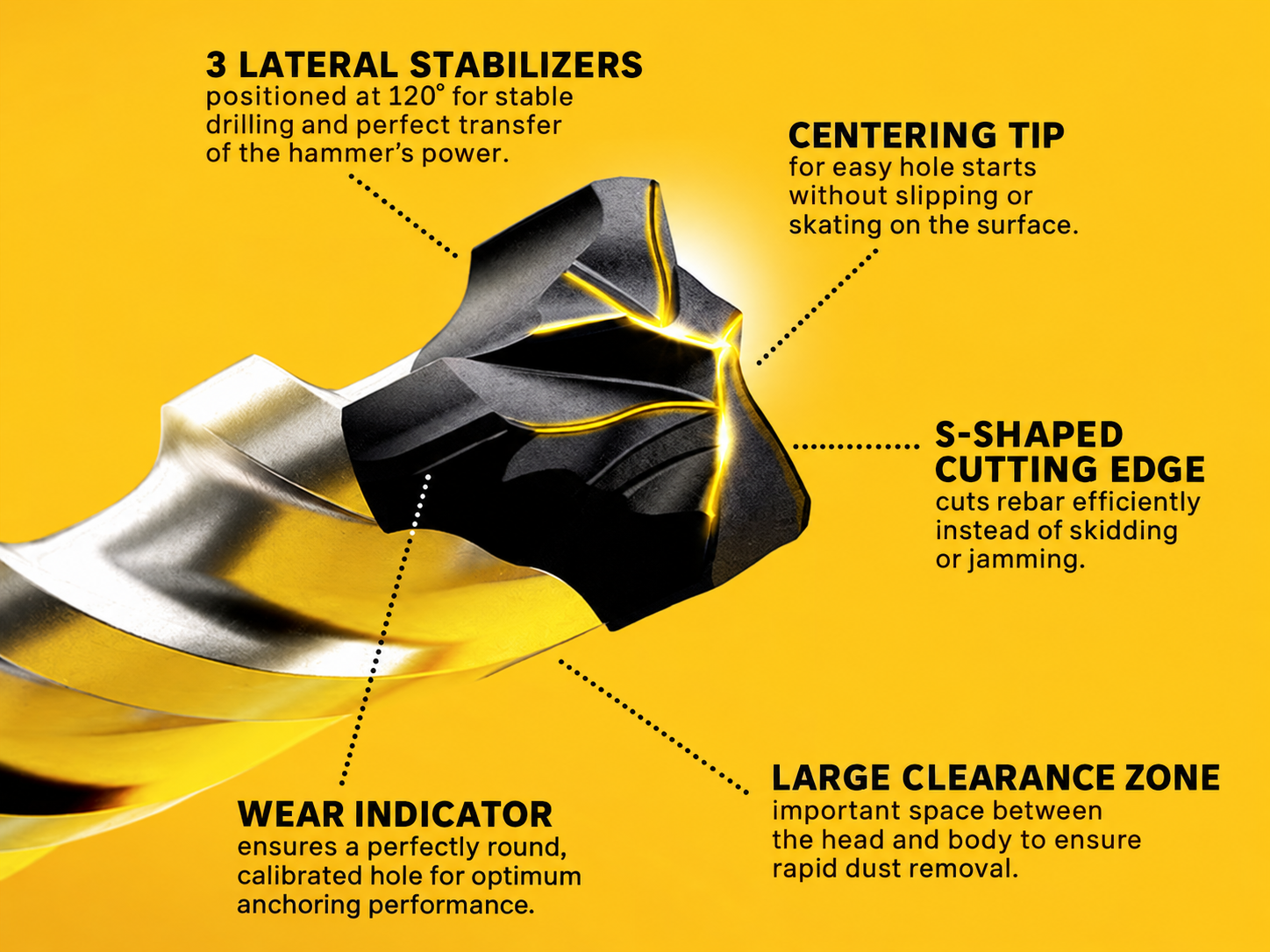
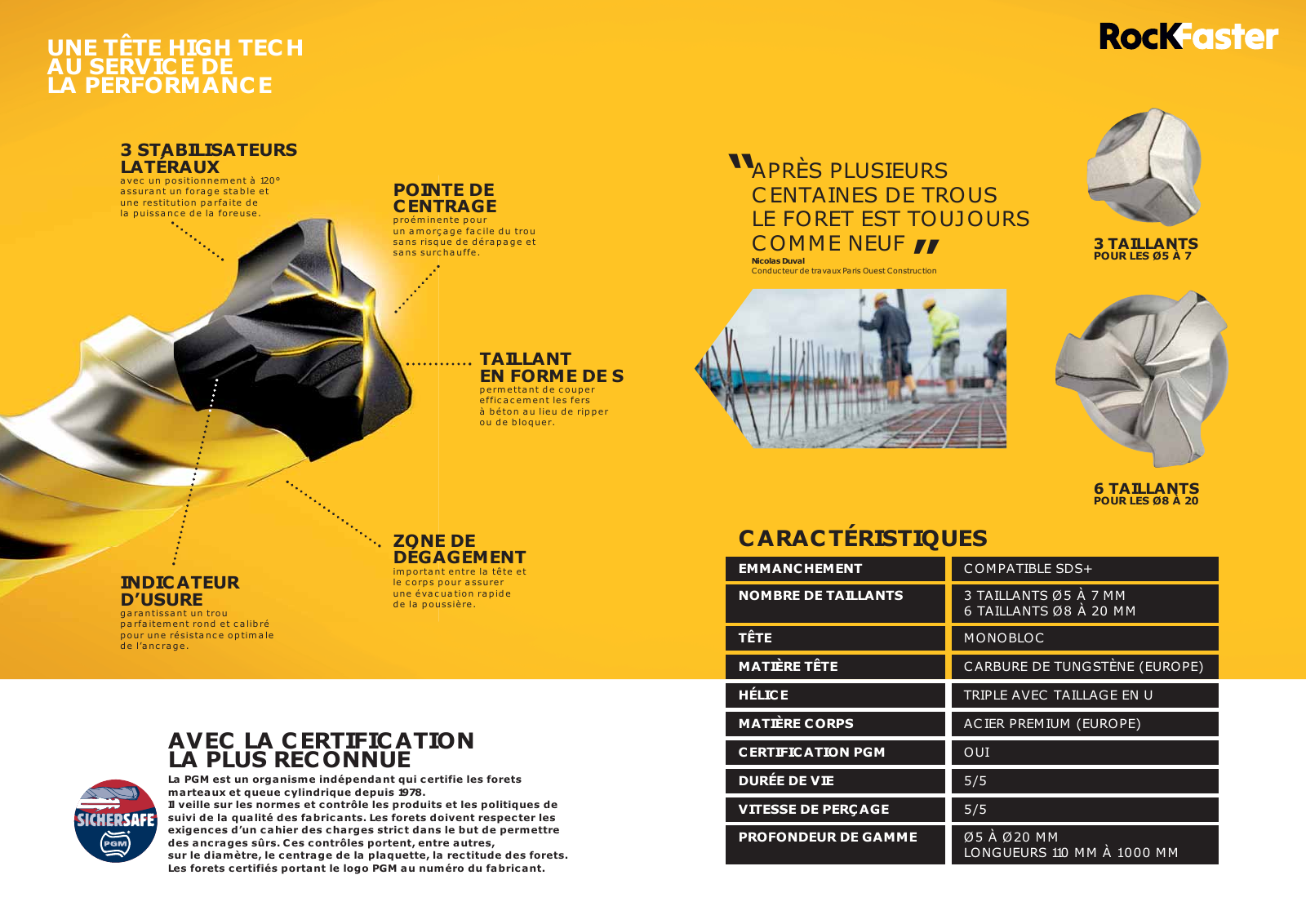
The prominent centring point supports easy positioning and hole starting. Diager’s launch brochure shows three side stabilisers positioned at 120°; the presentation associates them with stable drilling and reduced vibration. The wear indicator helps monitor the head’s gauge condition, while enlarged diameter marking improves identification on the shank.
Diager describes its curved, S-shaped cutting-edge profile as helping cut reinforcement with less slipping or jamming. The presentation also promotes premium steel and 30% more carbide for longer life.
The presentation closes with Made in France and PGM marking. For anchor work, turn the hole-quality benefit into checks of finished diameter, roundness, entry damage and wear condition. Use the selected anchor system’s tolerances and cleaning instructions, and follow the approved drilling method when structural reinforcement is involved.
Specify Diameter, Working Length and Overall Length
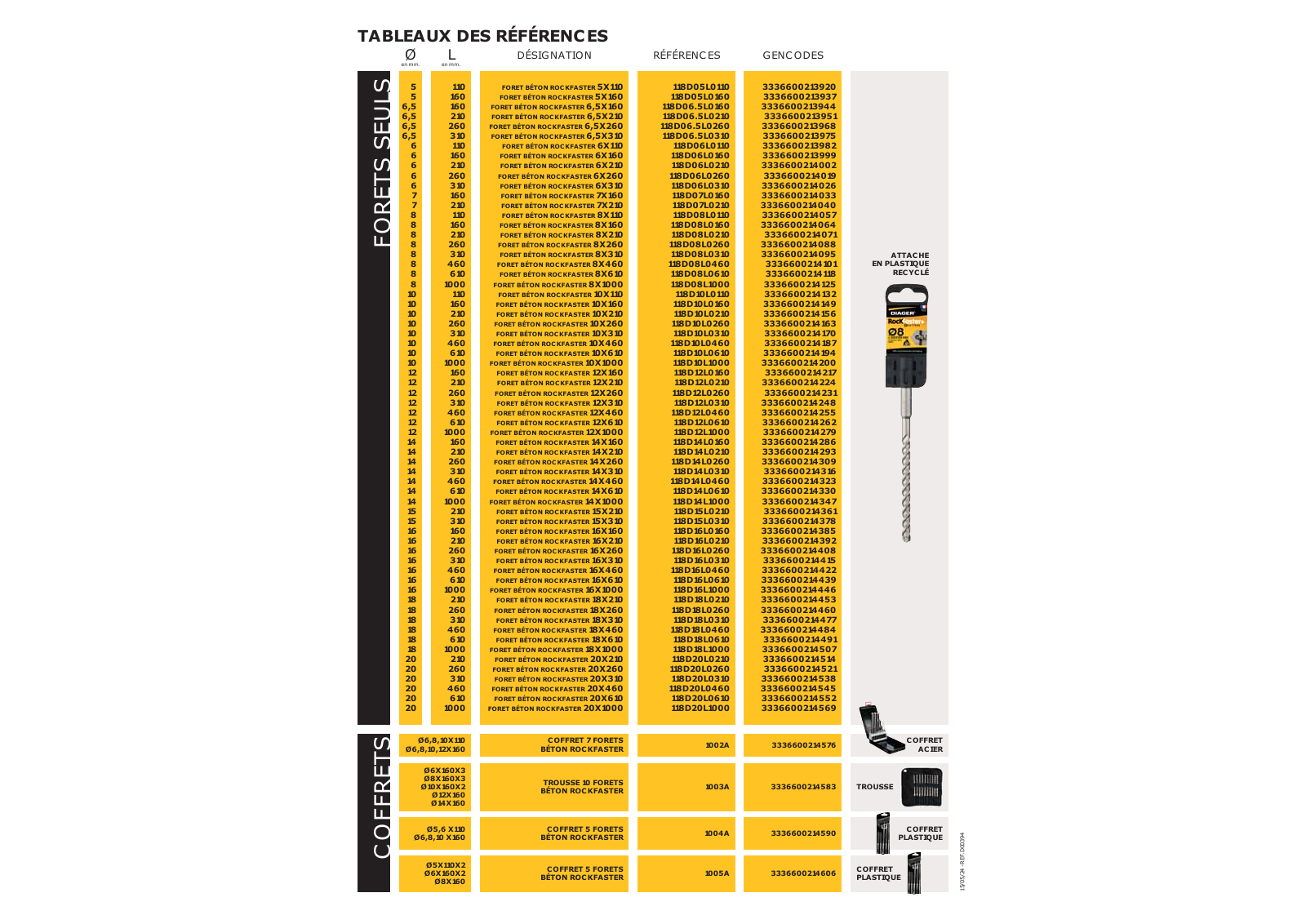
Diager presents a range of Ø5–20 mm and 110–1000 mm overall lengths, with availability depending on the reference. The examples below are actual RockFaster references. In the catalogue, Lu is working length and Lt is overall length. All dimensions are in millimetres.
| Item code | Diameter | Edges | Lu | Lt |
|---|---|---|---|---|
| 118D05L0110 | 5 | 3 | 50 | 110 |
| 118D06.5L0160 | 6.5 | 3 | 100 | 160 |
| 118D07L0210 | 7 | 3 | 150 | 210 |
| 118D08L0260 | 8 | 6 | 200 | 260 |
| 118D10L0110 | 10 | 6 | 50 | 110 |
| 118D20L0610 | 20 | 6 | 550 | 610 |
| 118D16L1000 | 16 | 6 | 940 | 1000 |
Reading the Original Packaging and Sets
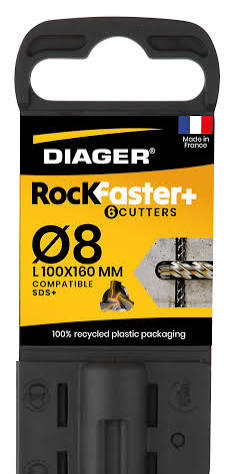
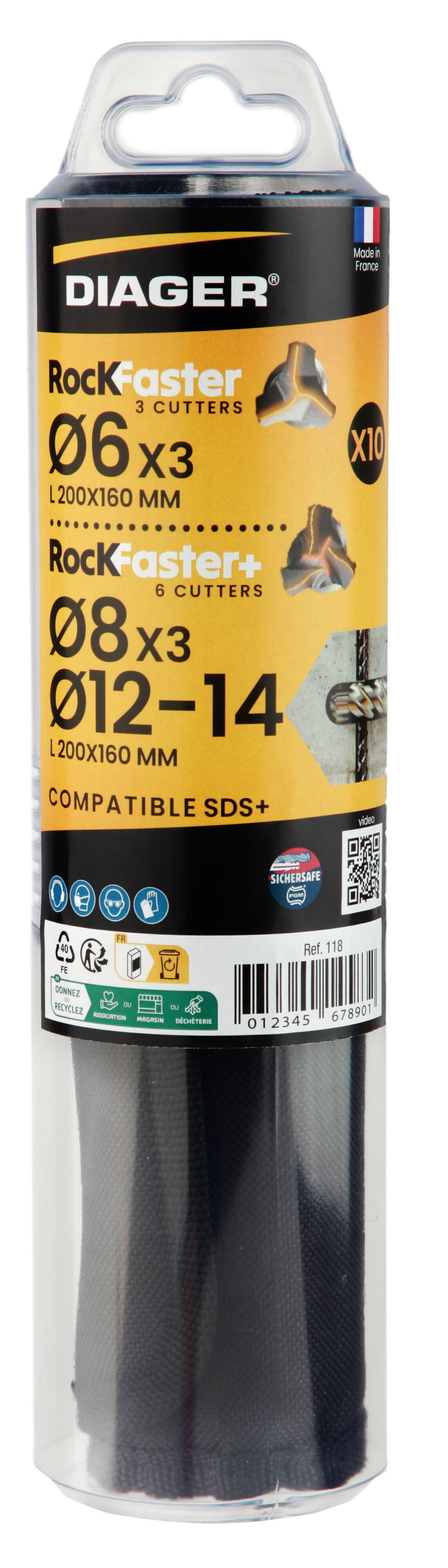
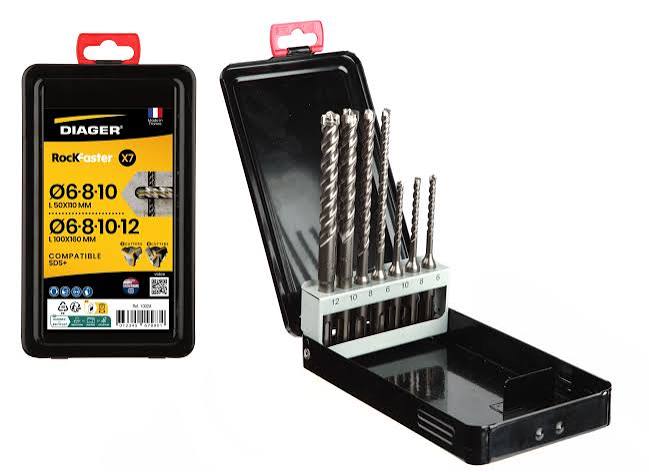
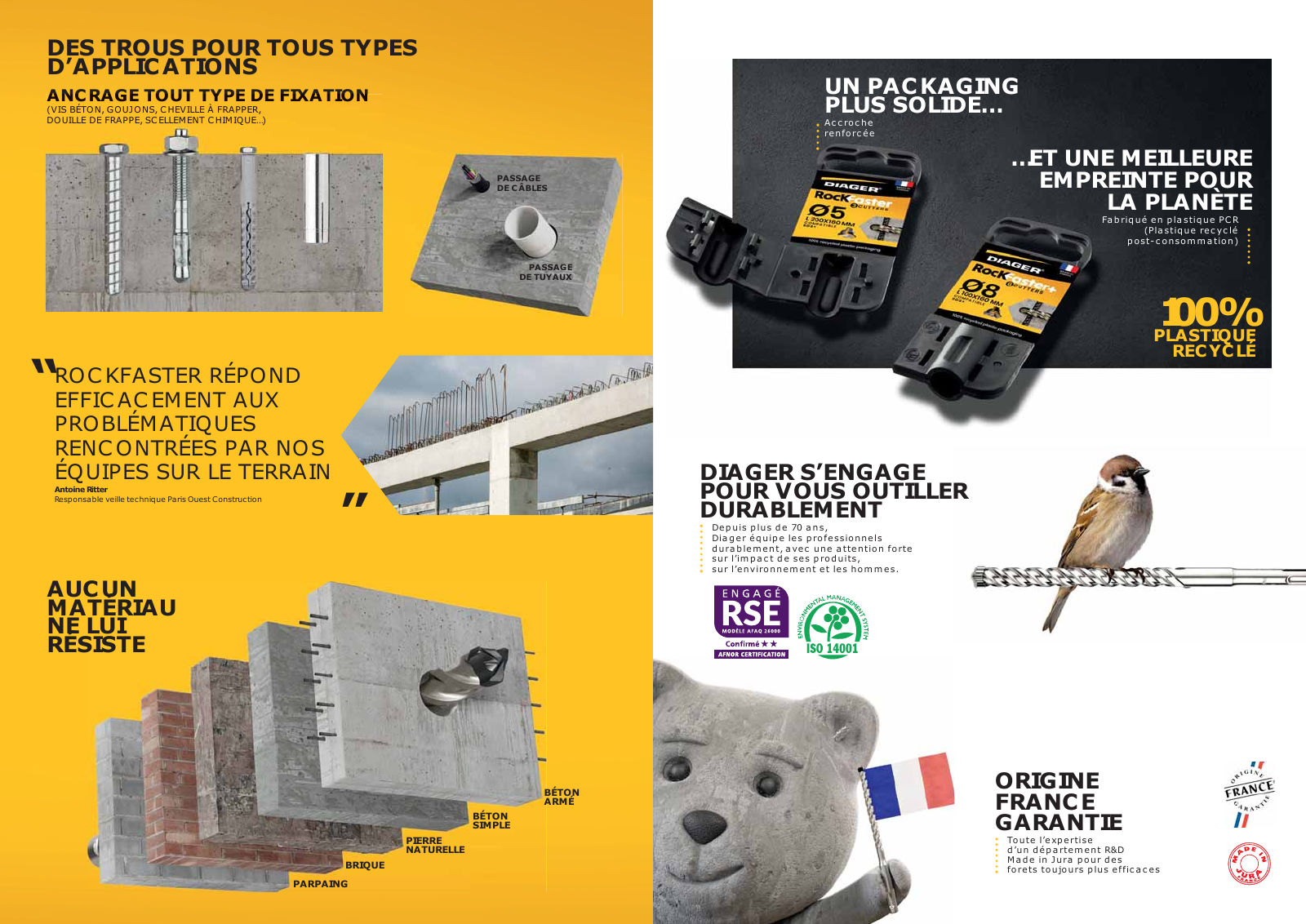
The original Ø8 package says RockFaster+ / 6 cutters, while the mixed-diameter pack distinguishes Ø6 three-edge bits from the larger six-edge sizes. These labels support the diameter split; the plus sign appears on the pictured six-edge presentation.
Diager also highlights recycled-plastic packaging in the product presentation. For sets and bulk packs, confirm the set reference, included diameters, lengths and quantities separately. The open case photograph shows the assortment layout; packaging format and cutting-edge count are separate purchasing fields.
RockFaster Launch: Official Brochure
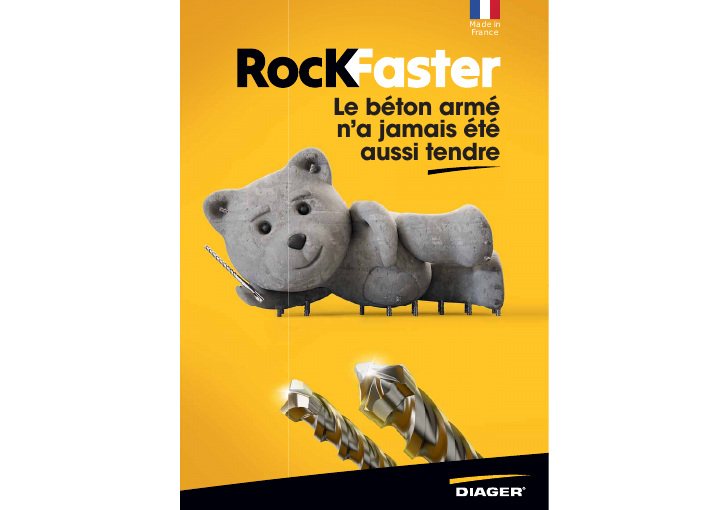
French original · 5 pages · PDF
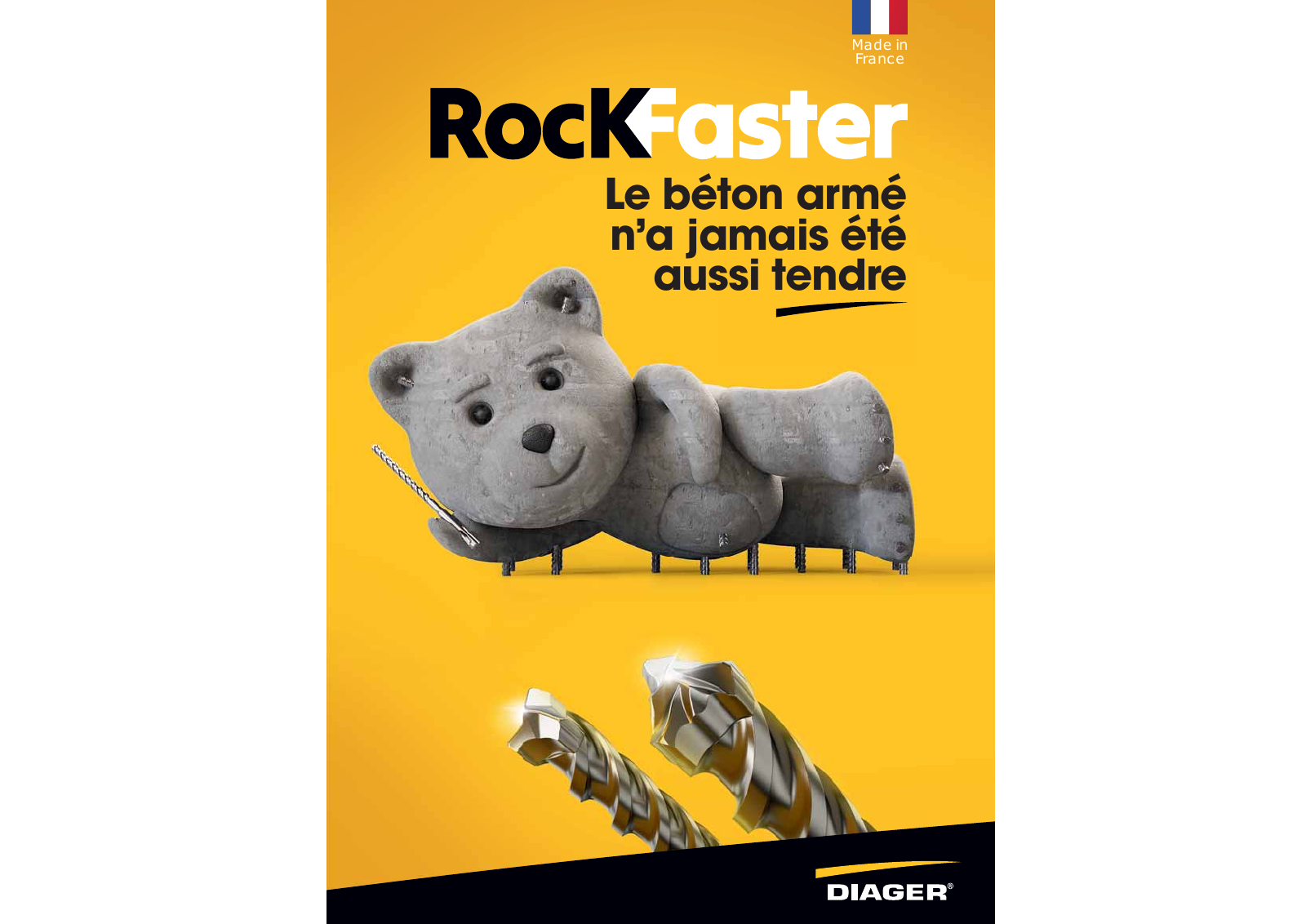
Diager’s original launch brochure covers the three- and six-edge heads, 130°/145° cutting geometry, product features and item/size tables.
Preview all 5 brochure pages
Developing an OEM Programme with Zhonghuan
At Zhonghuan, we turn benchmark features into an application-led SDS-Plus programme. Proposed Option A is a small-diameter three-edge full-carbide-head configuration; proposed Option B is a larger-diameter six-edge configuration for the customer’s reinforced-concrete work. Our engineers confirm head drawings, carbide, tooling and joining requirements against the application before sample approval.
Send hole diameter and depth, hammer model, concrete/rebar conditions and estimated quantity. We can then define the size matrix and sample set, agree completed-hole acceptance, and discuss private-label packaging. For the wider family comparison, see our Diager SDS-Plus selection guide.
SDS-Plus · Discuss an OEM SDS-Plus programme
Frequently Asked Questions
Is every RockFaster bit a six-cutter?
Diager specifies three cutting edges from Ø5 to 7 mm and six from Ø8 to 20 mm. Confirm diameter and item code.
How are RockFaster+’s six cutting edges arranged?
Diager describes three central cutting edges that start and centre the hole, followed by three peripheral edges that continue the cut. Its launch brochure specifies 130° and 145° respectively. All six edges belong to one carbide head.
Does a six-edge head contain six separate carbide inserts?
RockFaster uses one full-carbide head with six cutting edges at Ø8–20 mm. Ultimax 168 six-edge models and our ZHMAX-168 use three separate carbide plates to form six edges.
Is RockFaster an SDS-Max drill bit?
Reference 118 is an SDS-Plus range. Match its shank to the intended machine; Diager’s SDS-Max families have their own references and constructions.
What are Lu and Lt in the size table?
Lu is working length and Lt is overall length. Keep both separate from diameter and verify them against the exact catalogue reference.
Official Sources
- Diager RockFaster 118: official English product page
- Diager RockFaster 118: official French technical description
- Diager 2026 catalogue: RockFaster description and Lu/Lt reference tables
- Diager Ultimax 168: three carbide tips and six cutting edges
- Diager official RockFaster product video
- Diager RockFaster launch brochure: central/peripheral edge geometry and feature descriptions


