

A bushing tool roughens concrete by making a field of shallow impact marks. With Hilti’s TE-YX BT 4x4 as a reference, three features govern the setup: the working face, the spacing of its carbide pins and the connection that carries each blow from the hammer to the head. These matter at construction joints, patch edges and small areas that need preparation for a coating.
Hilti tool and head designs
| Hilti reference | Construction | Key specification |
|---|---|---|
| TE-YX BT 4x4 · #2207028 | Complete, preassembled TE-Y (SDS-Max) tool | 40 × 40 mm working face; 250 mm overall length. |
| TE-Y SKHM · #62893 | Complete TE-Y (SDS-Max) tool in Hilti’s earlier catalogue | 40 mm head width; 250 mm overall length. |
| TP-SKHM 40 · #1829 | Replacement head only | 40 mm head width; confirm the matching shank and head connection. |
| TE-Y/S BH | Replaceable head system | Hilti lists compatible TE-Y and TE-S shanks separately; check the exact head and shank combination. |
TE-Y is the SDS-Max connection at the hammer. The head socket is a second interface on a replaceable-head design. A preassembled tool carries the blow through its shank into the working head as one assembly. A replaceable head adds a mating joint that must seat and retain correctly. Match both interfaces to the specified shank and hammer. TE-S is a separate hammer connection.
How the carbide pin pattern works
Hilti specifies a 40 × 40 mm working face and a 250 mm overall length for TE-YX BT 4x4 #2207028. The reference photo shows five rows of five carbide pins, 25 in all. Face dimensions describe the footprint; pin count and pitch describe how the impacts are distributed across that footprint.
With the same face width and hammer, a tighter grid puts the impact marks closer together. A wider pitch leaves more space between marks. Pin-tip shape and protrusion, actual contact and aggregate hardness also affect how much material breaks away. Hold the face square to the concrete so the outer row does not take the blow on its own. Hilti describes induction hardening for the steel tool body. The catalogue and photos identify the construction features without providing a carbide grade or pin joining method.
What the tool and socket photos show
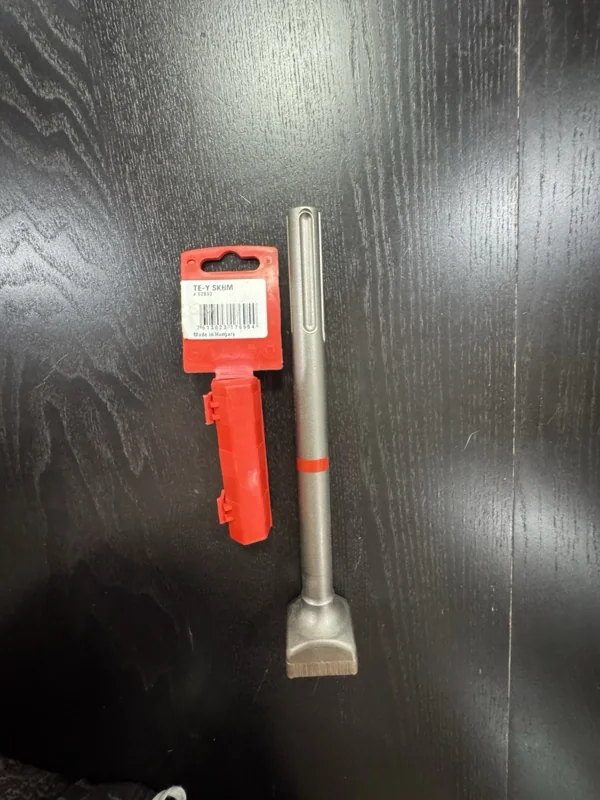
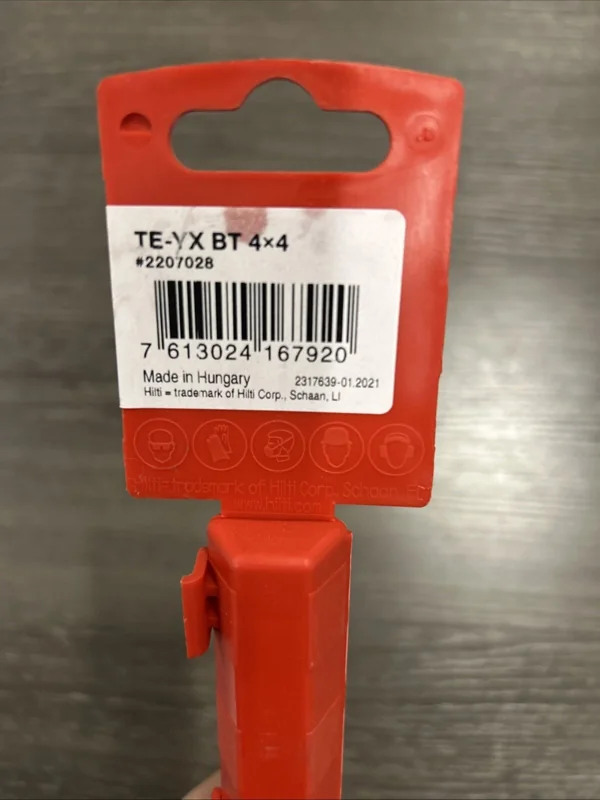
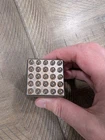

During an inspection, compare pin height across the face and check for chipped or missing pins. On a replaceable head, inspect the seating surfaces and retention fit as well. Uneven pins or a loose interface can concentrate impacts and leave an uneven texture.
Validate the surface on a trial patch
Start with the repair material’s required finish and the concrete you actually have. Local joints, patch edges and hard aggregate can call for different contact areas and pin patterns. Match the tool to the exact hammer model and approved hammer-only operating mode; a matching shank alone does not select the right impact energy.
Run a trial patch on representative concrete with the same hammer and comparable technique. Check for an even texture, sound concrete and no unwanted edge spalling. Record time, tool changes and the accepted area; compare (tool and replacement-head cost + labour, downtime and rework cost) ÷ accepted area. Set the required surface profile from the repair or coating specification and verify it on the patch.
Specify a Zhonghuan bushing tool
We manufacture carbide-pin and integral steel-tooth bushing tools for concrete surface preparation. For general roughening, we can sample a hardened steel-tooth configuration; for hard concrete and abrasive aggregate, we can sample a carbide-pin configuration. We agree the shank, face size, pin pattern and fixed or replaceable head design before sampling.
Send the hammer model, the surface you need and your estimated quantity. A photo of the current tool or the benchmark part number helps us match the geometry.
See our bushing tool range · request an OEM sample
Frequently asked questions
Is #2207028 a head or a complete tool?
Hilti lists it as a preassembled TE-Y (SDS-Max) bushing tool with a 40 × 40 mm head and 250 mm overall length.
Does 4x4 mean 16 pins on #2207028?
Hilti specifies a 40 × 40 mm working face for #2207028. The reference specimen shows 25 carbide pins arranged in five rows of five. Record face size and pin count as separate specifications.
Can I fit a TP-SKHM 40 head directly into an SDS-Max chuck?
TP-SKHM 40 #1829 fits onto a matching shank. The shank provides the connection to the hammer.
