

Quick Answer: Working Face Defines Construction, Not SDS-Max
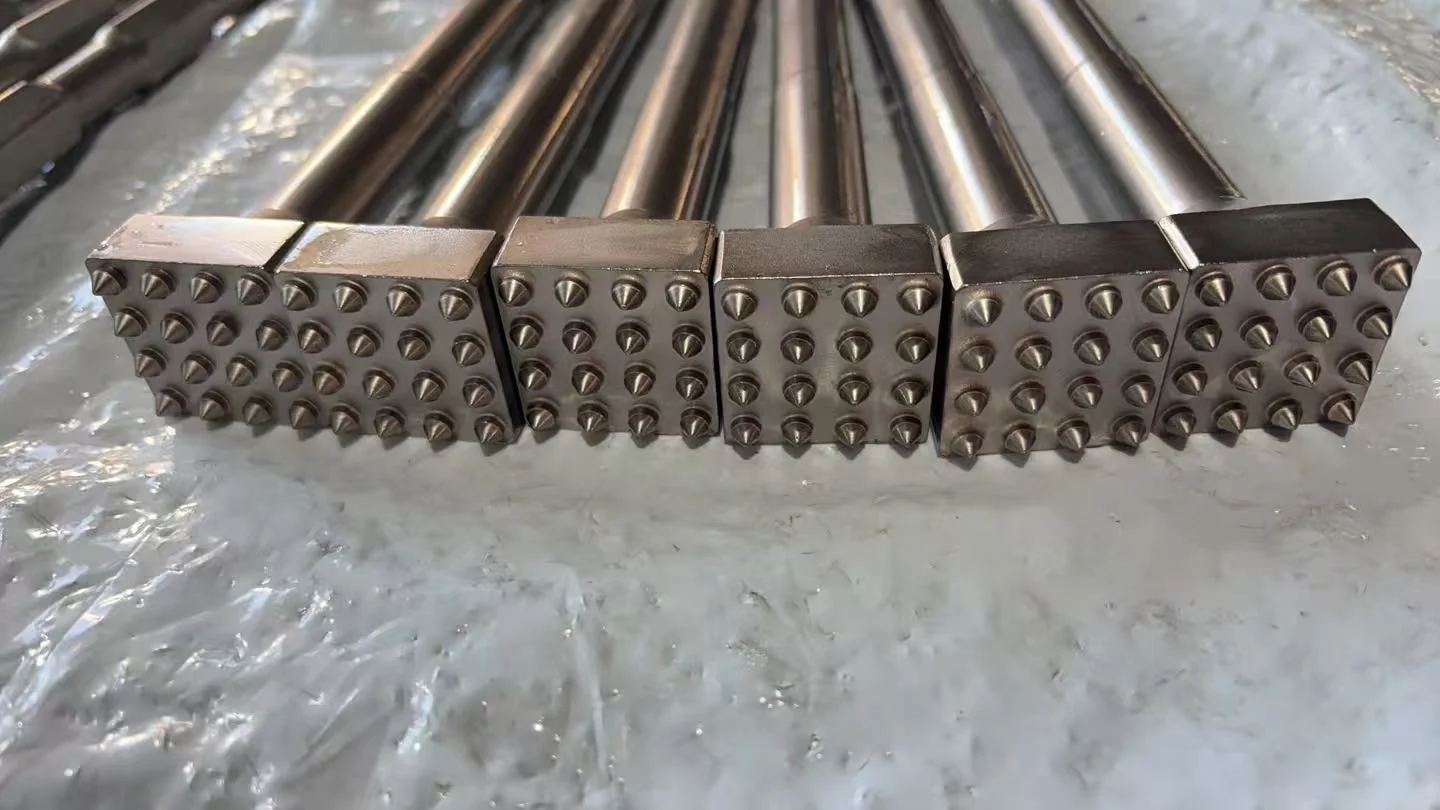
A bushing bit’s construction is defined by its working face, head construction and texture result — a hammer-only concrete surface preparation tool built around those factors. The mistake many importers make is treating SDS-Max as a quality signal. It is not. SDS-Max is only the machine interface. A steel-tooth SDS-Max bushing bit and a carbide-pin SDS-Plus bushing bit are simply two different constructions, each suited to different jobs, regardless of shank size.
For OEM catalogues, the clearer taxonomy is simple: carbide-pin bushing bit for one line, and integral steel-tooth line for the other. Then choose SDS-Plus, SDS-Max, TE-Y, Hex, fixed shank or replaceable head as fitment options inside each line.
Carbide Pin vs Steel Tooth: What Actually Differs
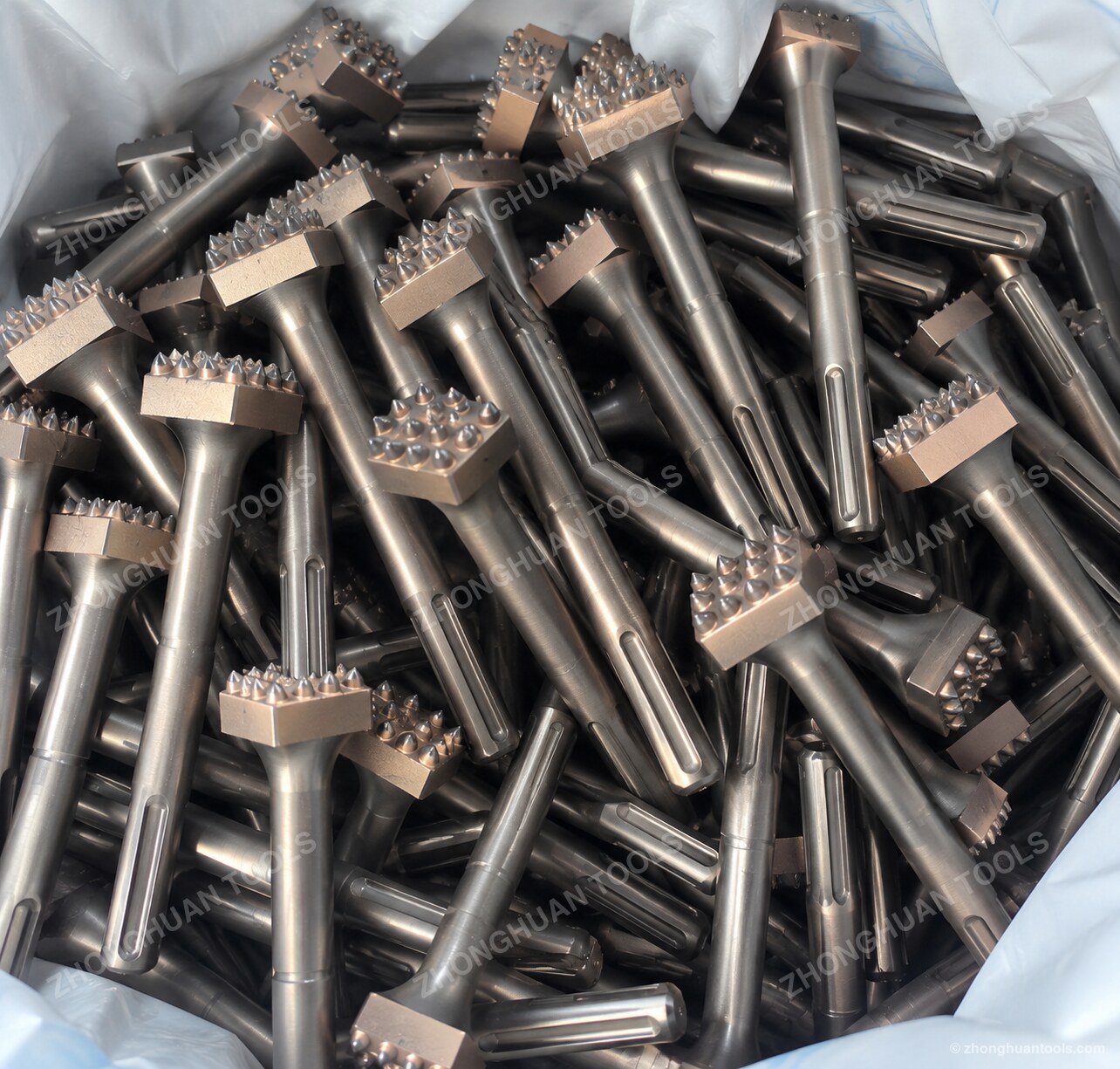
Construction quality comes from the parts of the tool that survive repeated impact and keep the texture consistent. Four details matter more than the shank label:
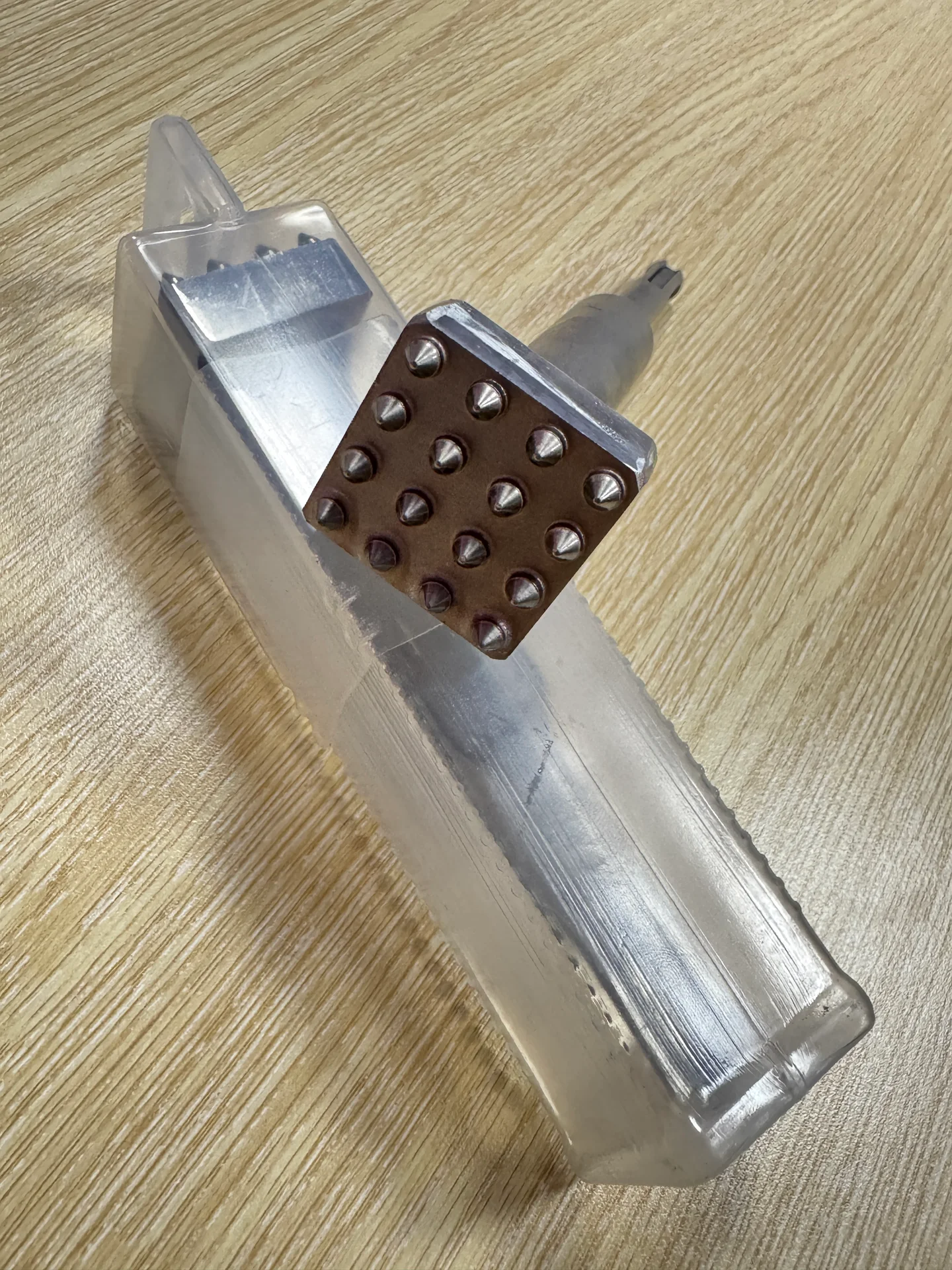
- Working face material: tungsten carbide pins hold the impact profile longer on hard concrete and abrasive aggregate than integral steel teeth.
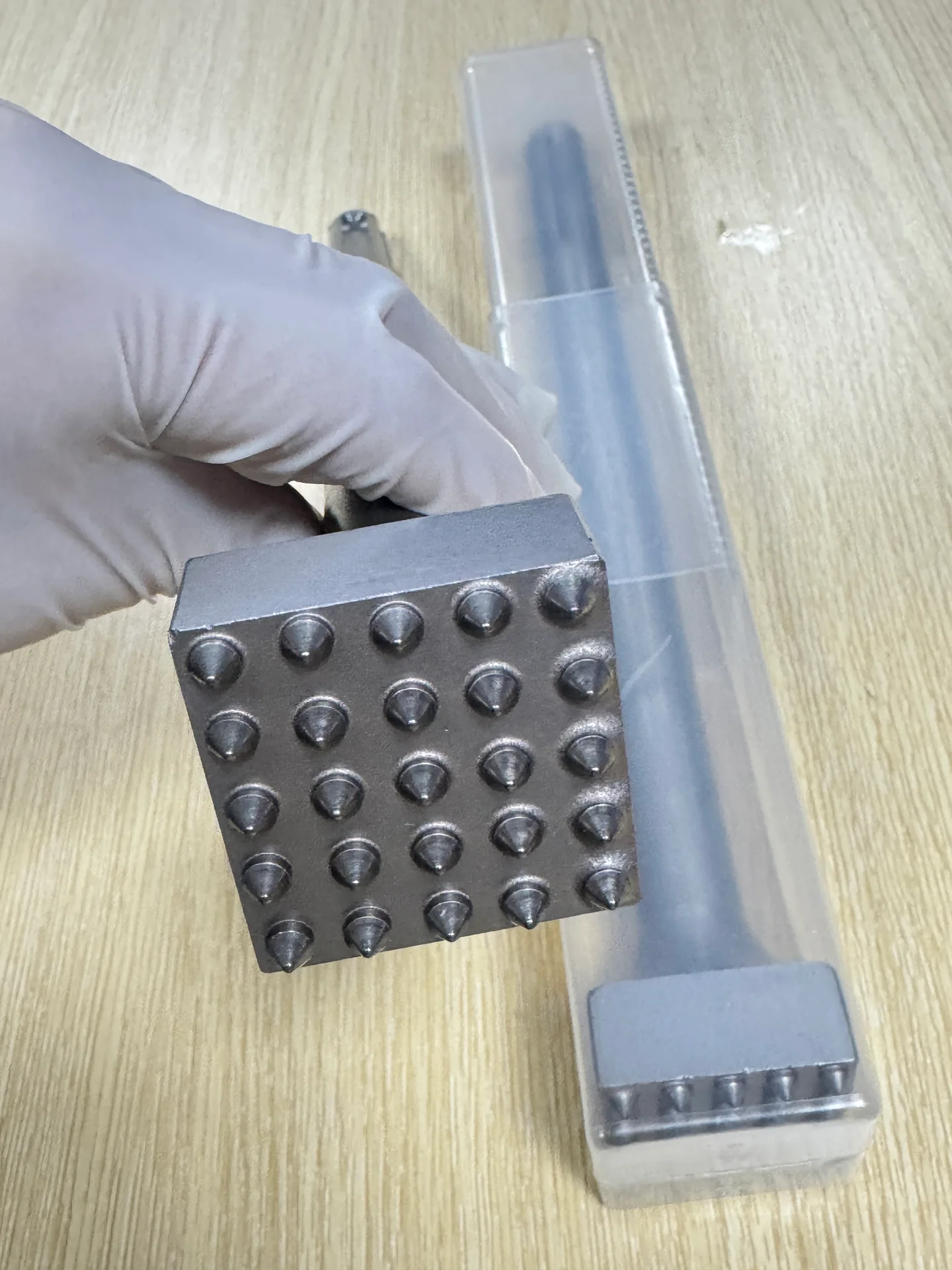
- Pin or tooth grid consistency: uneven grids produce patchy surface roughness, which is a problem for coating adhesion and shotcrete bonding.
- Body heat treatment: a 40Cr or similar alloy body with induction-hardened impact zones resists mushrooming, bending and head-to-shank wear.
- Head system: one-piece fixed shanks are simpler and cheaper; replaceable-head systems make sense for contractor programs with multiple tooth patterns.
In sales language, each construction should be positioned on its own wear-life and texture-consistency story, not ranked as better or worse than the other.
Two-Line Product Taxonomy: Carbide Pin vs Steel Tooth
| Line | Working Face | Best Buyer | Sales Story |
|---|---|---|---|
| Carbide-Pin Bushing Bit | Tungsten carbide pin grid | Professional distributors, contractors, private-label SKUs | Wear life, hard concrete, bridge deck roughening, shotcrete prep |
| Integral Steel-Tooth Line | High-hardness alloy steel tooth face | Retail, MRO, wholesale price-band programs | Competitive landed cost, general concrete roughening, leveling, coating prep |
Strong distributors usually carry both lines. The carbide-pin SKU gives the catalogue a wear-life-focused professional option. The steel-tooth line protects price position for retail shelves, jobber assortments and container-volume wholesale orders.
Head Shape: Square vs Round — Also Fitment, Not Taxonomy
The same carbide-pin construction ships in both square and round head formats. Shape is a coverage-pattern choice, the same way shank is a machine-fit choice — it does not change which construction line the bit belongs to.
- Square head: edge-to-edge pin coverage with no gaps at the corners of the working face. The standard choice for texturing flat areas — bridge decks, parking decks, floor slabs — where uniform coverage matters more than reach.
- Round head: a circular pin pattern that centers impact around a single axis. Useful for spot texturing, tighter access areas, and operators who prefer a rounded profile against the surface.
Both formats use the same carbide-pin joining process: tungsten carbide pins bonded to the body through mesh belt furnace brazing, where the assembled head moves through a continuous furnace under a controlled protective atmosphere. This produces even, oxidation-free braze joints across every pin on every head — the reason square and round carbide-pin bits from the same production batch hold pin retention equally well, regardless of head shape.
Integral steel-tooth heads are supplied primarily in square format, since the tooth grid is machined directly into the body rather than bonded piece by piece.
Shank Is Fitment, Not Taxonomy
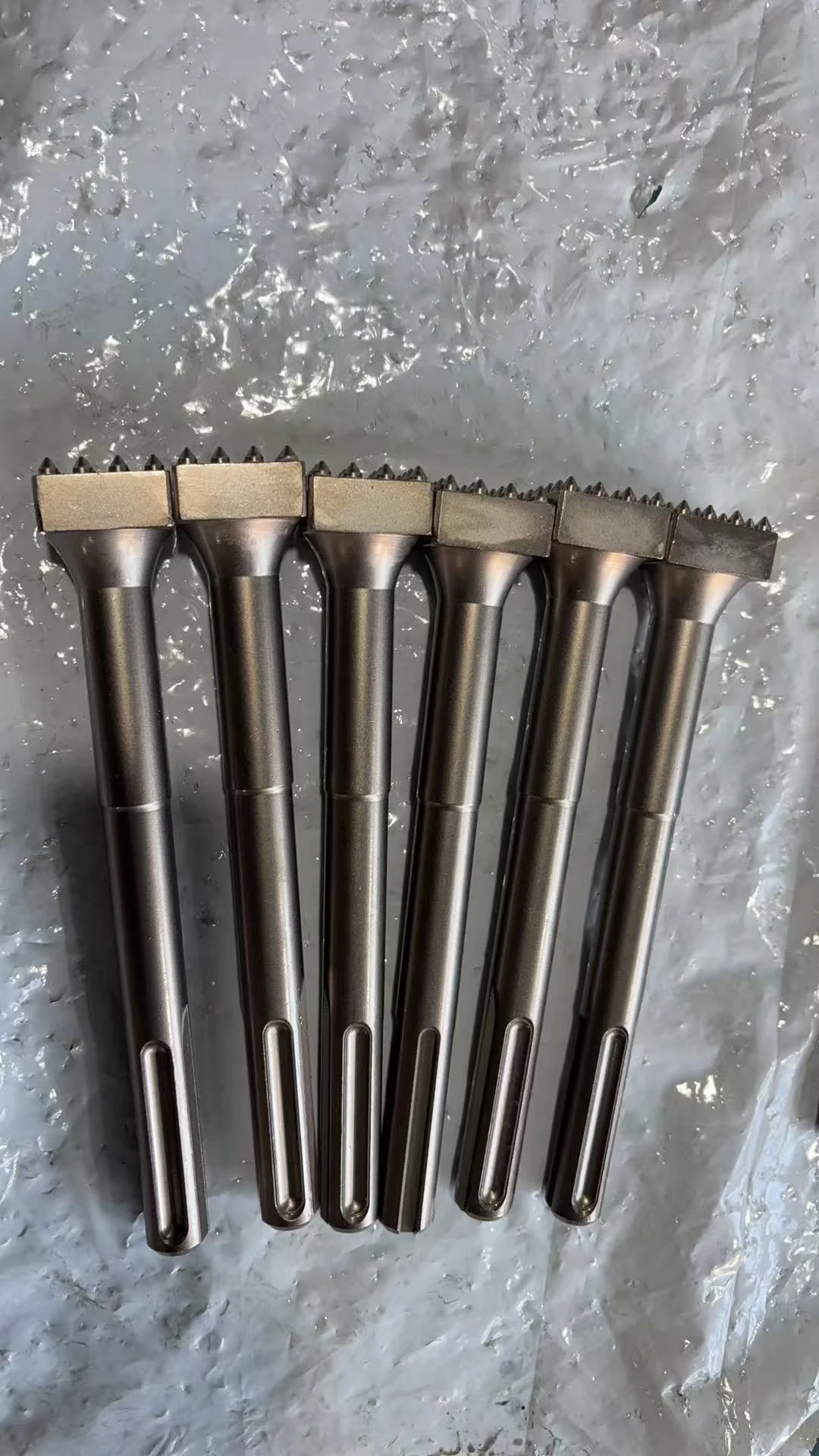
A bushing bit product page should not start by dividing the range into SDS-Plus and SDS-Max. That tells the buyer what hammer the tool fits, not what the tool is designed to do. Use shank type after the buyer has already chosen material tier and surface result.
- SDS-Plus: compact hammers, smaller heads, detail work, stairs, ramps and repair patches.
- SDS-Max / TE-Y: heavier rotary hammers, larger heads, bridge decks, parking decks and commercial floor prep.
- Hex: breaker platforms, industrial demolition and contractor fleets that already standardize on hex shanks.
- Fixed vs replaceable head: fixed shank for simple SKUs; replaceable head for contractor systems and spare-head programs.
This is the same logic used for diamond blades: the category is not the arbor size first; it is segment technology, material and machine class first.
Tooth Count and Texture Result
Tooth or pin count controls how aggressive the texture is. It should be written as a surface result, not just a number on a spec sheet.
| Pattern | Texture | Best Use | Catalogue Position |
|---|---|---|---|
| 16-20 teeth / pins | Coarse, deep profile | Structural keying, coating adhesion, shotcrete prep | Professional prep SKU |
| 25 teeth / pins | Medium roughness | General surface roughening and excess concrete removal | Workhorse SKU |
| 30-45 teeth | Fine, dense texture | Anti-slip walkways, stairs, decorative concrete, stone aging | Finish and anti-slip SKU |
For mixed distributor channels, start with 25 as the workhorse, add 16 for aggressive prep, then add 30 or 45 when anti-slip or decorative finish customers appear.
How to Use Hilti, Bosch, Milwaukee and DeWalt as Benchmarks
Benchmark brands should define the specification. They should not be used as a promise to copy a trademarked product. In practice:
- Hilti TE-Y BT style: use when the buyer is asking for carbide pins, long wear life, pre-assembled tool feel and professional contractor positioning.
- Bosch HS1909 style: use when the buyer is asking for SDS-Max roughing tools for stone, concrete and asphalt in a pro-retail range.
- Milwaukee style: use when the buyer cares about forged steel, hammer-only use and demolition-channel durability.
- DeWalt style: use for North American retail or contractor-channel steel tools where impact resistance and packaging are part of the sell.
The RFQ should name the benchmark model, then list the actual dimensions, head size, tooth pattern, construction and packaging target. That prevents the supplier from guessing based on a brand name alone.
Quality Inspection Checklist for OEM Bushing Bits
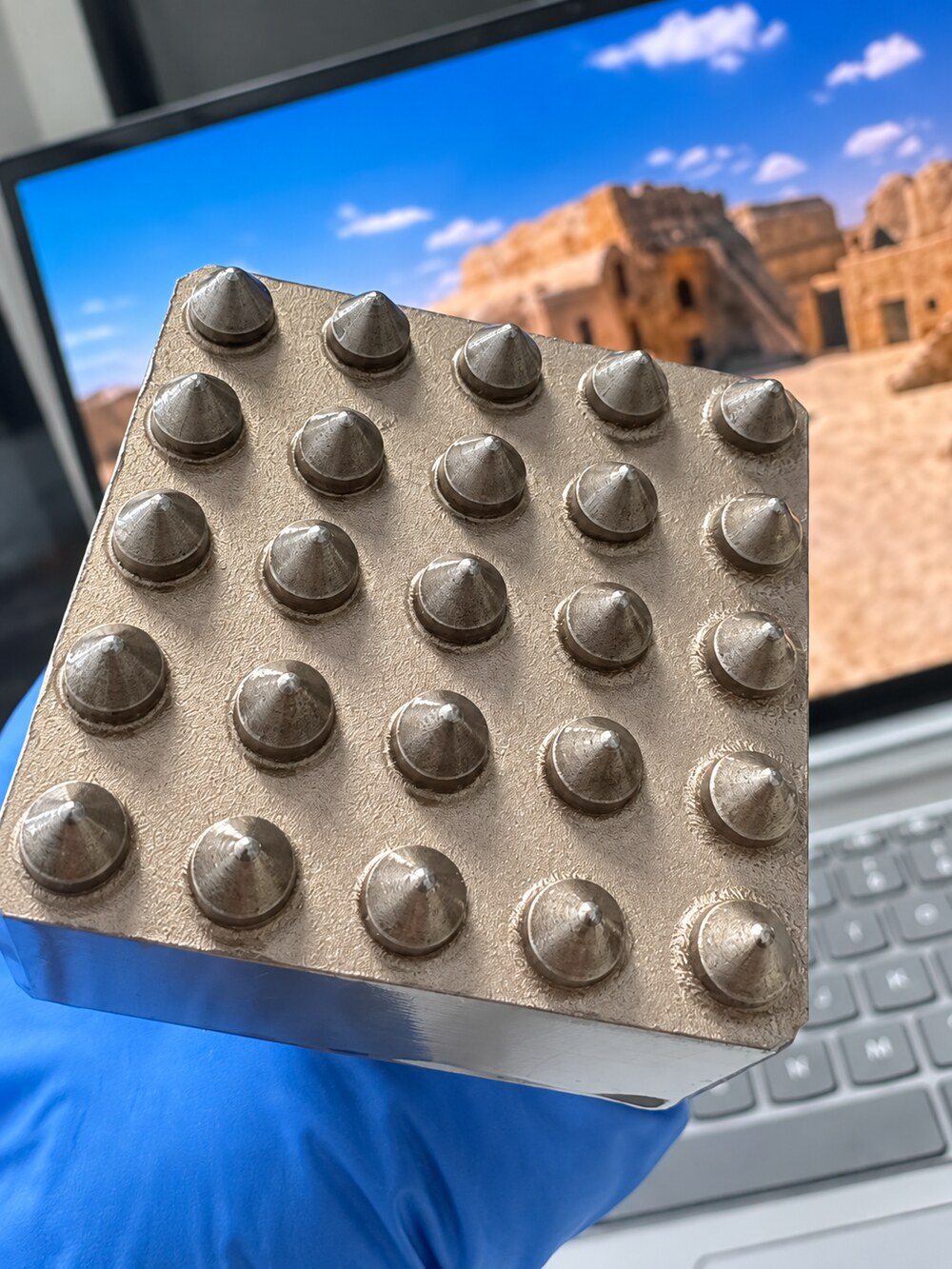
- Working face inspection: check pin or tooth grid alignment, broken tips, uneven height and surface finish.
- Body hardness: verify induction-hardened impact zones and a tough core; avoid bodies that deform after short hammer-only testing.
- Head-to-shank transition: inspect radius, weld or forged transition, and early cracking risk.
- Shank tolerance: confirm SDS-Max, SDS-Plus or Hex dimensions against the tool platform to avoid chuck rattle and energy loss.
- Impact test: run hammer-only strikes on representative concrete and check for pin loss, tooth deformation and head loosening.
- Packaging drop resistance: heavy heads damage weak retail packaging. Test carton and blister protection before approving artwork.
A sample that looks clean in a photo is not enough. Bushing bits fail under impact, so the approval loop should include impact testing and post-test measurement.
RFQ Template for a Bushing Bit Program
Carbide-pin bushing bit program for private label. Working face: tungsten carbide pin grid. Benchmark: Hilti TE-Y BT 4x4 style, but OEM branding required. Application: hard concrete, bridge deck roughening and shotcrete substrate prep. Head size: 40-80 mm range. Tooth / pin patterns: 16 and 25 first, optional 30/45 for anti-slip. Shank: SDS-Max / TE-Y one-piece fixed shank; evaluate replaceable head option for contractor kit. Body: 40Cr, induction-hardened impact zones. Packaging: single plastic tube plus OEM master carton. Provide sample, impact test result, shank dimensional report, label artwork and MOQ by SKU.
For the steel-tooth line, replace the working face with hardened alloy steel tooth face, keep the same head and shank questions, and ask the supplier to quote a separate price-band SKU instead of mixing it into the carbide-pin line.
Build a Bushing Bit Program
Send Zhonghuan your benchmark model, target surface result, working face material, tooth count, shank, packaging and annual volume. We will separate the carbide-pin SKU from the steel-tooth SKU before quoting.
Request Bushing Bit RFQ Review

