

Why the order says BL and the barrel says B
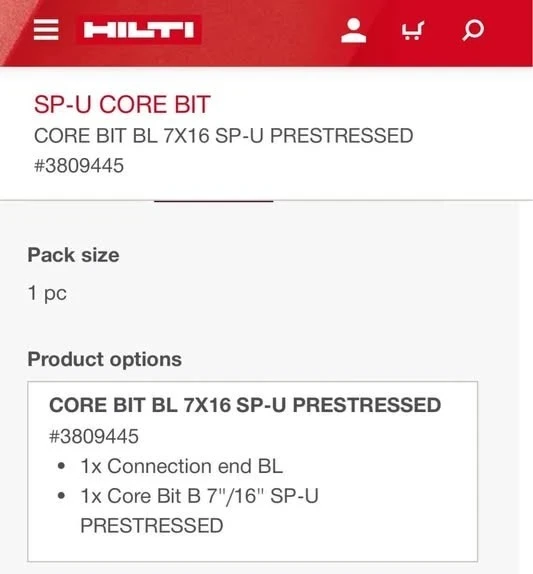
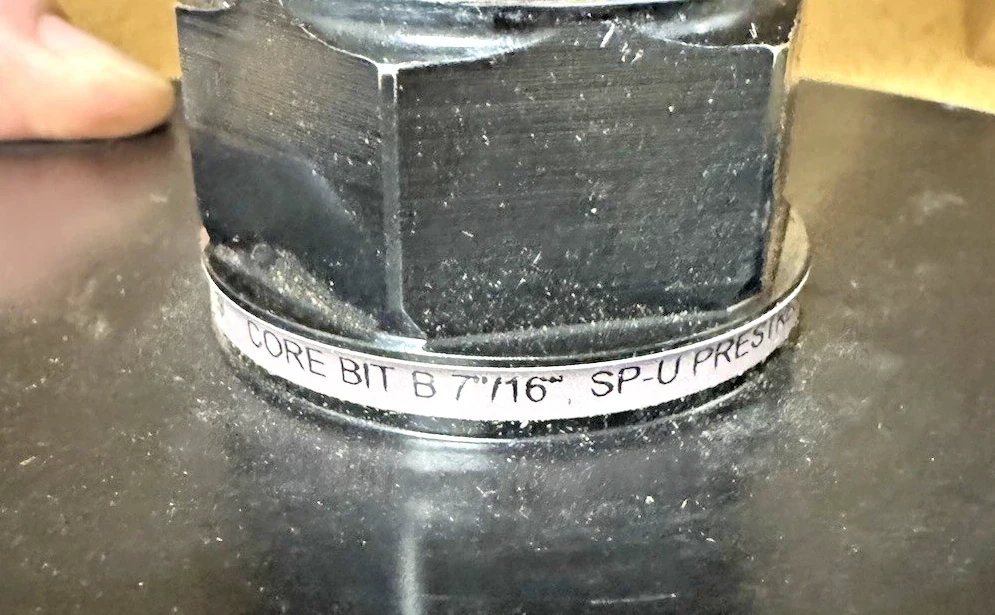
Hilti’s order description reads BL 7×16. The metal band on the actual bit reads B 7″/16″. The packing list for #3809445 explains both markings. The buyer orders a kit containing a BL connection end and a B barrel from the SP-U Prestressed series. The band identifies the barrel in that kit.
Order listing, PDF page 39 Hilti USA item #3809445 7-inch sample photographs
- Cutting diameter
- 7″ · 177.8 mm
- Working length
- 16″ · 406.4 mm
- Drilling mode
- Rig-mounted, wet
- Hilti performance level
- Premium
Where SP-U fits in Hilti’s Premium range
Hilti USA describes this bit as Premium, the middle of its three core-bit performance levels. Read the designation on the item page when identifying the grade. The letter U at the end of SP-U can easily be mistaken for the top-tier Ultimate label.
The word Prestressed identifies the working conditions behind the specification. Hilti describes two design aims: efficient drilling in prestressed concrete and improved resistance to bit breakage during encounters with steel tendons. One concerns the time taken to complete a hole. The other concerns whether the bit can withstand a sudden change in cutting load. Both matter to a contractor coring repeated approved openings in precast components.
Hilti uses Equidist diamond placement on its Premium line and on selected Ultimate bits. The name identifies how the diamonds are positioned inside the segment. The performance level is stated separately. Hole time and service life depend on conditions in the particular prestressed member.
Hilti core bit performance levels SP-U Prestressed application data
Prestressed and hollow-core describe two features of a slab
Hilti lists both prestressed concrete and hollow-core concrete. Prestressing describes how the member carries load. For example, in a pretensioned precast plank the strands are tensioned before casting. When the concrete has gained the required strength, the strands are released and transfer compressive stress to the concrete. Hollow-core describes the cross-section: continuous voids run along the length of the plank. A single prestressed hollow-core floor plank has both characteristics.
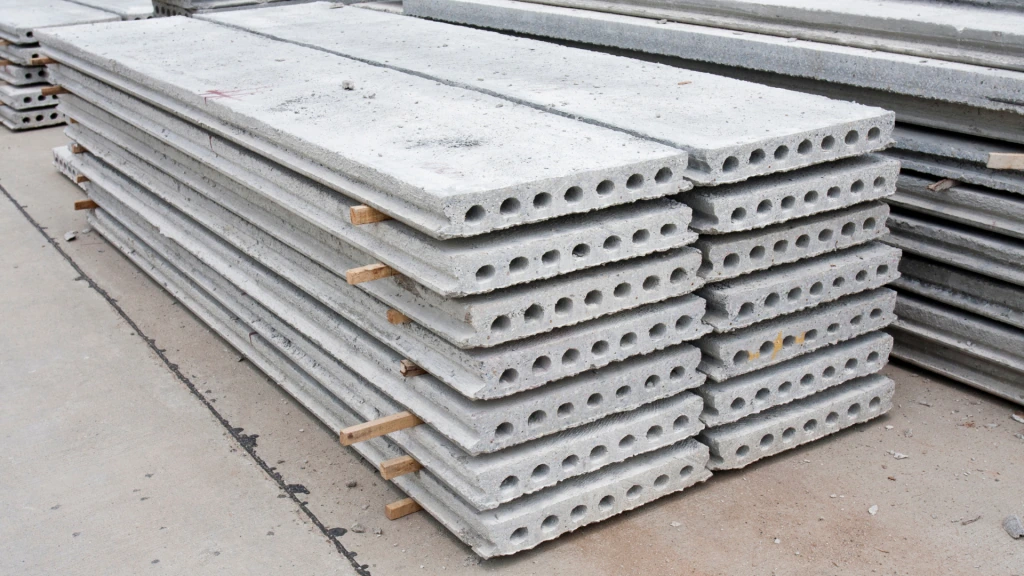
A 7-inch crown entering the slab face cuts around a circle 177.8 mm in diameter. As it crosses a void, some segments may be over the cavity while others are still in contact with a concrete web. The area of contact changes again when the crown reaches the lower flange. Two holes with the same diameter and slab thickness can therefore involve different volumes of concrete. A count of holes completed in half an hour does little to isolate the cutting speed of the bit.
Breakage resistance is a property of the tool. Opening location is a decision about the structural member. The precaster and structural engineer need to check the proposed location against the strand layout. The discussion here concerns the cutting conditions at an approved opening.
Coreslab prestressed hollow-core planks PCI guidance on openings in hollow-core planks
What the segments, welds and steel barrel each do
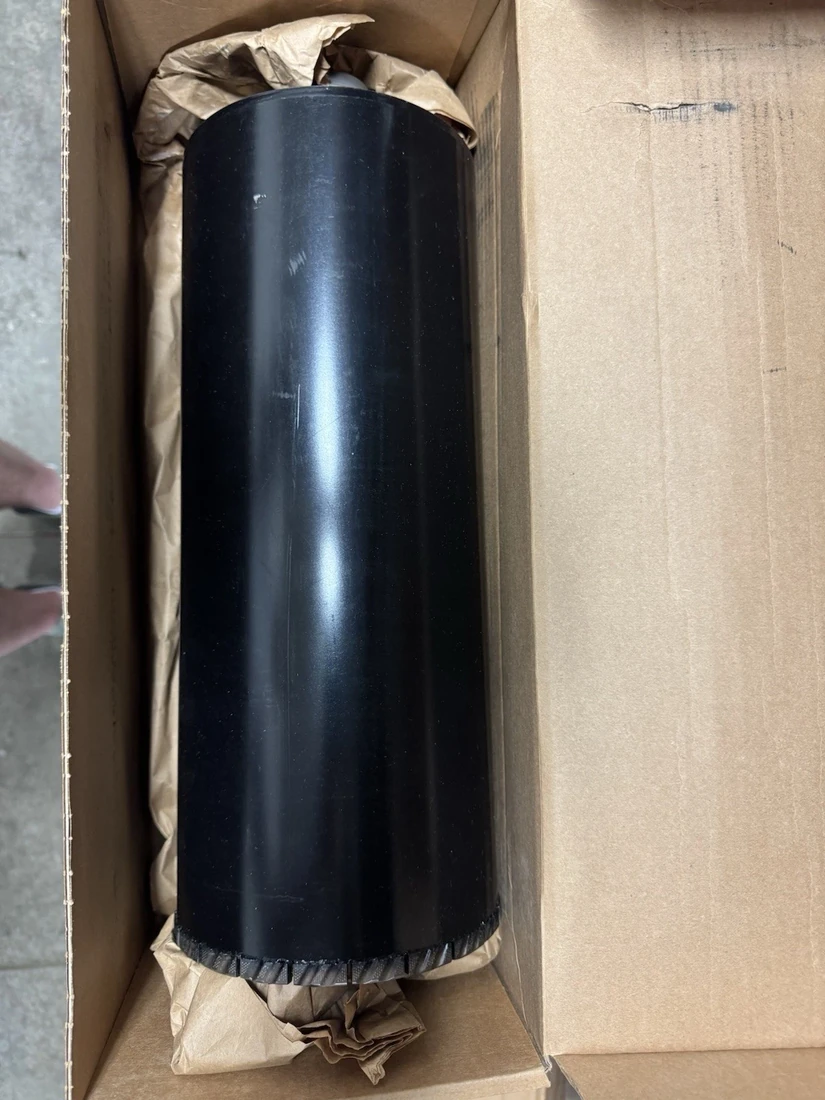
The unboxing photograph shows a segmented crown around the lower edge of the black steel barrel. The core drill turns the barrel, and torque passes through the barrel and the segment joints to the cutting end. The segments grind the annular slot while the material in the centre enters the barrel as a core. The rear connection receives torque from the machine and the crown applies it at the work surface.
Laser welding describes how each complete segment is attached to the steel barrel. Cutting resistance at the rim is transferred back through these joints. Equidist refers to another part of the construction: the location of diamond particles inside the segment. Hilti lists both features for this SP-U, identifying the segment joint and the arrangement of the cutting material respectively.
What keeps the crown cutting as the working face wears?
Exposed diamond particles grind the concrete while the metal bond holds them at the working face. As the particles and bond wear, diamonds farther inside the segment become exposed. Hilti describes Equidist as deliberate diamond placement intended to keep cutting performance consistent through the segment’s life. The individual blocks around the crown are visible in a product photograph. The arrangement within those blocks is documented in the manufacturer’s technical material.
Hilti specifies rig-mounted wet drilling. The stand guides a crown almost 18 cm across on a fixed axis. Water reaches the cutting face, carries heat away and transports fines out through the annular kerf. Differences in water supply, depth and contact with concrete webs can all affect time per hole in sample trials. Hilti confirms the welding and diamond placement. Its public item data do not give the segment count, individual segment dimensions or bond formulation for this 7-inch size.
Hilti segment specifications ETH Zurich diamond coring research Tyrolit wet drilling water circuit, Figure 3-20
Where to find B, M41 and BL on the assembly
Moving from the barrel towards the machine, there are two connections. The connection end screws into the rear of the barrel. Its other end engages the quick-release chuck. After assembly, the threads at the first joint sit inside the neck of the barrel.
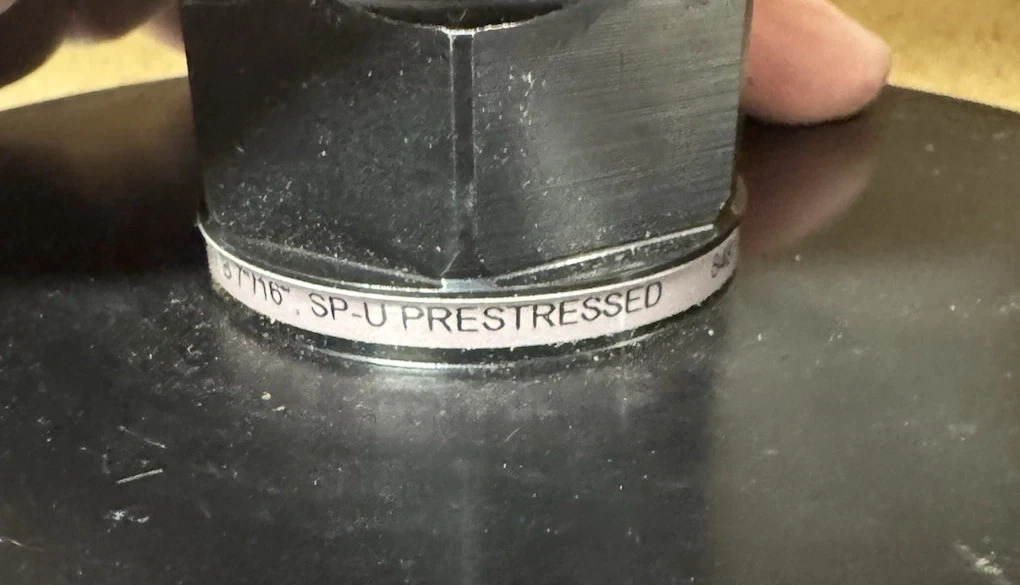
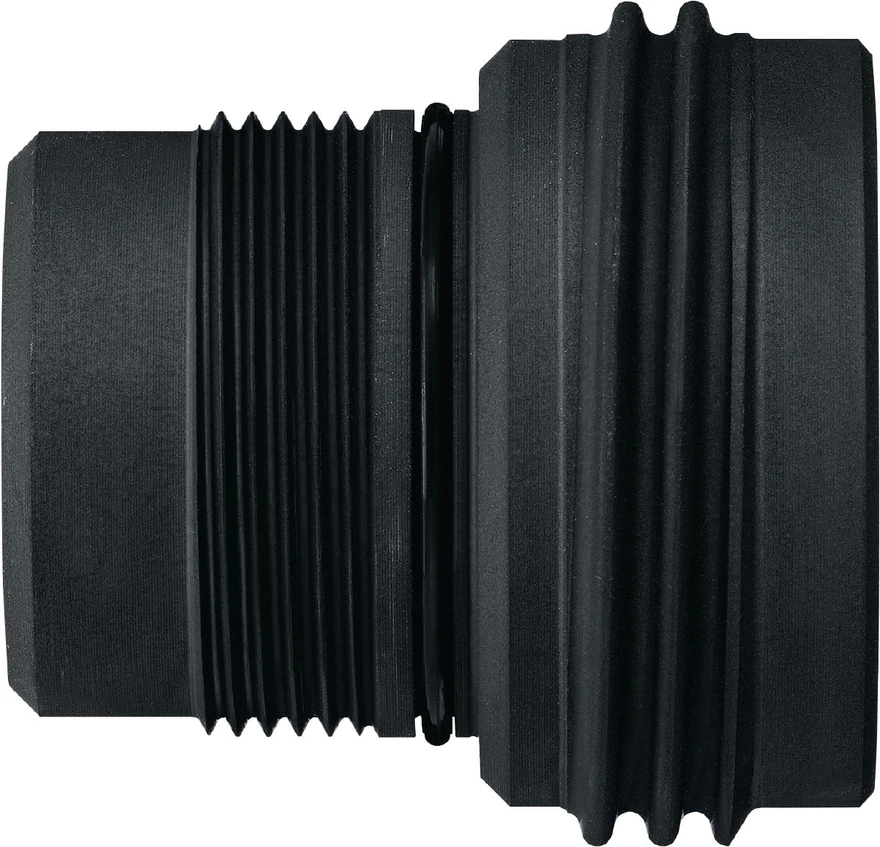
The separate component in Hilti’s photograph makes the two ends easier to identify. The closely spaced threads on the left secure the end to the barrel. The larger ridges on the right face the machine. Hilti lists the separately orderable component as BL (M41), #305542. A side view of an assembled barrel hides one of those two interfaces.
Hilti BL (M41) end Hilti section drawing, Figure 2 on page 6
Where the M41 thread sits after assembly
Think of the barrel neck as a nut with a bore through it. There are wrench flats on the outside and female threads on the cylindrical wall inside. The smaller male end of the adapter screws into the bore, hiding the joint. The ridges exposed on the assembled specimen are on the BL machine side. Measuring across those ridges with calipers gives a different dimension from the M41 thread diameter.
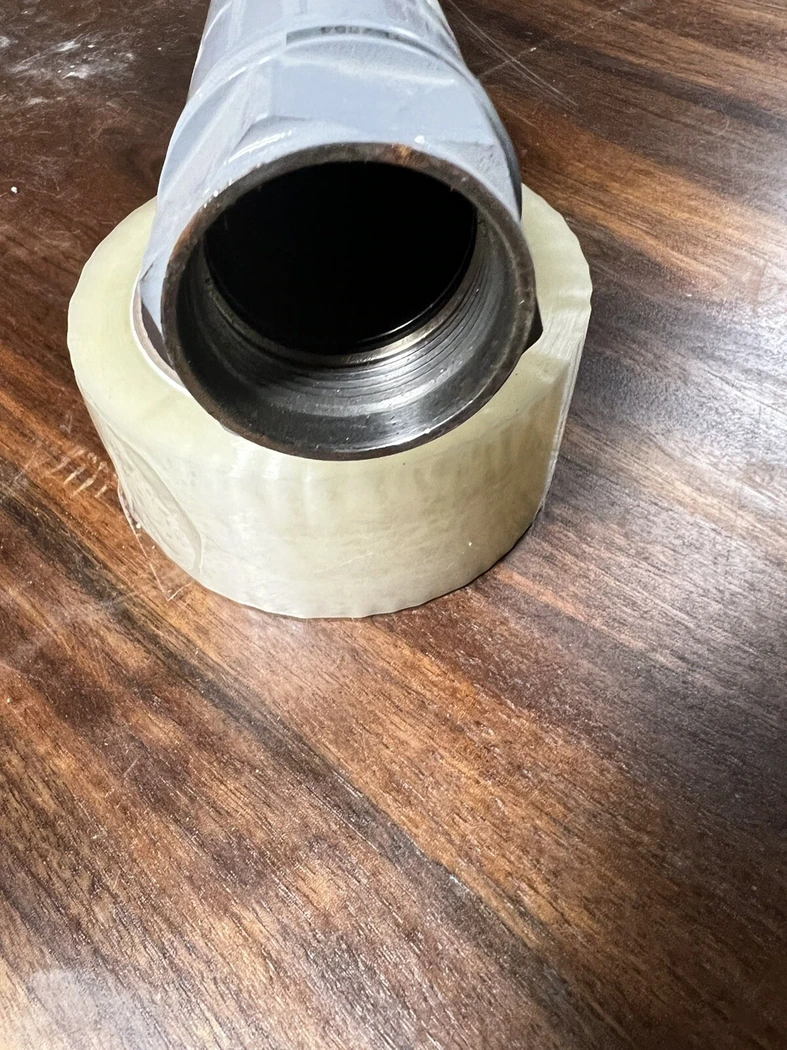
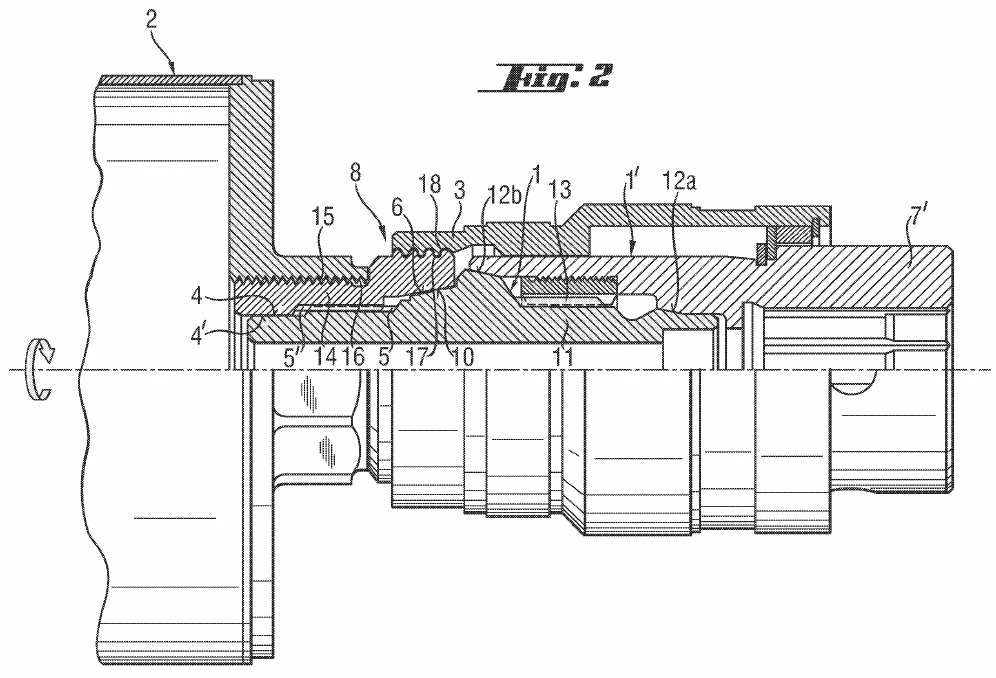
Hilti’s connection patent illustrates the hidden joint. In section, item 15 is the external adapter thread and item 16 is the internal barrel thread. The patent describes this example as M41 × 2: a nominal diameter of 41 mm with an axial pitch of 2 mm between adjacent thread crests. The current page for #305542 lists M41 only. For a mating part made to a sample, confirm the pitch, effective thread engagement and seating face against the actual part.
Hilti BL (M41) part Hilti patent description of items 15 and 16
Why one 7-inch barrel appears under three order numbers
Three US item pages specify exactly what comes in the box. All three list the barrel as B 7″/16″ SP-U PRESTRESSED. The other line identifies the connection end supplied. A distributor ordering a BI kit receives a different machine-side fitting from a distributor ordering BL or BS.
| Kit item number | Barrel in the box | Connection end in the box |
|---|---|---|
| #3809405 | B · 7″ × 16″ | BI · Hilti quick release |
| #3809445 | B · 7″ × 16″ | BL · Hilti quick release (sample shown) |
| #3809424 | B · 7″ × 16″ | BS · 1¼″ threaded connection |
Once the end has been removed from a stocked B barrel, its identification band gives the barrel designation and size. That band alone does not tell you whether the original order was BI, BL or BS. For a complete kit, check its package number and the fitted connection end. For a replacement barrel, check the barrel marking and the end the customer intends to retain. A side photograph of the black barrel alone would look the same in all three cases.
Order list: BI and BL on page 39, BS on page 40

Matching the diameter and chuck to the drill
The nominal cutting diameter is 7″, or 177.8 mm. The 16″ working length is 406.4 mm. In metric enquiries the same size is sometimes described informally as a 180 mm core bit. On a drawing the diameters differ by 2.2 mm. A 400 mm working length also differs from 406.4 mm. For existing sleeve openings or replacement stock, agree explicitly whether a metric alternative is acceptable.
The SP-U family page lists the DD 150-U, DD 160 and DD 250-CA across a range of diameters and connections. For example, the US corded DD 150-U is rated up to 6⅜″. This 7″ bit exceeds that range. The DD 250-CA covers 7″, and Hilti lists both BL and BS chucks for that machine. When matching kit #3809445 to a DD 250-CA, check which chuck is actually fitted.
When a customer sends photographs of a used bit, we look for two details: the diameter and working length on the barrel band, and the profile of the installed chuck or original connection end. The first identifies the required barrel dimensions. The second identifies the fitting to supply. Together they save a second round of sampling when an enquiry initially specifies only a Hilti core drill.
DD 150-U diameter range DD 250-CA diameter range Hilti USA machine and chuck chart
OEM wet core bits from Zhonghuan Tools
We support importers and tool brands with OEM and private-label wet diamond core bits. When using this sample as a reference, specify a diameter of 177.8 mm and a working length of 406.4 mm, whether you need a bare barrel or a complete assembly, the installed chuck and quantities by size. We review the rear connection, segment construction, marking and packaging against your sample or drawing before confirming the supply specification.
To compare samples, use the same rig and comparable concrete. Record actual drilled depth, time per hole and remaining segment height after a group of holes. For hollow-core planks, also note where the voids and webs were encountered. These observations separate penetration speed from segment consumption and help identify changes worth evaluating in the next batch. Suitability for a particular prestressed application is confirmed in the sample evaluation.
View Zhonghuan diamond core bits Discuss an OEM sample with Zhonghuan

