

Quick Answer: Start With the Saw and the Job
A buyer does not need to design the diamond blade. Start with the information that is already available on the job: saw model, blade diameter, center bore, what is being cut, approximate cutting depth, wet or dry operation, target meterage and order quantity. Zhonghuan converts that brief into the segment, bond, steel core, gullet and mounting pattern.
Gullet names are useful for comparing drawings and confirming repeat orders, but the machine and application remain the purchasing entry point. This guide gives buyers enough visual language to describe an old blade without turning the RFQ into a materials-science exam.
Three Ways a Blade Gets Classified
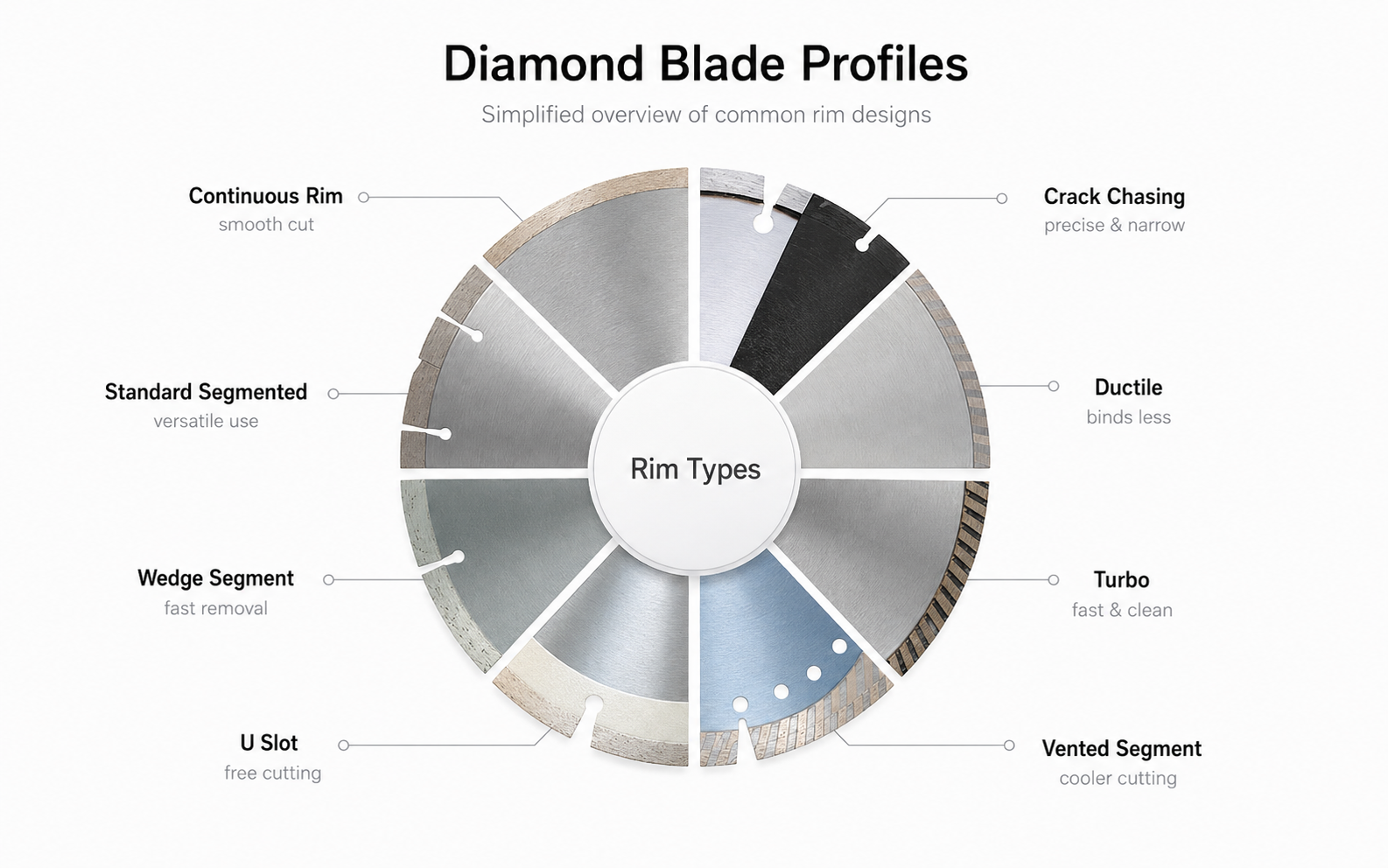
| Classification axis | Common terms | Buyer question |
|---|---|---|
| Rim construction | Segmented · Turbo · Continuous | What type of cutting edge is required? |
| Gullet / core geometry | U-slot · J-slot · Keyslot / Keyhole · V-gullet | How are the segments separated and the core relieved? |
| Application | Concrete · Asphalt · Stone · Precast · Ductile iron | What does the buyer need to cut? |
Diamond Saw Blade Anatomy
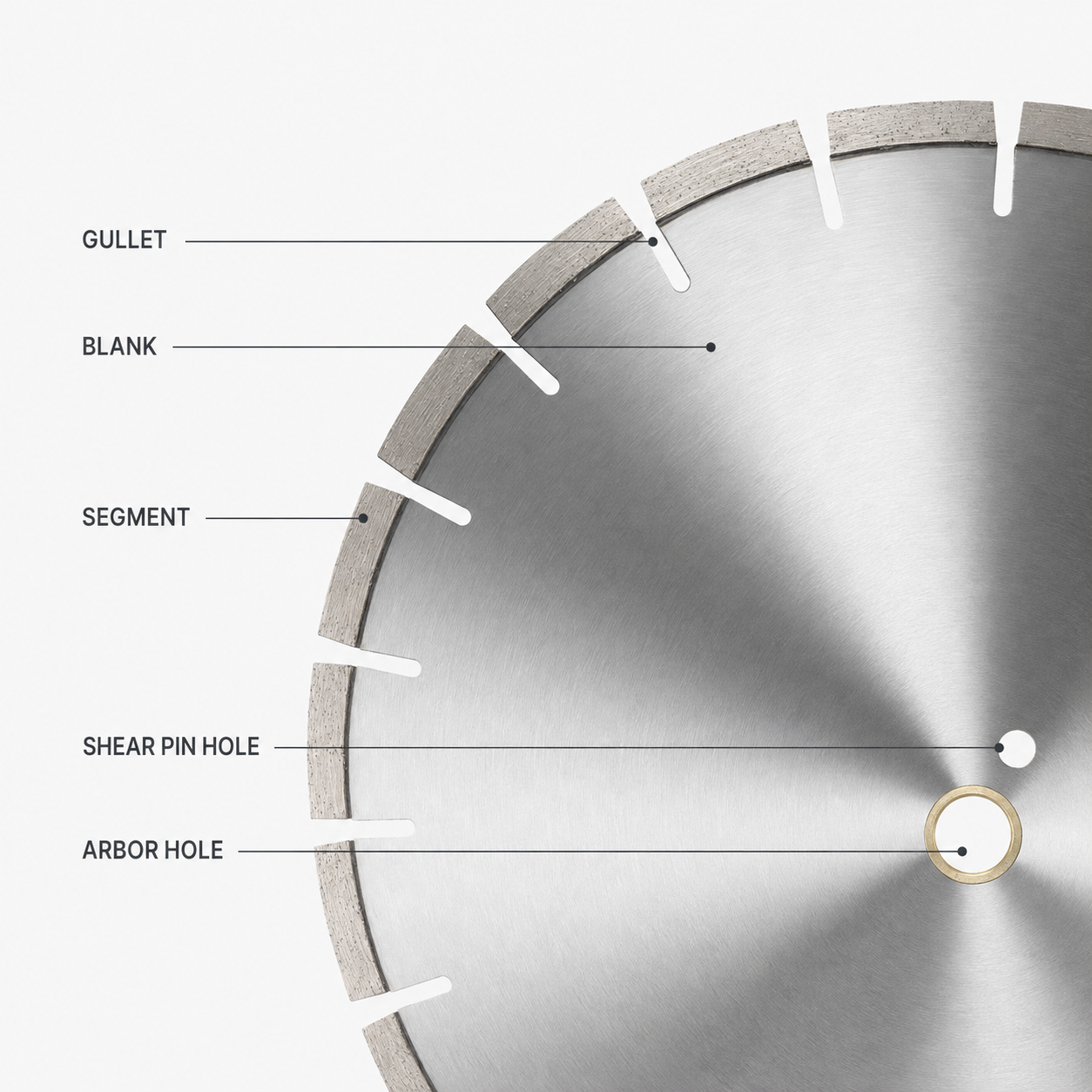
- Segment: the diamond-bearing cutting element around the rim.
- Blank / steel core: the tensioned steel body carrying the segments and machine interface.
- Gullet: the complete slot or gap between segments.
- Arbor hole: the center bore locating the blade on the spindle or flange.
- Drive / shear-pin hole: an additional machine-interface hole used by driven flange systems.
The Diamond Products glossary uses the same practical vocabulary: the gullet is the slot in the core, while the drive pin engages the blade and flange.
What the Gullet Actually Is
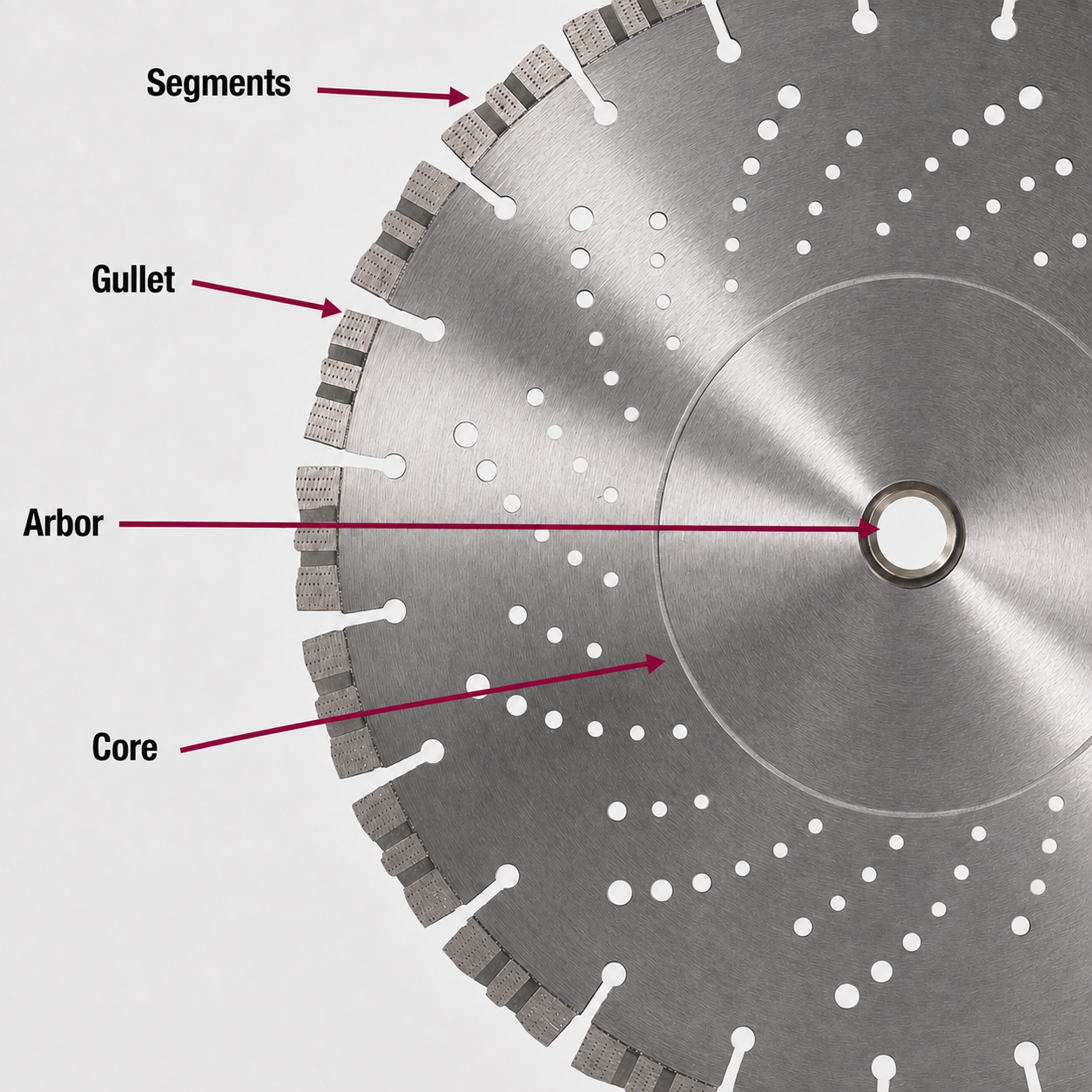
Gullets create the spacing between segments and form a controlled passage through the rim area. Width, depth, root form, spacing and orientation work as one system. The Diamond Products training guide describes gullets as laser-cut keyways that provide segment spacing and a path for cooling flow.
U-Slot Geometry
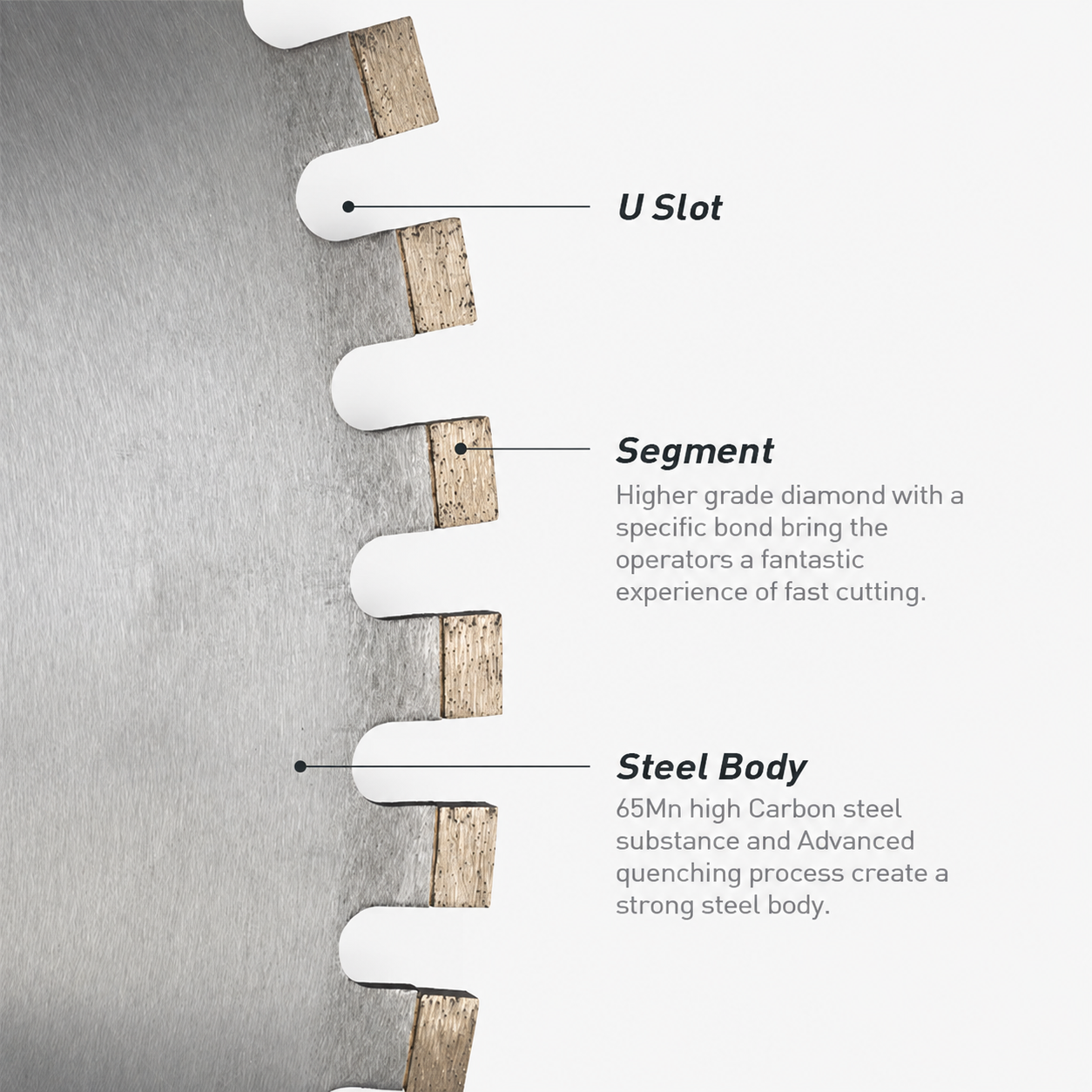
A U-slot has an open body and rounded root. It is easy to recognize in an old-blade photo and is common where the engineering program needs open flow space around the rim. Narrow and wide versions can be matched to the segment count, blade diameter and expected slurry or debris load.
J-Slot Geometry
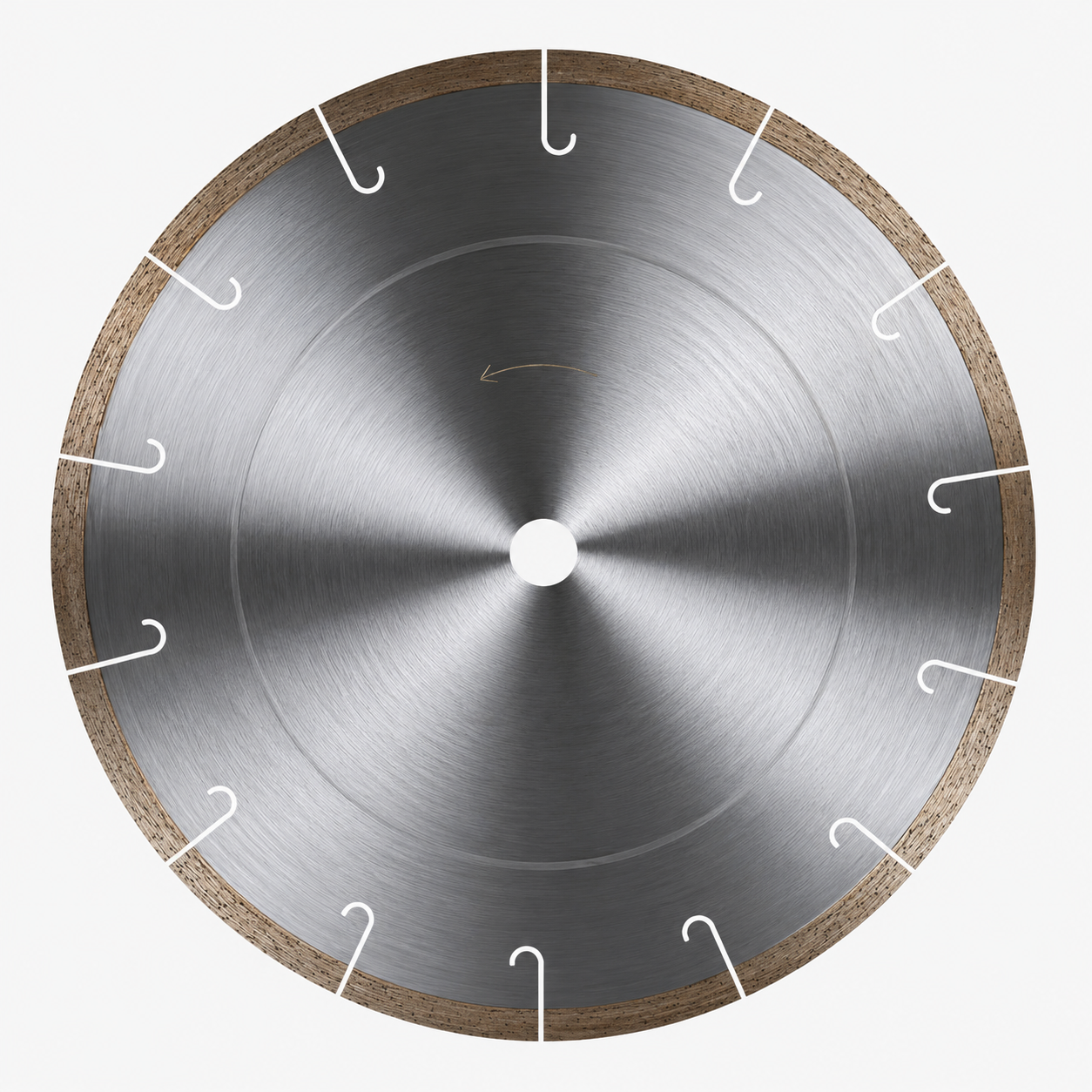
A J-slot curves at the inner end of the gullet. The visible direction of the curve makes the blade orientation part of the drawing and sample approval. Buyers can identify it from a photo; Zhonghuan then matches the full blade architecture to the host machine and cutting application.
Keyslot / Keyhole Geometry
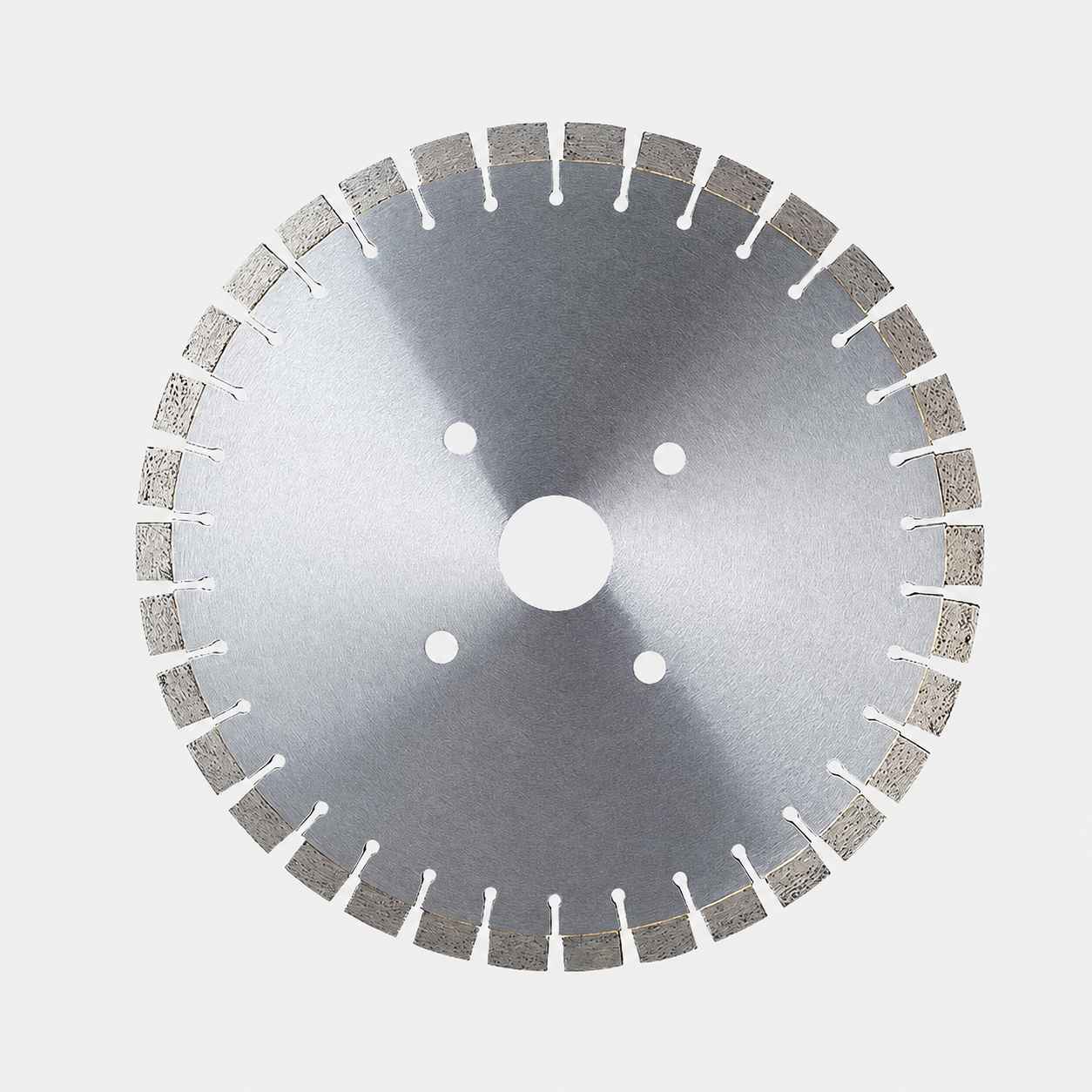
Keyslot and Keyhole are often used interchangeably in commercial diamond-blade conversations. Zhonghuan treats them as one buyer-facing family: a narrow slot ending in a rounded or enlarged root. The rounded root replaces a sharp slot end with a smoother stress transition as the steel core cycles through cutting load and temperature change. We engineer that root together with slot width, depth, steel-core tension, blade diameter and machine load. The production drawing carries the exact geometry, so the buyer can simply attach an old-blade photo or approved sample.
Narrow, Wide, Radial and Inclined
These words modify the base geometry rather than create a new product family. A U-slot may be narrow or wide; a Keyslot may be radial or inclined. For an RFQ, a clear photo plus the machine and diameter is more useful than forcing every buyer to choose the perfect English term.
| Visible feature | What Zhonghuan aligns behind it |
|---|---|
| Narrow or close spacing | Segment count, rim continuity, water or air path |
| Wide or open spacing | Slurry/debris load, segment support and core layout |
| Radial or inclined direction | Rotation, machine power, cutting load and core tension |
| Rounded or curved root | Approved slot geometry and repeat-order drawing |
Machine-First Selection Map
| Buyer entry | Plain-language application | Engineering follows |
|---|---|---|
| Floor saw | Asphalt · green concrete · cured concrete · reinforced concrete | Bond, segment, gullet and undercut route |
| Wall saw | Concrete / reinforced concrete | Power, rebar, segment width, flange and core |
| Hand-held saw | Asphalt · next-day green concrete · general concrete | Diameter, arbor, wet/dry rating and rim layout |
| Table / bridge saw | Granite · quartzite · engineered stone | Kerf, flatness, core damping and finish target |
| Precast plant saw | Hollow-core slab · pile · T-beam | Bore, drive-hole pattern, PCD, diameter and power |
How to Discuss Cutting Meterage
Cutting meterage is the buyer's performance question. Send the saw model and power, blade diameter, material in plain words, approximate cutting depth, water or dry operation and the target linear meters. Zhonghuan will match the blade program and prepare a project-specific meterage estimate for sample approval.
A Practical RFQ
- Saw: machine brand/model or machine type.
- Blade: diameter, center bore and old-blade photo.
- Job: asphalt road, new concrete, old concrete floor, reinforced wall, precast element or stone slab.
- Cut: approximate depth and wet/dry operation if known.
- Interface: drive-hole quantity, diameter and PCD when the flange uses pins.
- Commercial target: expected meters, quantity, packaging and target market.
Send these inputs through the Zhonghuan engineering RFQ. Our team will return the recommended blade architecture, sample route and project quotation.


