

Hilti TE-CX SC is an Ultimate-class scaling chisel for removing surface residues and channelling in concrete. Its defining feature is a 60 mm working edge that spreads each pass across a broader strip than a narrow flat chisel. At Zhonghuan, we examine the blade, neck, wear behaviour and TE-C/SDS-Plus connection as parts of one surface-removal tool.
Core specifications: 18/6 and 25/6
Hilti lists 180 and 250 mm overall lengths with a 60 mm working width. The supplied physical photographs show TE-CX SC 25/6, item 282303. The 18/6 version uses the same nominal width in a shorter overall tool.
| Model | Overall length | Working width | Item number |
|---|---|---|---|
| TE-CX SC 18/6 | 180 mm | 60 mm | 282302 |
| TE-CX SC 25/6 | 250 mm | 60 mm | 282303 |
Both versions use TE-C, commonly called SDS-Plus, and are listed in the Ultimate product class with a single-piece pack.
Hilti specifications and applications
Hilti item and dimension references
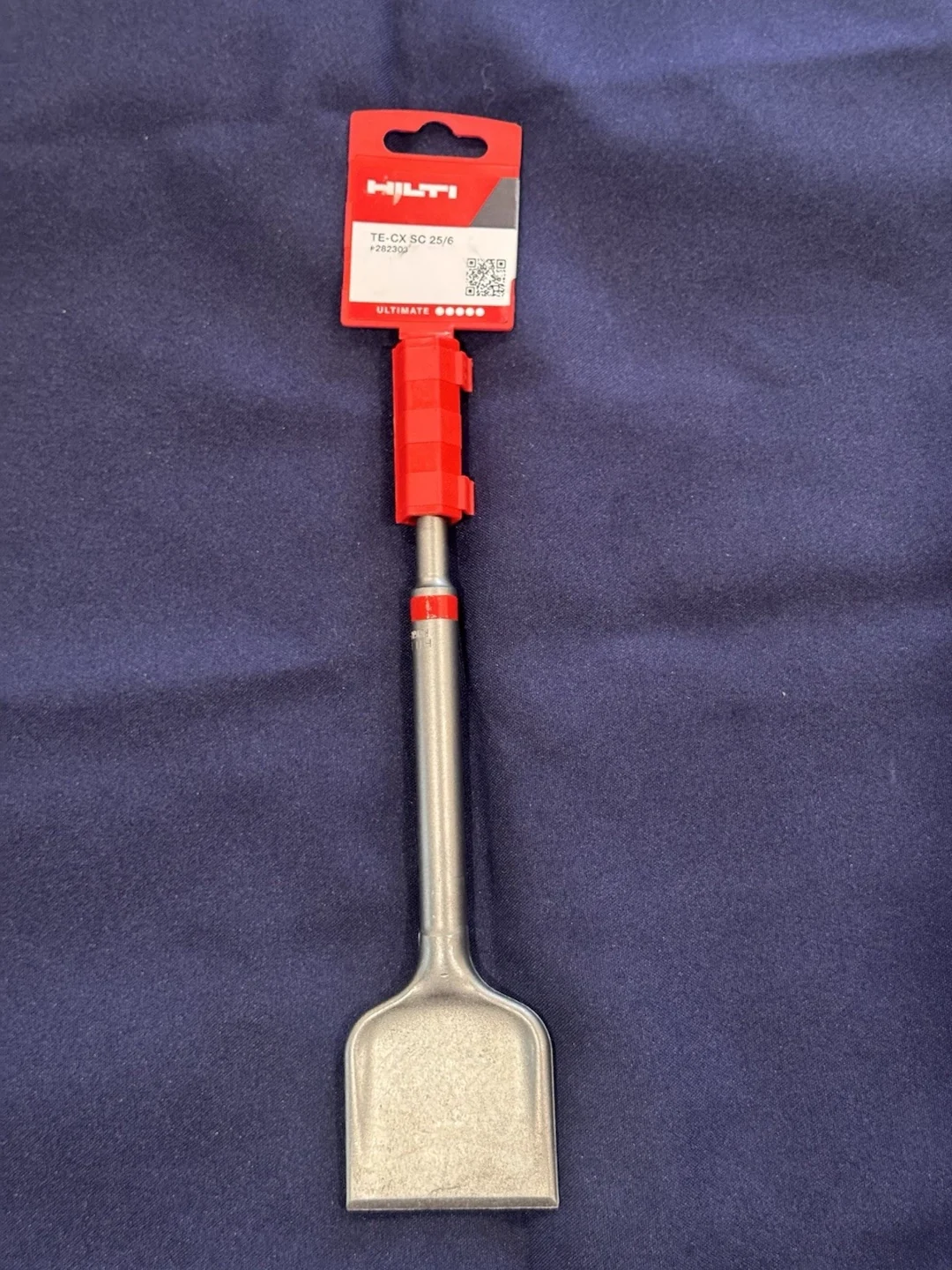
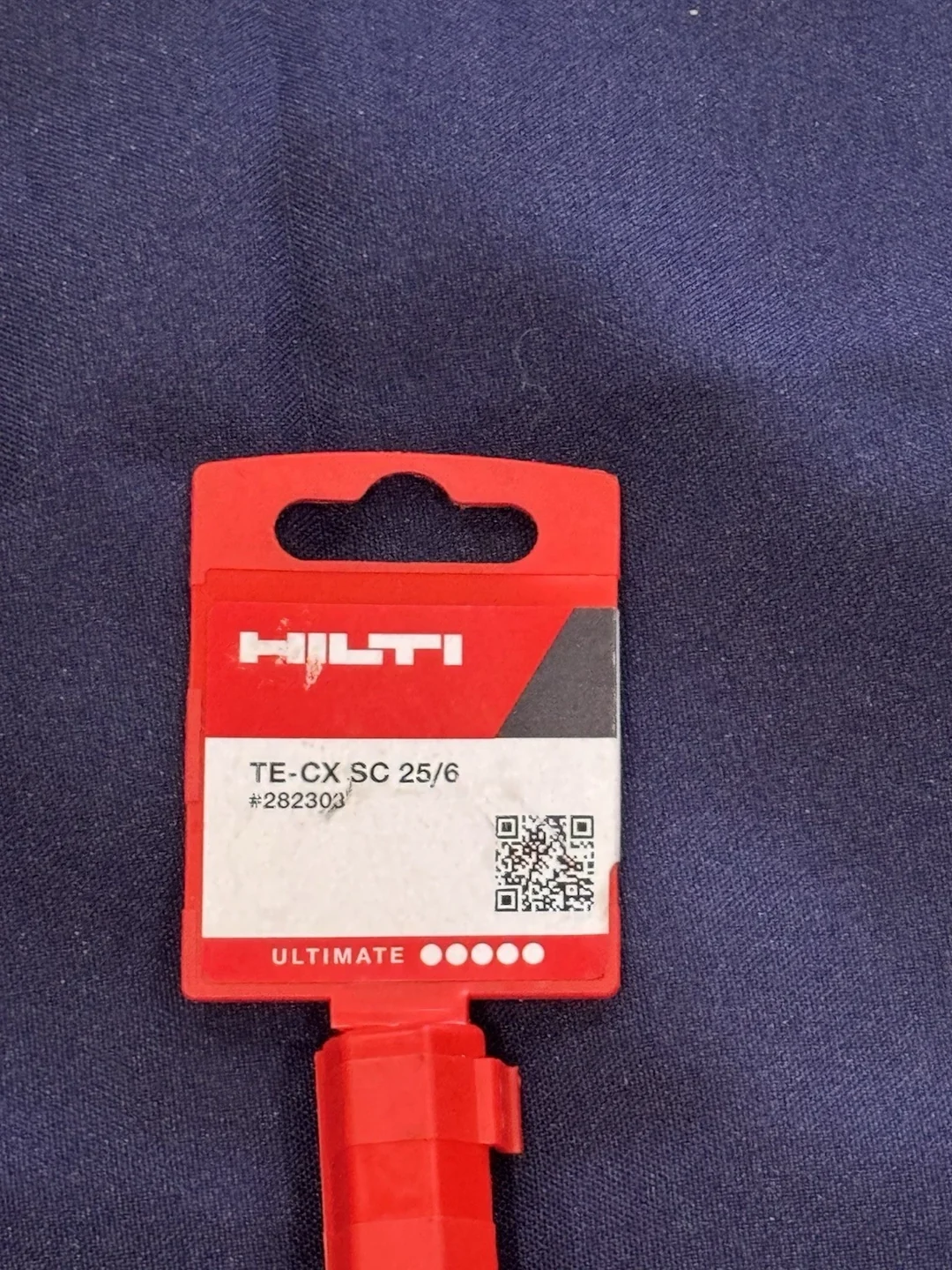
A 60 mm blade for progressive surface removal
The broad, straight edge works across a strip of the surface. The photographs show a widened blade joined to the round body through curved shoulders. In surface-removal work, the edge can enter beneath a raised deposit or along the boundary of a layer, then advance in overlapping passes. The width supplies coverage; the operator’s approach angle controls how deeply the blade bites into the substrate.
This geometry is useful when the target is material lying on the surface. For an isolated starting fracture, a point concentrates contact differently. Choose the working end around whether the task is initiating a break, following a channel or lifting residues across an area.
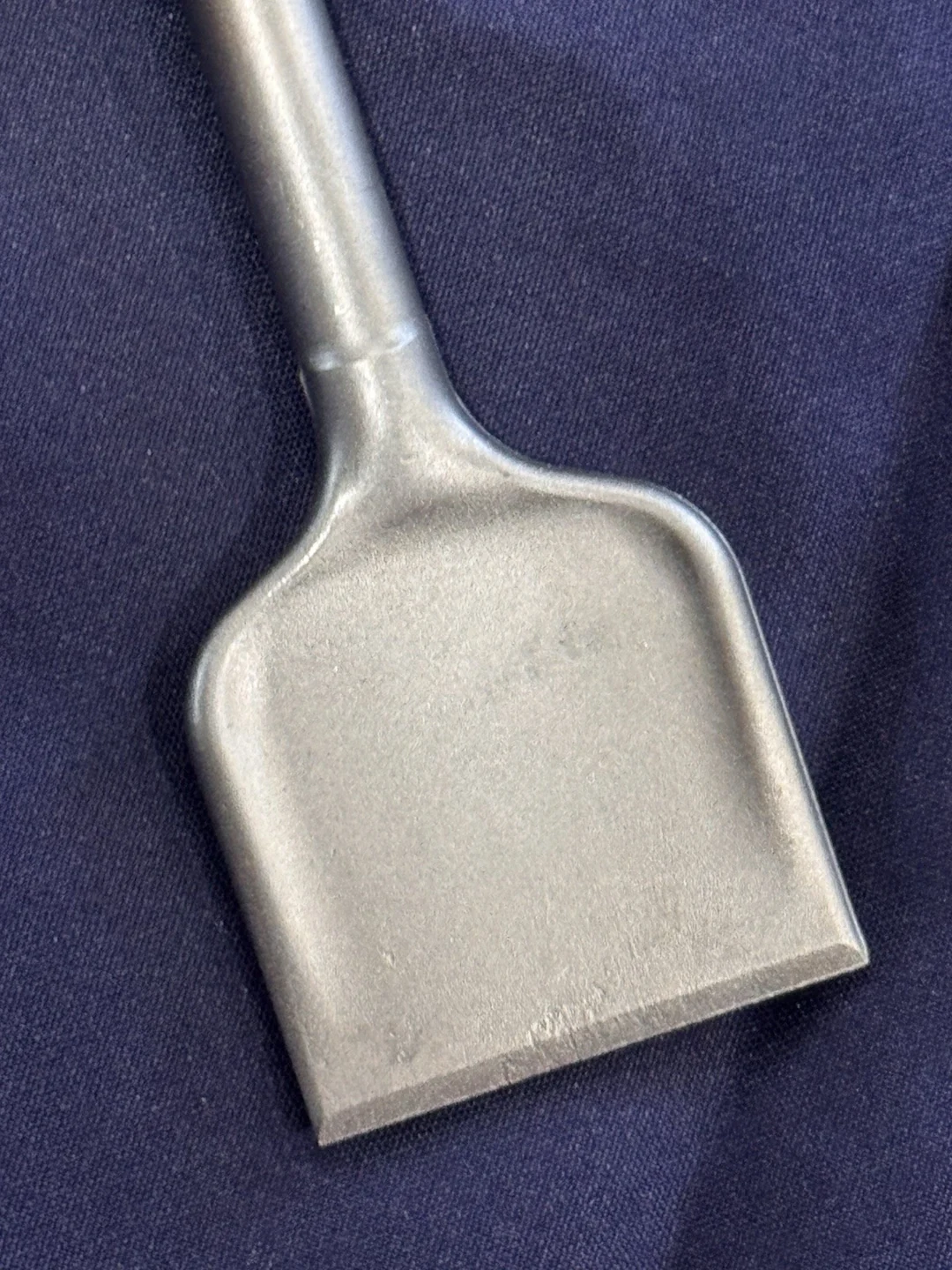
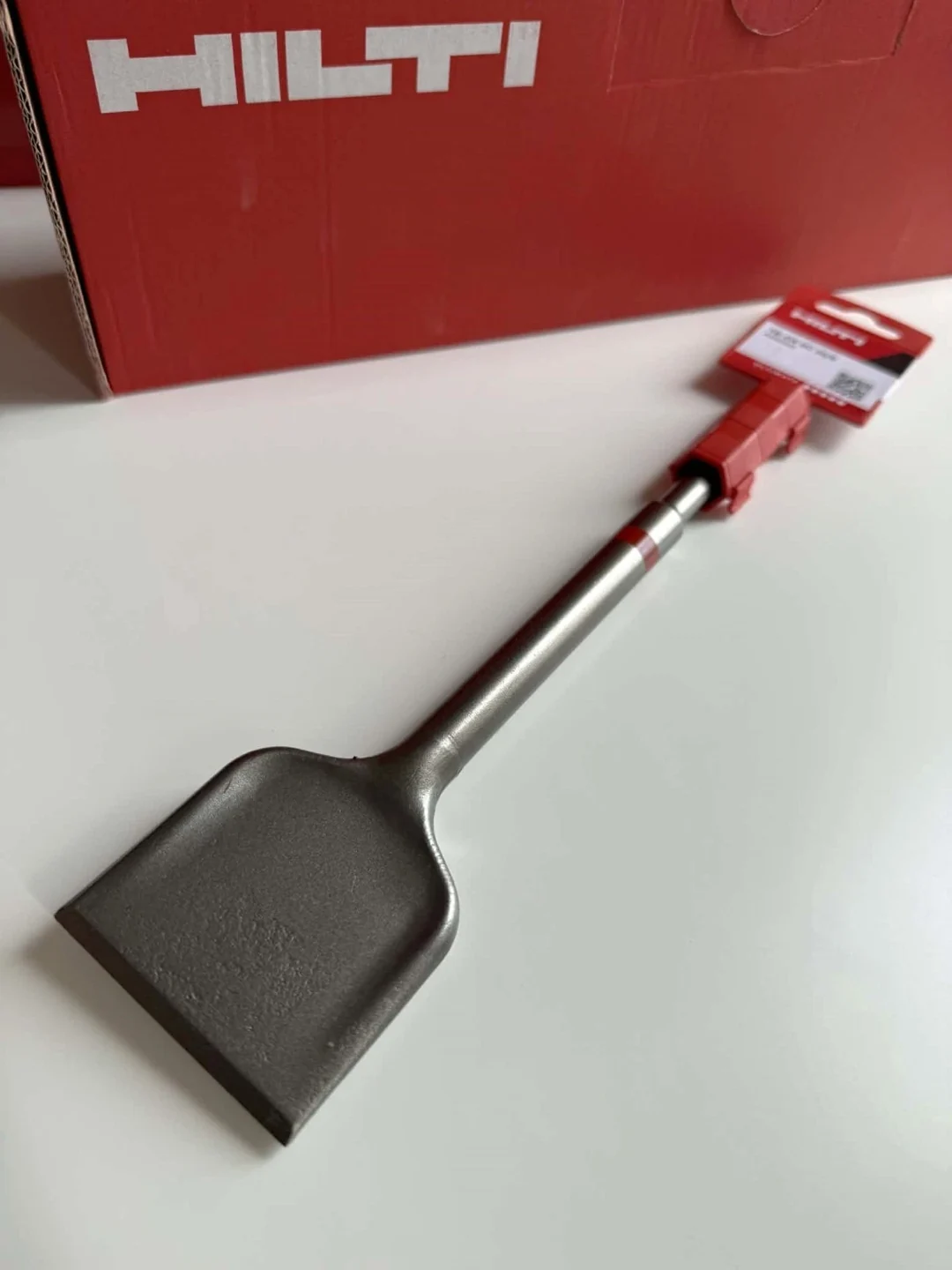
What the self-sharpening edge does
Hilti identifies the cutting edge as self-sharpening, with no routine resharpening or rehardening required. In practical terms, the intended benefit is retaining a useful working edge as steel wears during the specified application. The cutting edge still experiences wear: assess continued use by the blade’s working profile, removal progress and overall condition.
Hilti specifications and applications
High-alloy steel and the blade-to-body transition
Hilti specifies high-alloy steel for consistency and reliability. The blade, neck and connection face different loads during use: the edge meets abrasive deposits, the shoulders transfer the load into the body, and the shank receives repeated impacts. The generous curved transition visible in the photographs links the wide blade to the narrower body. Steel selection and working geometry contribute to the same durability objective.
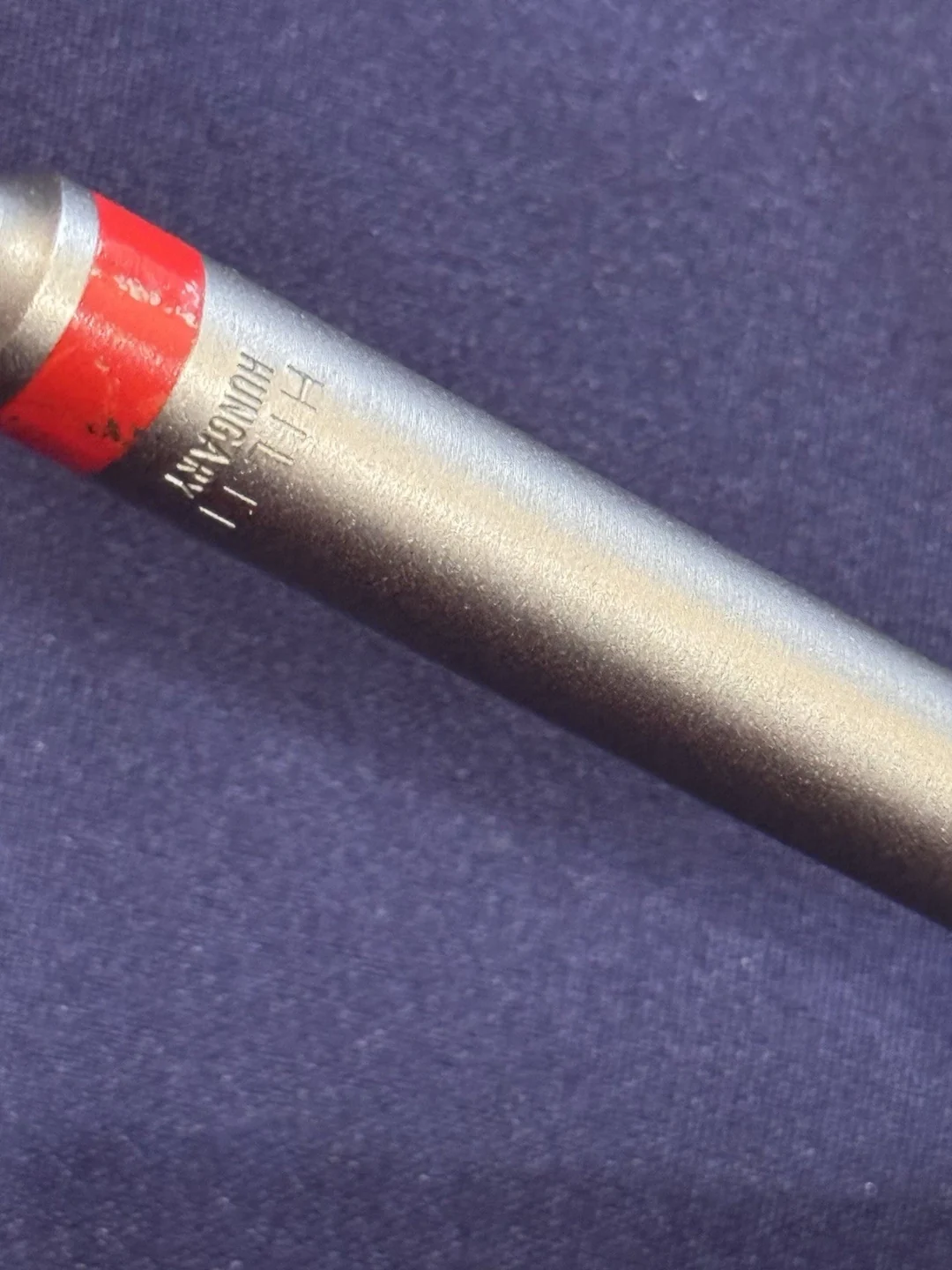
180 or 250 mm: choose length around access
Hilti recommends shorter chisels for efficient energy transmission and service life, with longer versions providing greater reach into deeper or tighter spaces. The 180 mm version is a compact choice for accessible work; the 250 mm version adds reach around an obstruction or into a recess. Choose the length that lets the machine and edge approach the job comfortably, while maintaining controlled contact.
Hilti specifications and applications
TE-C/SDS-Plus connection and machine selection
TE-C is the SDS-Plus connection family. Use a matching tool holder on a machine equipped with a suitable chiselling mode, and follow the machine’s insert requirements. SDS-Max/TE-Y and TE-S require their own connection systems. The red sleeve shown in the photographs protects the connection end in its packaging and is removed for installation.
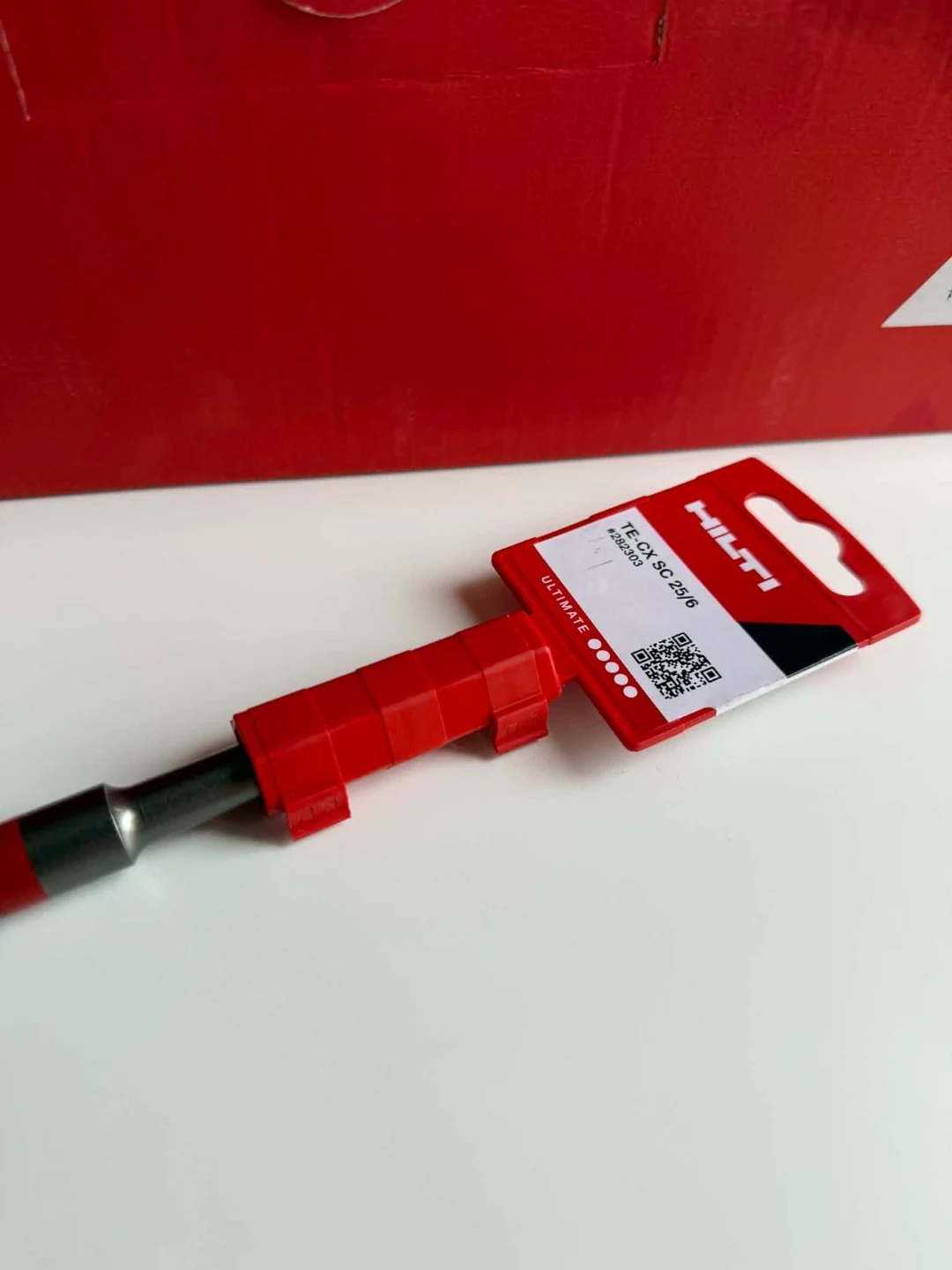
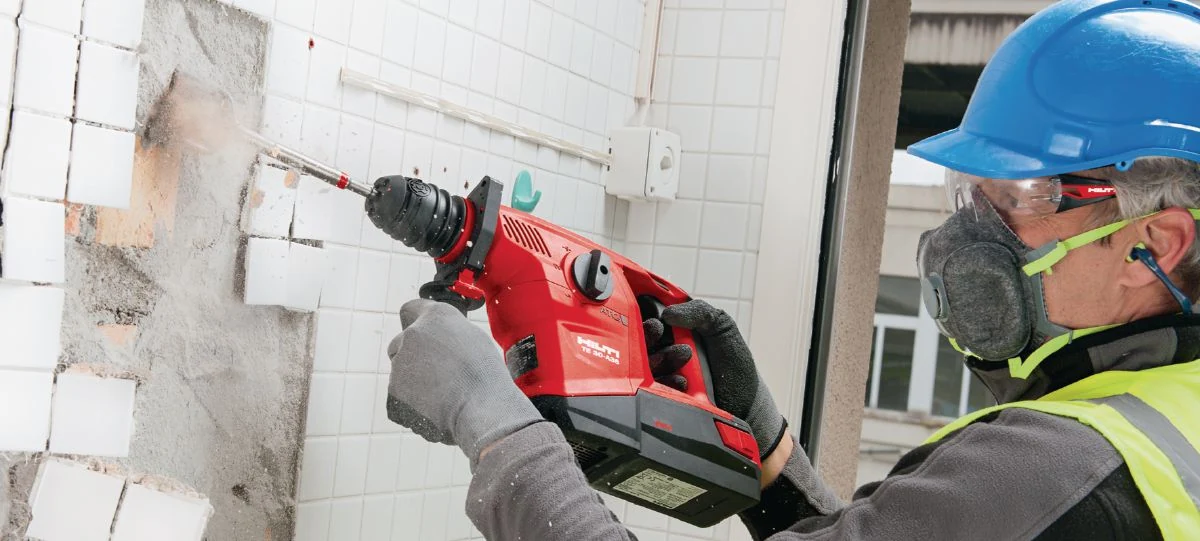
Residue removal and concrete channelling
- Removing concrete overflow and seepage left around formwork joints.
- Scraping weld spatter, scale and other surface residues within the specified application.
- Channelling in concrete with the working width and depth suited to the task.
The supplied wall-renovation photo illustrates controlled surface removal with a rotary hammer. For that type of work, establish the layer boundary and advance in short, overlapping passes. Collect debris and dust with equipment suited to the machine and material.
Connection-end care and repeat use
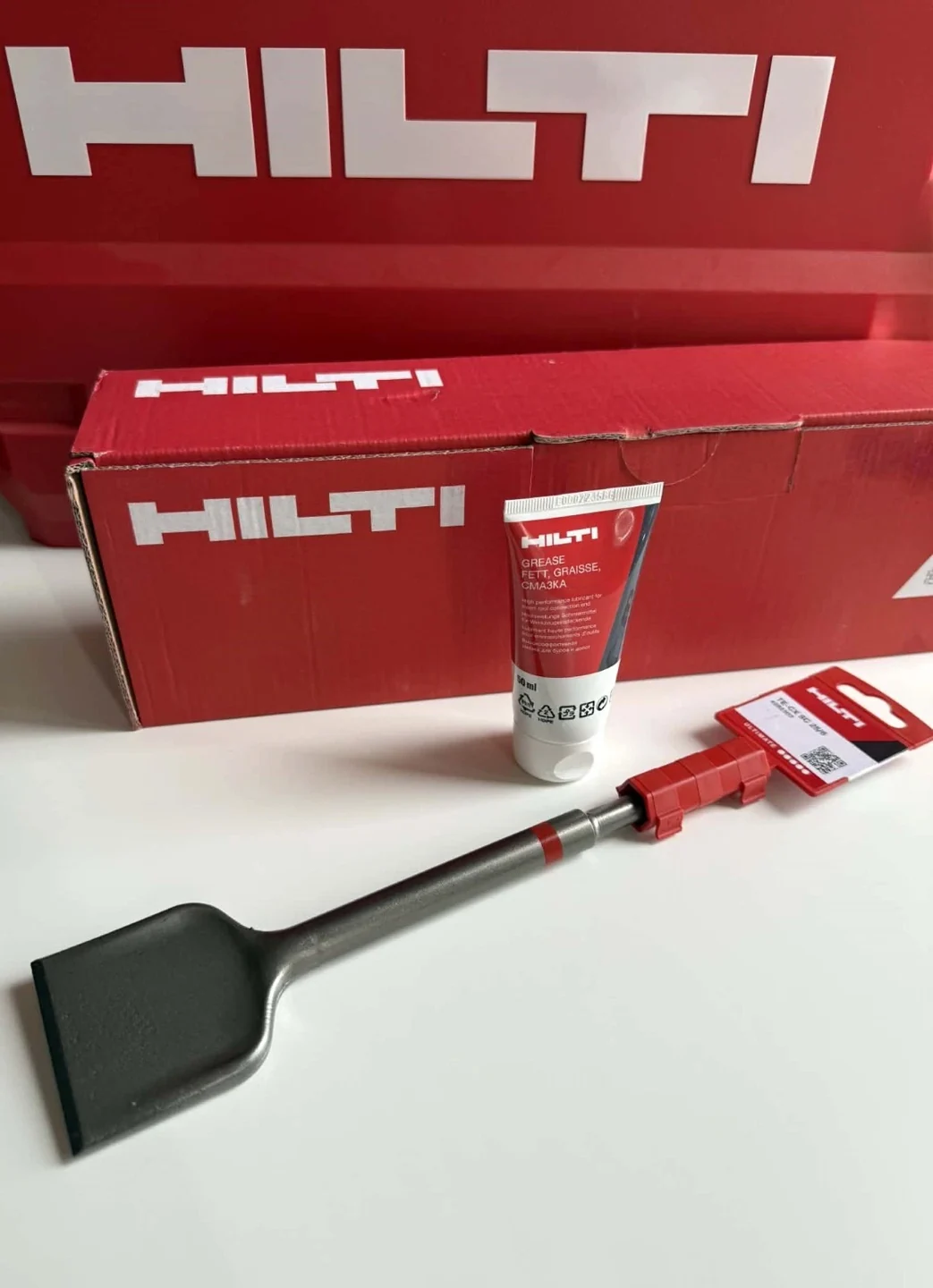
Keep the connection end clean and use the lubricant specified in the machine instructions. Confirm retention before starting work and inspect the blade and shank during continued use. The photograph with grease illustrates connection-end maintenance; the lubricant’s role is at the tool holder, separate from the self-sharpening action of the working edge.
Explore our demolition chisel range. For application matching, send the machine model, material to remove, required width and length, and quantity.
Explore our chisel range · Discuss the application
Frequently asked questions
What is TE-CX SC designed to remove?
Hilti lists weld spatter, scale and concrete formwork overflow or seepage, together with concrete channelling.
What are the 18/6 and 25/6 dimensions?
TE-CX SC 18/6 is 180 mm long and 60 mm wide. TE-CX SC 25/6 is 250 mm long and 60 mm wide.
Does TE-C mean SDS-Plus?
Yes. TE-C is Hilti’s SDS-Plus connection family. The machine also needs a suitable chiselling function.
Does self-sharpening mean the blade does not wear?
The steel still wears. The intended advantage is retaining a useful working edge during its specified application, without routine resharpening or rehardening.


