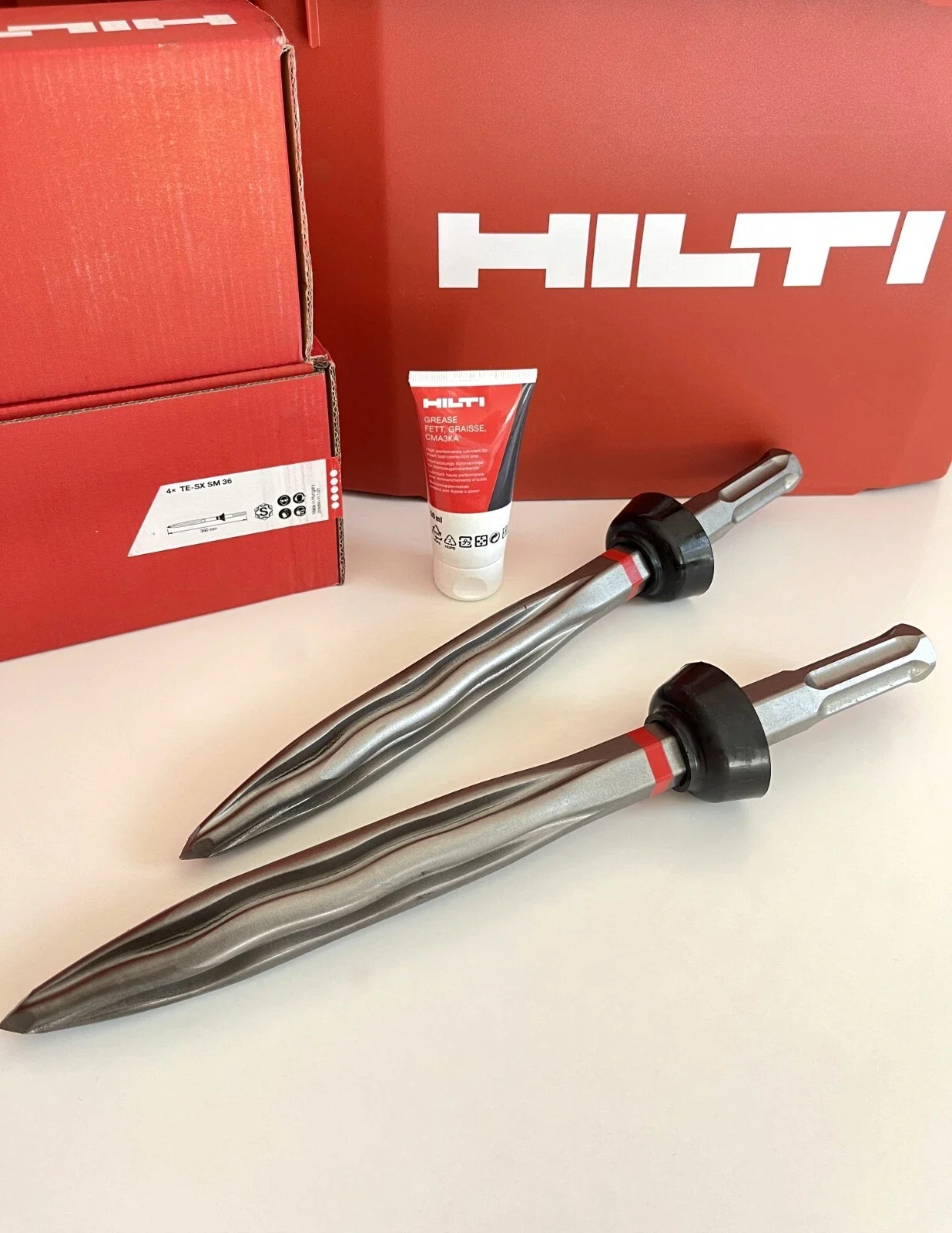

Hilti TE-SX SM is an Ultimate-class self-sharpening pointed chisel for concrete and masonry demolition. Its wave-profile working section, inductively hardened steel and dust cap address penetration, release and durability as one tool system. At Zhonghuan, we explain the product through the machine, working geometry and intended breaking task.
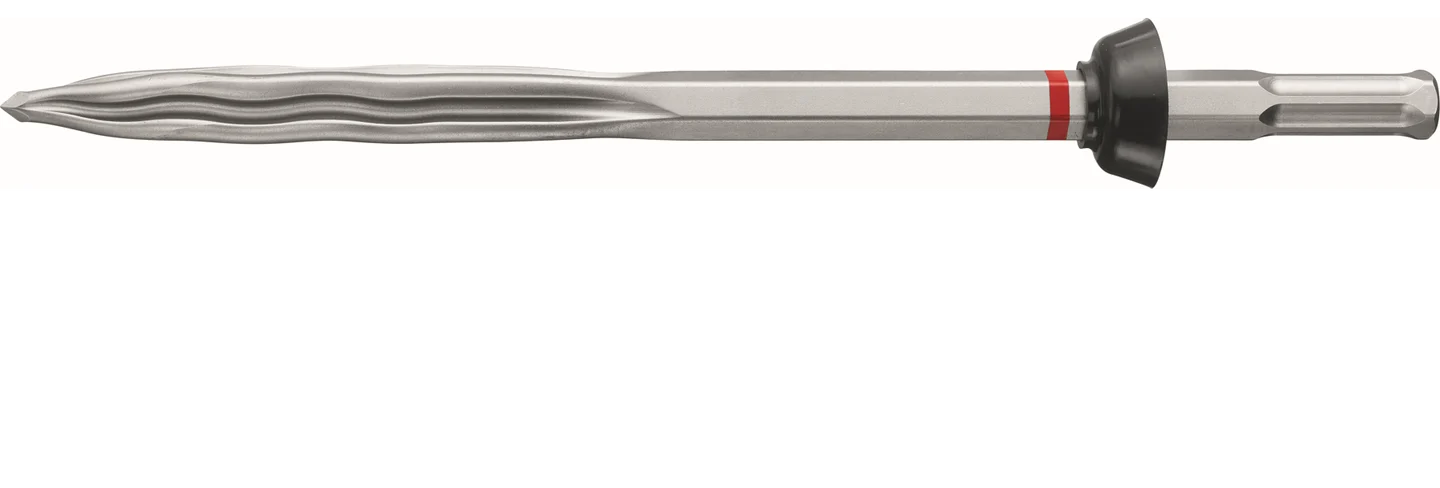
Specifications and machine platform
The connection end is TE-S. Matching breaker platforms include TE 800-AVR, TE 1000-AVR, TE 1500-AVR and TE 2000-AVR, together with TE-S-equipped TE 805 and TE 905 machines. Select by the actual TE-S holder and machine model; TE-Y/SDS-Max is a separate connection system.
| Model | Overall length | Single-piece item number | Four-piece pack item number |
|---|---|---|---|
| TE-SX SM 36 | 360 mm | 2341237 | 2341251 |
| TE-SX SM 43 | 430 mm | 2341238 | 2341252 |
| TE-SX SM 50 | 500 mm | 2341239 | 2341253 |
The family also includes TE-SX SM 70 at 700 mm, item 2341250. Choose length around reach, working position and access to the breaking point.
TE-SX SM item numbers and pack sizes
Self-sharpening point: maintaining a useful working profile
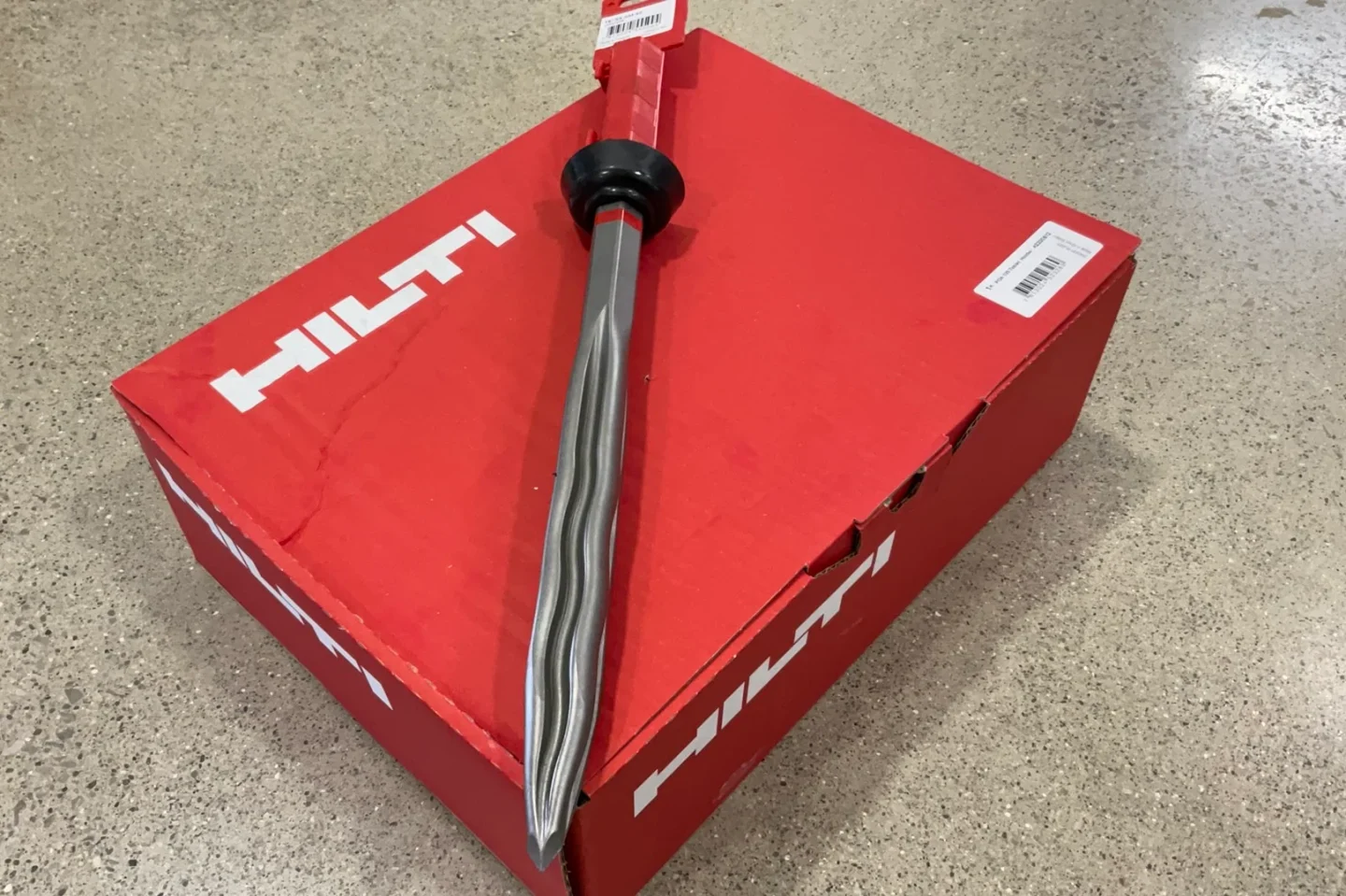
The self-sharpening point is designed to retain an effective breaking profile as the working end wears. Hilti positions the tool for continued use without resharpening, reforging or rehardening, helping reduce interruptions during demolition.
Hilti recommends a minimum penetration depth of 5 cm / 2 inches. Penetrating breaking engages a longer working zone than shallow surface tapping and gives the profiled point its intended wear conditions.
Wave-profile geometry: cracking and material release
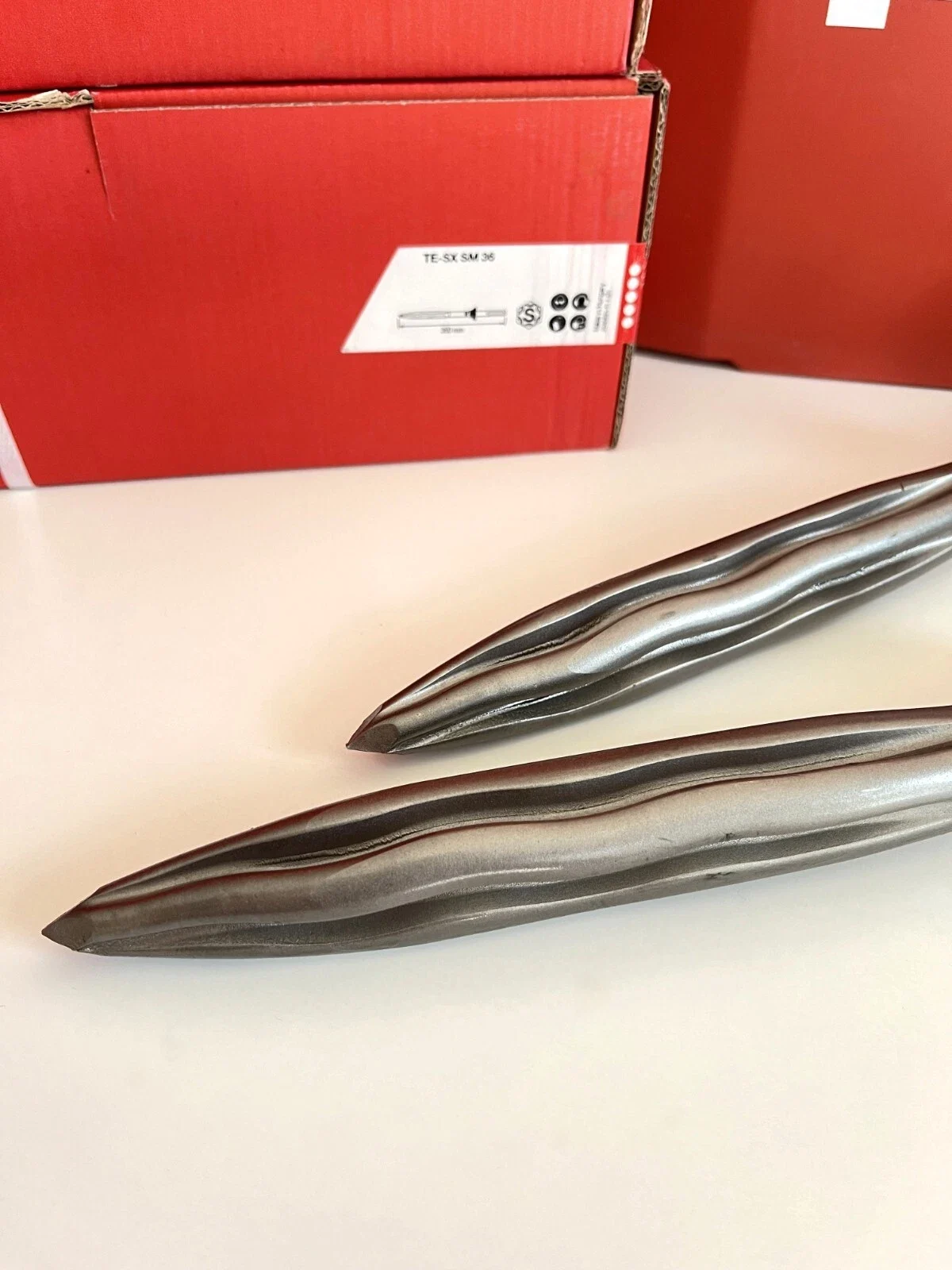
Longitudinal ribs and relief valleys form the distinctive wave-profile working section. Hilti links this geometry to reduced side contact, less jamming and larger, deeper cracks in concrete.
Mechanically, the point concentrates impact at the entry zone while the expanding working profile loads the surrounding concrete and helps extend cracks. Relief valleys leave space for broken particles to move away from the contact zone, supporting release as the chisel enters and withdraws. These spaces provide material relief; active dust collection uses the machine’s extraction equipment.
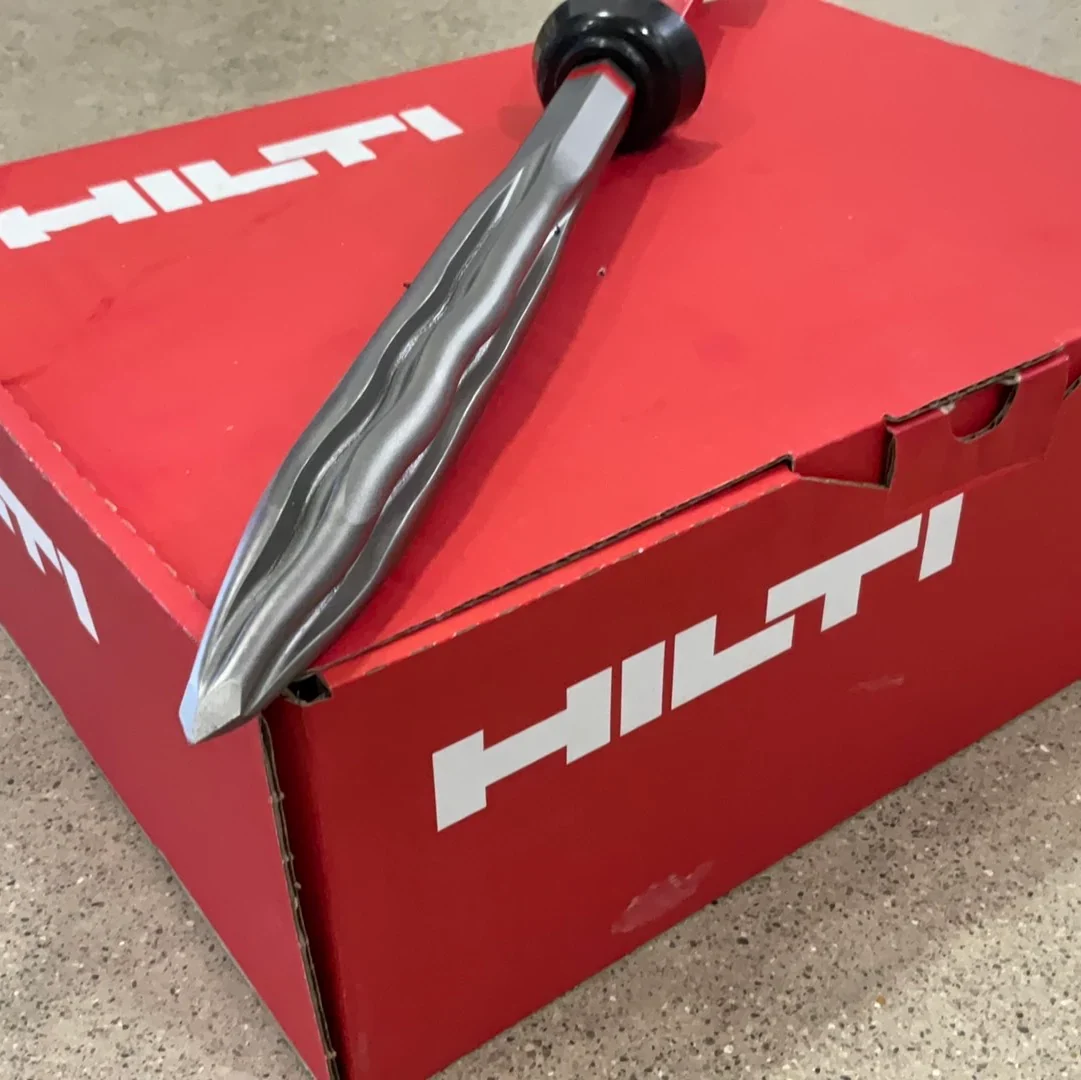
Hilti TE-SX SM product features
Inductive hardening and impact durability
Hilti specifies inductive hardening to improve resistance to mushrooming, wear and bending. The heat-treatment functions can be understood across three parts of the tool:
- Working point and section: resistance to abrasive wear while keeping an effective contact shape.
- Body: impact toughness and bending resistance under repeated blows and off-axis loading.
- Striking end: resistance to deformation and damage where the hammer transfers its impact.
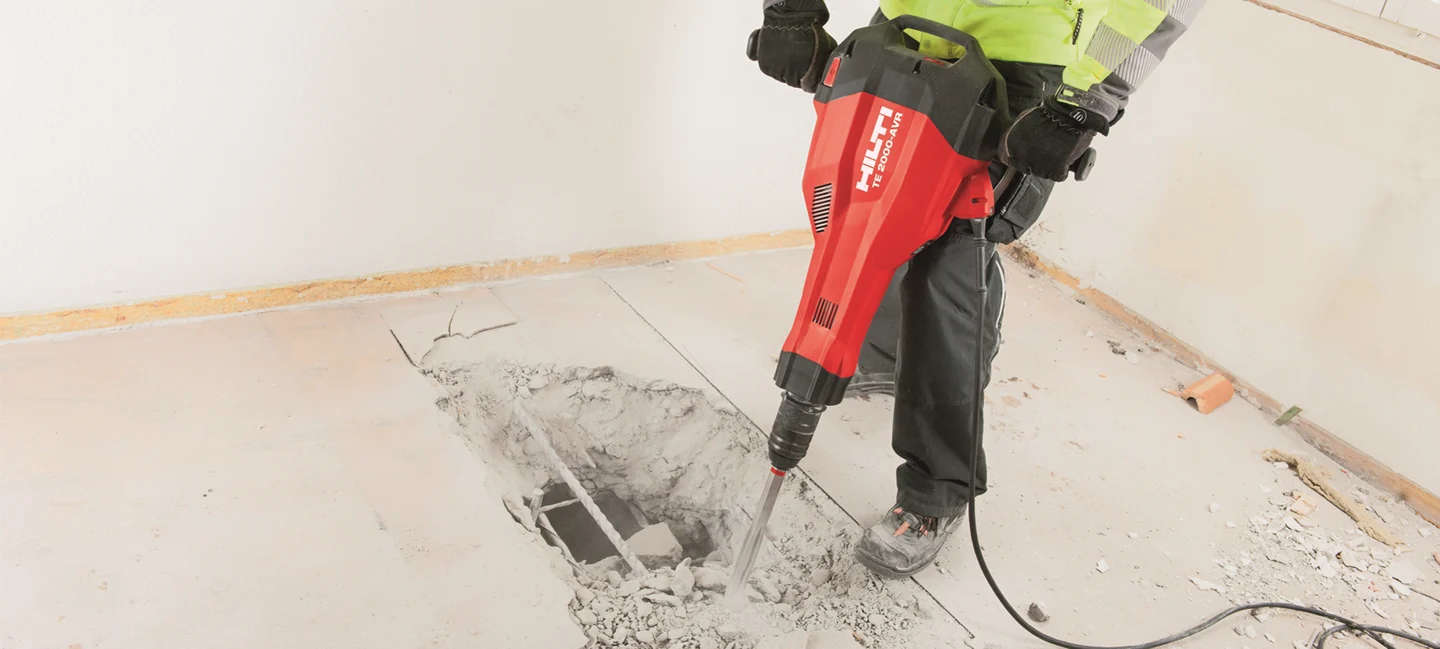
The TE 2000-AVR provides a concrete example of the operating duty: its published single-impact energy is 35 J. Working geometry, supporting section and heat treatment must function together under this repeated loading.
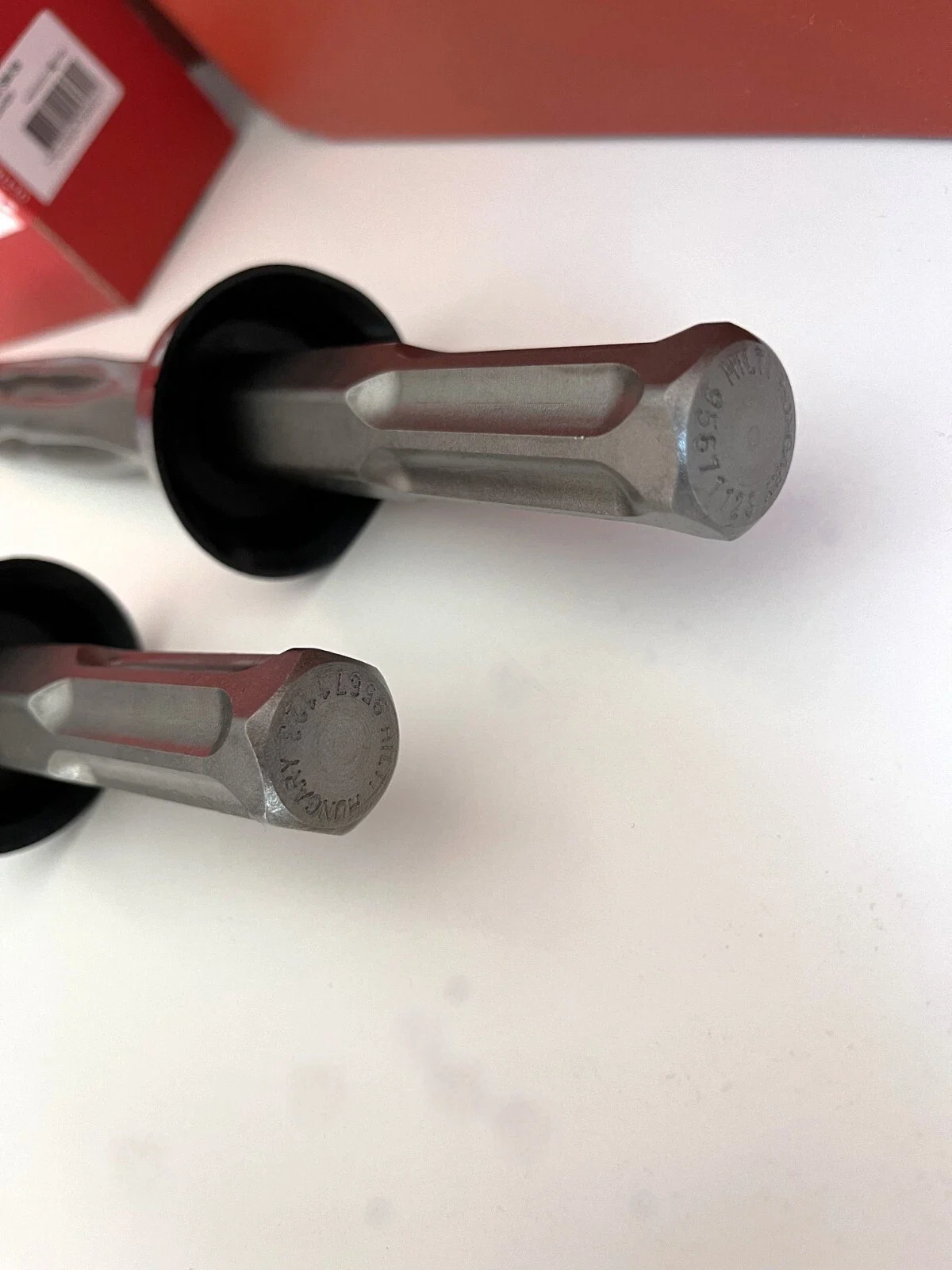
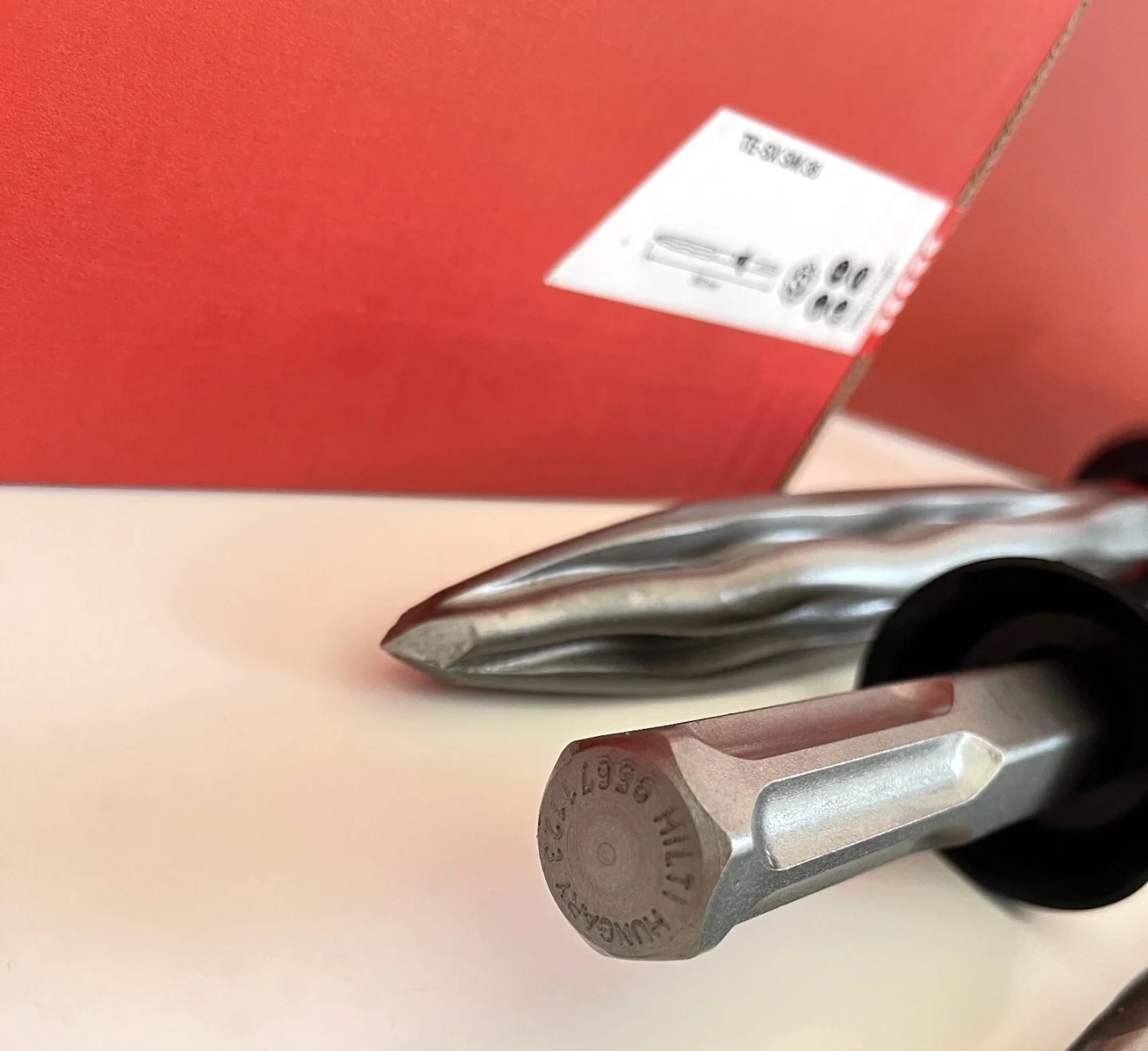
TE-S connection and integrated dust cap
The TE-S shank locates and retains the chisel in the matching holder while transmitting the machine’s blows. Its slots, striking face and transition into the body belong to the complete machine connection.
A black flexible dust cap sits ahead of the connection end. It helps keep debris away from the holder entrance and supports protection of the retaining and sealing area. Clean contact surfaces and the machine’s specified lubrication remain part of normal tool care.
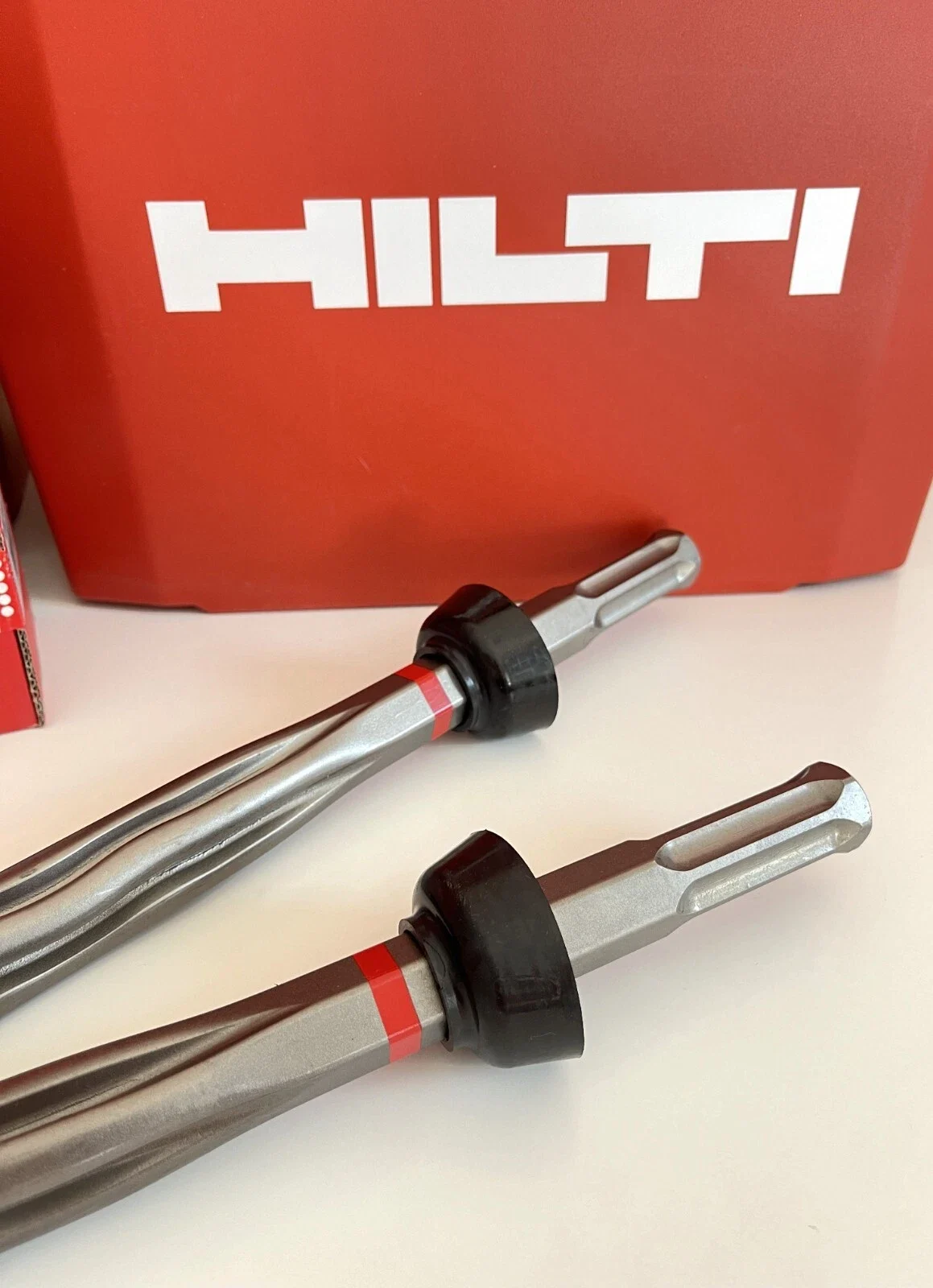
Hungarian manufacturing
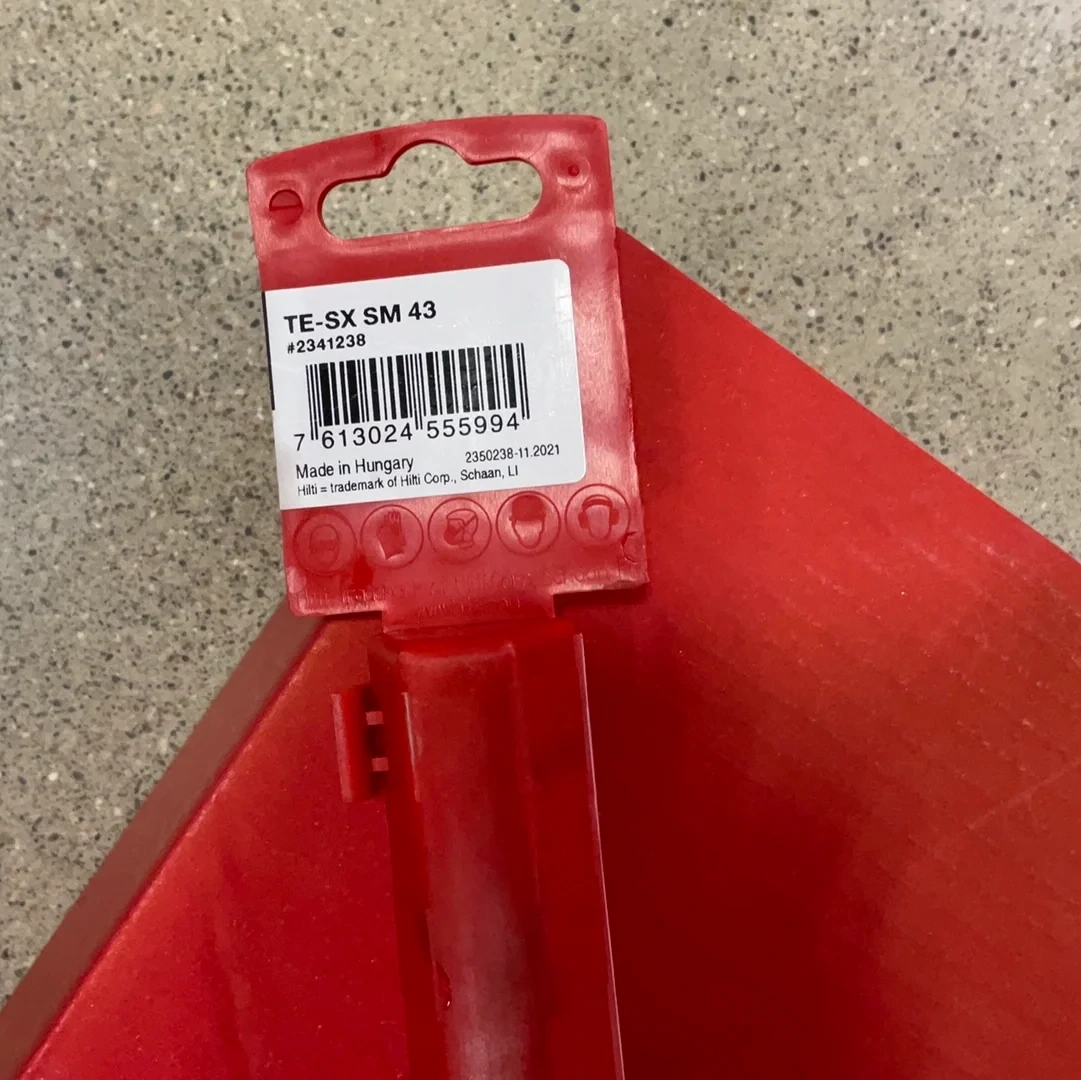
The pictured TE-SX SM 43 package, item 2341238, is marked “Made in Hungary”; the photographed striking ends also carry HUNGARY markings. Hilti’s manufacturing information identifies Kecskemét, Hungary, as a production location for chisels and other tool inserts.
Concrete and masonry applications
- Concrete breaking: local demolition of floors, slabs, foundations and pavement, with the machine and chisel length selected for the section and access.
- Openings and service penetrations: impact removal within the planned slab opening or channel, using the point to establish and extend the breaking zone.
- Brick and block demolition: concentrated breaking of masonry where a pointed working end suits the removal direction.
For reinforced concrete, the point breaks the surrounding mineral material; reinforcement and embedded services follow the project’s approved removal plan.
Pack sizes and connection-end care
The 360, 430 and 500 mm models are listed in single-piece and four-piece packs. The photograph shows chisels, a four-piece carton and grease together. Keep the connection end clean and lubricate it as specified in the matching machine instructions.