

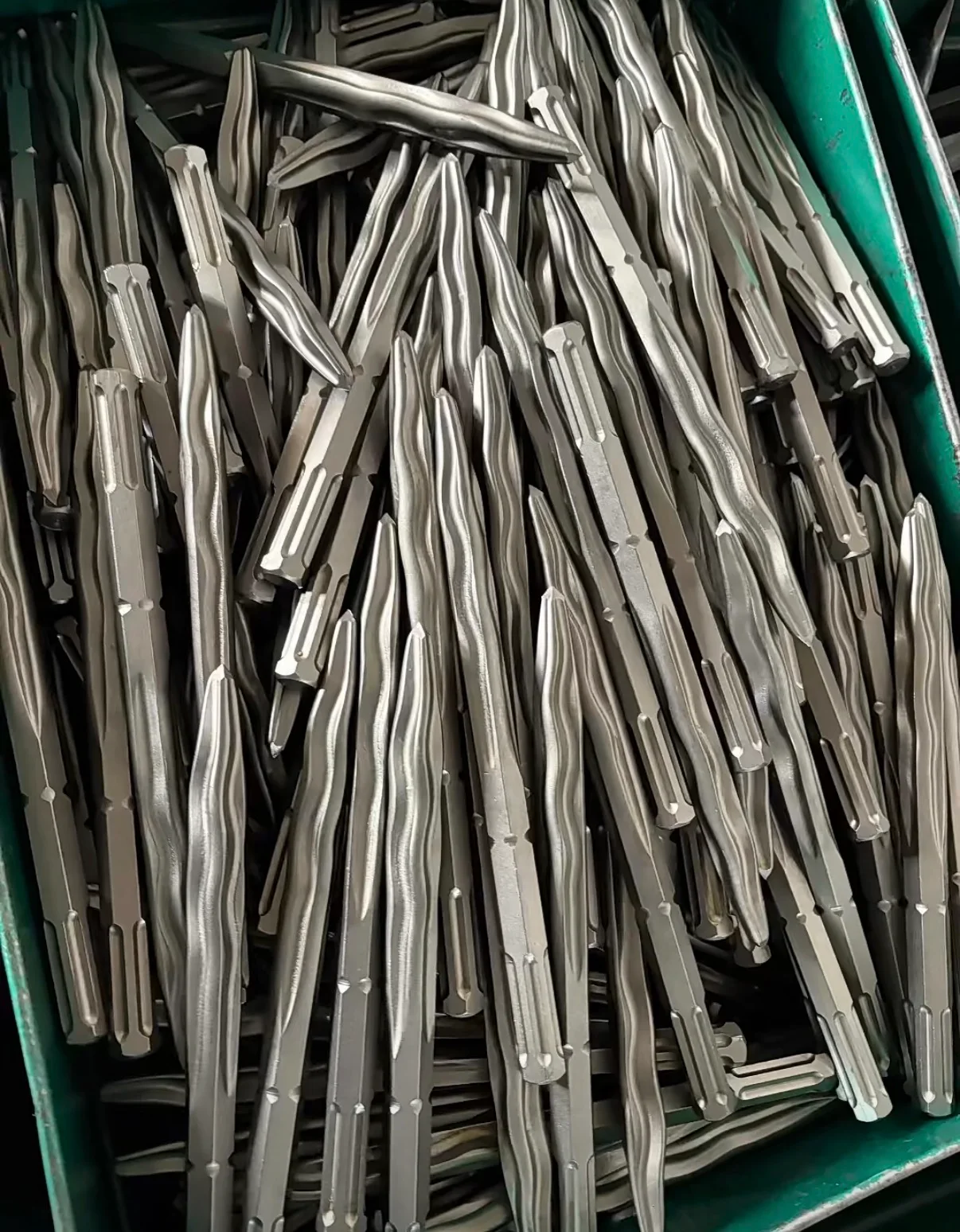
Concrete breaking, channeling and mortar removal need different chisels. Premium design supports the task through effective penetration, useful working geometry as the tool wears, and fewer interruptions from trapped accessories.
We start with the substrate, aggregates and reinforcement conditions, then the hammer platform and impact duty. Working-end geometry, steel and heat treatment follow those requirements. This guide explains star-profile, polygon, wave, ribbed flat and spade designs, then connects chisel selection with a complete drilling-and-breaking tool program.
Begin with the construction task
| Task | Working-end direction | Selection priorities |
|---|---|---|
| Local concrete breaking and point penetration | Star-profile, faceted, twisted or wave point | Penetration, jamming interruptions and tip wear |
| Channeling and controlled adjustment | Narrow-flat or combined point/flat design | Directional control, channel edges and edge retention |
| Mortar, plaster and surface residues | Material-matched spade chisel | Blade thickness, access under the layer and substrate condition |
| Tile and floor-covering removal | Tile chisel, angled blade or scraper | Working angle, contact area and replaceable-blade arrangement |
A wider edge covers more area but distributes the impact input across a larger contact zone. Greater reach changes handling and loading conditions. Match width and length with the material and machine.
Star-profile, polygon and wave: different descriptions
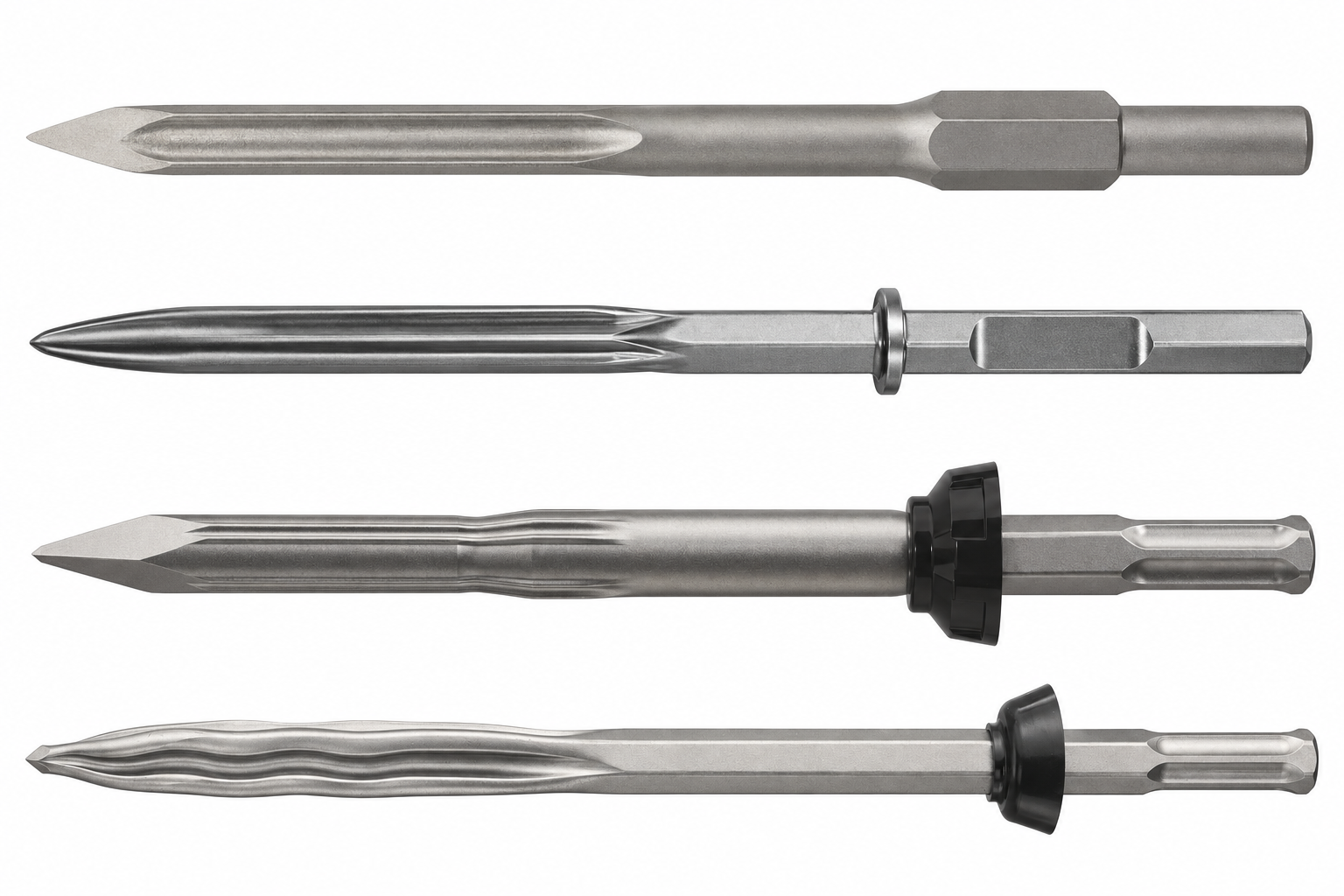
| Term | What it describes | Where to look | Application focus |
|---|---|---|---|
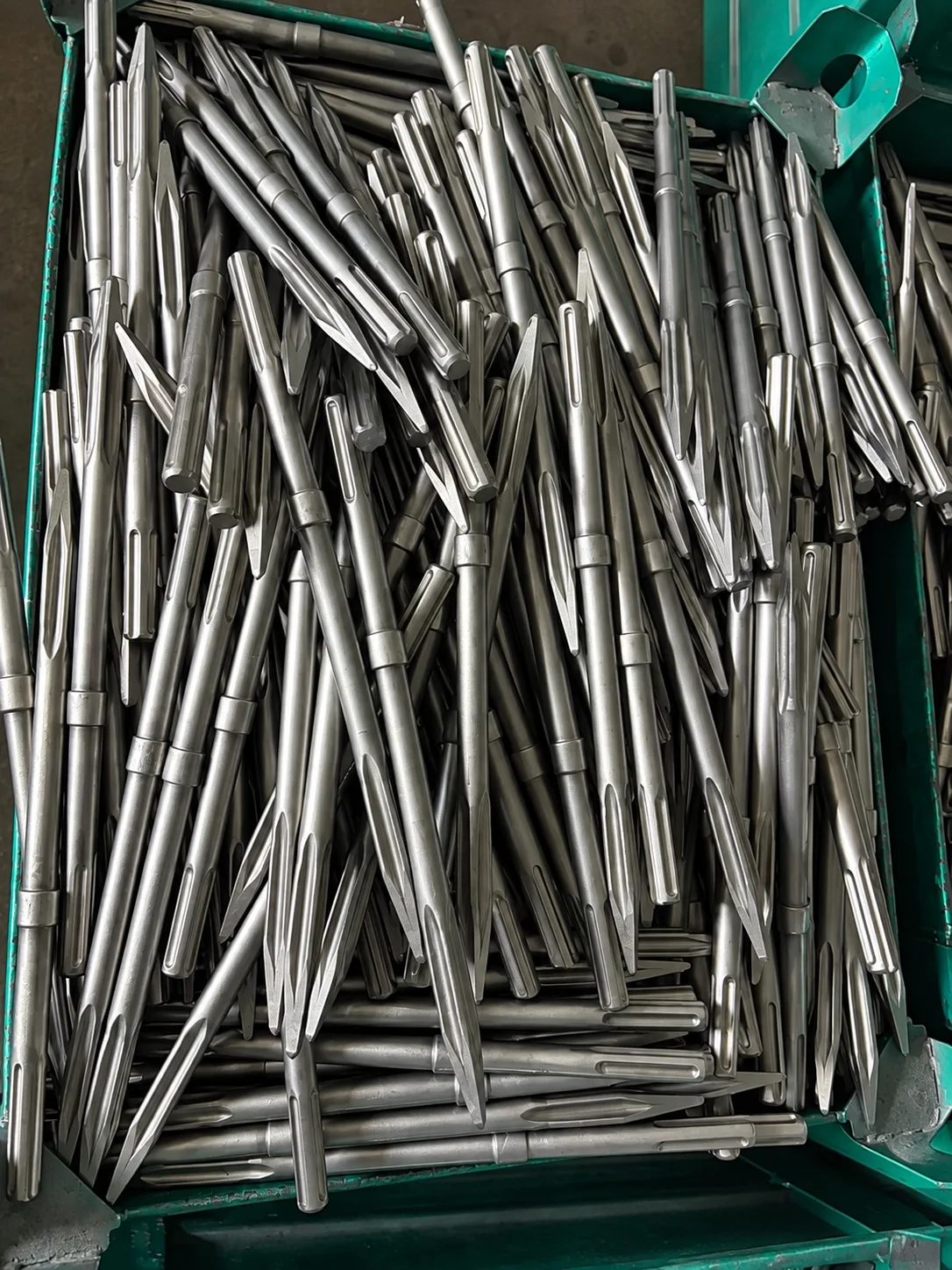
| Star-profile / Star Point | Star-like working cross-section converging toward the tip | Working-zone section, recesses and ribs | Sustained penetration and worn-tip profile |
| Polygon | Multi-sided or faceted construction | Cross-section and transitions | Material fracture and load-bearing geometry |
| Wave | Undulating longitudinal working zone | Side profile | Side contact, debris clearance and reduced wedging |
| Twisted tip | Tip geometry changing orientation along its length | Direction of the tip’s facets | Penetration, breaking and reduced jamming |
These terms can overlap. A tool may combine polygon geometry with a wave working zone. They describe the working end; SDS-Plus, SDS-Max and other connection ends require separate selection.
Star-profile points: consider the shape after use
Longitudinal recesses and ribs converge toward the point. The design considers the geometry remaining as material wears away. For local concrete breaking, compare penetration after a consistent workload and inspect whether the tip has rounded substantially.
Self-sharpening describes maintaining a useful working profile through wear. It does not mean zero wear. Whether and how a tool can be reground is a separate, specification-dependent issue.
Wave working-end details: broad waves, slender waves and straight channels
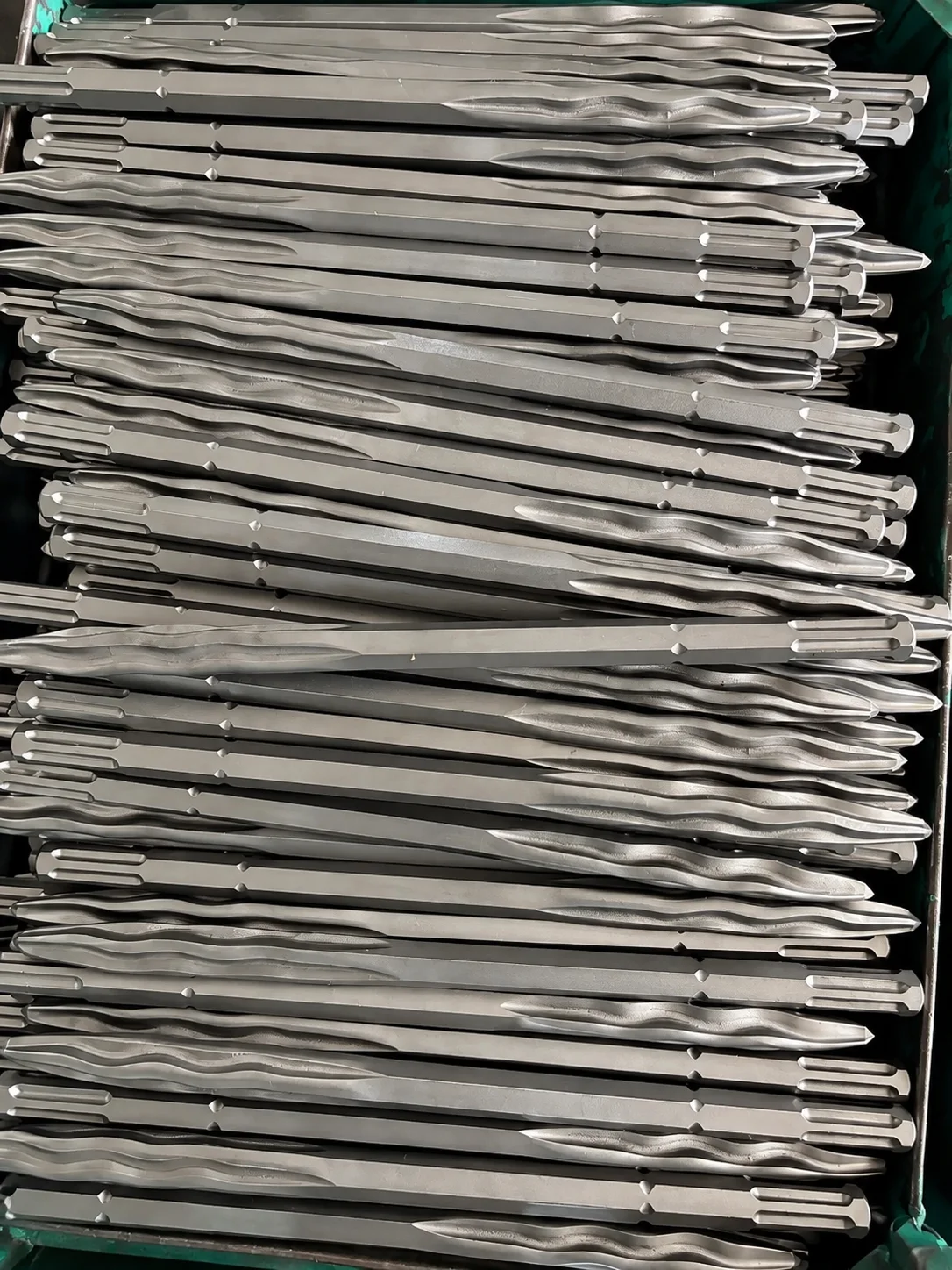
Wave designs can differ in waveform, ribs, channels and transitions. We evaluate the working geometry, machine interface and construction task separately. A and B below illustrate two wave profiles; C provides a straight-channel comparison.
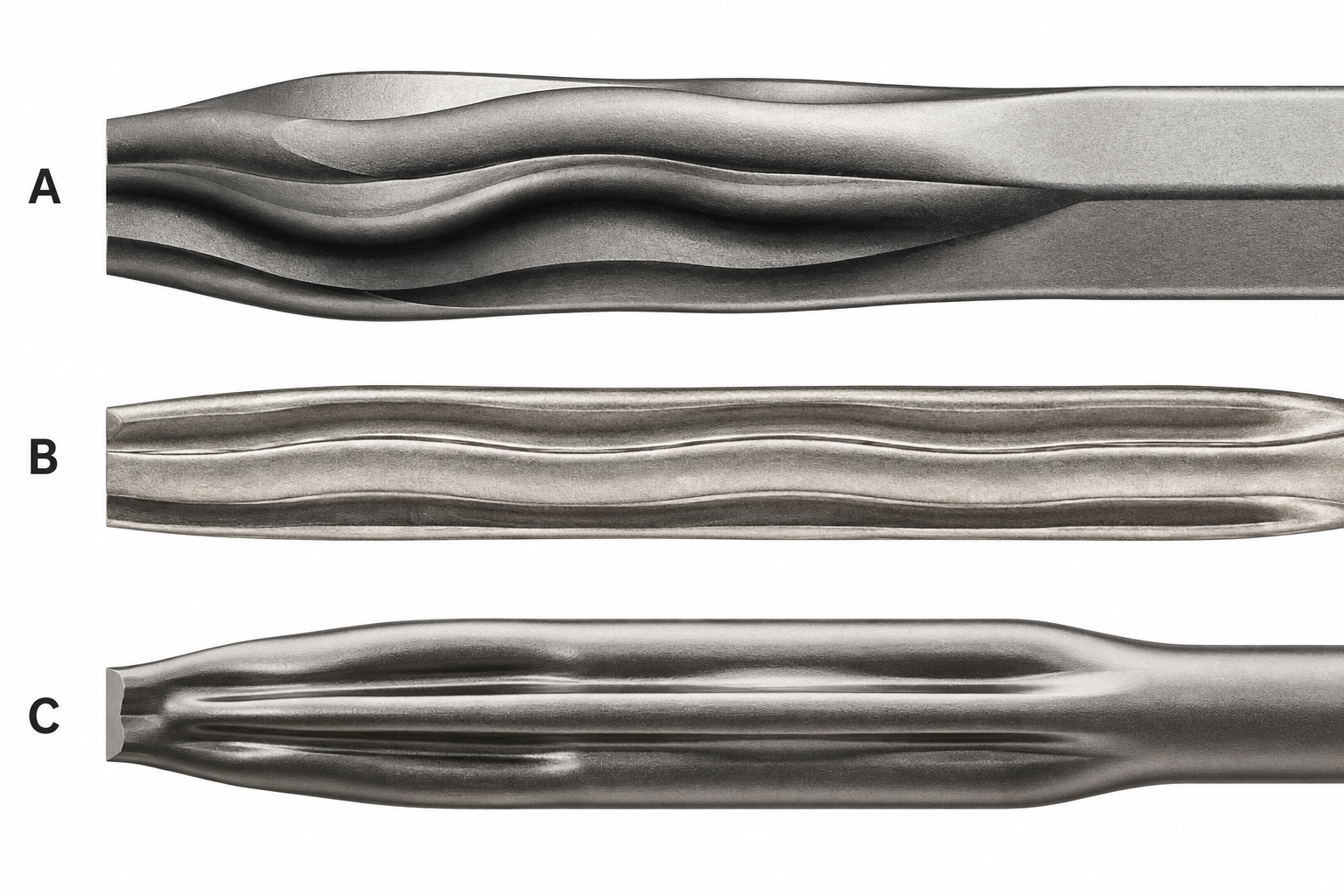
| Visible detail | A: Broad waves | B: Slender waves | C: Straight channels |
|---|---|---|---|
| Rib direction | Pronounced longitudinal undulations | Gentler longitudinal undulations | Ribs run largely along the axis |
| Ribs and troughs | Broad visible ribs and troughs | Long, slender channels and a restrained outline | Fairly straight channels around a fuller working zone |
| Working-zone transition | Waves merge into a straight-sided body on the right | The crop shows continuous channels; inspect the full tool for the complete transition | Working zone narrows toward the neck on the right |
| Classification | One specific wave profile | Another wave profile | A comparison geometry; grooves alone do not make it a wave design |
What do these differences mean for selection?
Waveforms and channels change contact distribution with surrounding material and the space available for debris to disengage. A and B use undulating working zones; C uses straighter axial passages. Application matching still requires the complete edge, section, steel and machine. Cropped images do not establish interchangeability.
Compare wave amplitude and spacing, rib width, channel width, remaining section and transition location. Shadows do not measure groove depth, and more pronounced waves alone do not establish longer life or faster breaking.
We select working ends from the substrate, aggregates and reinforcement conditions, then the machine, impact duty and observed wear or jamming problem. Compare removal, extraction time and worn profile on the same machine and comparable material before confirming the production specification.
Explore wave-profile pointed-chisel anatomy and five connection/working-end configurations.
Ribbed flat chisels: control channels and local adjustment
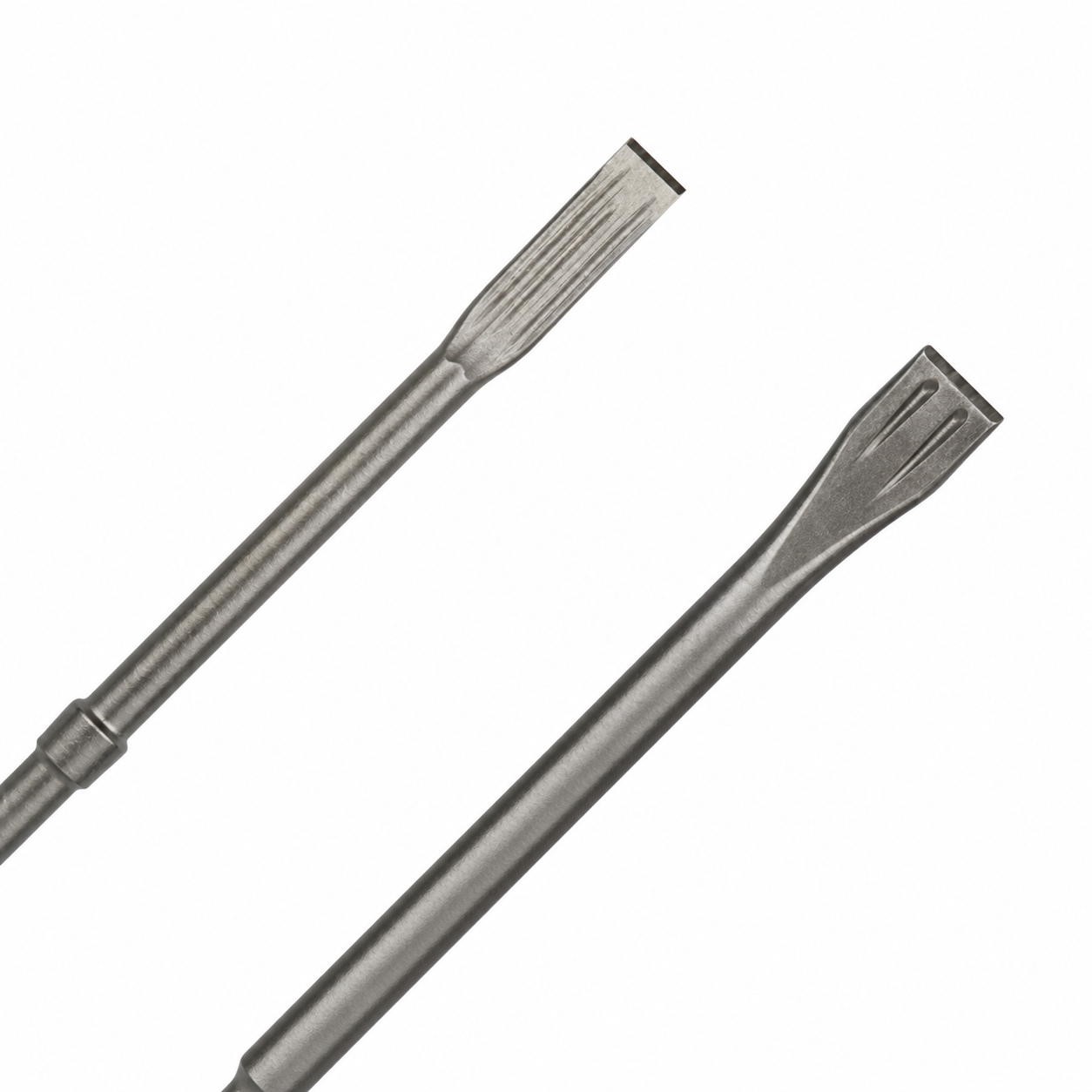
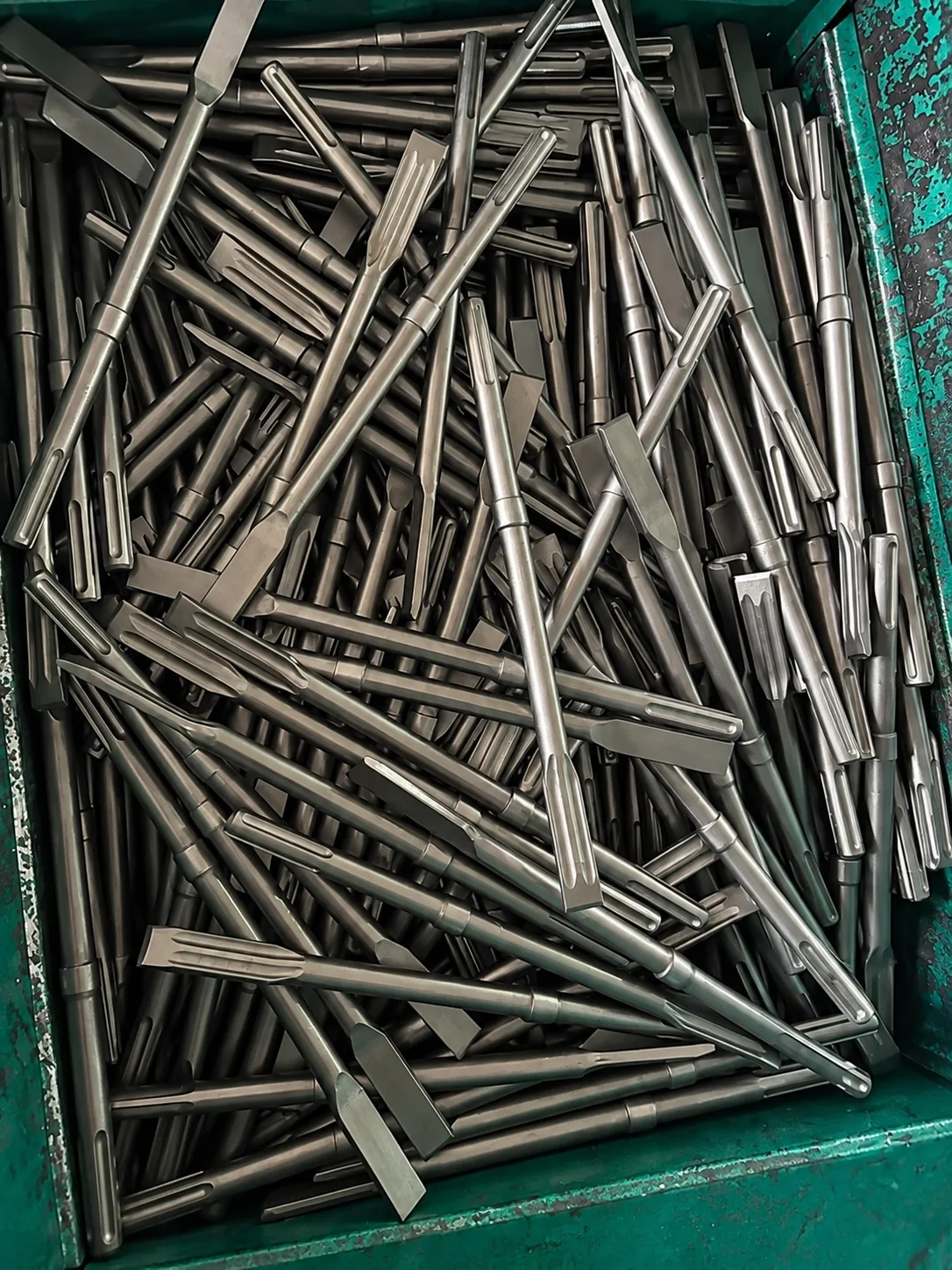
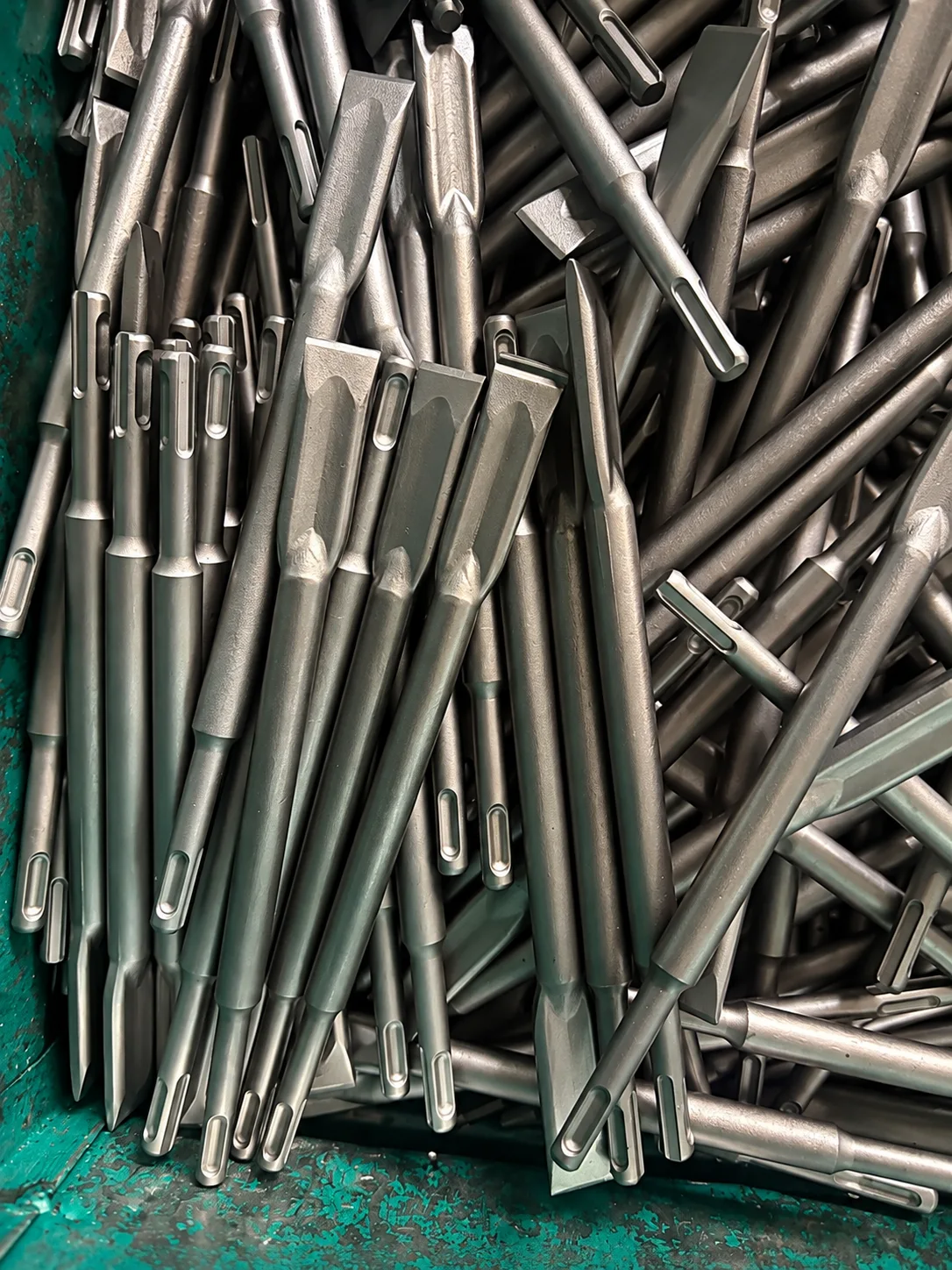
A flat edge provides directional contact for channeling and adjustment. Premium versions may combine self-sharpening edges, ribs, recesses and shaped transitions to support effective material separation.
Compare blade width, edge geometry and control together. Combined point/flat designs are another option where work repeatedly changes between penetration and adjustment; suitability depends on the actual channel and substrate.
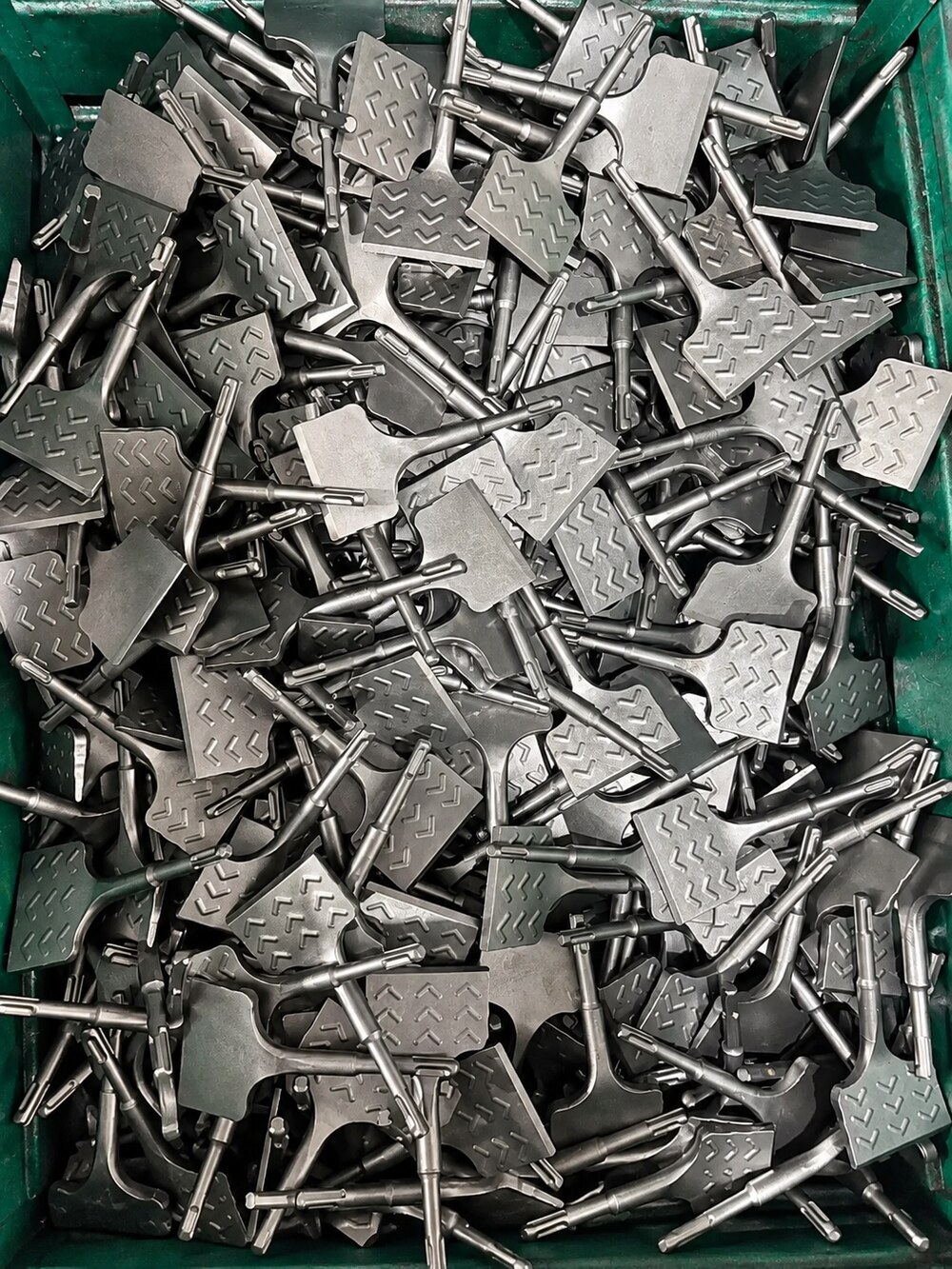
Spade chisels: a suitable thin, wide blade for surface layers
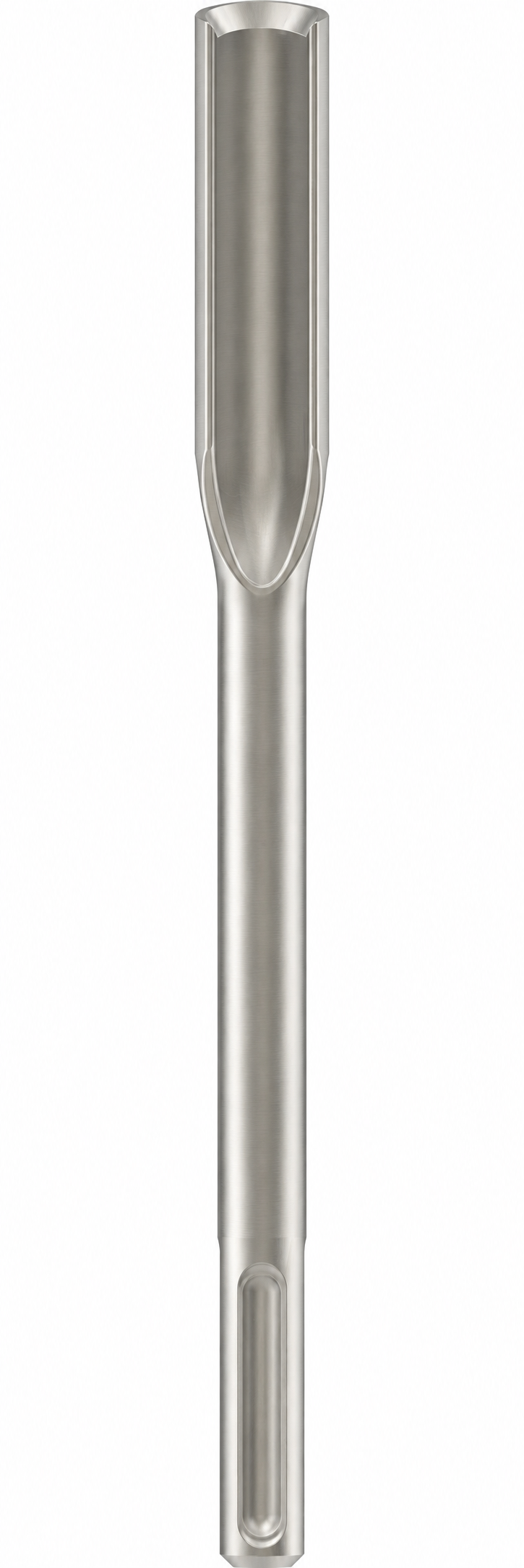
Spade chisels can address mortar, plaster and residues within the selected tool’s application range. Consider layer thickness, adhesion, blade thickness, working angle and machine capability. A thin blade intended for surface layers should be selected separately from a heavy concrete-breaking tool.
Tile and floor-covering work may benefit from angled or replaceable-blade scraper configurations. Match the design to the material being removed.
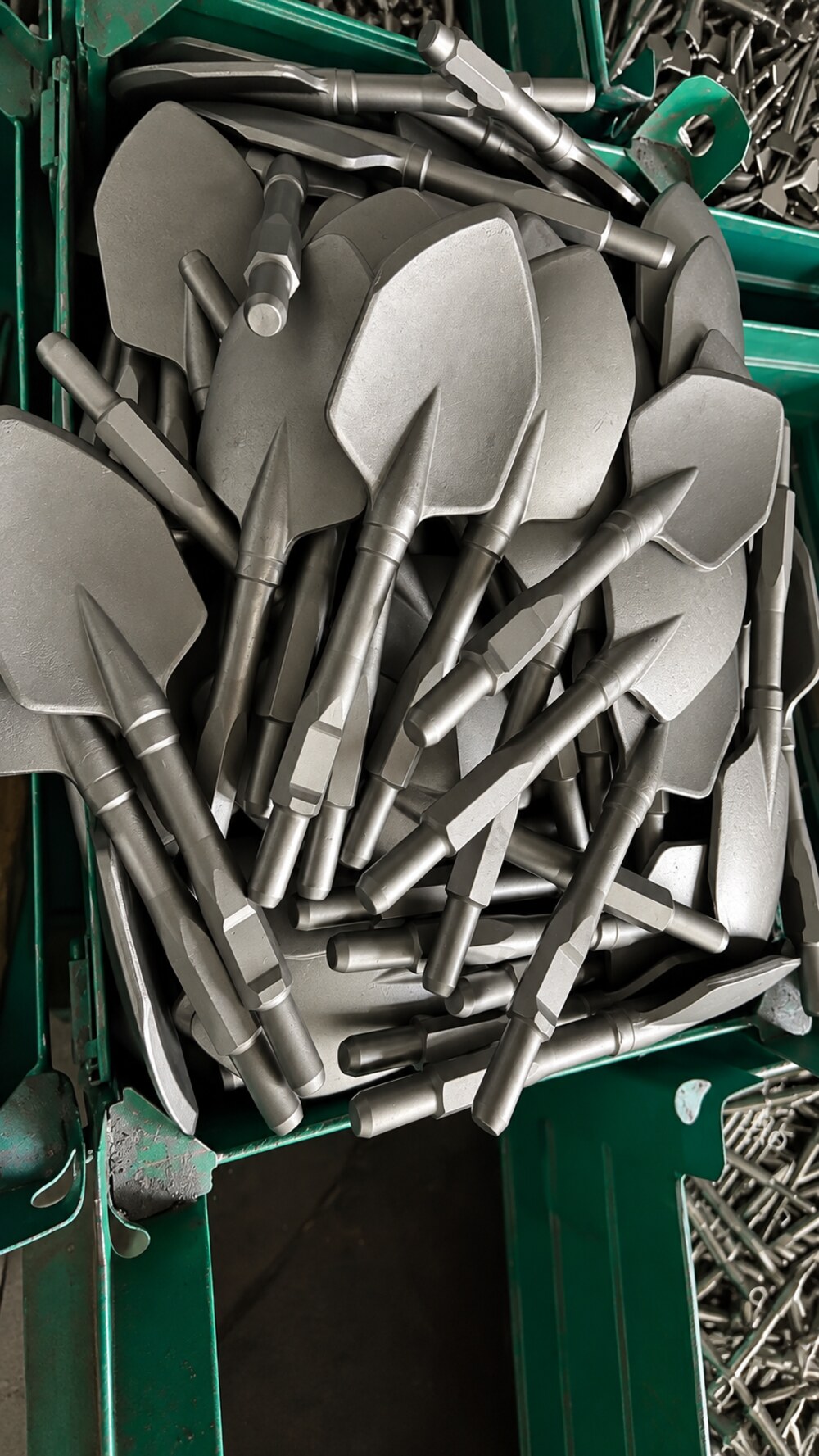
Steel and heat treatment support the geometry
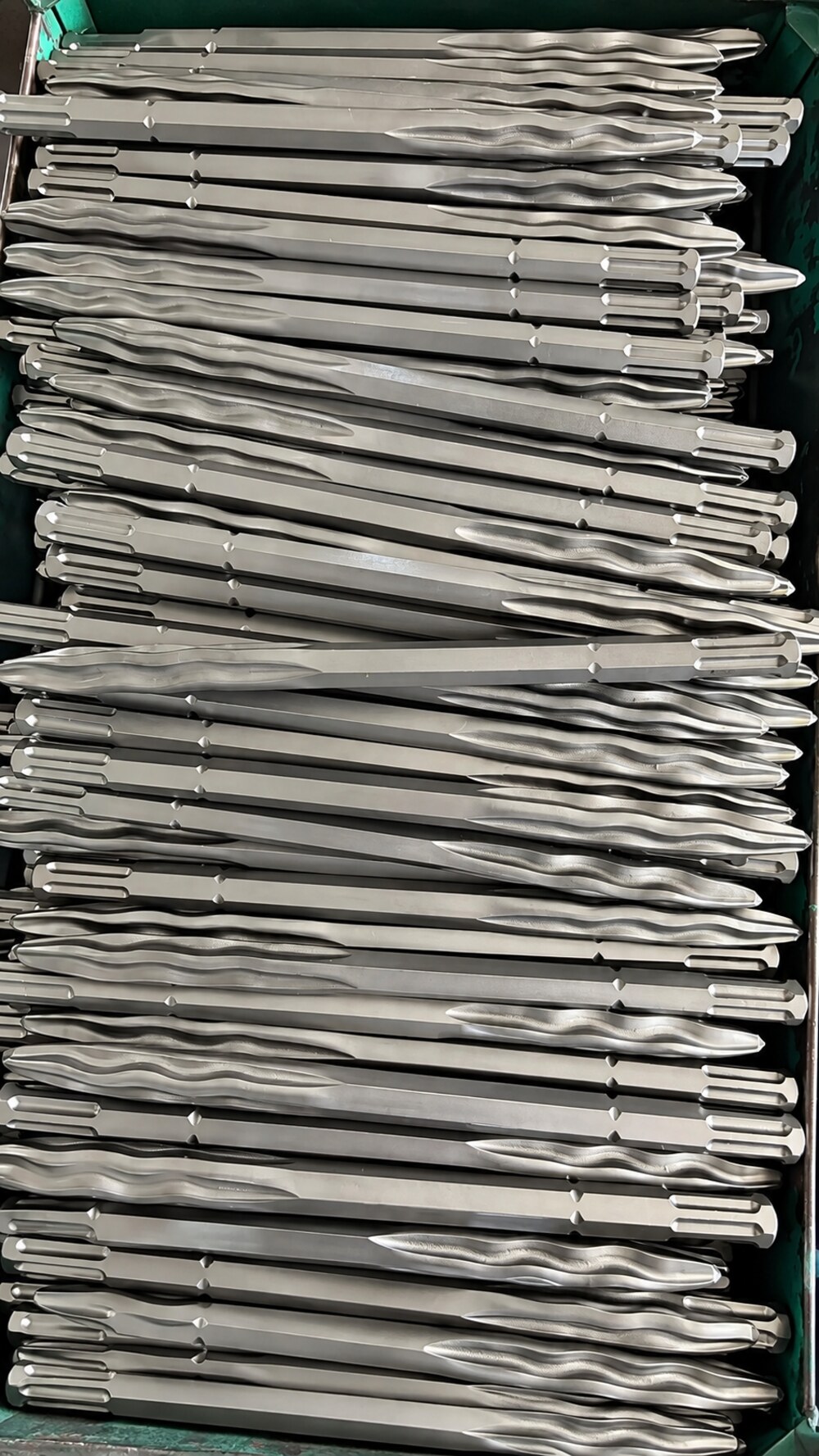
The working end must resist wear and deformation while the body and shank withstand repeated impact. For chipping, examine loading, local geometry and toughness. For rapid rounding, compare wear profile and material treatment. Connection-end deformation also requires checking fit, machine and impact-end condition.
Some premium tools use air-hardening steels with model-specific regrinding provisions. Other tools achieve their intended performance through suitable alloy steels and heat treatment. Appearance does not identify a steel grade or authorize a maintenance method.
Our premium chisels use 42CrMo alloy steel, with geometry and heat treatment matched to the intended hammer duty. Material, finish and acceptance requirements are agreed in the order specification.
Confirm the interface and dust protection separately
Confirm the hammer model, connection, retention arrangement, supported modes and accessory range. A dust cap near the shank is separate from working-end geometry and does not replace jobsite dust control.
Compare samples on complete construction tasks
Compare samples on the same machine and comparable material. Record task time, removal, jamming, extraction time, tool changes and before/after working-end photographs. Inspect the body and shank, and include edge control or substrate condition where relevant.
Pair premium chisels with quality rotary-hammer bits
Renovation and installation combine removal and hole-making. Chisels perform suitable breaking operations; quality rotary-hammer bits provide centering, cutting and dust evacuation for drilling.
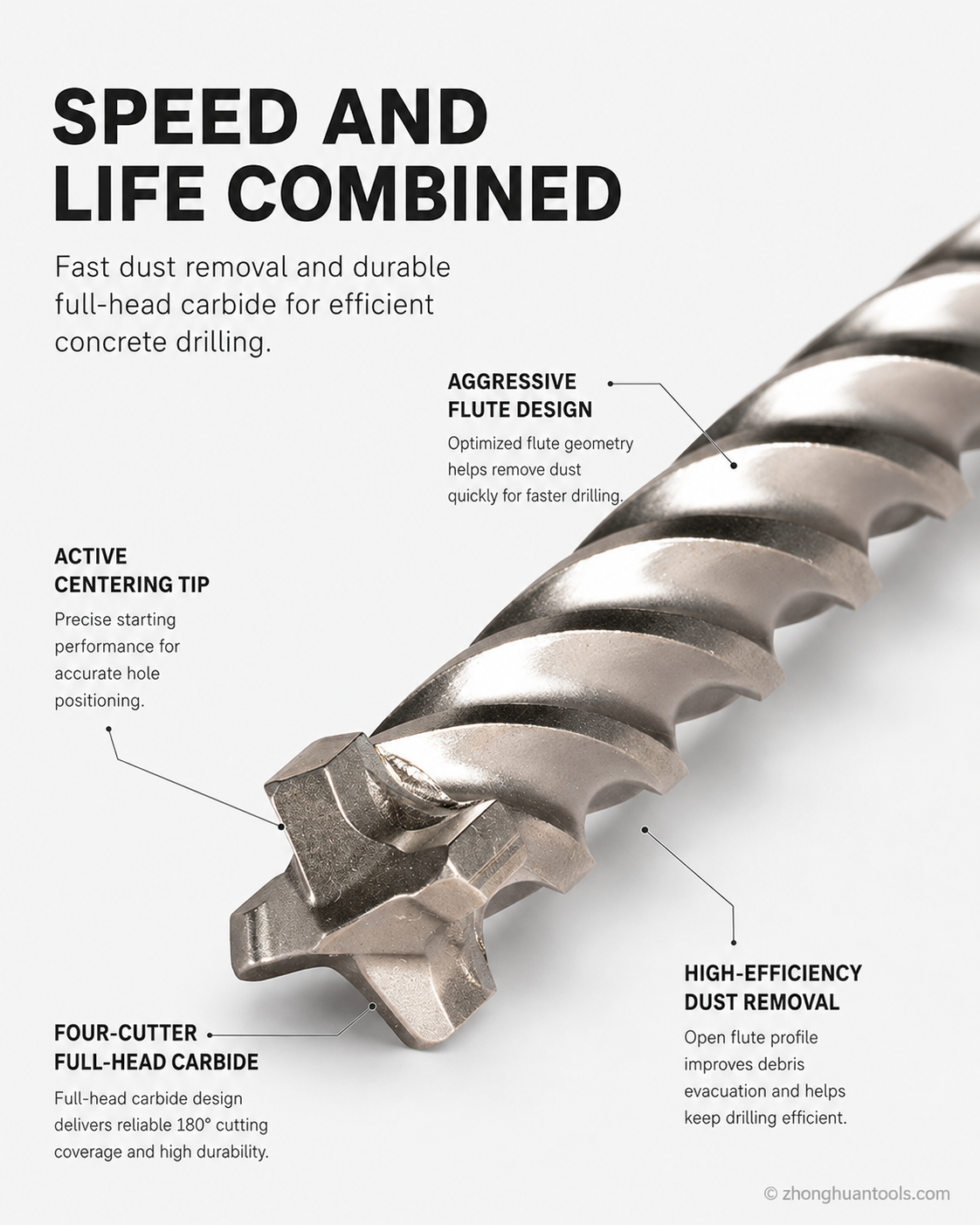
We supply chisels together with our SDS-Plus and SDS-Max drill bits. Proposed configurations for engineering confirmation include:
| Program | Drilling accessories | Chiseling accessories |
|---|---|---|
| Option A: Professional construction | Platform-matched 5X four-cutter bits | Point and flat chisels; evaluate star-profile or stripping tools for the task |
| Option B: Demanding construction | Platform-matched 8-Series full-carbide-head bits; evaluate ZHMAX-7 for relevant SDS-Max work | Premium 42CrMo chisels selected for sustained penetration, jamming reduction and adjustment requirements |
Tools are fitted separately and used in their supported machine modes. We can discuss individual packaging, combined cases, OEM marking and separate replenishment specifications.
Send us the machine model, construction material, hole sizes, chiseling task and quantities. We will configure the working ends, drill-bit series and packaging for your project or sales program.
Discuss a combined supply program · Chisels · SDS-Plus · SDS-Max


