

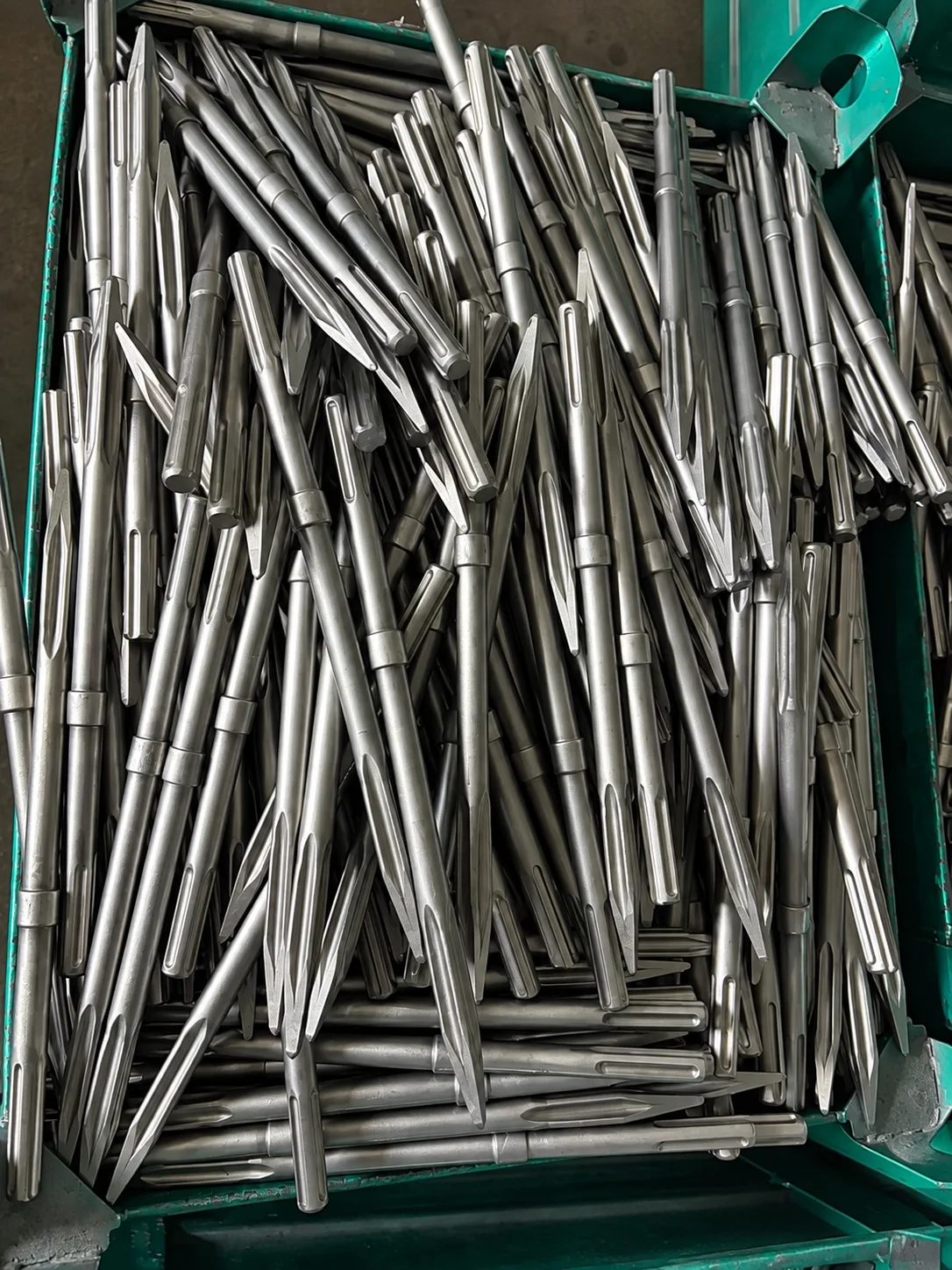
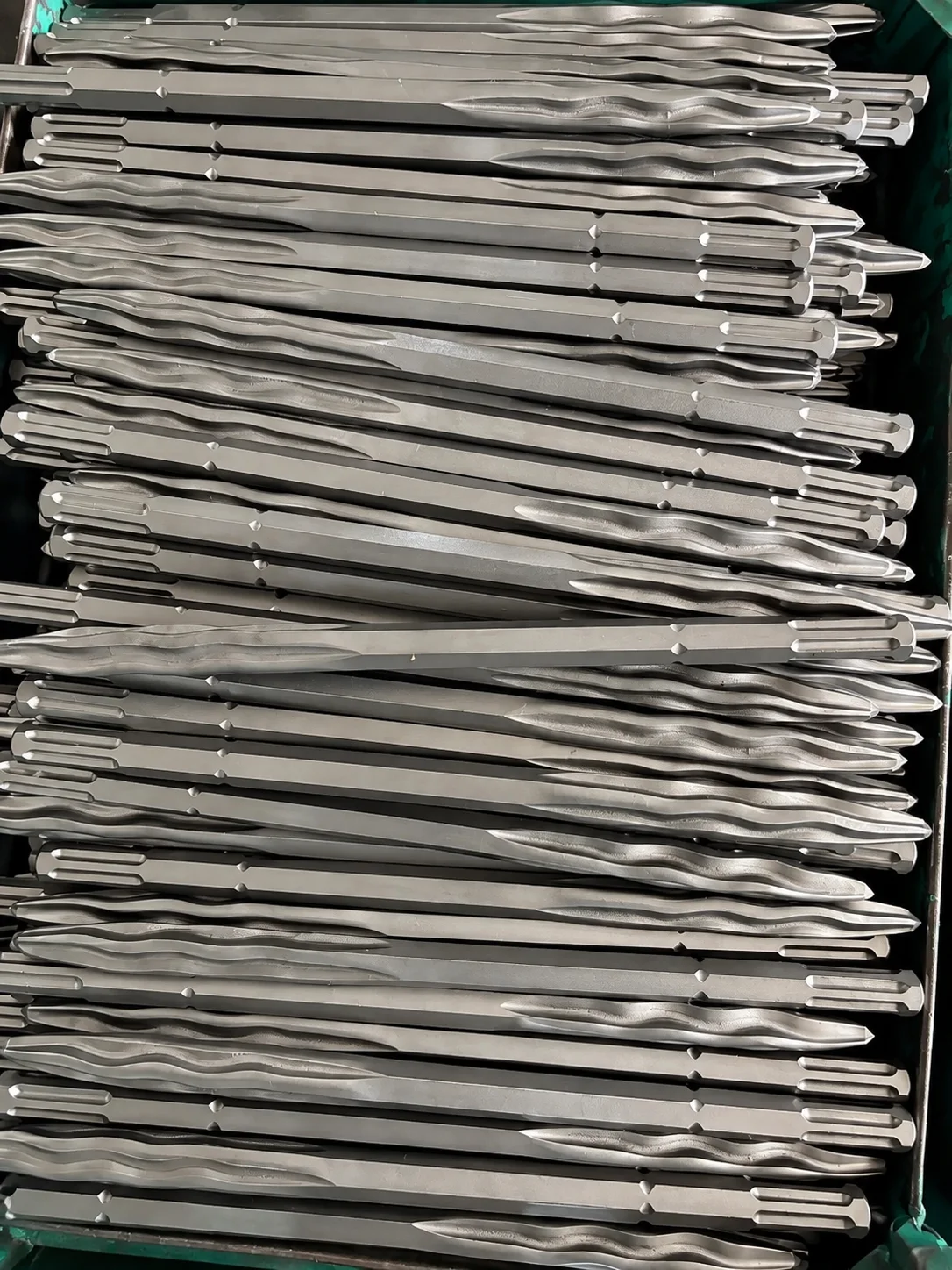
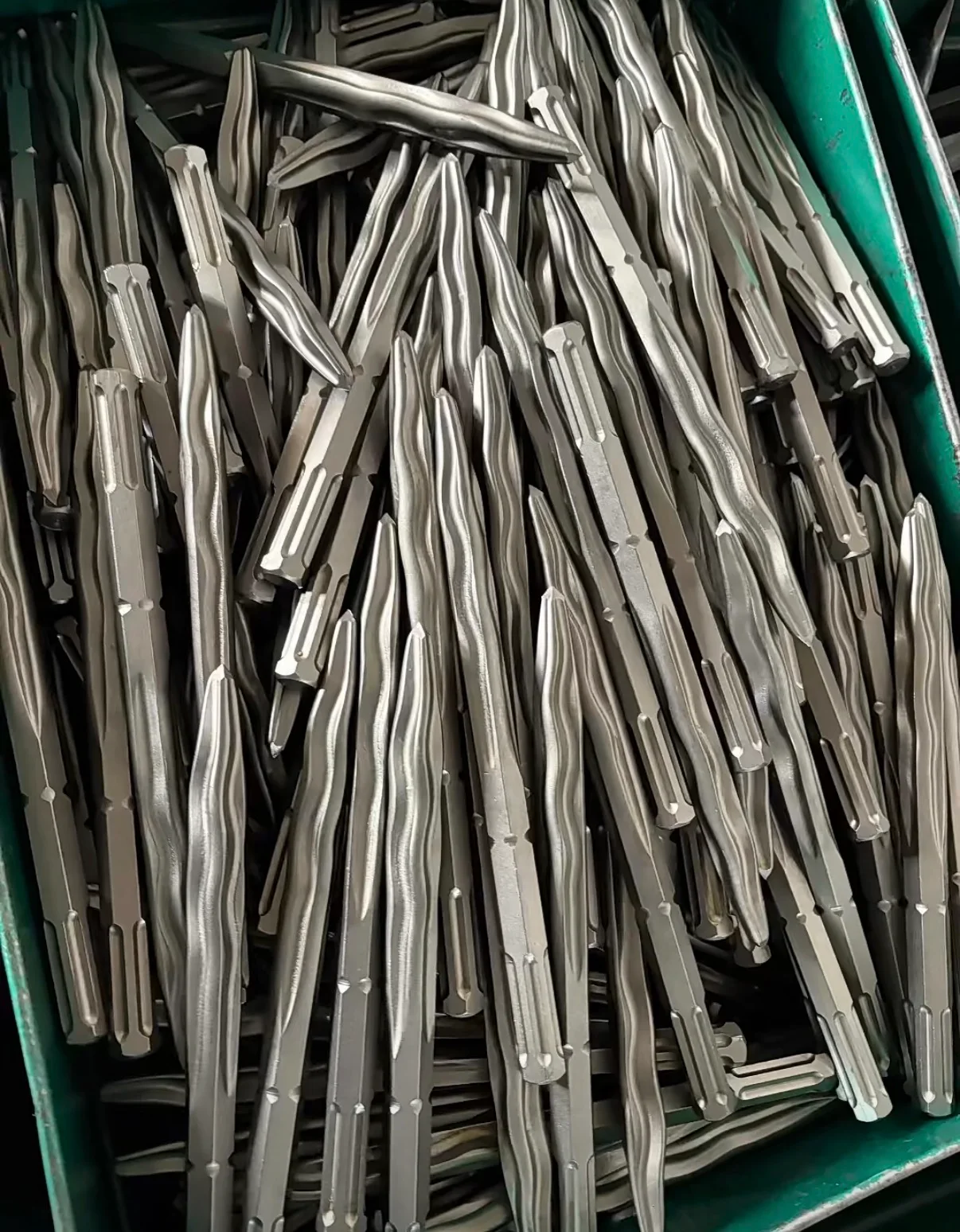
A sharp new point is only the beginning of a chisel’s working life. During concrete demolition, tip wear, trapped debris and repeated impact loads change how the accessory performs. A useful specification considers sustained penetration, interruptions and the condition of the whole tool after use.
We match demolition chisels by starting with the substrate, aggregates and reinforcement conditions, then the hammer platform and impact duty. Working-end geometry, steel and heat treatment follow those requirements. Star-profile designs focus attention on how a point continues to work as it wears.
What does star-profile mean?
Star-profile describes a star-like cross-section in the working end. Longitudinal recesses and raised ribs converge toward the point. From the side, the accessory still looks like a pointed chisel; a section through the shaped working zone reveals its alternating projections and recesses.
The term alone does not specify a universal number of ribs, groove depth or point angle. SDS-Max identifies a machine interface, while star-profile describes working geometry.
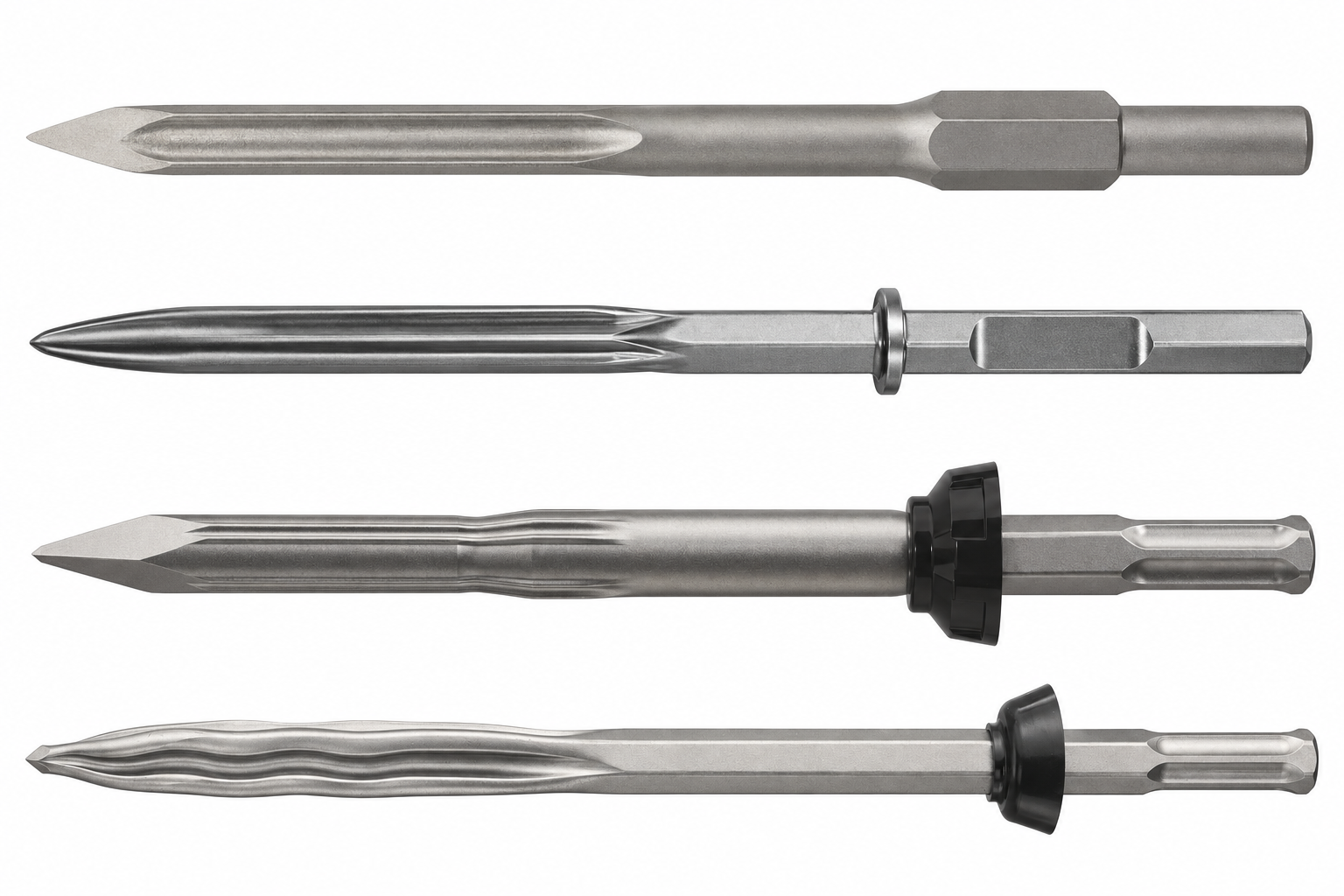
Star, polygon and wave describe different aspects
Star-profile refers to a cross-sectional outline. Polygon describes a faceted or multi-sided form. Wave describes an undulating shape along the working zone. A particular accessory may combine these features, so the terms should be tied to the actual model description.
A conventional smooth point has a simpler transition toward the tip. Shaped grooves and ribs give designers additional ways to manage contact with broken material and the geometry remaining after wear. More grooves alone do not establish better performance.
What do premium designs address?
| Jobsite problem | Design direction | What to compare |
|---|---|---|
| The point rounds and penetration slows | Star-profile, self-sharpening or another optimized point | Working profile and penetration after use |
| Debris traps the chisel | Recesses, dust channels and reduced-wedging geometry | Jamming frequency and extraction time |
| A channel needs controlled edges | Narrow-flat or combined flat/point geometry | Edge control and removal per pass |
| Surface material needs stripping | Wide, angled or application-specific blades | Removal control and substrate condition |
| The tool chips, bends or deforms | Steel, heat treatment and section transitions matched to duty | Point, body and connection-end condition |
Geometry needs the right steel and heat treatment
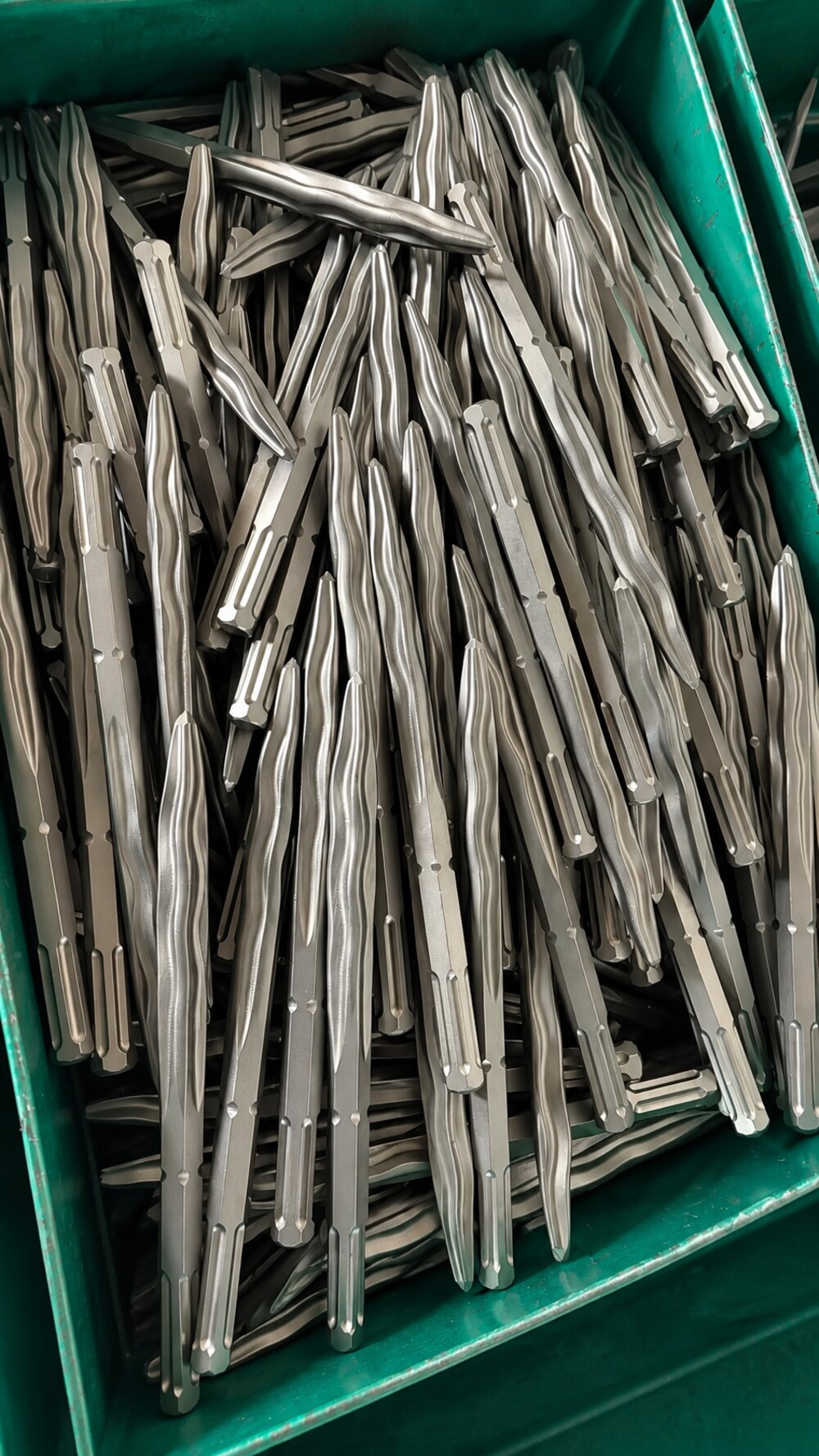
Self-sharpening describes retaining an effective working profile through wear. Material is still consumed, and the result depends on geometry, metallurgy, treatment and the material being broken.
The working end must resist wear and deformation while the body and shank withstand repeated impact. For point chipping, examine loading, local geometry and toughness. For rapid rounding, compare the wear pattern alongside the material condition. A single hardness number cannot replace this evaluation.
Our premium chisels use 42CrMo alloy steel, with working-end geometry and heat treatment matched to the intended hammer duty. Material, finish and acceptance requirements are agreed in the order specification. For a star-profile project, we begin with the breaking task and target geometry, then confirm the sample or drawing.
Match the task before selecting the profile
Bulk concrete breaking, masonry channeling and tile removal require different contact areas and working angles. Identify the material, reinforcement conditions and removal task first. Work around reinforcement follows the approved construction scope.
Next, identify the hammer model and, where available, its impact energy. Match SDS-Plus, SDS-Max or the relevant breaker connection separately. The machine must support the required chiseling mode, and working width and reach must suit the application.
Finally, identify the improvement sought: easier penetration, fewer interruptions, cleaner channel boundaries or sustained scaling. That makes the choice between a shaped point, flat chisel and wider blade more useful.
Compare sustained work, including interruptions
Use the same hammer, comparable substrate and a consistent task for sample comparisons. Record material removal alongside time spent freeing the chisel, changing accessories and clearing debris. Keep working-end photographs before and after the trial.
For channeling, include edge control. For stripping, include the resulting substrate condition. Inspect the point, body and connection end. Compare the complete task rather than the appearance of an unused tip.
Pair demolition chisels with quality SDS drill bits
Renovation may require old material removal and new fixing holes. Equipment installation may involve drilling and local surface correction. Star-profile chisels handle suitable impact-breaking tasks, while rotary-hammer bits create the specified holes.
We offer chisels together with our SDS-Plus and SDS-Max rotary-hammer drill bits as coordinated supply programs. Four-cutter bits, pointed chisels and flat chisels can form a professional selection; demanding concrete-drilling projects can also be evaluated with full-carbide-head bits and application-matched premium chisels.
The accessories serve complementary operations and are fitted separately in the appropriate machine modes. Send us the hammer model, construction material, hole diameters and working lengths, chiseling task and quantities. We will help configure the combination, with OEM marking, packaging and delivery discussed for the order.
Explore our chisels · SDS-Plus drill bits · SDS-Max drill bits · Request a combined quotation
Professional chisel selection guide · Drill-bit and chisel combinations


