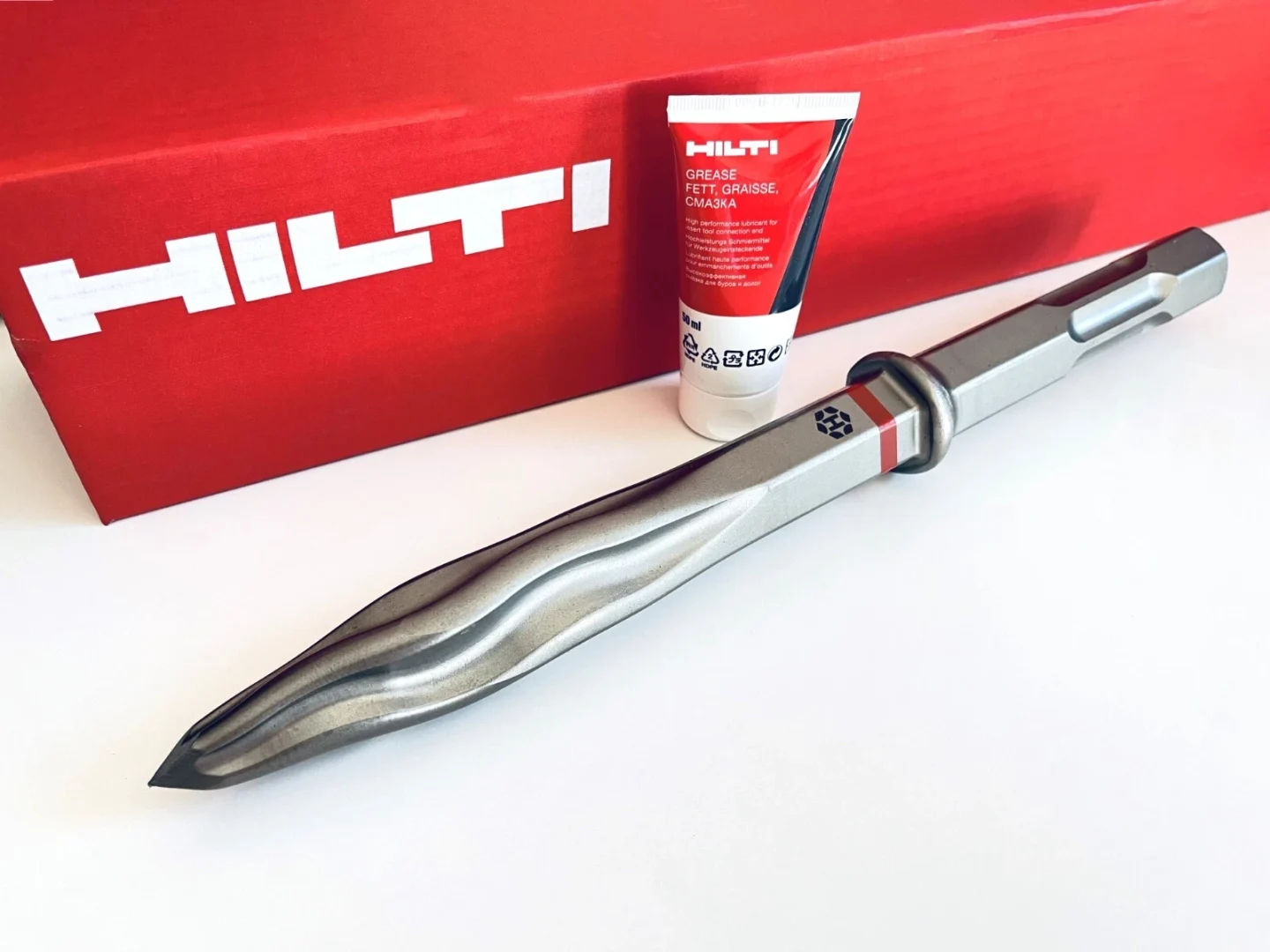

Concrete floor and slab demolition combines abrasive wear at the point with repeated impact through the body and connection. The Hilti TE-HX SM is an Ultimate-class self-sharpening pointed chisel built for this duty on a TE-H machine platform. At Zhonghuan, we explain its performance through the machine match, working profile and heat treatment.
Machine platform: TE-H and the third-generation TE 3000
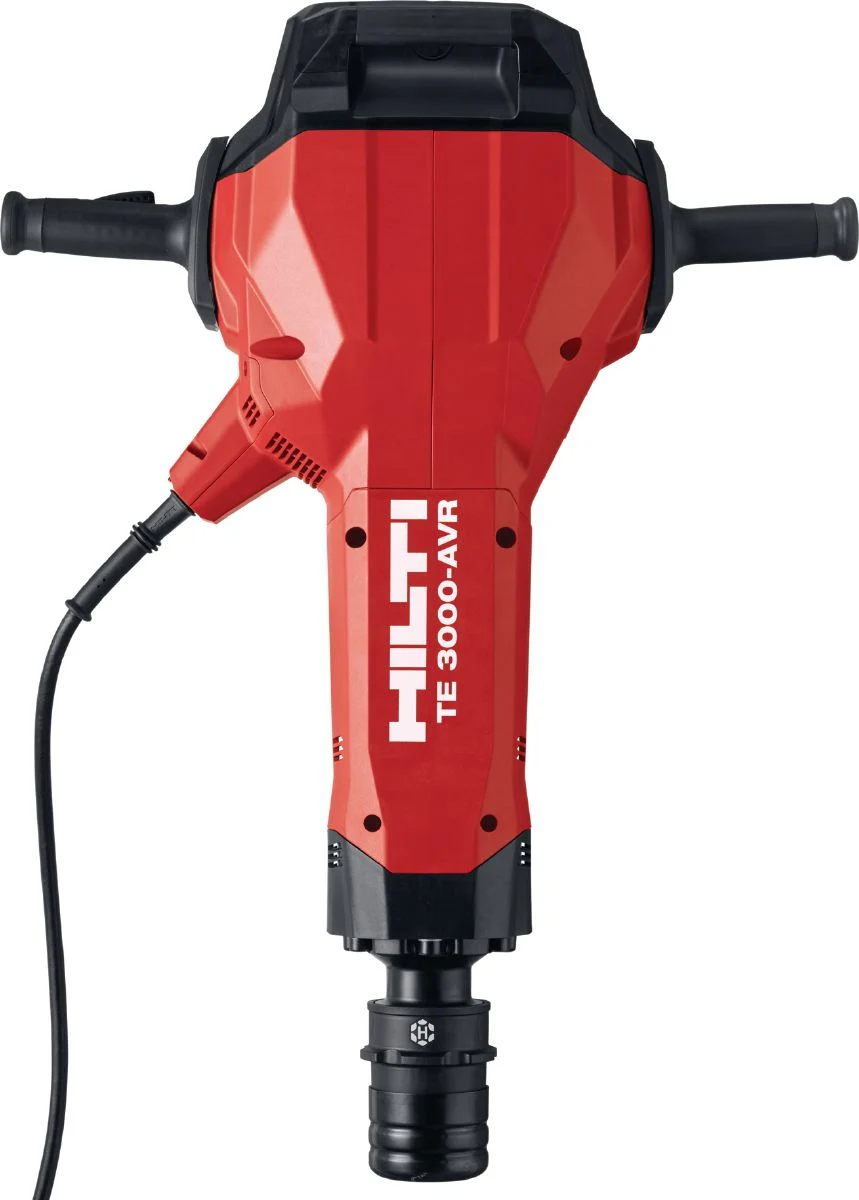
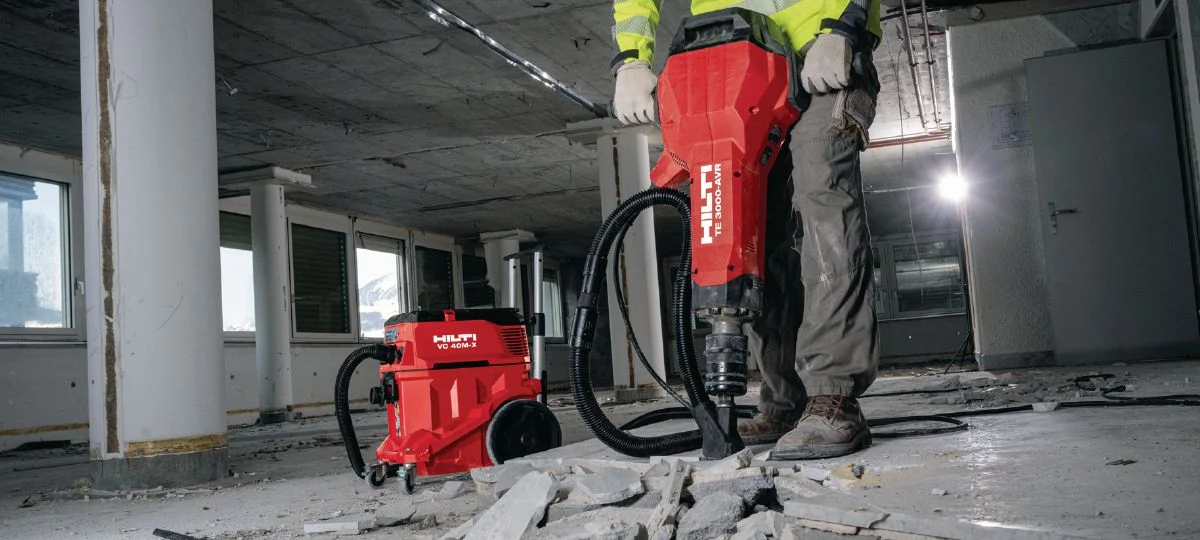
Hilti specifies TE-H (Hilti HEX 28) for the connection end, with use on third-generation TE 3000 electric jackhammers and H28 demolition tools with clamp. The retaining arrangement and complete shank geometry belong to this machine match.
The third-generation TE 3000-AVR is published at 85 J single-impact energy and 27.1 kg. This defines the machine platform; actual breaking progress also depends on concrete strength, aggregate, reinforcement and the available free edge.
Hilti TE-HX SM features and machine fit
Lengths, pack sizes and item numbers
The family covers 400 mm and 500 mm lengths. The following references identify the pictured single-piece model and documented four-piece packs:
| Model | Overall length | Pieces per pack | Item number |
|---|---|---|---|
| TE-HX SM 40 | 400 mm | 1 | 2254657 |
| TE-HX SM 40 (4) | 400 mm | 4 | 2254659 |
| TE-HX SM 50 (4) | 500 mm | 4 | 2254750 |
Choose length around working reach and access to the breaking point. Match the complete TE-H connection to the actual holder; TE-S and TE-Y/SDS-Max use separate interfaces.
TE-HX SM single-piece and pack references
Hilti TE-H length and pack references
Self-sharpening point and the recommended penetration depth
The self-sharpening point is designed to retain an effective breaking profile as it wears. Hilti describes continued use without resharpening or rehardening, helping reduce maintenance interruptions during sustained demolition.
Hilti recommends a minimum penetration depth of 5 cm, approximately 2 inches. Penetrating breaking brings a longer working zone into contact with the material than shallow surface tapping and provides the intended wear conditions for the profiled point.
Wave-profile geometry: cracking and material release
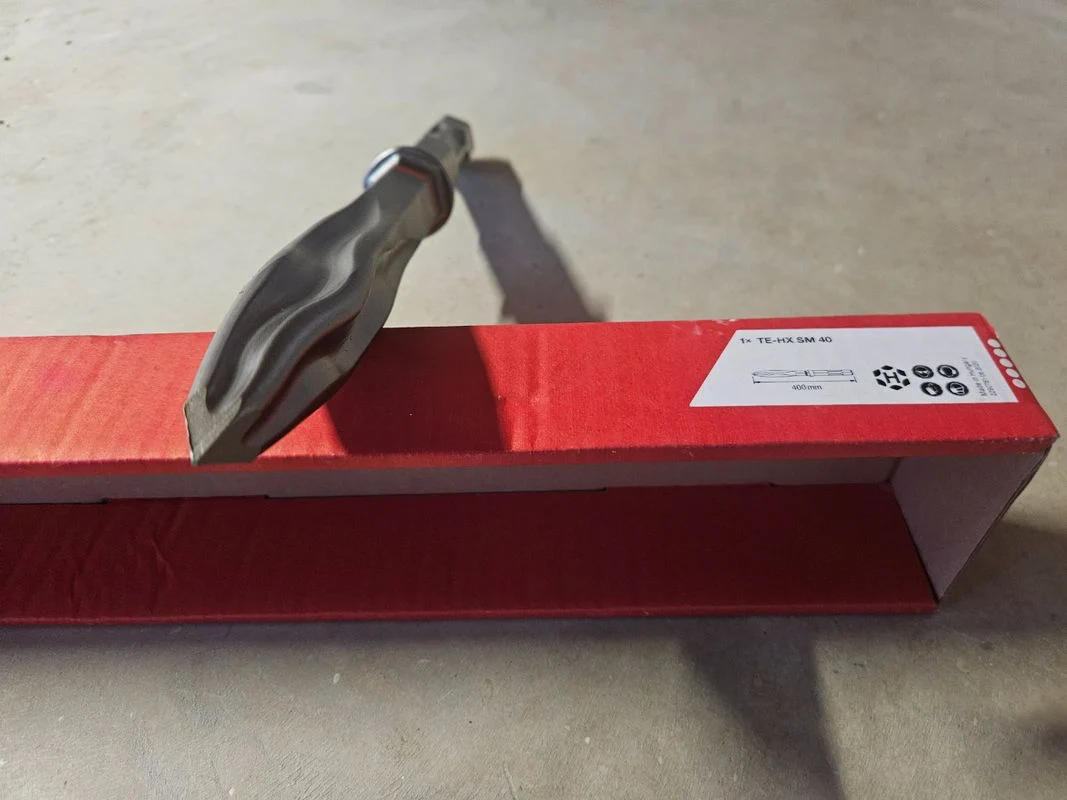
Longitudinal ribs and relief valleys create the characteristic wave-profile working section. Hilti links this geometry to reduced side contact, less jamming and larger, deeper cracks in concrete.
Mechanically, the point concentrates impact at the entry zone. As the working section enters, its changing outline loads the surrounding concrete and helps extend cracks. Relief valleys leave space for fragments to move away from the contact zone, supporting penetration and withdrawal. Active airborne-dust extraction uses the machine’s compatible collection equipment.
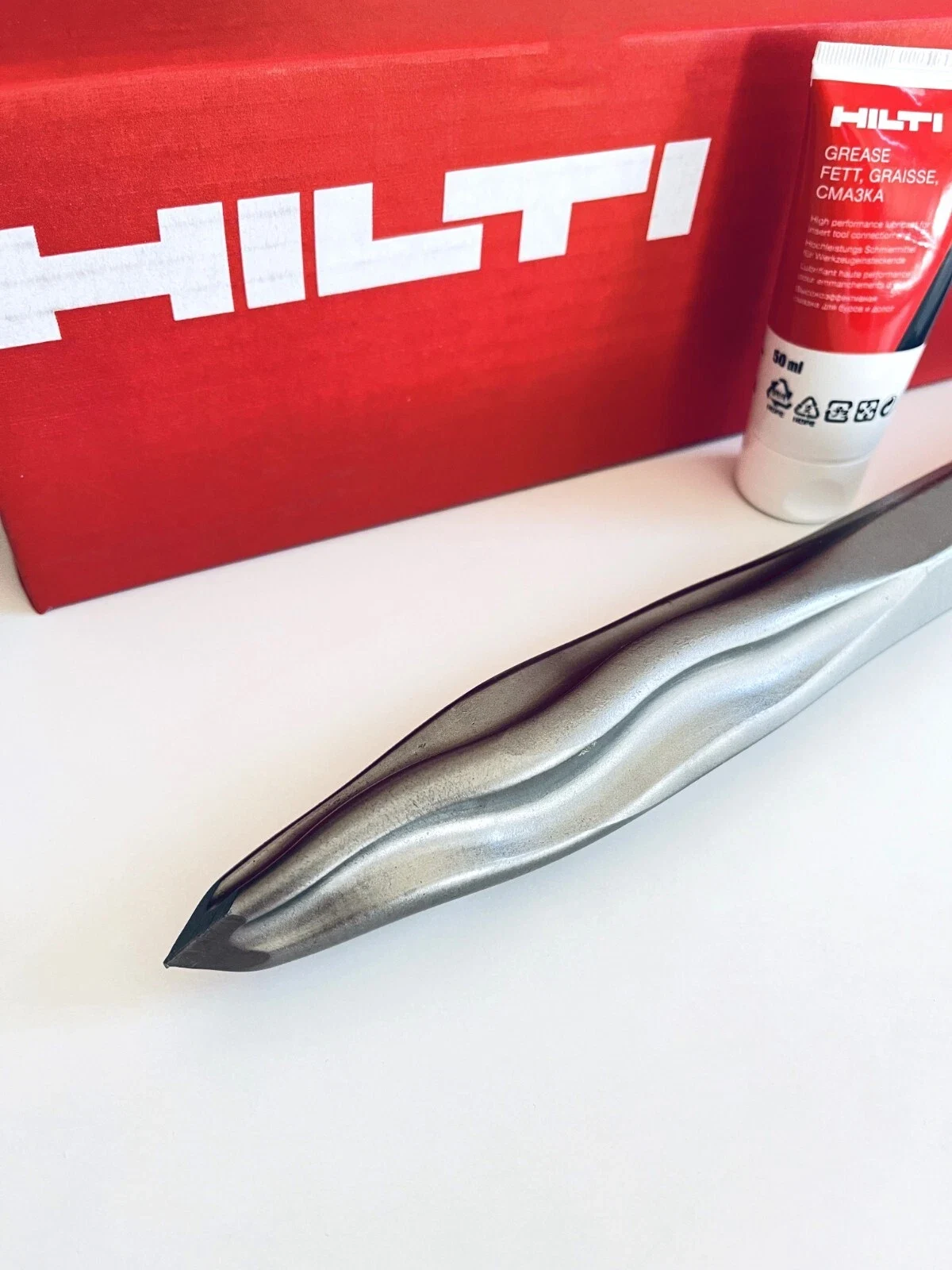
Inductive hardening for repeated impact
Hilti specifies inductive hardening to improve resistance to mushrooming, wear and bending. The functional requirements run through the complete steel tool:
- Point and working section: resist abrasive wear while maintaining a useful contact profile.
- Body and transitions: carry repeated impact and bending loads with adequate support and toughness.
- Striking and retaining areas: resist deformation and damage where loads enter and the holder retains the tool.
Working geometry and heat treatment function together under the repeated loading of the TE 3000 platform. The ribbed outline, supporting section and transitions all contribute to the finished tool’s impact duty.
HEX 28 shank, retaining collar and connection details
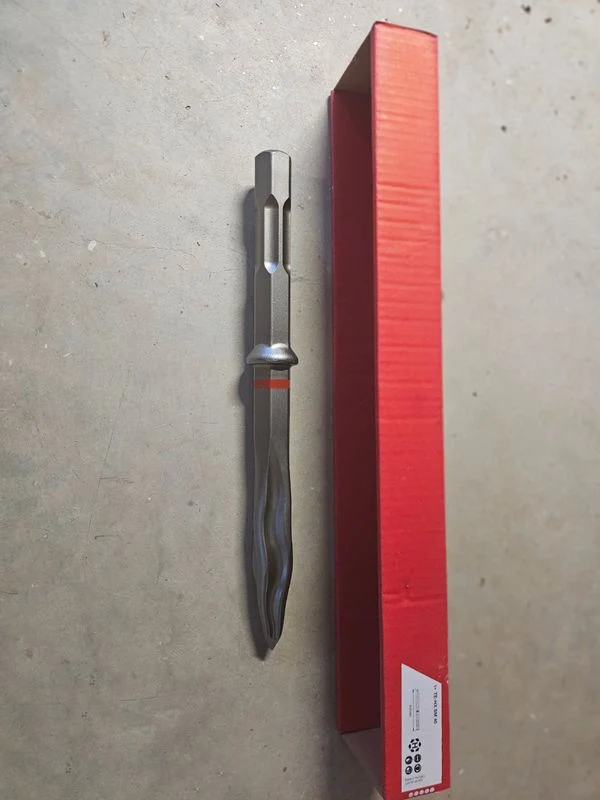
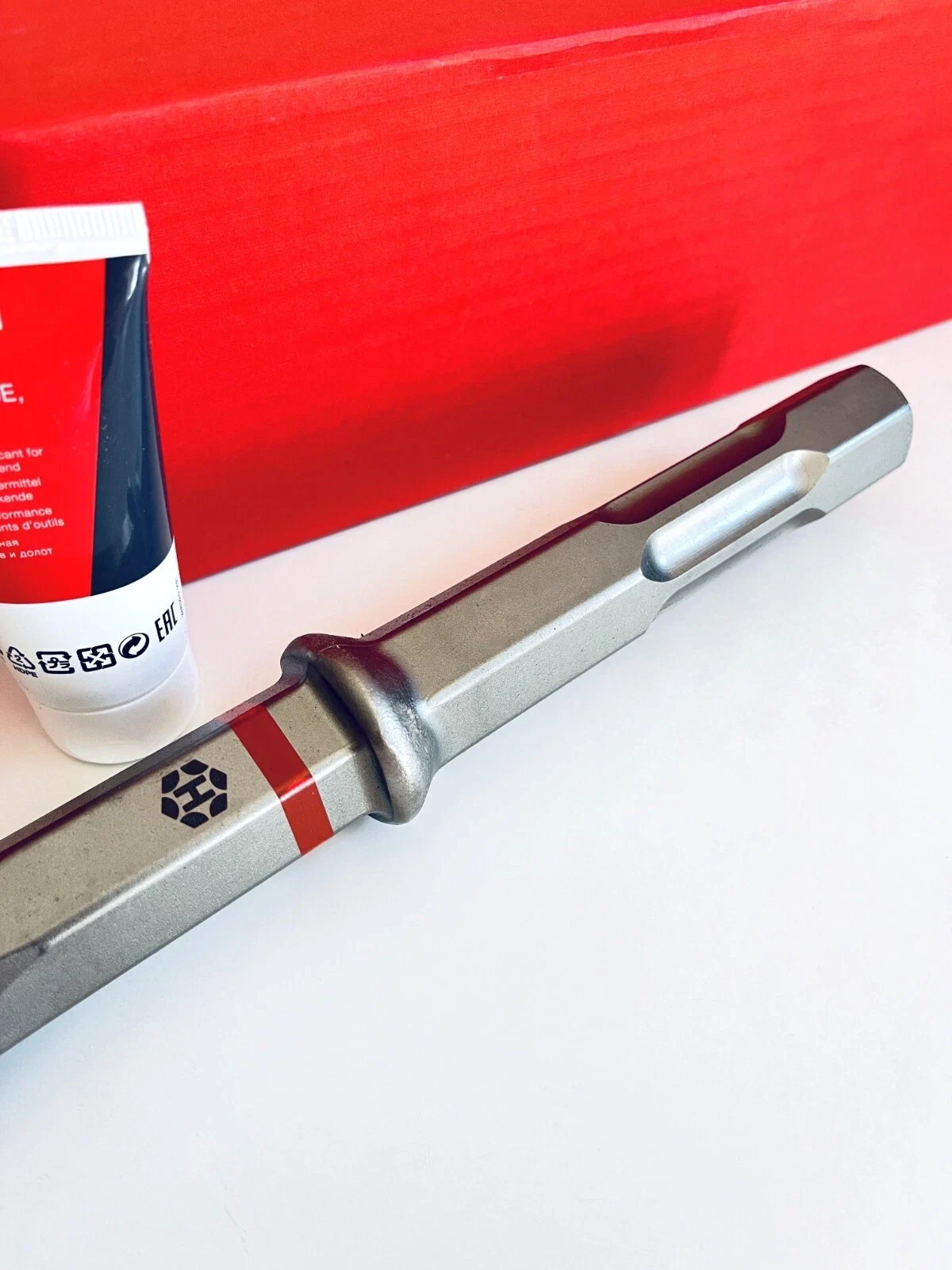
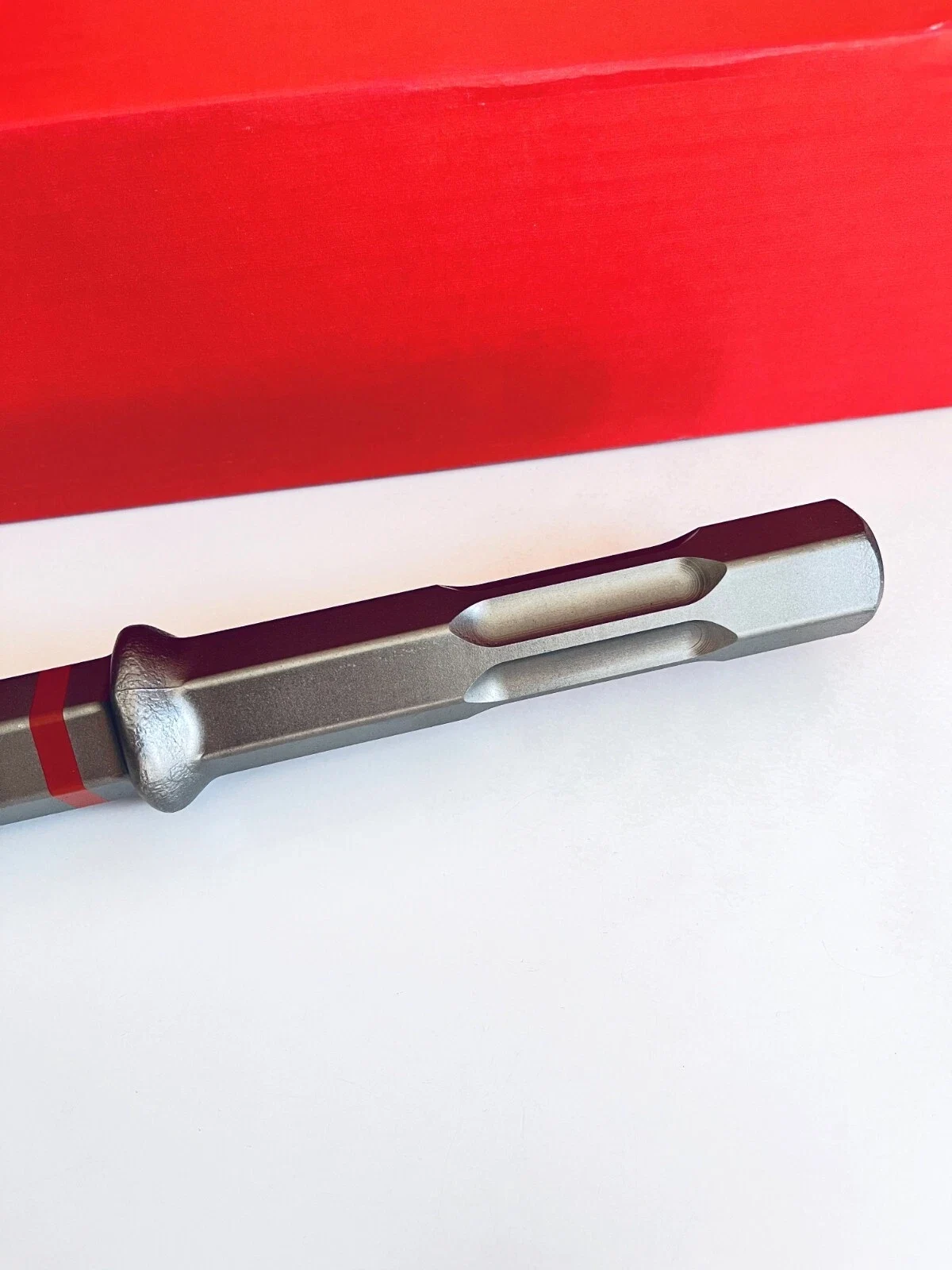
The photographs show the TE-H connection end, elongated side recesses and a metal retaining collar. These features position the tool and engage the matching holder’s retention system. The collar is a structural part of the connection.
Check the machine generation, holder type and complete retaining geometry when selecting the chisel. Install and retain it using the sequence in the matching machine instructions, including confirmation that the tool is securely held.
TE-H (Hilti HEX 28) is the connection designation for this system. Groove layout, collar position, insertion length and holder operation must match the specified machine generation. Confirm similar-looking long-groove tools against their own holder requirements. The TE-HX SM shown here is listed for the third-generation TE 3000 and H28 demolition tools with clamp.
Concrete and masonry applications
- Concrete floors, slabs and foundations: concentrated point breaking where the machine can be positioned for the planned removal.
- Slab openings: establish and extend the breaking zone within the opening defined by the work plan.
- Brick and block masonry: localized demolition using the point to initiate fracture and free material.
For reinforced concrete, the chisel breaks the mineral material around reinforcement. Embedded services and reinforcement are handled according to the approved removal plan.
Packing and connection-end care
Single-piece and four-piece references let the same working profile be selected in the required pack quantity. The supplied photographs show the chisel, its carton and connection-end grease. Keep the shank clean and lubricate it as specified by the machine instructions; confirm normal retention before returning to work.