

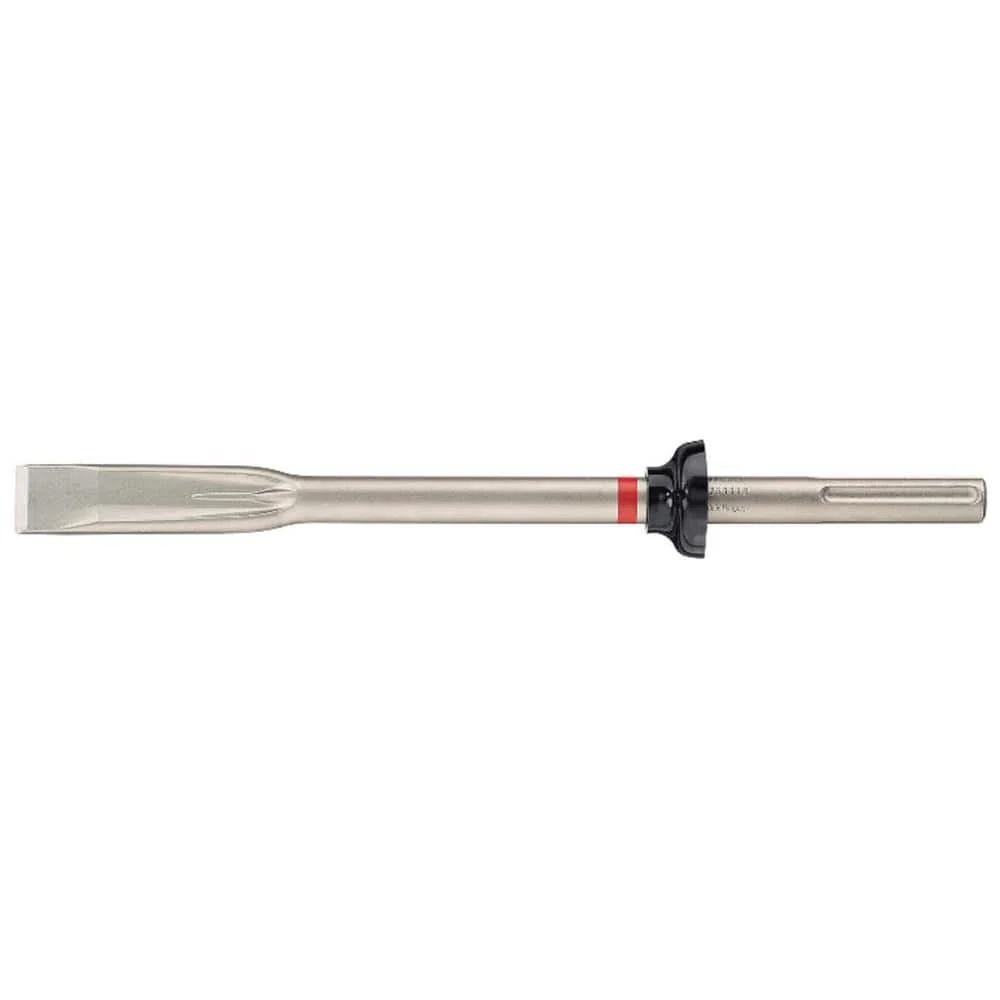
The Hilti TE-YX FM is a self-sharpening SDS-Max flat chisel for controlled concrete and masonry demolition. Its 26 mm edge, profiled working end and black dust cap make it a useful reference for contractors and distributors building a professional demolition range.
A premium chisel earns its place through sustained penetration, predictable breakout and reliable machine fit. We examine the TE-YX FM specification and the supplied 280 mm and 360 mm product photographs, then explain what buyers should specify when developing a high-quality OEM alternative.
TE-YX FM specifications and reference sizes
Hilti identifies the connection as TE-Y (SDS-Max), the edge width as 26 mm and the product class as Ultimate. Its Saudi product page currently offers 360 mm and 500 mm options. The size table below uses Hilti’s published 2024 Hong Kong catalogue for the corresponding item numbers; regional availability and pack quantities should be confirmed when ordering. Hilti TE-YX FM product page · Hilti 2024 accessory catalogue, p. 38
| Reference variant | Overall length | Edge width | Single-item number | Connection |
|---|---|---|---|---|
| TE-YX FM 28 | 280 mm | 26 mm | 2241990 | TE-Y (SDS-Max) |
| TE-YX FM 36 | 360 mm | 26 mm | 2241991 | TE-Y (SDS-Max) |
| TE-YX FM 50 | 500 mm | 26 mm | 2241992 | TE-Y (SDS-Max) |
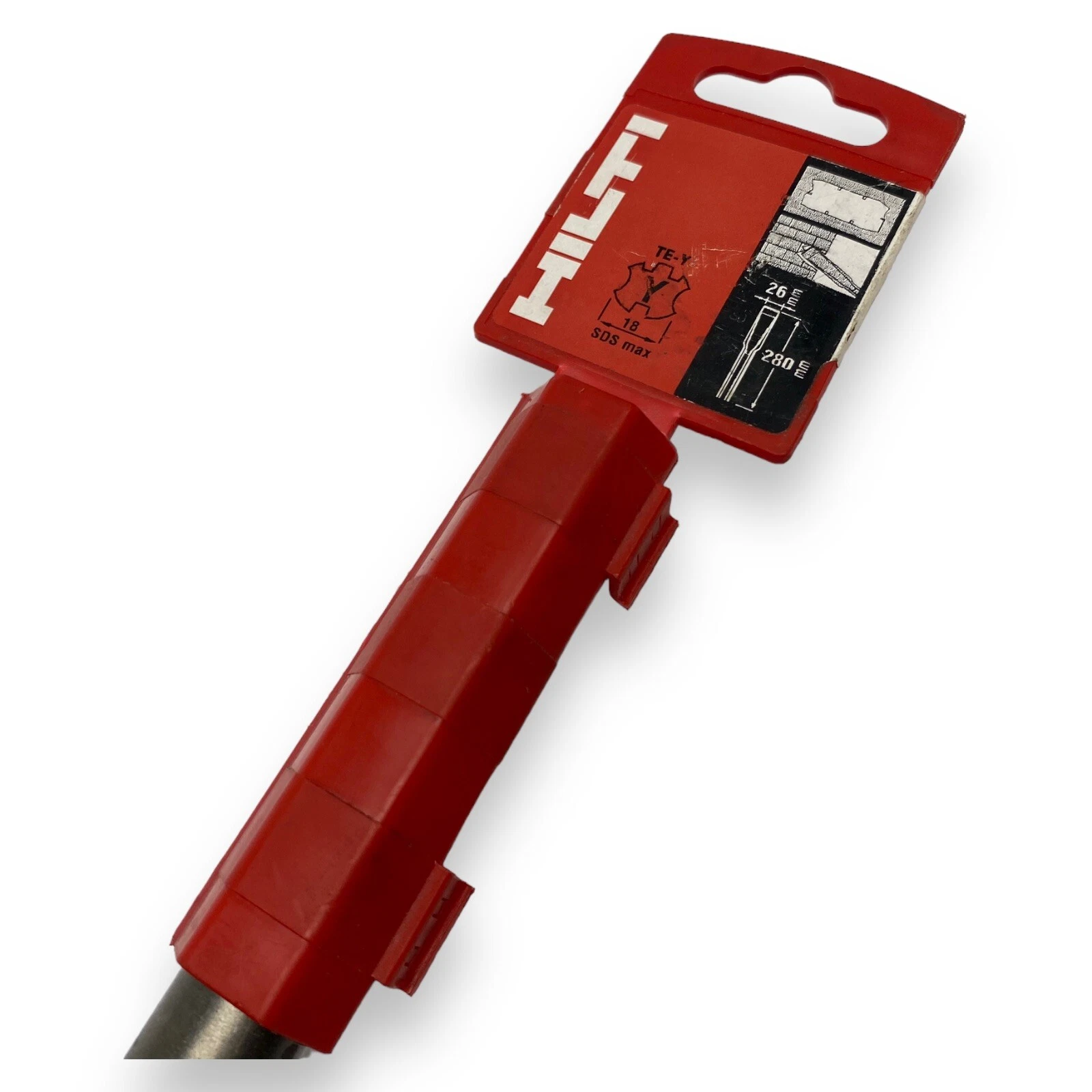
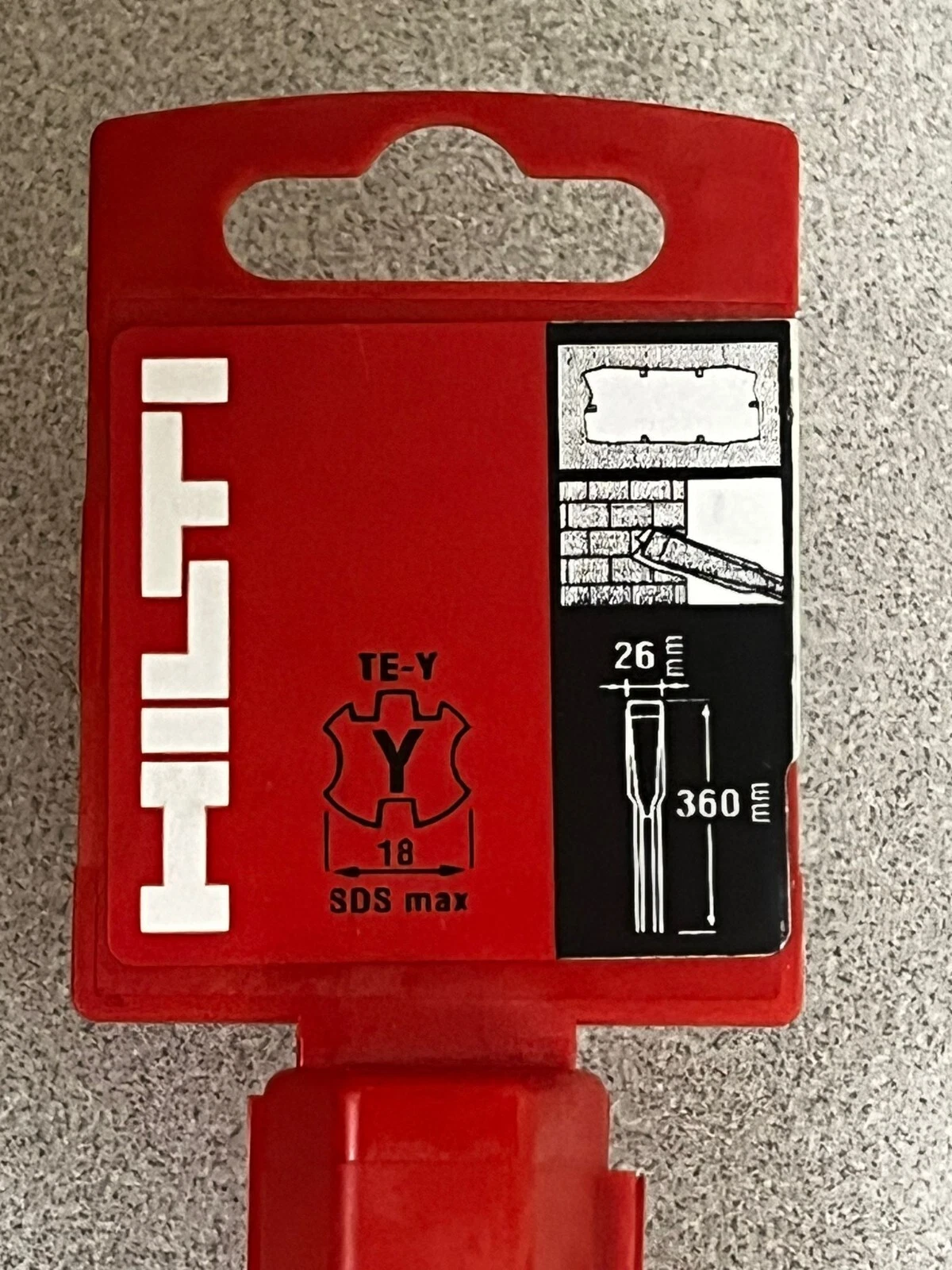
26 mm is the blade width, not the shank diameter. The supplied packaging identifies the separate 18 mm nominal SDS-Max shank. Keep edge width, overall length and machine interface as distinct order fields. An inch-based retail description is a rounded conversion; use the metric drawing for sample approval.
Match the substrate and demolition task to the hammer
Dense concrete, hard aggregate, brick and mortar load a chisel differently. Reinforcement may interrupt the fracture path. Begin with the material and removal task, then select a suitable SDS-Max machine and impact duty before choosing the working end.
A 26 mm flat edge suits controlled chipping, channeling and breaking strips of material. A wide scaling blade is a different choice for suitable surface layers, while a point concentrates initial contact differently. For reinforced concrete, follow the removal plan and use the appropriate method for exposed steel.
Use a machine with a supported chiselling mode and rotation stopped. SDS-Max fit is the first compatibility check; machine duty, access and working method complete the selection.
The self-sharpening profile is a complete working section
The supplied working-end close-up shows a broad, approximately straight edge with a long recessed face and raised side sections that converge toward the body. Read the edge, both faces, side profile and transition together. The visible geometry is more specific than a smooth, uniform flat wedge.
As a conventional edge rounds, its contact can spread across more material. A self-sharpening profile aims to preserve a useful working shape as steel wears away. The practical objective is sustained engagement with fewer interruptions for restoring the edge.
The steel still wears. A new-tool photograph establishes the starting profile; a comparison on the same concrete and hammer shows how that profile behaves in service. The visible recess does not establish a fixed speed gain or a guaranteed freedom from jamming.
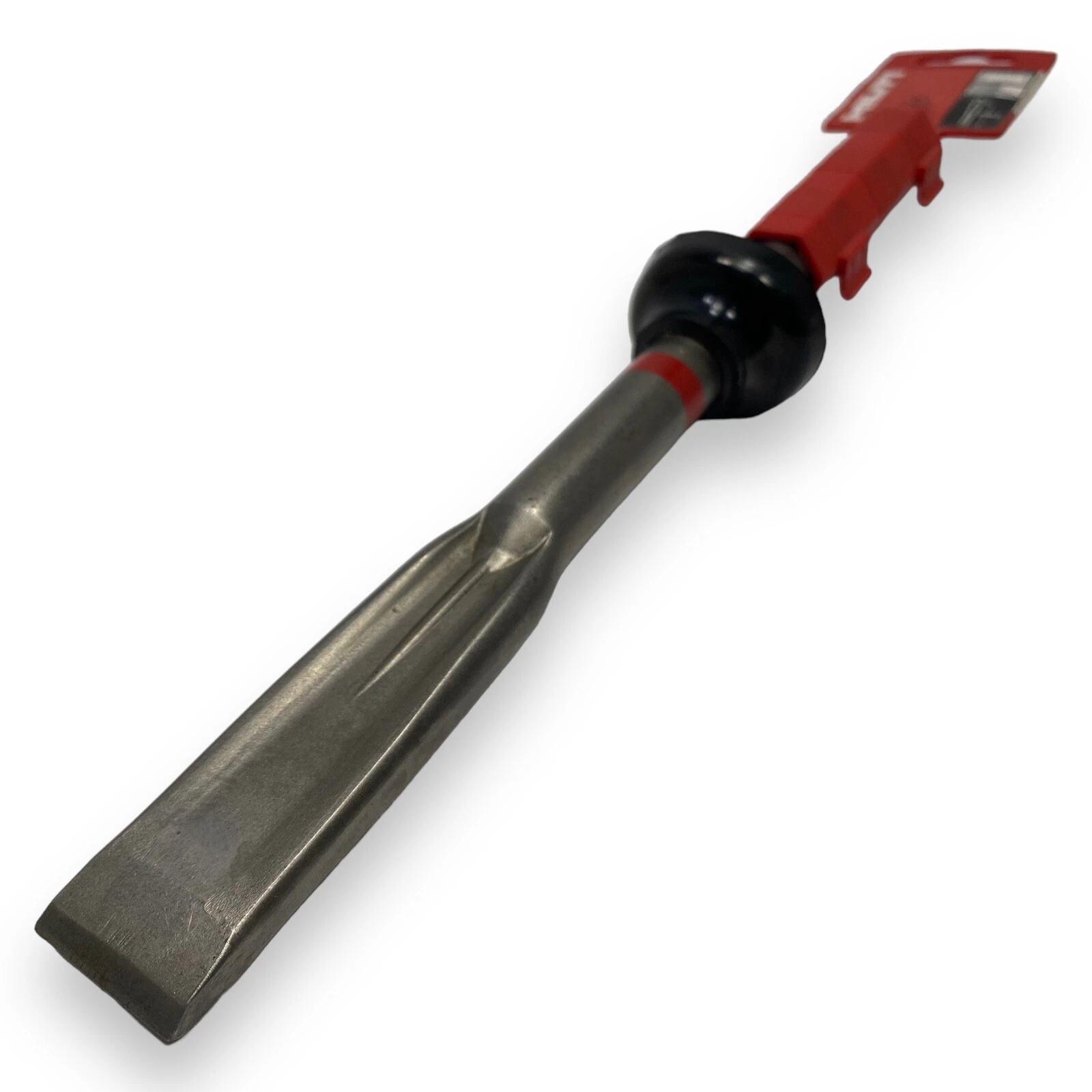
The black dust cap belongs to the holder end
The photographs show a black cap around the body near the insertion end. Hilti identifies this feature as a dust cap and links it to improved reliability and reduced downtime. It is separate from the SDS-Max retaining grooves. Hilti features and applications
For an OEM range, check the cap’s fit, position and clearance with the actual holder. It should remain secure without obstructing insertion or normal tool movement. Its presence is a practical assembly and inspection point; it does not replace the machine’s cleaning and lubrication instructions.
Inductive hardening supports the geometry under impact
Hilti lists inductive hardening for TE-YX FM and associates it with resistance to mushrooming, wear and bending. Geometry controls the working shape; material and heat treatment determine how that section responds to repeated blows. Hilti TE-YX FM construction features
A premium specification must balance wear resistance with toughness. Define the requirements at the working end, body, transition and shank instead of relying on one headline hardness number. Excessive brittleness can cause chipping or fracture, while excessive softness can allow the edge to roll or the body to deform.
Steel grade, treatment requirements, hardness measurement locations and sample acceptance limits should be fixed in the approved production specification. Surface color and a trade name do not define that specification.
Choose length for access and control
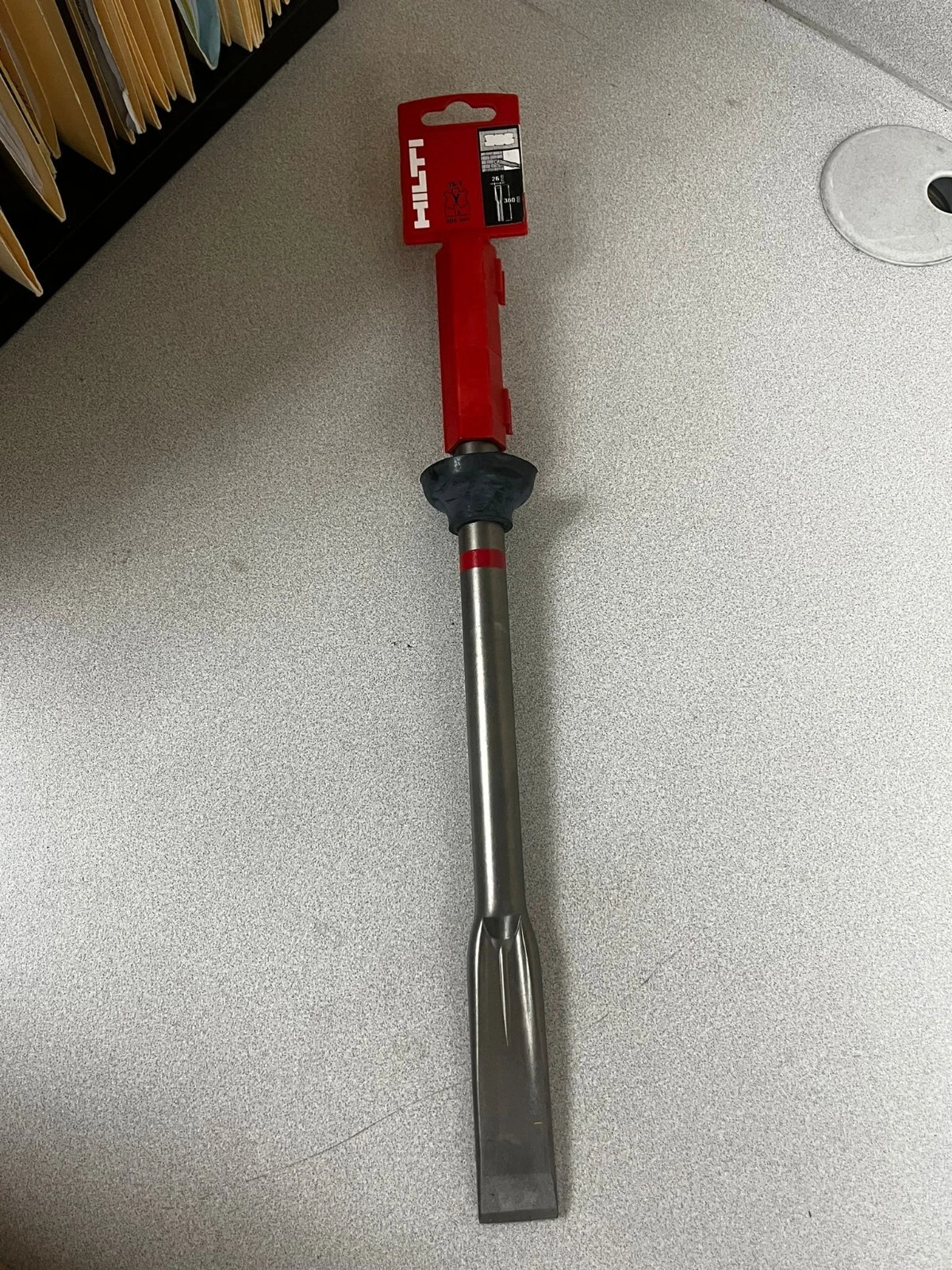
The supplied photographs show two separate sizes: packaging marked 26 × 280 mm and packaging marked 26 × 360 mm. These are edge width × overall length. They must not be captioned as the same size.
Choose the shortest length that gives suitable access and working posture. Extra reach can help in a recess or restricted area, while a shorter tool may be easier to control for local adjustment. Keep the machine and task in the decision: a longer chisel does not increase the hammer’s rated impact energy.
Specify 280, 360 or 500 mm as an overall-length requirement and review the useful working reach separately. If an existing drawing distinguishes insertion length or exposed length, preserve those definitions during quotation and sample approval.
TE-YX FM uses SDS-Max, with a different fit from TE-HX FM
TE-YX FM uses the TE-Y (SDS-Max) interface. The TE-HX FM reference uses TE-H / HEX 28. These are different machine connections and are not directly interchangeable. SDS-Plus is another separate interface.
Match the exact machine model and holder, not the shared “FM” letters. For OEM acceptance, check shank dimensions, retaining features, insertion and release, and condition after impact testing. A photo of the working end alone cannot confirm machine fit.
Build a premium alternative with our factory
At Zhonghuan Tools, our premium demolition-chisel program combines 42CrMo chromium-molybdenum steel, application-matched heat treatment and defined working-end geometry. We develop the complete tool around the machine and task, then agree dimensions, marking and packaging for repeatable OEM supply.
If the current chisel rounds quickly, review its wear profile and working-end treatment. If it bends or fractures, review the body section, transitions, toughness and hammer duty. If it becomes difficult to insert or release, review shank fit, retaining features, wear and maintenance. The failure mode should guide the specification.
We use the TE-YX FM as a machine-and-application reference. Our 42CrMo material specification describes our own premium program; it is not an identification of Hilti’s steel. The final deliverable is an approved sample and a repeatable production specification for your range.
Compare productive work and total task cost
Use the same SDS-Max hammer, operating mode, substrate and removal task. Record material removed, productive time, time spent freeing or changing the tool, edge condition and shank wear. Keep aggregate, reinforcement and operator technique comparable.
Compare cost per accepted completed task: allocated chisel cost plus labor and machine cost for the full task time, divided by completed accepted tasks. Include release, changeover and maintenance time. This gives contractors and distributors a practical basis for premium selection.
Frequently asked questions
Is Hilti TE-YX FM an SDS-Max chisel?
Yes. Hilti identifies its connection as TE-Y (SDS-Max). It is a flat chisel used with a compatible machine in chiselling mode with rotation stopped.
What size is TE-YX FM 36, item 2241991?
The published reference is 360 mm overall length with a 26 mm cutting-edge width. The width is separate from the SDS-Max shank size.
Does self-sharpening mean the edge never wears?
No. Steel is consumed during use. The profile is designed to retain a useful working shape as it wears, reducing the need for repeated edge restoration in normal service.
What is the black part near the shank?
It is the dust cap identified in Hilti’s product features. Check its fit and clearance with the machine holder; the SDS-Max retaining geometry is a separate feature.
Can TE-YX FM replace TE-HX FM directly?
No. TE-YX FM uses SDS-Max, while TE-HX FM uses TE-H / HEX 28. Match the exact machine connection before selecting the blade size.
Request a premium SDS-Max flat-chisel specification
Send the machine model, target material, required dimensions and quantity. Add a reference photo or sample if available. We will review the working profile and machine fit, then propose a premium chisel specification, sample plan and OEM marking and packaging.


