

What Is a 6-Cutter SDS-Max Drill Bit?
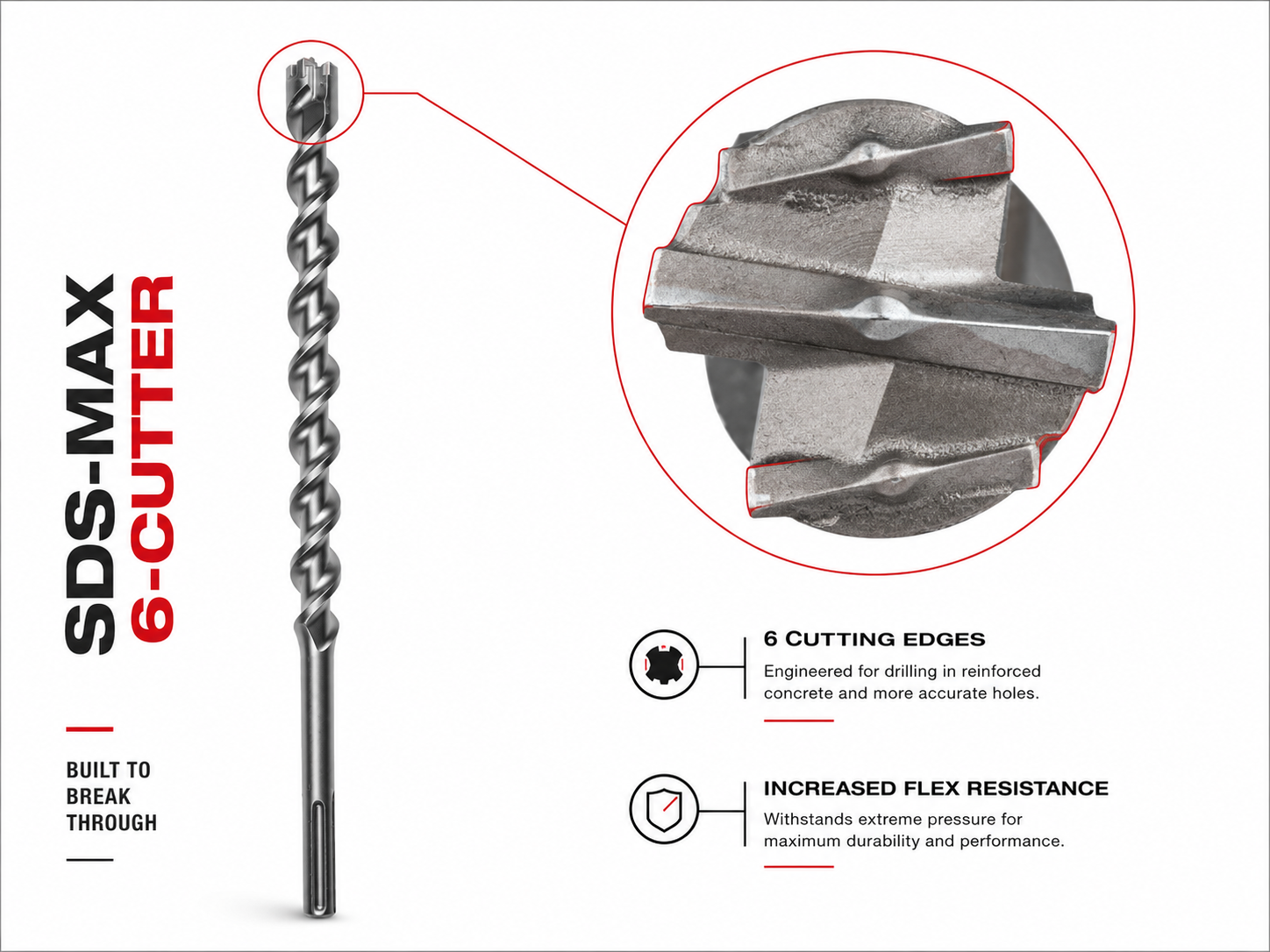
A 6-cutter SDS-Max drill bit is a carbide-tipped rotary-hammer bit with six active cutting edges. It is used for concrete, reinforced concrete and masonry drilling, including holes for anchors and fixings. Hard-stone and deep-hole work are additional applications. We select the head, carbide and body as one drilling system, starting with the substrate, reinforcement, hammer and hole requirement.
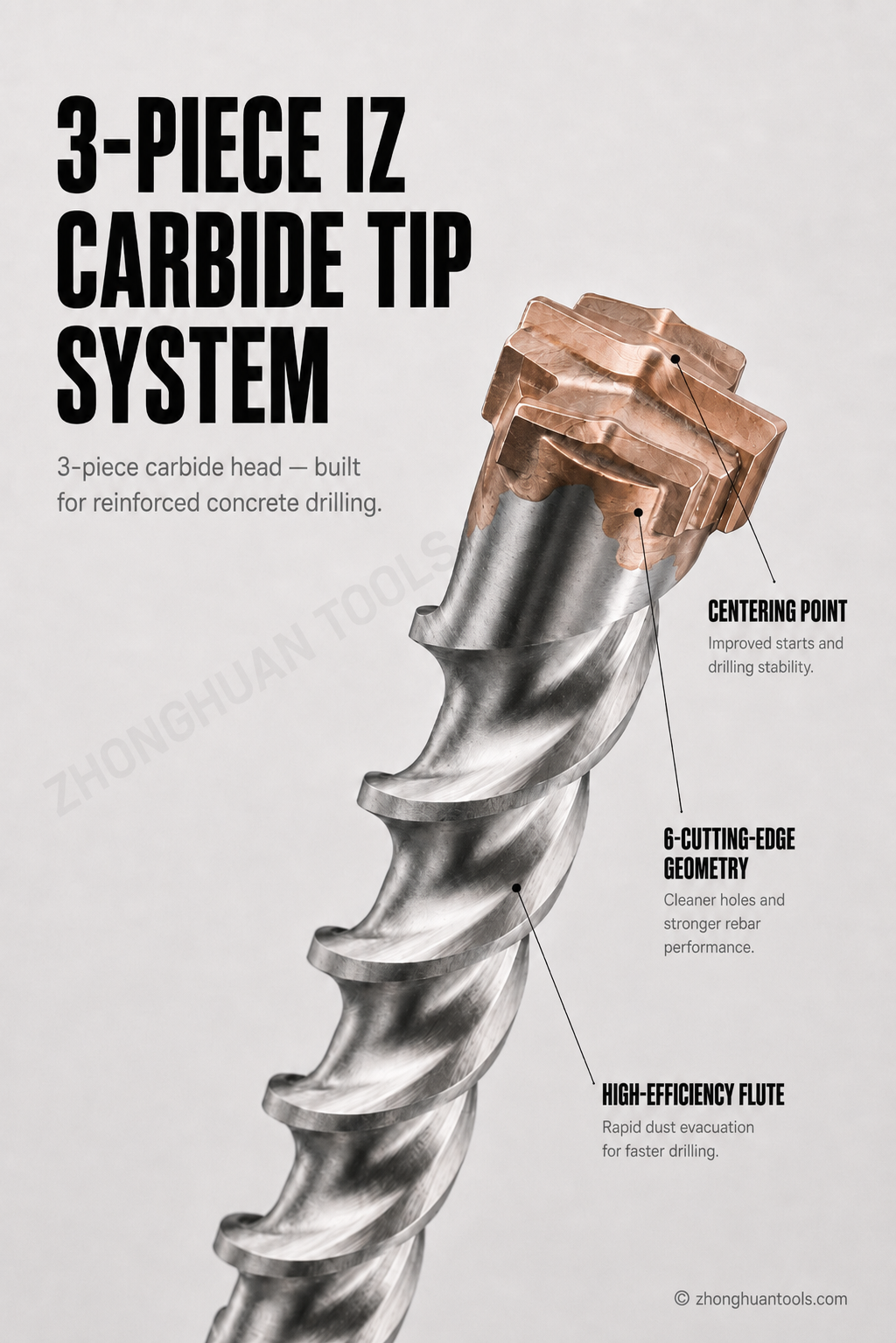
Six-cutter counts cutting edges, not necessarily six separate carbide pieces. Our ZHMAX-168 uses three carbide blocks with two working edges per block. A clear quotation therefore names both layers: 3-block / 6-cutting-edge carbide head, SDS-Max shank. This also separates it from a one-piece full-carbide head, whose construction and cutter count are separate specifications.
Where Six-Cutter Bits Are Used
The useful question is what the hole must achieve. A contractor drilling anchors into reinforced concrete and a quarry operator making a deep rock hole can both use a six-edge design, but they need different size programs and acceptance checks.
| Application | What matters | Information for the match |
|---|---|---|
| Concrete and reinforced concrete | Controlled starting, stable drilling and carbide support during interrupted contact | Concrete condition, aggregate, expected rebar and hammer model |
| Anchor and fixing holes | Hole diameter, useful depth and the anchor manufacturer’s installation requirements | Anchor system, specified bit diameter, hole depth and cleaning method |
| Hard stone and mixed masonry | Maintaining cutting action and limiting edge damage in the target substrate | Stone or masonry type, diameter and current failure mode |
| Deep drilling | Dust removal, straight tracking and enough usable flute length | Required working depth, total length and machine capacity |
What the Head, Flute and Body Each Do
Centering point and cutting face: the starting geometry helps locate the hole. Distributed edges engage around the face, while edge angles and support determine how the carbide handles the actual contact. More edges do not guarantee that each edge shares an equal load. This is also the mechanism buyers usually mean by “doesn’t jam on rebar”: distributing contact across six edges instead of two or four lowers the chance that a single edge absorbs the full impact when the bit meets reinforcement, so the bit keeps advancing instead of binding.
Flute clearance: the head must leave room for debris to enter the flutes. Dust transport depends on flute geometry, hole depth and operating practice. Six edges alone do not determine extraction performance or remove the need to clean an anchor hole.
Steel body: core diameter, flute section and heat treatment influence stiffness and impact durability. A long bit needs these matched to the hammer and diameter; total length is not a substitute for usable drilling depth.
Diager Ultimax 168, Makita and Wej-it Six-Cutter Programs
Based on our supply-chain knowledge, the Makita and Wej-it six-cutter programs discussed here are supplied by Diager. Diager markets this head architecture under its own Ultimax Ref. 168 range. This sourcing attribution is Zhonghuan’s industry information; the linked product catalogues describe the respective designs and applications.
| Reference | Published use or format | Procurement relevance |
|---|---|---|
| Diager Ultimax 168 | Three carbide tips, six cutting edges and a progressive flute for hard and reinforced concrete | Reference architecture for our ZHMAX-168 alternative; select the actual diameter and working length |
| Makita B-61379 | Concrete and reinforced concrete; accurate, round holes for anchor setting | 11/16-inch diameter, 21-inch overall length and 16-inch usable length |
| Wej-it SDS-Max, 6 Cutting Edge | Carbide-tipped concrete tooling with reduced-vibration and rebar-contact positioning | An established anchoring-channel reference for six-edge drilling |
| Mungo via Hobson, MUDSDSMX2061678 | SDS-Max 6-cutter, 16 × 920/780 mm listing | A concrete example of separate total and working lengths |
For the Diager reference, verify edge count by SKU: its French catalogue labels the 12 mm and 14 mm variants as two-cutter designs. Our published ZHMAX-168 program starts at Ø22 mm. Diager Ultimax 168
Diameter, Working Length and Machine Match
Quote diameter × working length × total length in that order. The exposed shank and the section that stays outside the hole do not contribute to drilling depth. For an anchor hole, follow the anchor system’s specified diameter, depth and cleaning procedure. For deep holes, also confirm the hammer’s permitted bit capacity and the clearance needed to withdraw debris. An SDS-Max connection confirms the interface family; machine capability still needs to match the drilling task.
ZH168 / ZHMAX-168: Our Factory-Direct Alternative
We have introduced ZH168, catalogued as ZHMAX-168, as our factory-direct alternative for buyers benchmarking the Diager Ultimax 168 six-cutter architecture. We manufacture this model and are seeing strong demand for it among our South American customers. We match the program to concrete, reinforcement, hard aggregate, required hole depth and the buyer’s SDS-Max hammer.
Our ZHMAX-168 program combines a 3-block / 6-edge carbide head, a centering point and a progressive 42CrMo body with high-capacity flutes. The current illustrated specification covers Ø22–45 mm and total lengths of 450 / 570 / 620 / 920 mm. These are the program envelope and listed lengths, not a promise that every diameter-length combination is stocked. We confirm useful length and availability by SKU.
The published specification identifies YG11C-class carbide and controlled-atmosphere belt-furnace brazing. Body heat treatment and carbide joining are separate controls. We match the approved carbide option, geometry and body condition to the application; OEM branding and packaging follow the confirmed order specification.
Download the ZHMAX-168 specification

How to Compare Samples on Site
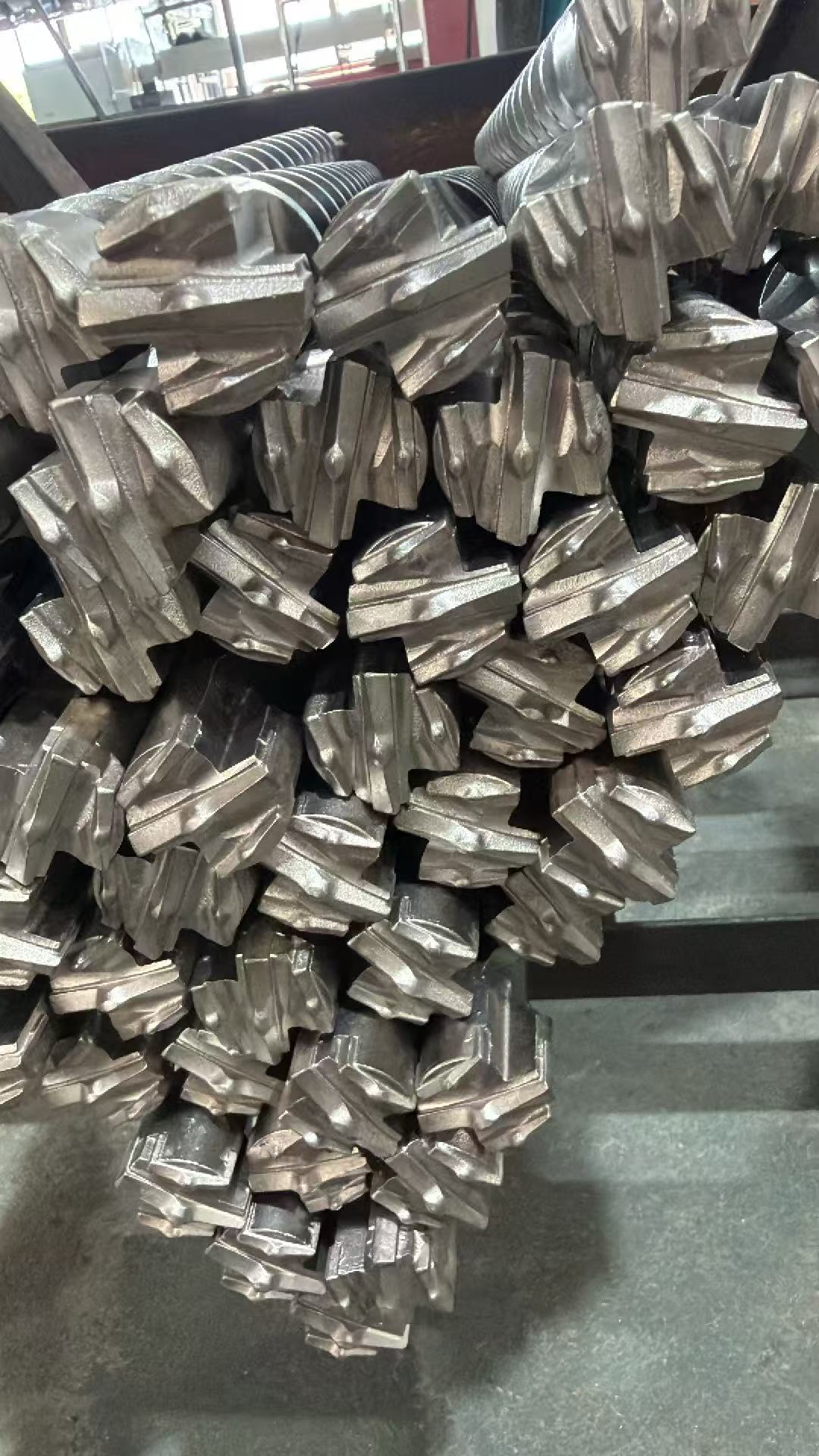
Compare samples at the same diameter and required depth with the same hammer, substrate and operating method. Record drilling time per accepted hole, diameter and roundness, tendency to bind, usable life, carbide damage and body condition. Where reinforcement is present, agree the permitted drilling path and rebar exposure before testing. A fast hole outside the required tolerance is not an accepted hole; cutter count is a design description, not the test result.
Prepare a Six-Cutter RFQ
Send the substrate and rebar condition, hammer model, diameter, working depth, total-length constraint and quantity per size. Add a reference SKU or head photograph if you already use a six-cutter bit. We turn those inputs into a ZHMAX-168 configuration and a sample comparison plan. Exact material and joining details stay in the approved specification rather than becoming a long public form.


