

What Hand-Held Blast-Hole Drilling Is
Hand-held blast-hole drilling means drilling production blast holes with a 10 kg-class electric SDS-Max rotary hammer instead of a pneumatic jackleg drill. The standard hole is 32 mm in diameter, 450–800 mm deep, inclined roughly 15° into the face, and loaded with ø25 mm (1") explosive cartridges. A drilled round in a narrow-vein heading typically means a few dozen such holes, after which the face is charged, blasted and mucked.
The method dominates artisanal and small-scale mining (ASM) in the Andes and is spreading wherever small headings, scattered workings, or the absence of compressed-air infrastructure make a compressor chain impractical. The tooling is ordinary on the machine side — the same rotary hammers sold for construction — and specialized on the consumable side: long mining bits whose head geometry, carbide grade and body steel decide the real cost per drilled metre.
Electric Rotary Hammer vs Pneumatic Jackleg
The honest comparison is not "which is better" but "which constraint binds your operation":
| Factor | Electric SDS-Max hammer (10 kg class) | Pneumatic jackleg |
|---|---|---|
| Capital chain | Hammer + small generator (or mine power) + bits | Compressor + air line + lubricator + jackleg + integral/threaded steels |
| Typical hole depth | 450–800 mm working (920 mm bits) | 1.2–2.4 m steels — deeper rounds, bigger pulls |
| Penetration in hard rock | Adequate; 12–20 J per stroke | Higher — the jackleg remains the speed king when air is free |
| Mobility between workings | One person carries the hammer; generator stays at the portal | Air line drags; compressor relocation is a project |
| Energy logistics | Fuel for a small genset; size it at ≥2× the hammer's nameplate watts for start-up surge | Diesel for a compressor sized in the hundreds of cfm |
| Water / dust | Dry drilling — dust management is on the operator | Wet drilling standard — built-in dust suppression |
| Consumable | SDS-Max mining bit, replaced as a unit | Integral steel / bit, regrindable on site |
The pattern in the field: operations that already own air keep their jacklegs; new, small, scattered or transitional operations electrify, because the entry cost of one hammer, one generator and a box of bits is an order of magnitude below the compressor chain — and the same hammer also drills rock-bolt and secondary-breaking holes between rounds.
The Hole Spec: 32 mm for a 25 mm Cartridge
The geometry of the entire product category flows from one number: the ø25 mm (1") cartridge. A 32 mm hole gives 7 mm of diametral clearance — enough for the cartridge to slide to the bottom of an 800 mm hole past minor deviation and residual cuttings, but tight enough for good coupling.
- Depth: 450–800 mm working depth per hole; total bit lengths 450 / 570 / 620 / 920 mm exist to serve exactly this band.
- Inclination: about 15° into the face, so the round breaks toward the free face.
- Straightness: a hole that wanders pinches the cartridge short of the bottom — head geometries with centering points or distributed impact faces exist primarily to keep deep holes round and straight.
- Cuttings: withdraw the bit every 200–300 mm of advance to flush cuttings; packed dust is the main cause of overheating, gauge wear and stuck bits in deep holes.
Bit Geometry: Why Concrete Bits Die in Rock
A standard 4-cutter concrete bit run against quartzite or andesite fails in shifts, not weeks, for three reasons that have nothing to do with manufacturing quality:
1. Abrasive gauge wear. Quartz-bearing rock is harder than any cement aggregate. It grinds the head's outer diameter continuously, and gauge is exactly the dimension the cartridge clearance depends on. The bit can look sharp and still be dead.
2. Edge chipping at first contact. A blast face is not a slab. The bit lands on an inclined, fractured surface that side-loads one cutting edge at full impact energy. Geometries with a centering point or many distributed faces spread that first contact; a wide two-edge concrete tip absorbs it on one corner.
3. Thermal cycling at depth. Dry 800 mm holes pack cuttings around the head. Brazed joints and carbide both fatigue faster hot — this is a brazing-quality and carbide-grade problem as much as a geometry one.
Mining heads answer with two architectures, which the major brands and we converge on:
| Architecture | How it works | Examples in the field |
|---|---|---|
| Distributed impact faces (round-hole heads) | Multiple brazed carbide faces share each blow; the hole stays round and on line; no single edge takes the face-contact hit | 6-cutting-edge mining heads; DeWalt's French-line 3-plate / 6-face design with centering point |
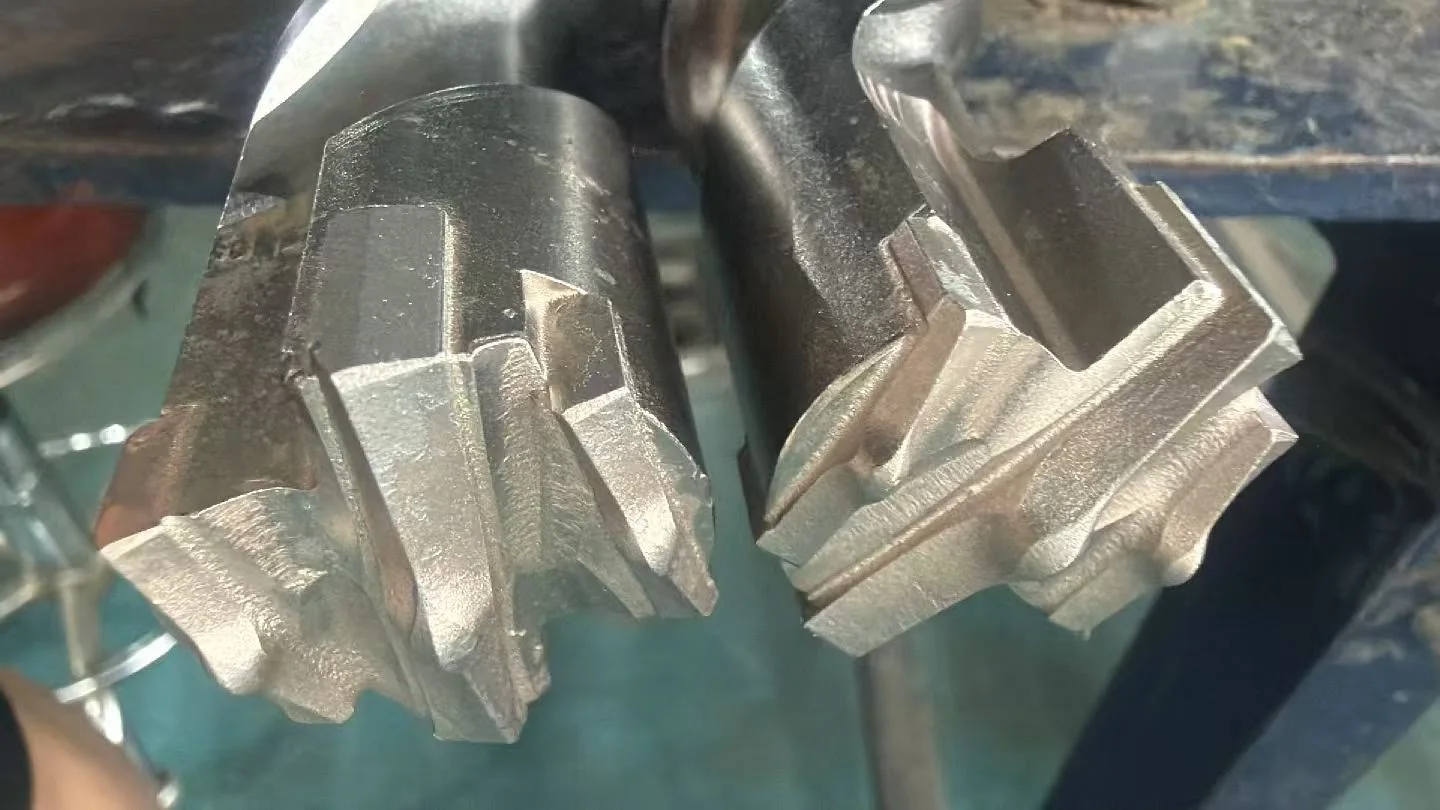
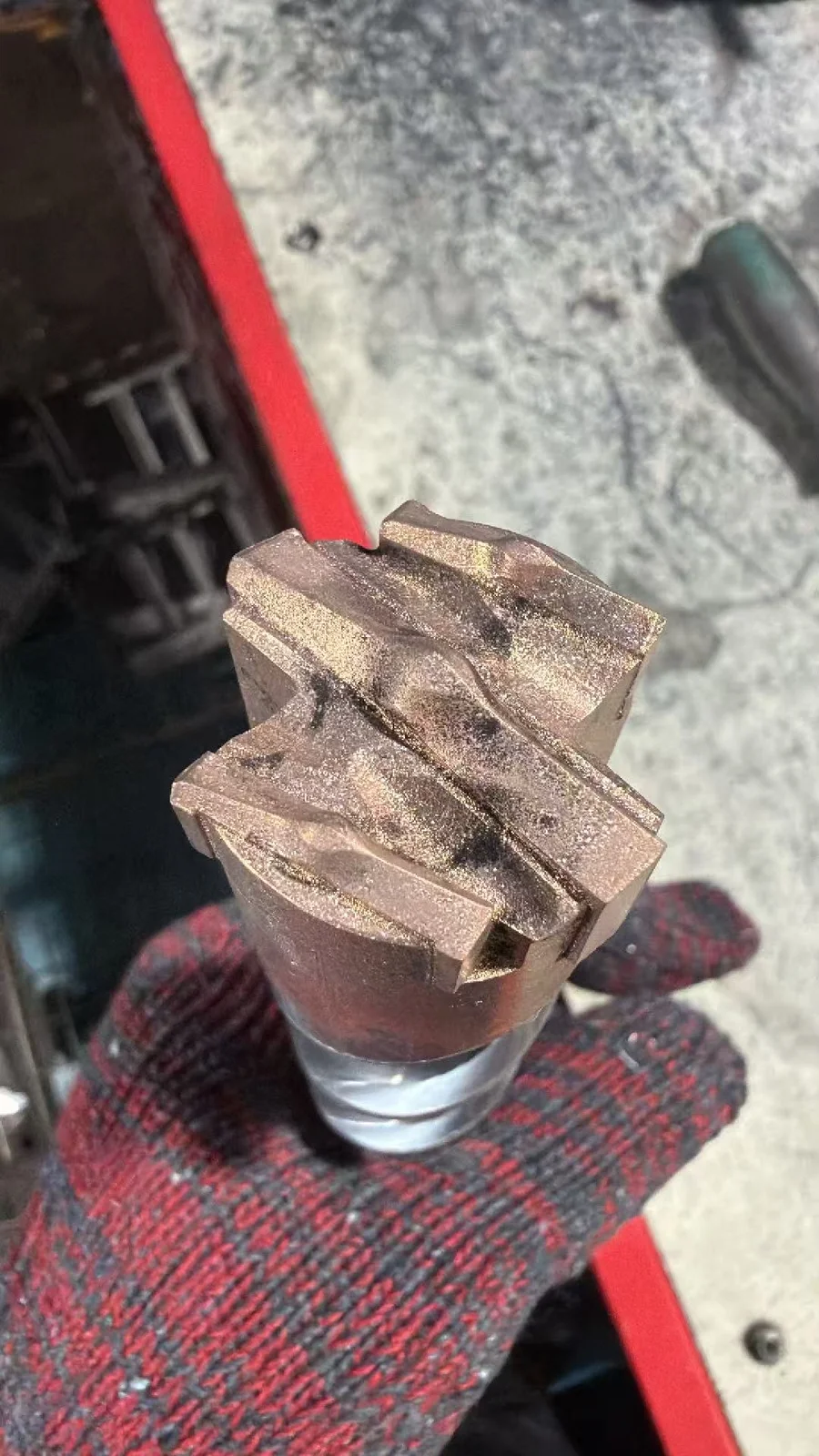
| Multi-insert 4-cutter | Full-width primary carbide blade plus two inclined, axially set-back side inserts; three carbide pieces and four active edges, with open debris paths to the flutes | Bosch SDS max-7 / Speed X / QX reference; ZHMAX-7 by its own drawing |
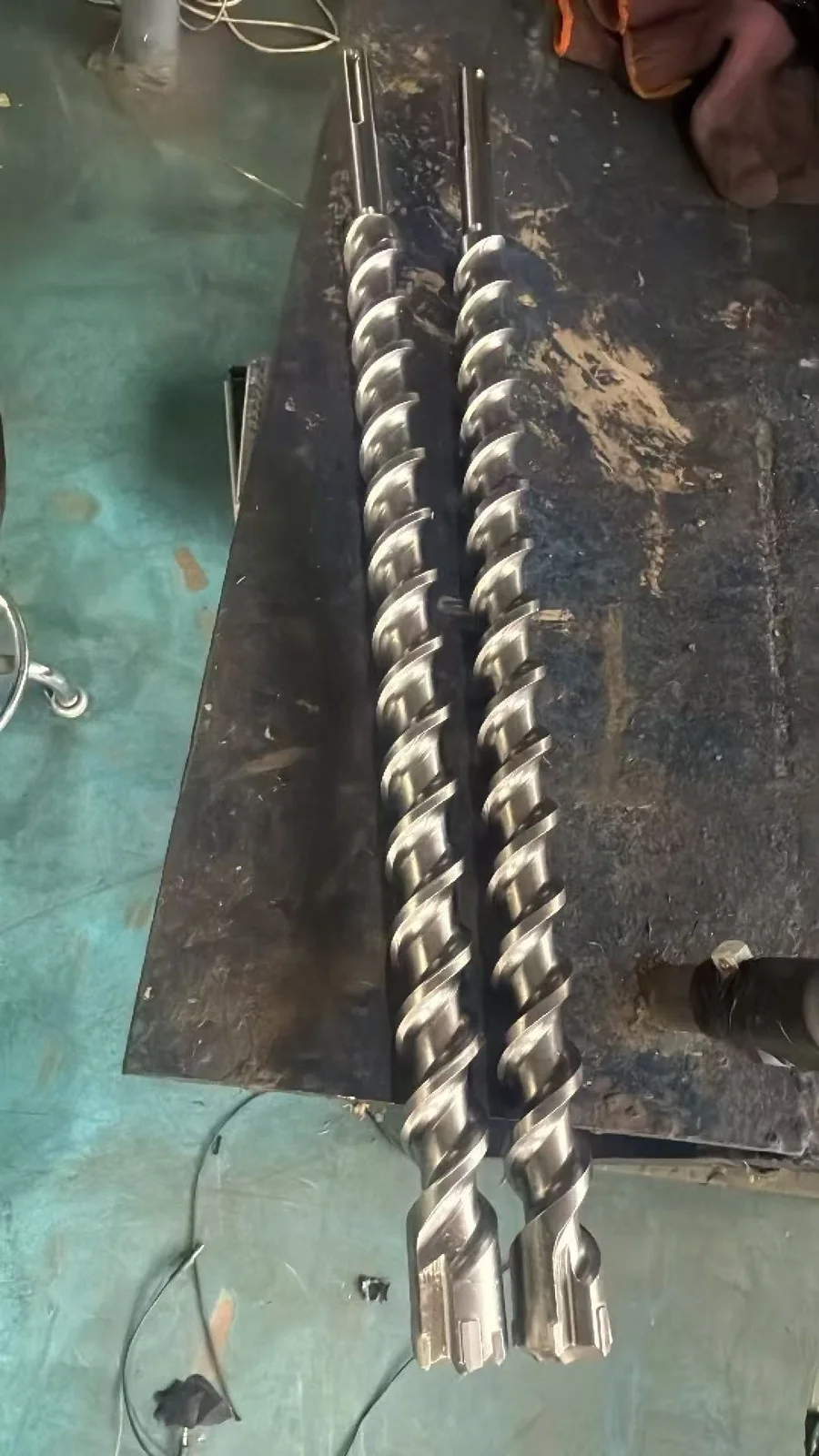
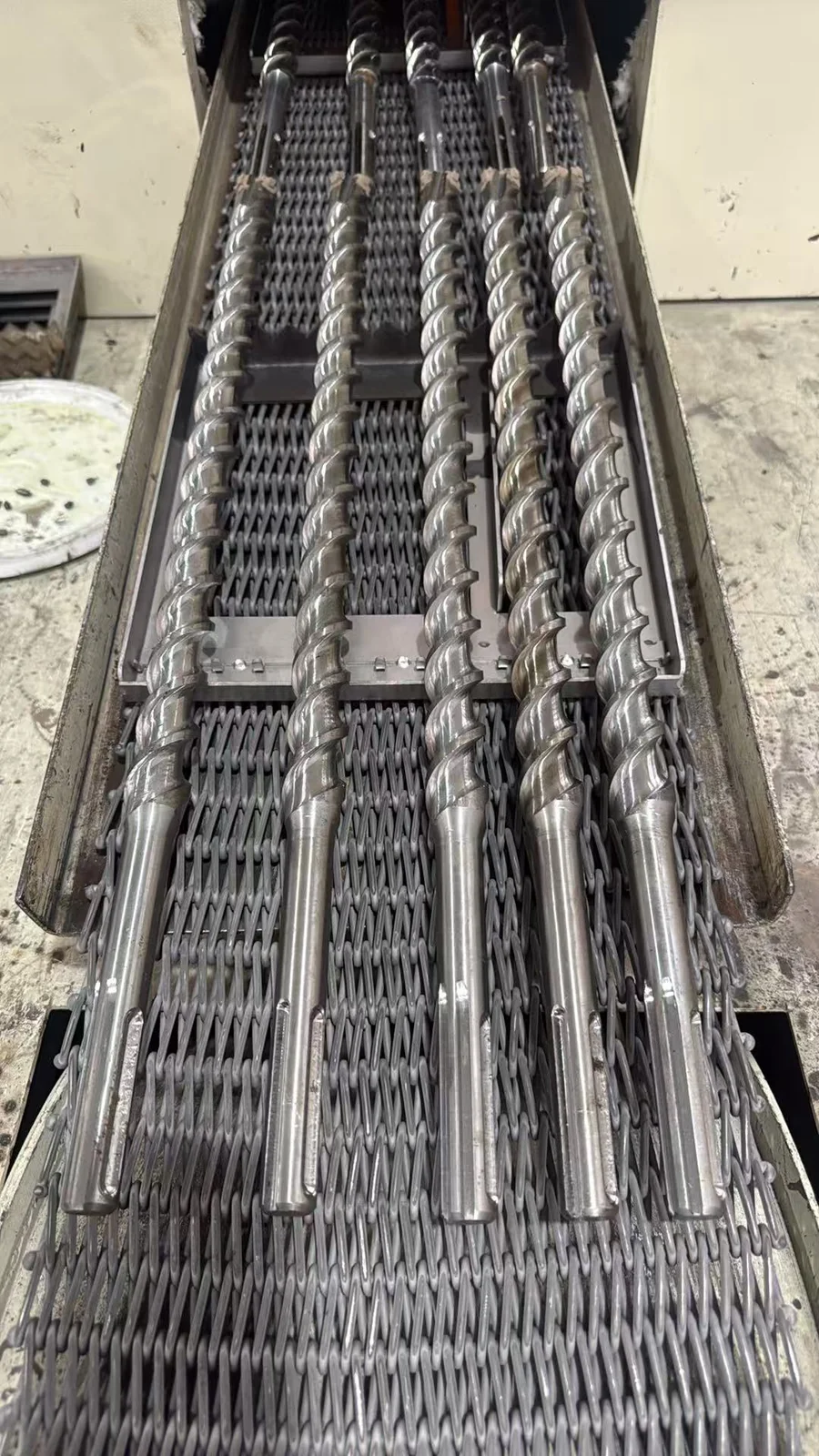
Under the geometry sit the materials, and they matter as much: coarse-grain, higher-cobalt carbide grades (the YG11C class) trade a little hardness for the toughness impact drilling demands; virgin rather than recycled carbide shows up directly in gauge-wear life; controlled-atmosphere brazing keeps the joint alive through thermal cycling; and a 42CrMo body with proper heat treatment is what lets a 920 mm bit take 20 J off-axis all shift without bending. The full geometry-tier framework is in our ZHMAX-5X / 7 / 8 guide.
Wear Modes, Retirement, and Cost per Metre
| Wear mode | Symptom | Driver |
|---|---|---|
| Gauge (diameter) wear | Cartridge jams short of hole bottom; measured head loss ≥1.5–2 mm | Rock abrasiveness (quartz content); carbide grade and quality |
| Edge chipping | Sudden drop in penetration; visible carbide loss | Collaring on uneven faces; oversized hammer on small bit |
| Brazed-joint fatigue | Insert loss, usually in a deep hot hole | Furnace vs controlled-atmosphere brazing; packed cuttings trapping heat |
| Body / shank damage | Bent body, hammered shank lobes | Off-axis force on long bits; worn hammer chuck; missing shank grease |
Retirement criterion: retire on gauge, not on sharpness. The hole the bit drills, not the edge it shows, is the product. Field check: if a fresh cartridge no longer slides freely to the bottom of a test hole, the bit is done.
Metres per bit vary too widely with rock for honest single numbers — abrasive quartzite can consume a bit in tens of drilled metres while softer limestone returns several hundred. What stays constant is the ranking: carbide grade, brazing method and head architecture reorder the result far more than brand stickers do.
The buying metric is cost per metre:
cost per metre = (bit price ÷ metres to gauge retirement) + (hammer amortization ÷ metres) + (labour per metre)
Run that formula and two things happen: cheap bits with recycled carbide lose to mid-priced bits with virgin carbide almost everywhere, and in genuinely abrasive ground the premium-geometry bit (multi-insert 4-cutter class) wins despite the higher sticker — because metres-to-retirement, the denominator, moves more than the price.
Matching the Hammer Class
| Machine | Impact energy | Note |
|---|---|---|
| Makita HR5212C | ≈20 J | The fleet standard in Andean small-scale mining |
| DeWalt D25773 | 19.4 J | The machine DeWalt pairs with its mining bit lines |
| DeWalt DCH733 (60V) | 13.3 J | Cordless option where even a genset is impractical |
| Bosch GBH 8-45 D/DV | ≈12.5 J | Pairs with Bosch SDS max-7 / Quadro-X bits |
Three field rules: keep the SDS-Max shank greased every shift (a dry chuck hammers the shank lobes, not the rock); size the generator at no less than twice the hammer's nameplate watts to survive start-up surge; and resist the urge to lean on the machine — impact energy, not feed force, does the breaking, and excess feed only accelerates edge chipping.
Selection Checklist
- Diameter: 32 mm for ø25 mm cartridges. Confirm your cartridge spec before anything else.
- Lengths: 450 mm for secondary breaking and short rounds; 620 mm mid-rounds; 920 mm for full 800 mm production holes.
- Head: distributed-face (6-edge) heads for medium rock and mixed ground; multi-insert 4-cutter (ZHMAX-7) for hard, abrasive, quartz-rich rock.
- Materials: virgin coarse-grain YG11C-class carbide, controlled-atmosphere brazing, 42CrMo heat-treated body — ask for the spec in writing.
- Verify by metres, not by feel: log metres per bit by heading; retire on gauge; compare suppliers on cost per metre.
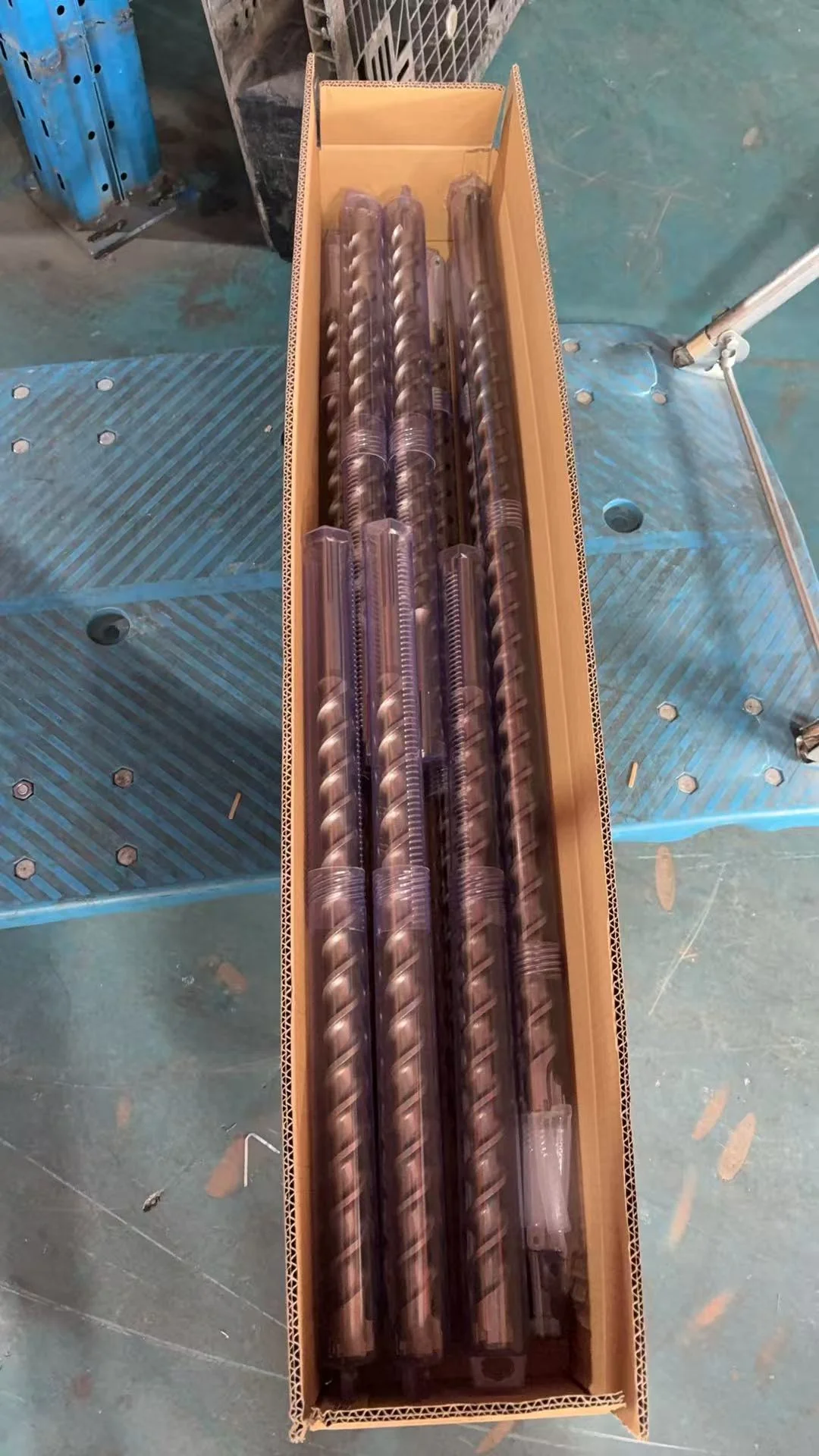
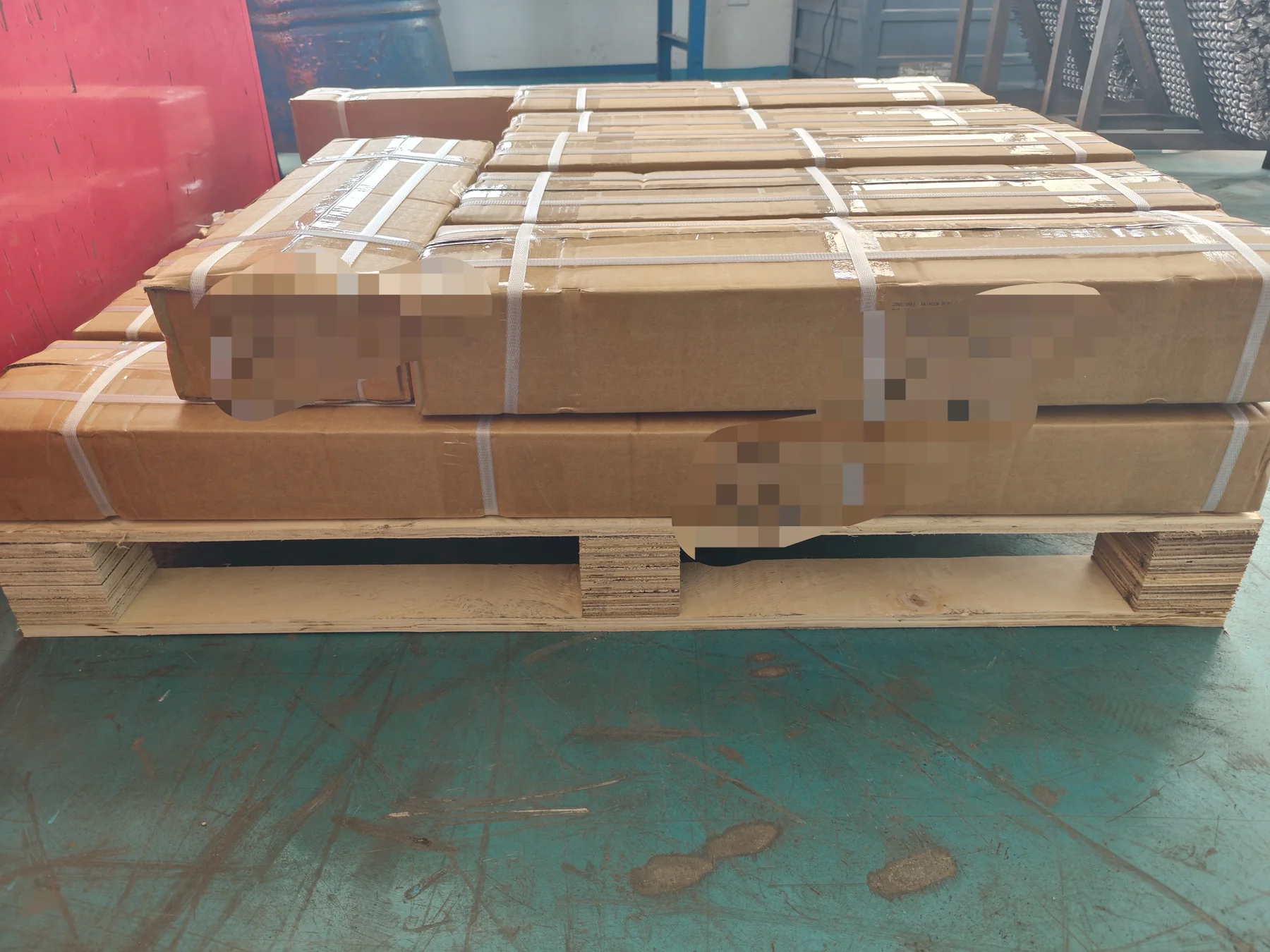
Mining drill bit packing: photos from our factory
Our long SDS-Max mining drill bits in individual protective tubes inside a carton, followed by strapped cartons on a wooden pallet. Tell us your sizes, quantities and packaging requirements for an OEM quotation.
Related Procurement Programs
If you are sourcing mining bits at distribution volumes, these pages cover the procurement side.
- SDS-Max Mining Drill Bits Manufacturer (OEM / Private Label) — the size program, head architectures, hammer compatibility and OEM terms behind this guide.
- Zhonghuan SDS-Max Product Range — full diameter and length tables and OEM inquiry.


