

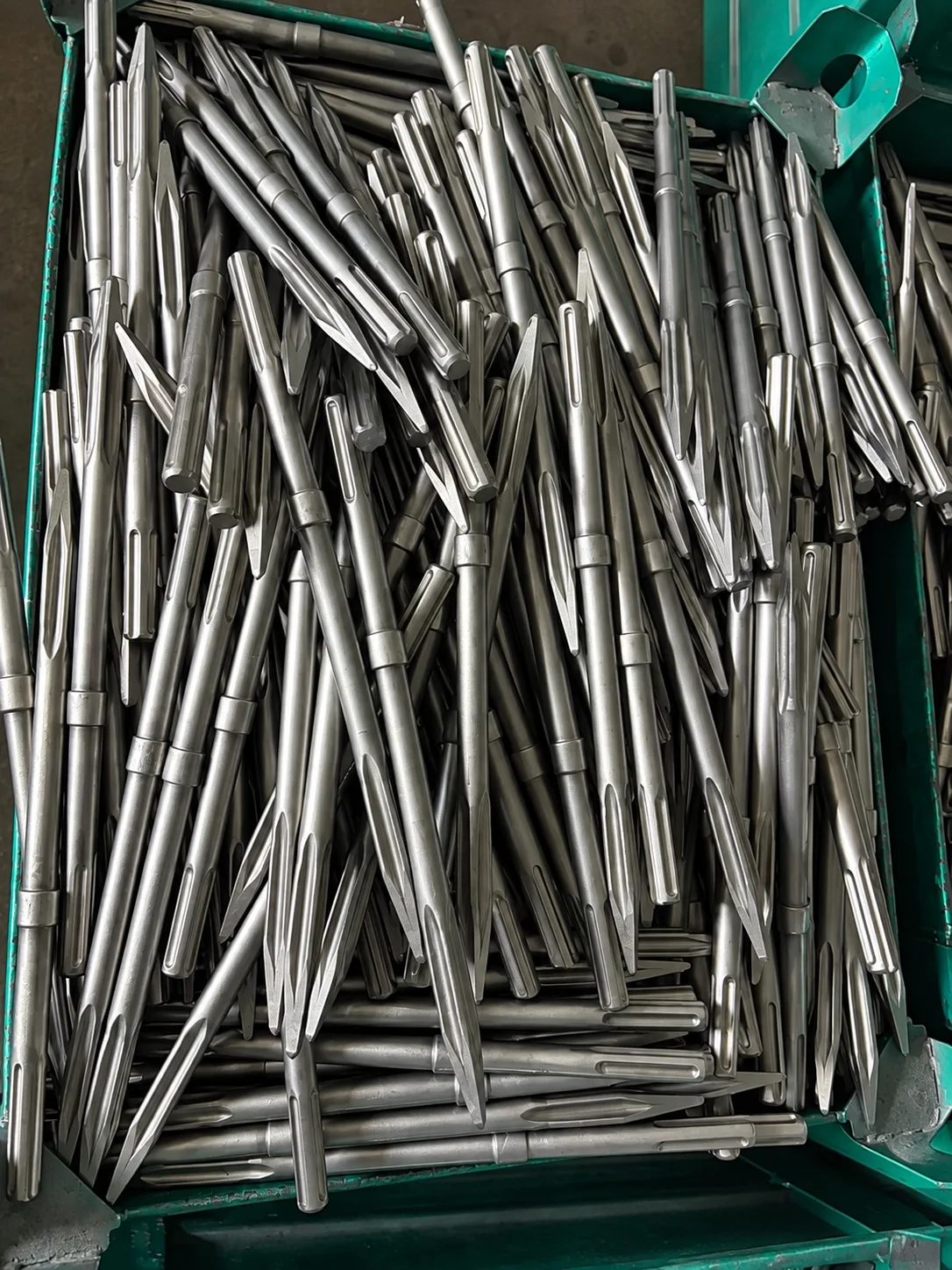
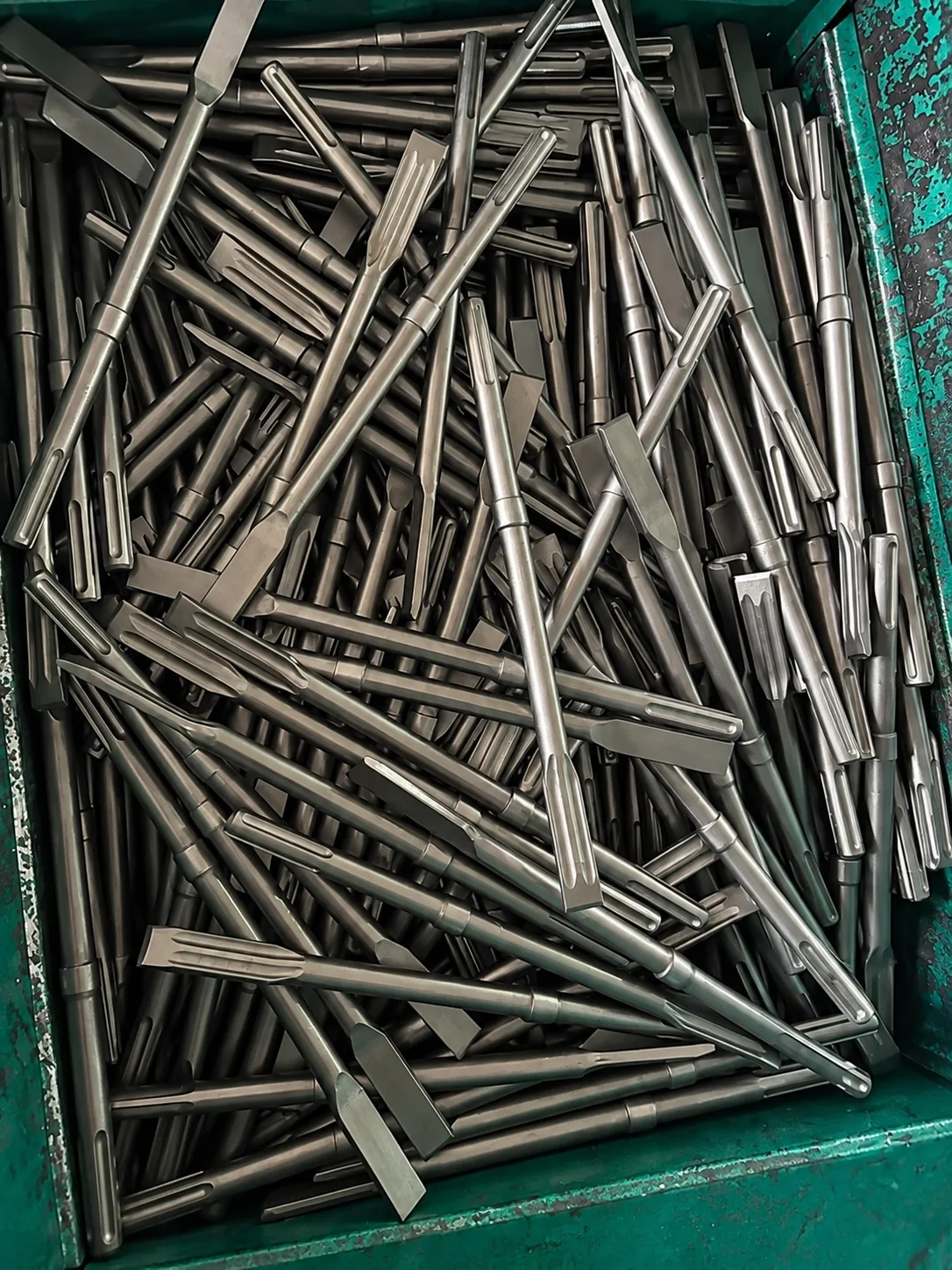
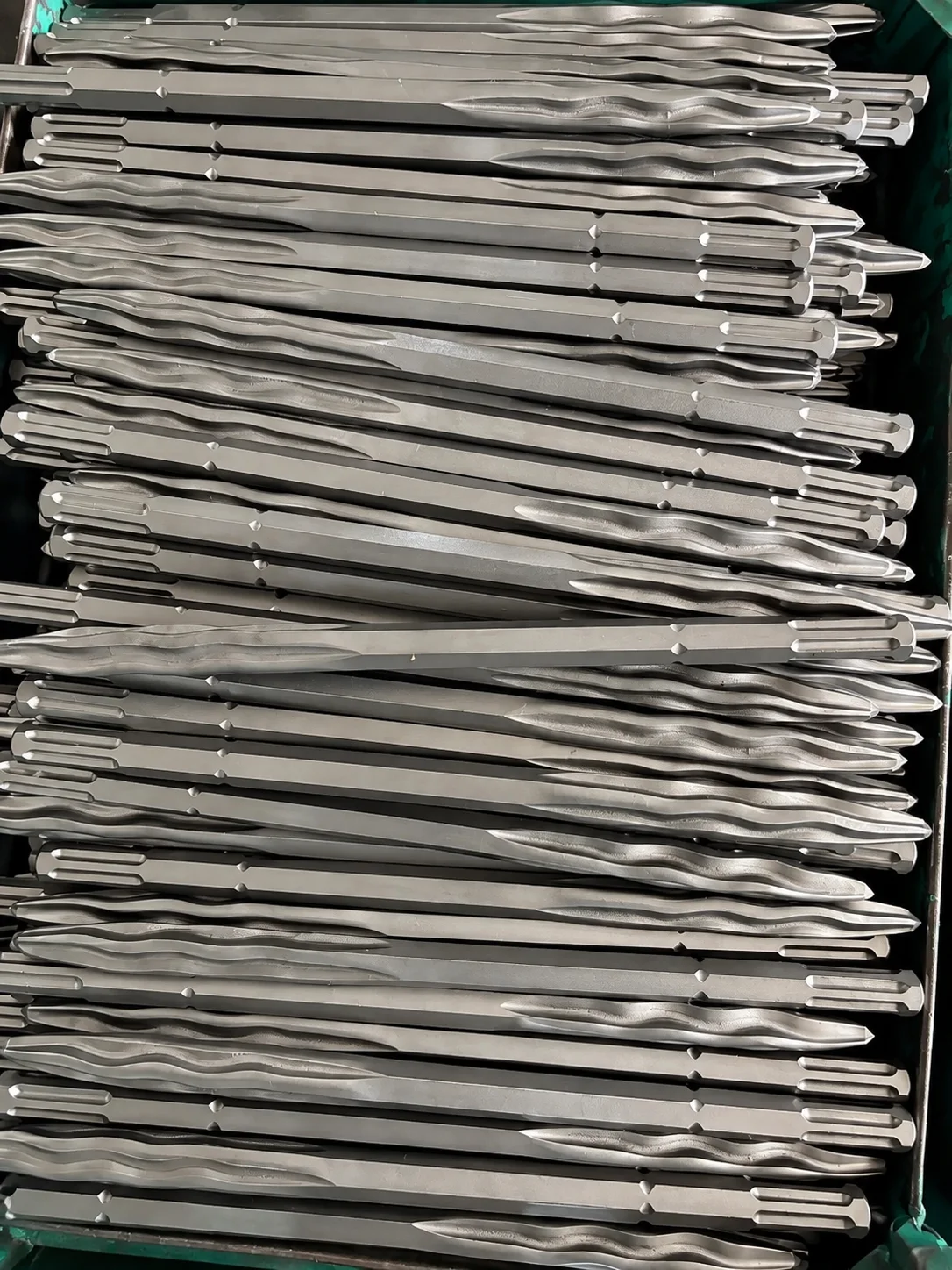
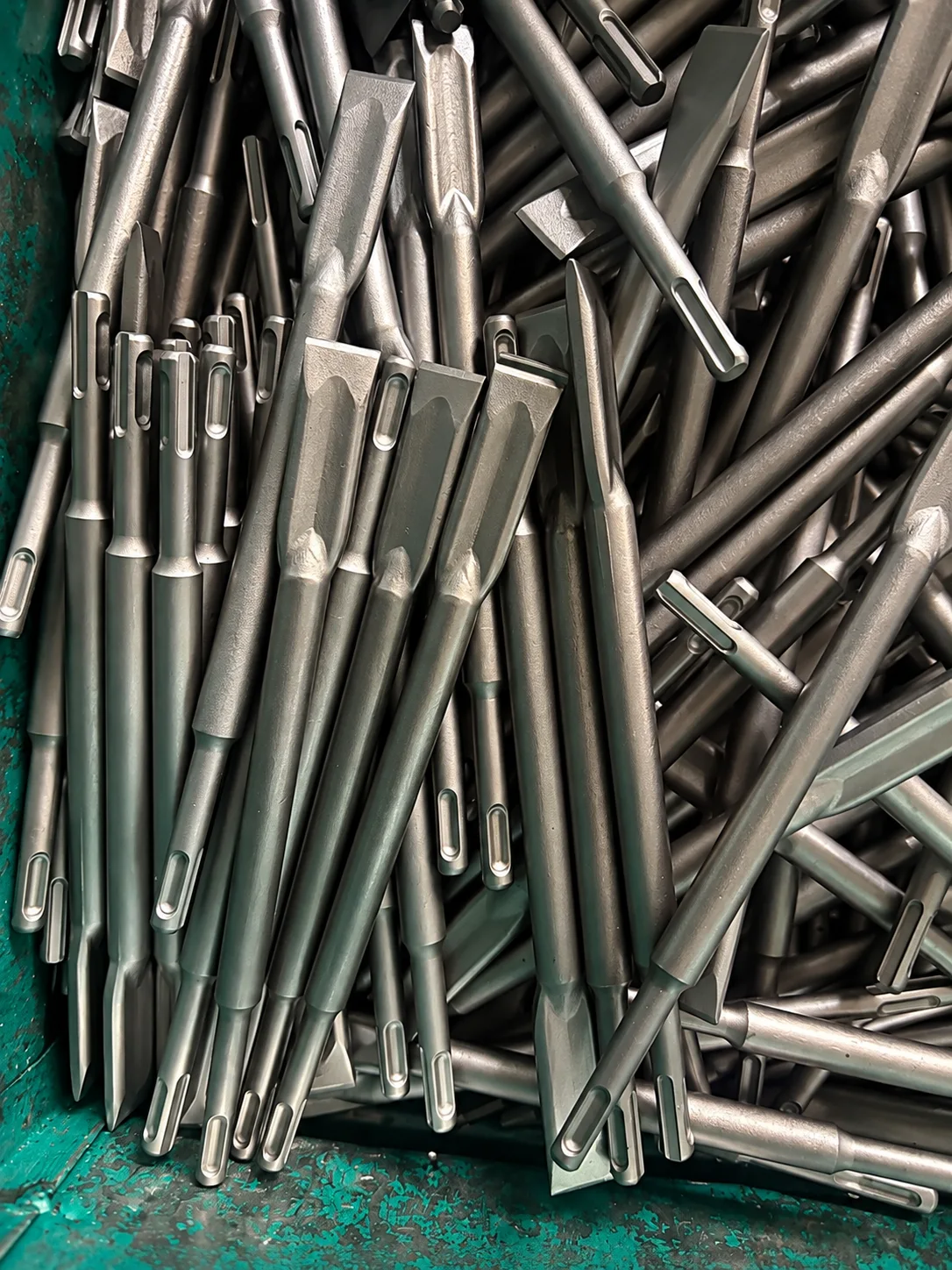
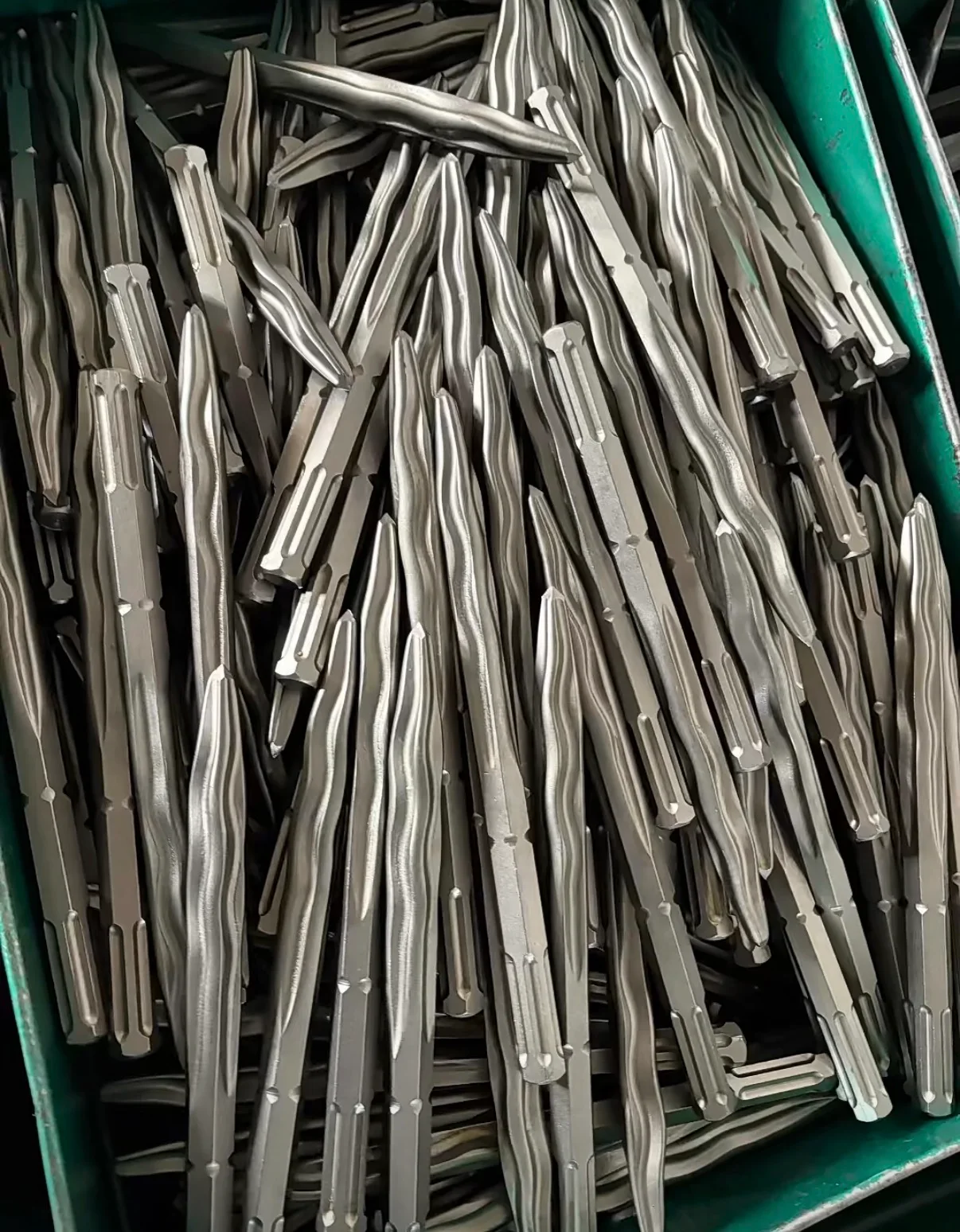
Identify the worn or stuck part
First identify the location: the working edge, body, collar or connection end. A rounded cutting edge, a mushroomed chisel shank and a tool trapped in concrete are different problems. Note the machine, material, operating mode and point where the symptom appears.
Separate cutting performance from holder problems
If the working end is trapped in concrete, investigate the cut, depth, surrounding fracture and working method. If the chisel cannot be released from the chuck, disconnect power and follow the machine’s release and service instructions. Deformed retaining features or a damaged holder require inspection; edge sharpening will not repair that interface.
Check whether this chisel can be reground
Regrind only when the particular chisel manufacturer permits it. Follow its specified equipment, cooling method, edge geometry and limits. Self-sharpening, carbide-tipped and differently heat-treated tools can have different maintenance rules. There is no universal angle or HRC recipe for every SDS chisel. Surface colour alone cannot establish the remaining hardness or a safe repair depth.
Why Heat Treatment Sets a Real Limit on Regrinding
A chisel’s working end is not uniformly hard from tip to shank. During manufacturing, the working zone is heat-treated to a higher hardness for wear resistance, while the body and shank are left tougher so they can absorb repeated impact without cracking. That hardness gradient — hard at the tip, tougher toward the body — is what a controlled heat-treatment process is actually producing.
Regrinding removes material from the working end. Each regrind pass moves the working point closer to the transition zone between the hardened tip and the tougher body. Grind past that transition, and the “sharpened” edge is now sitting on the softer, tougher material — it will look sharp but round over and deform far faster than a properly hardened tip, defeating the purpose of the regrind.
This is also why surface colour is not a usable test. A straw or blue temper colour from grinding heat tells you the surface was overheated during the regrind itself, not how much of the original hardened depth remains underneath. The only reliable way to know how much regrind margin a chisel has left is the manufacturer’s stated hardened-depth specification for that model, checked against how much material has already been removed.
Inspect the SDS shank and holder
Clean and inspect the connection end and apply the lubricant specified by the hammer manufacturer. Check burrs, mushrooming, retaining grooves and holder condition. Do not grind or reshape a damaged shank to force it into service. Use the correct SDS-Plus or SDS-Max holder and a supported chiselling mode with rotation stopped.
Decide when to stop using the tool
Remove cracked, visibly bent or damaged-retention tools from service. A mushroomed working end needs assessment under the tool maker’s repair guidance; a mushroomed connection end needs tool and holder assessment. Rapid repeat deformation after maintenance calls for review of the tool specification, treatment and application rather than repeated blind grinding.
Specify replacement chisels for the actual job
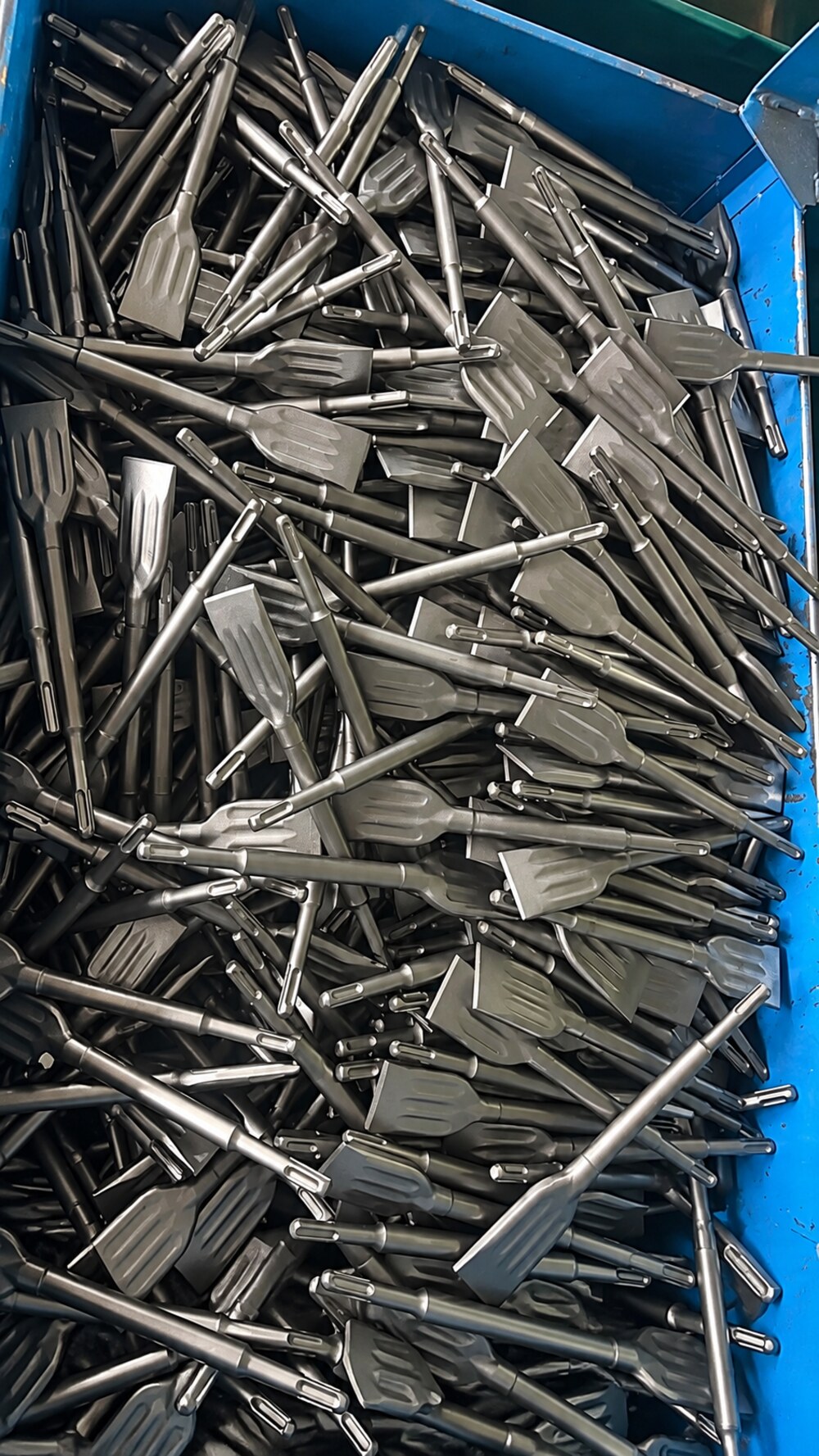
For replacement and OEM supply, record interface, length, blade width or point profile, substrate and wear pattern. Our premium chisel program uses 42CrMo with geometry and heat-treatment requirements matched to the hammer duty. Define inspection locations and acceptance limits in the order specification, and compare completed work and interruption time.
Premium chisel steel and heat treatment · 400 mm self-sharpening chisel set
Can all SDS chisels be resharpened?
No single method applies to every chisel. Follow the exact tool manufacturer’s permission, geometry and maintenance instructions.
Why is my SDS chisel stuck in the chuck?
Possible causes include connection-end deformation, contamination or holder damage. Disconnect the machine and follow its release or service instructions; do not force a damaged shank by grinding it.
Does a blunt chisel prove that it damaged the hammer?
No. Poor cutting and holder damage need separate inspection. The symptom alone does not establish a cause or a repair.
Can I tell chisel hardness from its colour?
No. Colour and finish do not replace material records and appropriate hardness measurement.


